
Karteikarten
Psychology AS AQA Definitions
Karten in diesem Stapel (133)
- 1AbnormalityA Psychological or behavioural state leading to impairment of interpersonal functioning and/or distress to others.
- 2Active ProcessingSubjecting information to deep and meaningful analysis
- 3Adrenal glandThe gland in the adrenal system that releases adrenaline
- 4Adrenal MedullaThe central part of the Adrenal gland
- 5Affectionless psychopathyAn inability to show affection or concern for others
- 6Agentic StateThe way in which an individual may obey an order, perhaps to do something they see as wrong , because the individual hands over the responsibility for the outcome of the action to an authority figure. The individual sees themselves as an agent
- 7AimA precise statement of why a study is taking place
- 8AndrocentrismA bias in psychological research in which a male perspective is overemphasised at the expense of a female one
- 9AnxietyAn unpleasant state of emotional arousal
- 10Articulatory Process (AP)Part of the phonological acoustic store , allows sub-vocal repetition within the store
- 11AttachmentA two way , enduring, emotional tie to a specific other person
- 12Authoritarian personalityThis title describes a person who holds rigid beliefs , is intolerant of ambiguity and is submissive to authority but hostile to those of lower status
- 13Autonomous StateWhere individuals are seen as responsible for their own actions
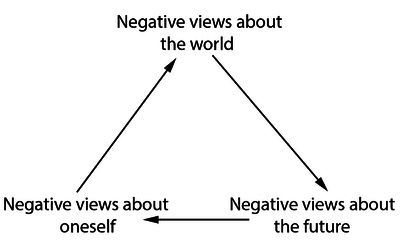
- 14Beck's Negative TriadA model of cognitive biases which are characteristic features of depression. The triad consists of three elements.
- 15Behavioural CategoriesDividing target behaviours into subsets of behaviours through the use of coding systems
- 16Behavioural approachThe perception of phobias as occuring through learning processes with treatments based upon modifying maladaptive behaviour through substitution of new responses
- 17Biological approachThe perception of OCD as determined by physiological means of treatments based upon chemical means
- 18Bipolar depressionA form of depression characterised by periods of heightened moods and periods of despondency and hopelessness
- 19CapacityThe amount of information that can be stored at a given time
- 20Case studiesIn-depth , detailed investigations of one individual or a small group
- 21Central Executive (CE)A component of the Working Memory Model that oversees and co-ordinates the components of working memory
- 22Central Nervous System (CNS)This system comprises the brain and spinal chord
- 23ChunkingMethod of increasing the STM capacity by grouping information into larger units
- 24Circadian rhythmsBiological rhythms which occur every 24-hours
- 25Classical ConditioningWhen a response ,produced naturally by a ertain stimulus , becomes associated with another stimulus that is not ususally associated with that particualr response
- 26CodingThe means by which information is represented in memory
- 27Cognitive approachThe perception of depression as determined through maladaptive thought processesbwith treatments based upon modifying thought patterns to alter behaviour and emotional states
- 28Cognitive DissonanceAn unpleasant feeling of anxiety created by simultaneously holding two contradictory ideas
- 29Cognitive Interview (CI)A procedure for police questioning of witnesses that promotes accurate, detailed recall of events
- 30CompliancePublicly , but not privately, going along with majority influence to fit in and gain approval
- 31Confederates (Pseudo Participants)Individuals who pretend to be participants or researchers in research studies , but who are in fact acting in a role
- 32ConformityYielding to majority influence
- 33Confounding VariablesUncontrolled extraneous variables that negatively impact the results
- 34Content analysisA method of quantifying quaitative data through the use of coding units
- 35Context-Dependent failureA form of Cue-dependent forgetting where recall occurs in a different external setting to coding
- 36Continuity hypothesisThe idea that there is consistency between early emotional experiences and later relationships
- 37ContralateralWhen the right hemisphere
- 38Correlational studiesThe factors measured in a correlational study to asses their direction and the strength of the relationship
- 39Co-variablesThe variables investigated in a correlation. They are not reffered to as the independent and dependent variables because the study is investigating the relationship between them.
- 40Critical PeriodA specific time period within which an attachment must form
- 41Cross-cultural studiesComparison of findings from people of different cultures
- 42Cue-dependent forgetting (CDF)A type of forgetting based upon a failure to retrieve the prompts that trigger recall
- 43Cultural relativismThe way in which the function and meaning of a behaviour , value or attitude are relative to a specific cultural setting meaning that interpretations of these may vary across countries.
- 44Cultural variationsDifferences in ways of life across different nations involving child-rearing practices
- 45Cupboard love theoryThe belief that attachments are formed with infant's carers throught feeding processes
- 46DehumanisationDegrading people by lessening their human qualities
- 47De-individuationA state in which individuals have lowered self awareness and a weaker sense of personal responsibility for their actions . This may result from the relative anonimity of a crowd.
- 48Demand CharacteristicsFeatures of a piece of research which allows participants to work out its aim and/or the hypothesis. Participants may change their behaviour to comply or resist the researcher. Called the "Please you , Screw you" effect
- 49Dependent variable (DV)The factor measured by researchers in an investigation
- 50DepressionA mood disorder characterised by feelings of despondency and hopelessness
- 51DeprivationA long-term disruption of an attachment bond
- 52Deviation from ideal mental healthFailure to meet the criteria for perfect psychological wellbeing
- 53Deviation from social normsBehaviour violating accepted social rules
- 54Dispositional explainationThe perception of behaviour as caused by internal characterisitics of individuals
- 55Drug therapyThe treatment of OCD through chemical means
- 56DurationThe length of time during which information remains in a storage
- 57Electroencephalogram (EEG)A method of measuring brain activity using electrodes on the scalp
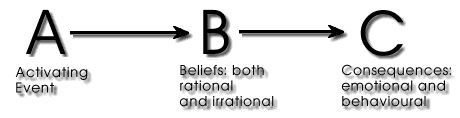
- 58Ellis' ABC modelAn explaination that sees depression as occuring through an activating agent , beleif and consequence
- 59Endocrine systemThis is the system which affects the transfer and secretion of hormones throughout the body
- 60Endogenous pacemakerInternal body 'clocks' that regulate biological rhythms such as regular times of sleep linked to levels of light e.g Suprachasmatic nucleus or Pineal gland
- 61Enchanced Cognitive Interview (ECI)An advanced method of questioning witnesses that overcomes problems caused with inappropriate sequencing of questions
- 62Episodic bufferComponent of the Working Memory Model that serves as a temporary store of integrated information from the central executive , phonological loop, visuo-spatial sketchpad and LTM.
- 63Episodic memory (EM)A form of LTM for events occuring in an individuals life
- 64Ethical IssuesThe rules governing the conduct of researchers in investigations
- 65Event-related potentials (ERPs)A method of measuring brain activity in response to a stimulis (using the same equipment as an EEG)
- 66Excitatory potentialsIncrease the chance of a neuron firing
- 67Exogenous zeitgebersExternal stimuli , such as levels of light , tempreature and social cues, which influence biological rhythms
- 68Experimental methodsA research method using random allocation of participants and the manipulation of variables to determine cause and effect
- 69Extraneous variablesVariables other than the Independent Variable that might affect the Dependent Variable
- 70Eye-witness testimony (EWT)Evidence provided by those recalling an event who were present when the event took place
- 71Failure to function AdequatelyAn inability to cope with day-to-day living
- 72FalsificationThat scientific statements are capable of being proven wrong
- 73Field ExperimentExperiment conducted in a naturalistic environment where the researchers manipulate the independent variable
- 74FloodingA behavioural therapy used to remove phobias through direct confrontation with the feared object or situation
- 75ForgettingThe failure to retrieve information from memory stores
- 76Genetic explainationThe perception of OCD as transmitted trough inherited factors
- 77GenotypeThe genetic makeup of an individual
- 78GraphsEasily understandable , pictoral representations of data
- 79Hemispheric lateralisationThis is when one hemisphere carries out a particular function
- 80HormonesChemicals secreted by the endocrine system in the blood and other bodily fluids
- 81HypothalamusA part of the brain which is located in the centre of the brain and deals with basic survival tactics
- 82HypothesesPrecise testable research predictions
- 83IdentificationPublic and private acceptance of majority influence in order to gain group acceptance. Only present when maintained by group presence
- 84Imposed eticusing techniques that are only relevant to one culture to study and/or draw conclusions about another
- 85ImprintingA form of attachment where the offspring follow the first large moving object they see
- 86Independent groups designExperimental design in which each participant performs one condition of an experiment
- 87Independent variable (IV)The factor manipulated by researchers in an investigation
- 88Individual VariablesPersonal characteristics that affect the degree to which individuals yield to group pressure
- 89Inferential testingStatistical procedures that make predictions about populations from mathematicl analysis of data taken from samples
- 90Informational Social Influence (ISI)A motivational force to look to others for guidance in order to be correct
- 91Infradian rhythmsBiological rhythms that occur less than once a day
- 92Inhibitory potentialsdecrease the chance of a neuron firing
- 93Inner scribePart of the Visuo-spatial sketchpad, stores information about the physical relationships of items
- 94Institutional careChildcare provided by orphanages and children's homes
- 95Interactional SynchronyThe co-ordinated rhythmic exchanges between carer and infant
- 96Interference Theory (IT)An explaination for forgetting when similar material is confused in recall from the LTM
- 97Internal Working ModelA cognitive framework used to understand the world, self , and others , that acts as a template for future relationships based on an infant's primary attachment
- 98InternalisationPublic and private acceptance of majority influence , through adopting the majority group's beleif system. Often called true conformity.
- 99Inter-observer reliabilityWhere observers consistently code behaviour in the same way
- 100InterviewsSelf-report method where participants answer questions in face-to-face situations
- 101IntrospectionA technique pioneered by Wilhelm Wundt , to gain insight into how mental processes work. People were trained to report in detail on their inner experiences when presented with a stimulus.
- 102Investigator effectsA research effect where researcher features influence participants' responses
- 103Ironic devianceThe beleif that other people's behaviour occurs because they have been told to do it lowers their informational influence
- 104Laboratory experimentExperiment conducted in a controlled environment allowing the establishment of causality
- 105Learning theoryThe beleif that attachments develop through conditioning processes
- 106Legitimacy of authorityThe degree to which individuals are seen as justified in having power over others
- 107LocalisationIn terms of the brain, this means the part of the brain in which a function is carried out
- 108Locus of Control (LOC)The extent to which individuals believe that they can control events in their lives
- 109Long term memory (LTM)A permanent store holding limitless amounts of information for long periods
- 110Matched-pairs designExperimental design where participants are in similar pairs, whith one of each pair compleing a condition
- 111Measures of central tendencyMethods of estimating mid-point scores in sets of data
- 112Measures of dispersionMeasurements of the spread of scores witin a set of data
- 113Meta-analysisA process in which a large number of studies, which have involved the same research question and methods of research, are reviewed together and the combined data is tested by statistical techniques to assess the effect size
- 114Milgram paradigmExperimental procedure devised by Stanley Milgram for measuring obedience rates of people
- 115Minority influenceA type of social influence that motivates individuals to reject established majority group norms
- 116Misleading informationInformation that suggests a desired response
- 117MnemonicsTechniques that promote memory recall
- 118Modified cognitive interview (MCI)An ammended form of the cognitive interview
- 119Monotropic theoryUsed bh John Bowlby to suggest that infants have a inbuilt tendency to make an attachment to one primary figure, the mother. He suggested his has an evolutionary origin.
- 120MonotropyAn innate tendency to become attached to one paticular adult
- 121MoralityDecisions and behaviour based upon the perception of proper conduct
- 122Multiple AttachmentsThe formation of emotional bonds with many carers
- 123Multi-store model (MSM)An explanation
- 124Natural experimentExperiment conducted in a naturalistic environment with naturally occuring independent variable
- 125Naturalistic ObservationsSurveillance and recording of naturally occuring event
- 126Negative reinforcementA behaviour is more likely to occur because of avoidance of negative consequences
- 127Neural explanationThe perception of OCD as resulting from abnormally functioning brain mechanisms
- 128NeuronA nerve cell which transfers information throughout the nervous system
- 129NeurotransmittersChemicals witin the cerebreal fluid that transmit signals
- 130Normal distributionData with an even distibution either side of the mean
- 131Normative social influence (NSI)A mtivational force to be liked and accepted by a group
- 132ObedienceComplying with the demands of an authority figure
- 133ObjectivityObservations made without bias
Informationen
- Beschreibung
- Cards with Definitions
- Erstellt von
- Natalia Chlebowska
- Aufrufe
- 72
- Tags
- Bewertung