
Mindmap
DIABETIC KETOACIDOSIS

Inhalt der Mindmap
DIABETIC KETOACIDOSIS
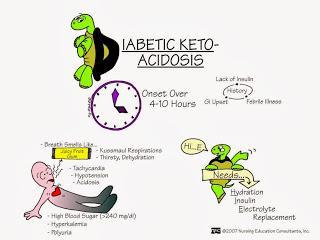
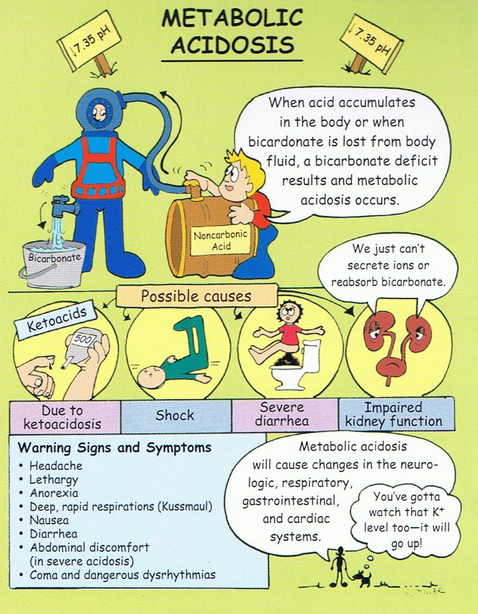
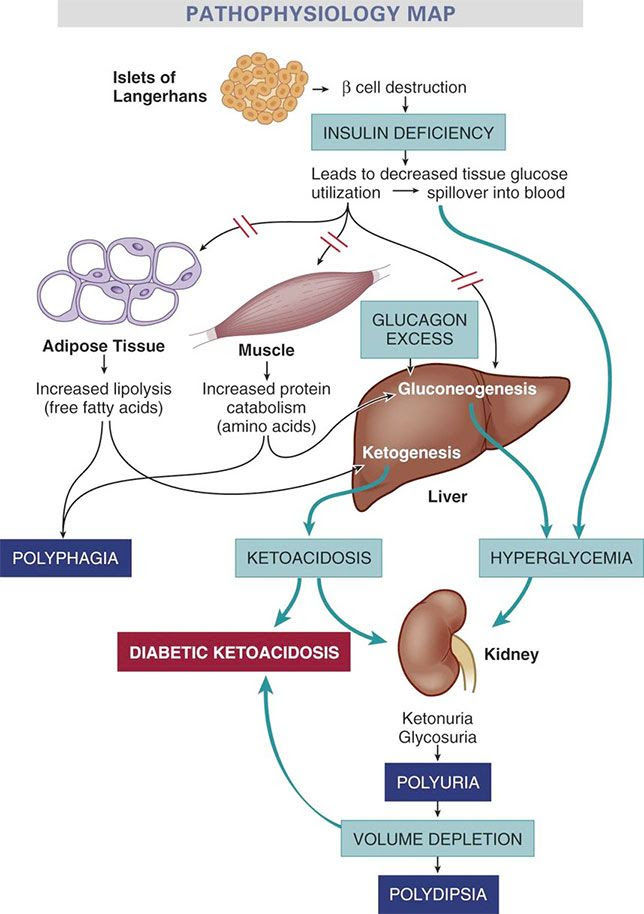
Diabetic Ketoacidosis is a condition that results in life-threatening metabolic acidosis
- A consequence of insufficient insulin production – seen with Type 1 diabetic patients
- Rarely present in individuals with type II diabetes as a result of pancreas’ inability to meet insulin demands
- Rarely present in individuals with type II diabetes as a result of pancreas’ inability to meet insulin demands
- A consequence of insufficient insulin production – seen with Type 1 diabetic patients
CLINICAL MANIFESTATIONS
- Polydipsia
- Polyuria
- Dehydration
- Tachycardia
- Poor skin turgor
- Orthostatic hypotension
- Dry mucous membranes
- Comatose
- Nausea
- Vomiting
- Fluid/electrolyte loss
- Hypovolemic shock
- Fluid/electrolyte loss
- Abdominal pain
- Kussmauls respirations
- Acetone breath (fruity)
- Respiratory compensation
- Hyperventilation
- Fever- if associated with infection
- Increased WBC count
Nursing Interventions
- O2 administration
- Establish IV access
- fluid resuscitation with saline
- 0.45% OR 0.9% NaCl
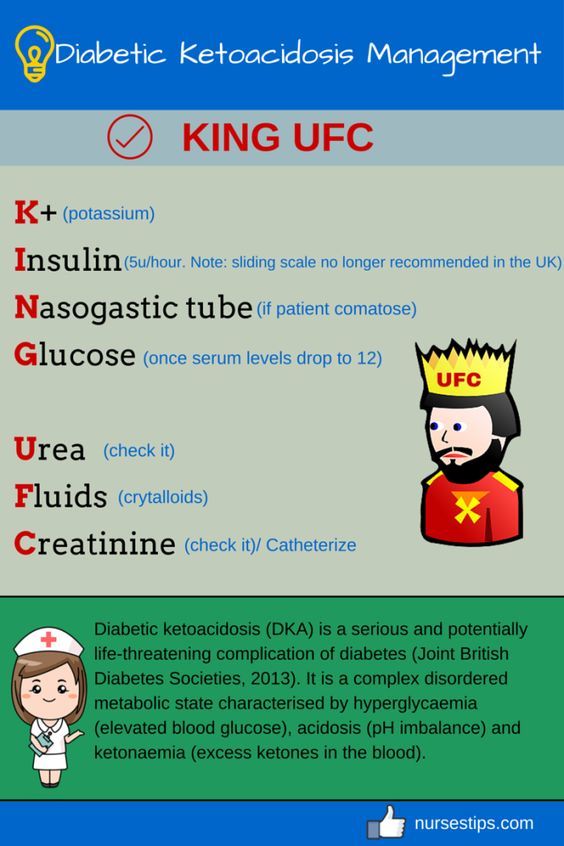
- continuous insulin drip ad lib (rapid/fast-acting)
- Rapid acting: onset (10-15 min), peak (60-90 mins), duration (3-5 hours) → lispro, aspart
- Fast acting: onset (30 min -60 mins), peak (2-4 hours), duration (5-8 hours) → regular
- K+/Bicarb (severe acidosis)
- Fluid/electrolyte replacement
- IV rate to restore urine output to 30-60 mL/hr and increase BP
- 5% glucose is added to prevent hypoglycemia when glucose approaches 14 mmol/L
- Correct deficits of sodium, chloride, bicarbonate, potassium, phosphate, magnesium, and nitrogen
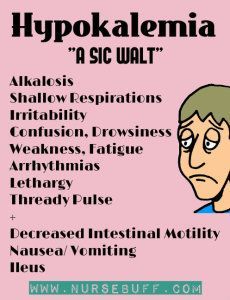
- Early potassium replacement is important
- fluid resuscitation with saline
- Assessment
- Vital signs
- Level of consciousness
- Mental status
- Cardiac rhythm monitoring
- O2 saturation
- Urine output
- Serum glucose
- greater than 14 mmol/L
- Breath sounds
- pH
- less than 7.35
- Fluid intake
- Ketones in blood or urine
- Cardiac and respiratory status
Diagnostic tests
- History
- Physical examination
- Blood glucose levels
- > 14 mmol/L
- Complete blood count
- pH
- < 7.35
- Ketones in blood and urine
- From protein degradation
- Electrolytes
- Hydrogen ions move from intracellular fluid to extracellular space
- Potassium ions follow hydrogen ions into extracellular space
- Severe potassium depletion
- Severe potassium depletion
- Potassium ions follow hydrogen ions into extracellular space
- Hydrogen ions move from intracellular fluid to extracellular space
- Blood urea nitrogen
- Protein degradation leads to nitrogen losses from tissues
- Arterial blood gases
- Serum bicarbonate < 15 mmol/L
Characteristics
- Dehydration
- Electrolytes and ketones are eliminated/depleted to maintain electrical neutrality
- Acidosis
- Ketones- acidic byproducts of fat metabolism
- Blood pH is altered
- Metabolic acidosis
- Metabolic acidosis
- Blood pH is altered
- Ketones- acidic byproducts of fat metabolism
- Ketonuria
- Byproduct of fat metabolism
- Ketone bodies excreted in urine
- Byproduct of fat metabolism
- Hyperglycemia
- Insulin deficiency
- Conversion of glucose from amino acids in liver
- Insulin deficiency
- Dehydration
Causes
- Insulin deficiency
- Decreased glucose utilization by tissues
- Excess glucose in blood
- Decreased glucose utilization by tissues
- Insulin deficiency
COMPLICATIONS
- Hypovolemic shock
- Caused by vomiting
- Renal failure
- Comatose
- Result of dehydration, electrolyte imbalance, and acidosis
- Death if left untreated
- Hypovolemic shock
Bilder und Dateien der Mindmap

Informationen
- Beschreibung
- Public Health Mindmap am DIABETIC KETOACIDOSIS, erstellt von Suehan Marian Lawson am 31/10/2017.
- Erstellt von
- Suehan Marian Lawson
- Aufrufe
- 42
- Bewertung