
Mindmap
Main Memory
Inhalt der Mindmap
Main Memory
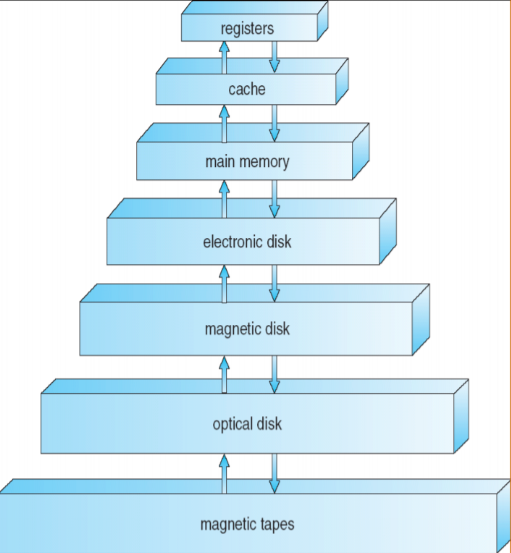
Storage Structure
- Main Memory/RAM
- Only storage area CPU can access directly
- Small and volatile storage
- Secondary Storage
- Extension of main memory - large, nonvolatile
- Magnetic Disks
- Metal/glass platters covered with magnetic recording material
- Disc surface divided into tracks, subdivided into sectors
- Disk controller determines interaction between device and computer
- Where programs are stored before being loaded into memory
- Metal/glass platters covered with magnetic recording material
- Main Memory/RAM
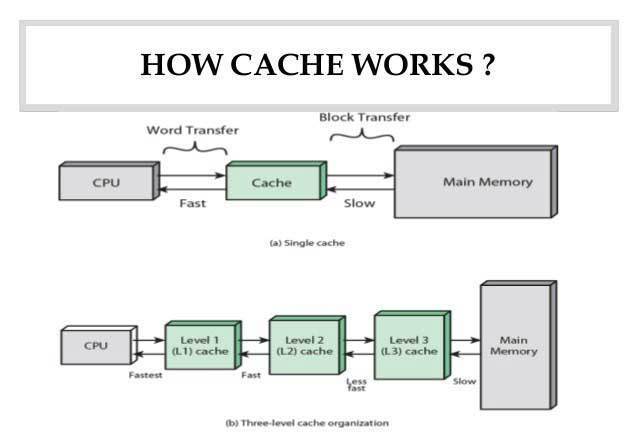
Cache Memory
- Cache
- Temporary storage
- Frequently accessed
- Sits between the CPU and registers
- Caching
- Copying information into faster storage system
- Cache checked first - Returns hit or miss
- Cache
Base and Limit Registers
- Each process has separate memory space
- Base register
- Holds smallest legal physical memory address
- Limit register
- Holds range
- E.g.: if base register holds 300040, limit 120900, the program can access address 300040 through 420940 inclusive
- base register + limit register = addresses accessible for given process
- E.g.: if base register holds 300040, limit 120900, the program can access address 300040 through 420940 inclusive
- Holds range
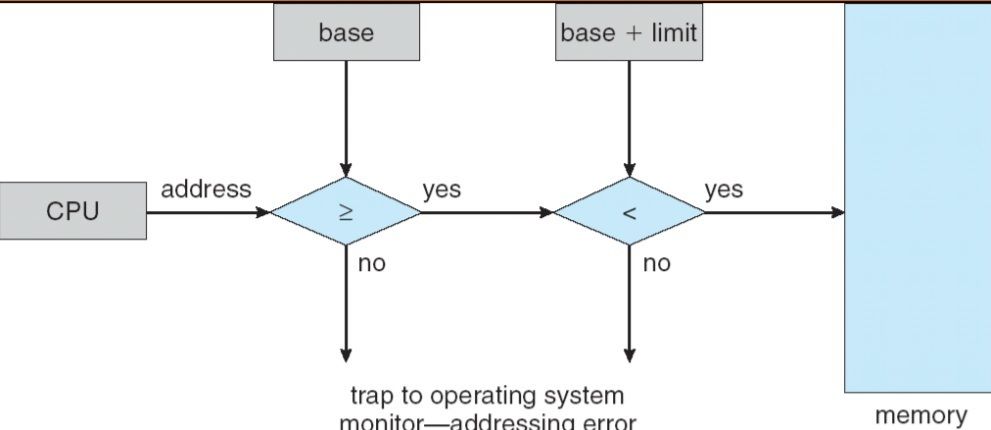
- HW address protection with base + limit registers
- CPU compares every address generated in user mode with registers
- If program executing user in user mode tries to access OS/other user memory, a trap is generated
- CPU compares every address generated in user mode with registers
Logical vs Physical Space
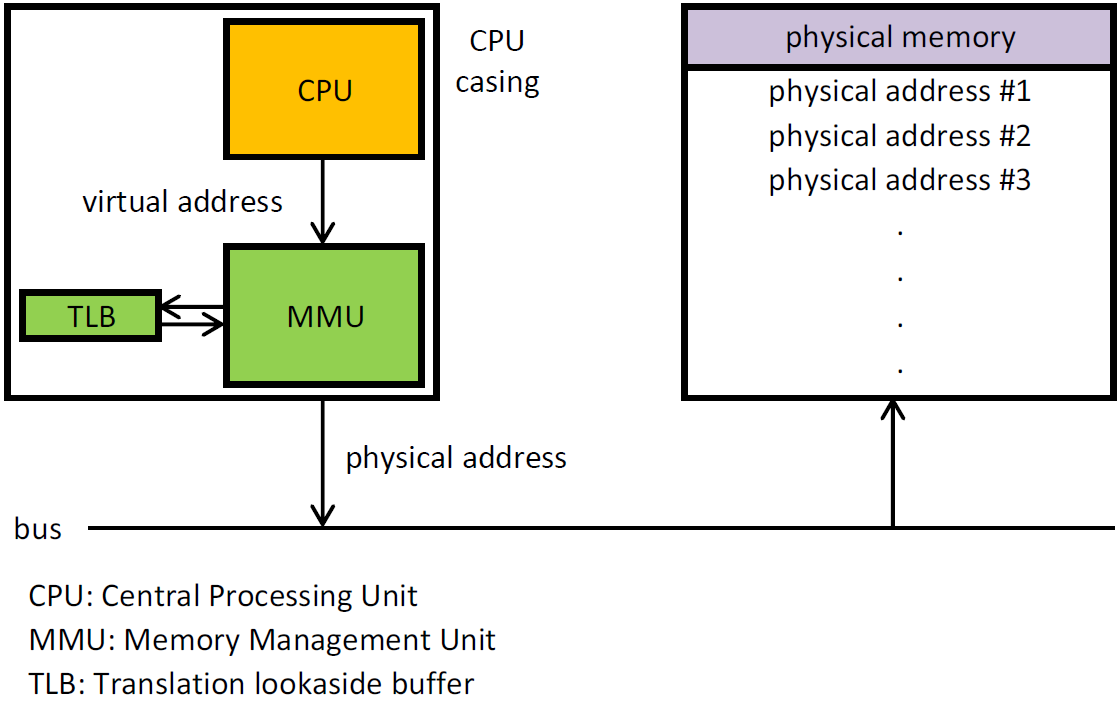
- Logical Address
- Generated by CPU - "Virtual Address"
- System would crash if it tried to access RAM not available - Virtual memory stops this
- User programs only deal with logical addresses
- Generated by CPU - "Virtual Address"
- Physical Address
- Address seen by memory unit
- Address are same in compile-time and load-time address binding
- Addresses differ in execution-time address-binding
- Memory Management Unit (MMU)
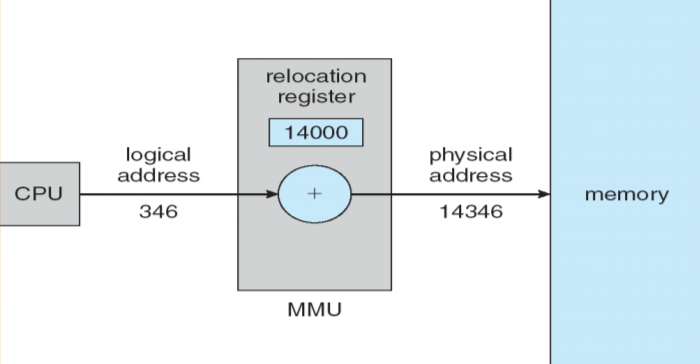
- Maps virtual to physical address at RUN-TIME
- Methods include contiguous allocation, paging, segmentation
- Contiguous Allocation
- Each process is contained as a single contiguous section of memory
- MMU maps logical address dynamically
- 'Hole'
- Block of available memory
- Process allocated to hole big enough
- 'First-fit'
- 'Best-fit'
- 'Worst-fit'
- Process allocated to hole big enough
- Block of available memory
- Paging
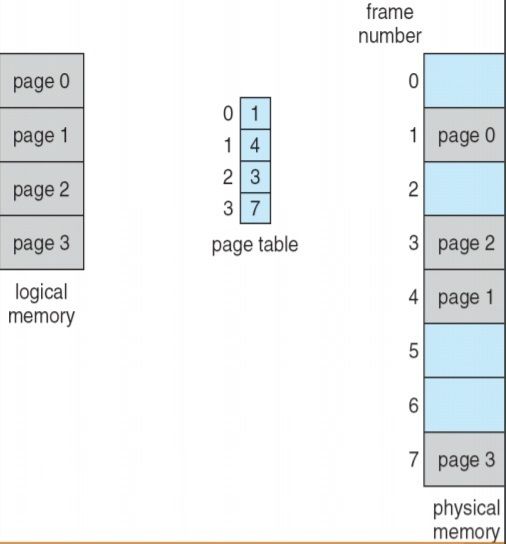
- Physical address space of a process can be non-contiguous
- Process allocated physical memory whenever the latter is available
- Method:
- 1. Divided phy. memory into fixed-sized blocks called Frames
- Size is power of 2, e.g. 512 bytes
- 2. Divide logical memory into blocks of same size, called Pages
- 3. Page table set up to translate logical to physical
- Address Translation Scheme
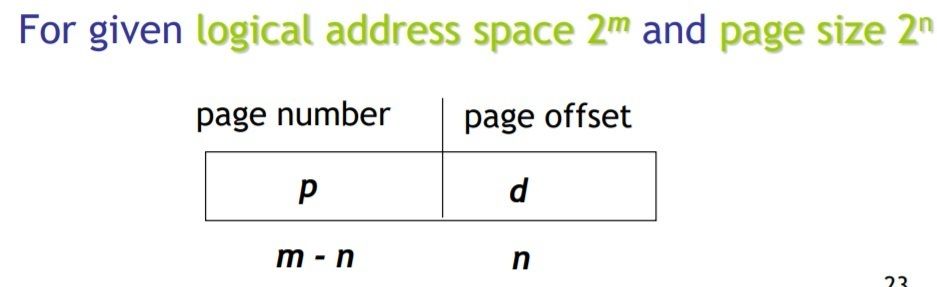
- Page Number
- Index into a page table containing base address of each page in physical memory
- Page Offset
- Combined with base adress to define physical memory address its been sent to
- Page Number
- Page Table
- Page-table base register
- Points to table
- Page-table length register
- Indicates size of page table
- 2 memory accesses - page table, and data/instruction
- Page-table base register
- Hierarchical page tables
- Contiguous memory can be wasteful for large tables e.g. 4MB
- Divide up page table - Multi-level paging
- Contiguous memory can be wasteful for large tables e.g. 4MB
- Address Translation Scheme
- 1. Divided phy. memory into fixed-sized blocks called Frames
- Effective Access Time and Memory Protection
- Effective Access Time
- EAT = (hit ratio x hit time) + ((1 - hit ratio) x miss time)
- Memory Protection
- Protection bit added to each frame
- Valid-invalid bit attached to each entry in page table
- 'Valid' indicated page is in process' logical address space
- Effective Access Time
- Physical address space of a process can be non-contiguous
- Segmentation
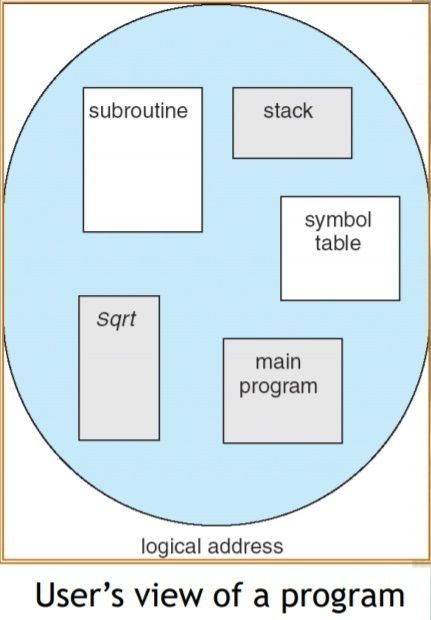
- A program is a collection of segments
- Segment is a logical unit e.e.g object, stack, table etc.
- Each segment s given a region of contiguous memory
- Segment Table
- Has a base (STBR) and limit (STLR)
- Supports user view of memory
- Contiguous Allocation
- Methods include contiguous allocation, paging, segmentation
- The relocation register value is added to every address generated by a user process
- A user program only deals with logical addresses - Never sees physical addresses
- Maps virtual to physical address at RUN-TIME
- Logical Address
Bilder und Dateien der Mindmap
Informationen
- Beschreibung
- Computer Science Mindmap am Main Memory, erstellt von Alex Bernini am 25/04/2019.
- Erstellt von
- Alex Bernini
- Aufrufe
- 1
- Bewertung