
Mindmap
Genetics
Inhalt der Mindmap
Genetics
Cell Division
- Meiosis
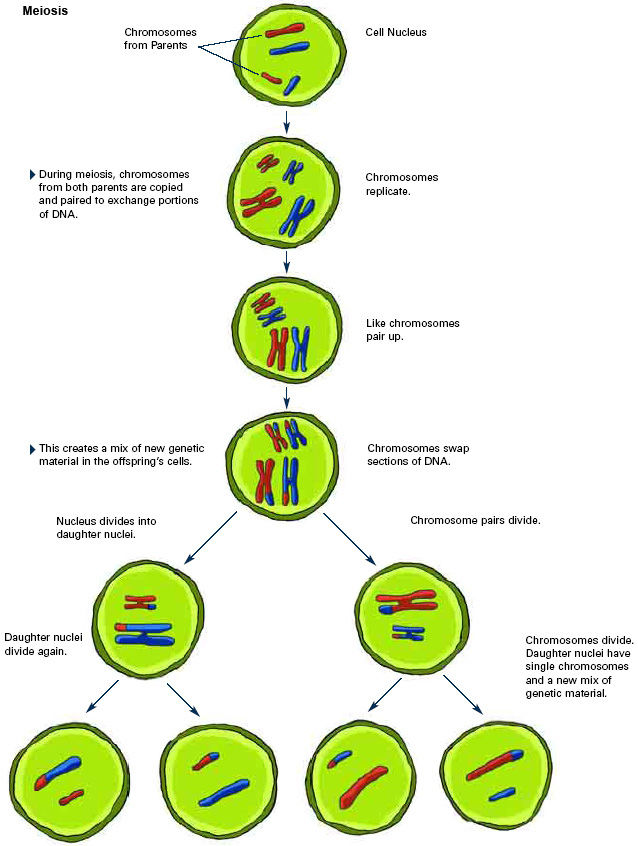
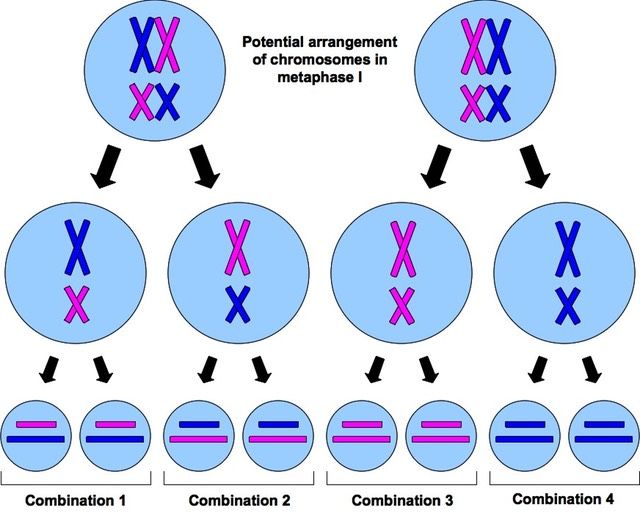
- Process: 1. DNA replication occurs and then it condenses into chromosomes 2. Nuclear membrane disappears 3. Homologous chromosomes line up on the cell equator randomly (INDEPENDENT ASSORTMENT) 4. Sections of DNA are exchanged between homologous chromosomes (CROSSING OVER) 5. Spindle fibres pull apart chromosomes to either side of the cell 6. First cell division 7. Chromosomes then line up single file on the cell equator 8. Spindle Fibres pull apart the chromatids to either side of the equator 9. Second cell division 10. Nuclear membrane forms around the chromosomes
- Purpose: To create 4 genetically unique gametes(sex chromosomes) for sexual reproduction. Two gametes fertilise to form a zygote which grows to produce a new organism. This continues the survival of a species. Where: Gonads - Testes/Ovaries When: Females - before birth, Males - All the time
- Mitosis
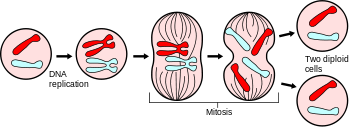
- Process: 1. DNA Replication and then DNA condenses into chromosomes 2. Nuclear Membrane diappears 3. Chromosomes line up single file on the cell equator 4. Spindle fibres pull apart the chromatids to either side of the cell 5. Cell divides 6. Fibre network retracts, nuclear membrane forms 7. 2 identical daughter cells are formed
- Purpose: To produce two genetically identical daughter cells for an organism to grow and to replace old/damaged cells for repair. Where: Everywhere in your body excepts gonads When: All the time
- Meiosis
DNA Structure
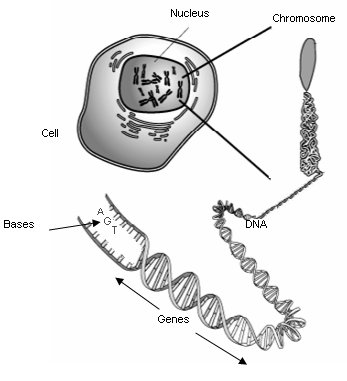
- Relationship between DNA, Alleles, Genes, Chromosomes
- Gene
- A section of DNA that codes for a particular protein/characteristic/trait
- Allele
- An alternative form of a gene that is caused by a slight change in the base sequence of DNA
- Chromosome
- A thread-like structure made up of condensed DNA
- DNA
- DNA is a double helix biological molecule that carries all the genetic information for the makeup and function of an organism.
- Gene
- Protein to Physical Characteristic
- Three nucleotides (bases) in a row of DNA are called a triplet and carry the code for an amino acid. Amino acids are connected together by peptide bonds. A long chain of these are called polypeptide chains. When these are fold into a specific shape, it forms a protein. Proteins are important biological molecules that carry out a number of vital biochemical functions. These functions include the appearance of certain features. For example...
- Nucleotides
- Made up of base, sugar, phosphate. adenine + thymine guanine + cytosine
- Protein
- Are important biological molecules used for vital biochemical functions
- DNA Replication
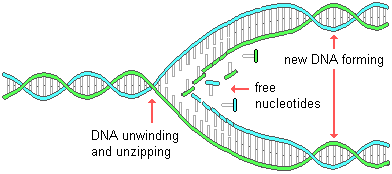
- Process: 1. Enzymes breakdown the bond between the nucleotides and the double helix structure unwinds 2. New nucleotides are brought in to bond with the original DNA according to the 'complementary base pairing' rule. 3. Enzymes connect the nucleotides together through hydrogen bonds 4. The DNA strands coil up to the double helix structure and two new molecules of DNA have been formed. Both are exact copies of the original DNA This process is known as conservative DNA duplication because one half of the new DNA molecule is an intact strand of the old DNA
- Relationship between DNA, Alleles, Genes, Chromosomes
Inheritance
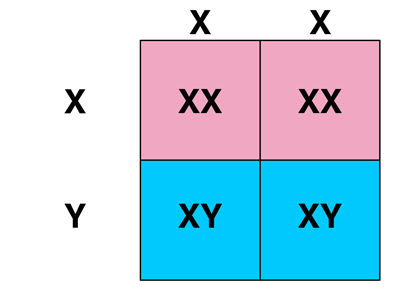
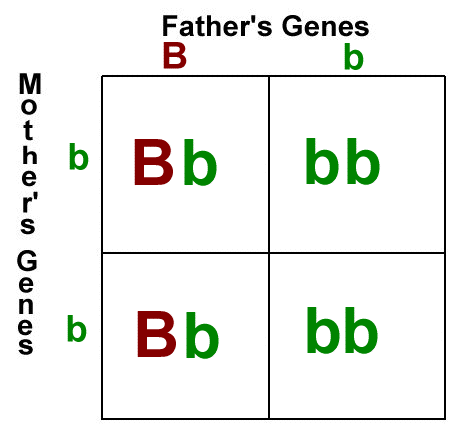
- Punnet Squares
- Test Cross
- A test Cross involves mating the individual in questions with another individual which is homologous recessive for the same condition. This is to test whether the individual in question is pure bred or not.
- Exam Important Points: Importance of large sample size importance of using an individual which is homologous recessive
- Purebreeding
- An individual is purebreeding for a trait if it is homologous for the gene that controls the trait.
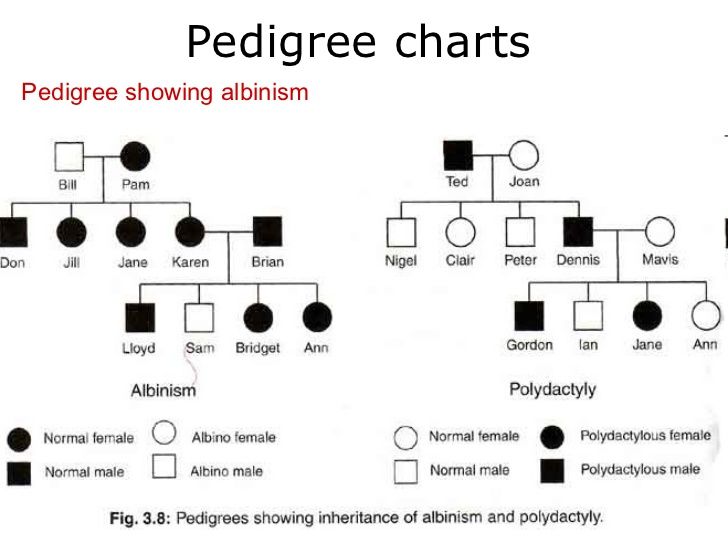
- Pedigree Charts
- Sex Determintaion
- Phenotype
- Is the observable physical characteristic that appears as a result of the interaction between the genotype and environmnent
- Genotype
- Is the combination of alleles you inherit from your parents.
Reproduction
- Sexual Reproduction
- Advantages
- Disadvantages
- Asexual Reproduction
- Advantages
- Disadvantages
- Sexual Reproduction
Variation
- Mutations - Forming new Alleles
- Mutations are permanent changes in the base sequence of DNA caused by errors in DNA replication during cell divisions and mutagens.
- Mutagens are ...
- Types of Mutations
- Gametic
- Gametic Mutations occur in the formation of gametes in meiosis. It is caused by errors in DNA replication before Meiosis. These types of mutations can be inherited because these cells, gametes, are used for sexual reproduction. Therefore they can be inherited/passed on.
- Somatic
- Somatic Mutations occur in the formation of somatic cells during Mitosis. They are cause by errors in DNA replication. These types of mutations are not inherited/passed on because these cells aren't used for sexual reproduction.
- Gametic
- Crossing Over
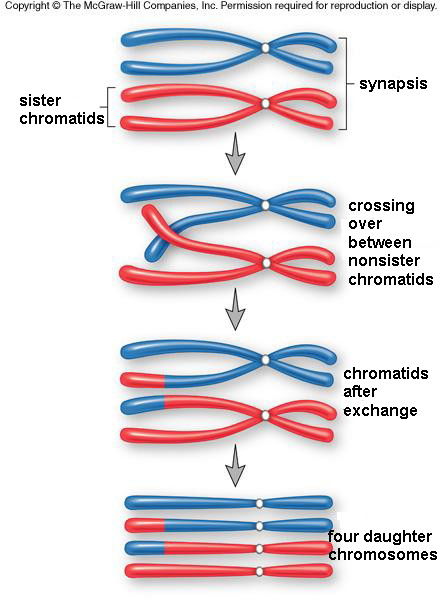
- Crossing Over occurs in the first cell division of meiosis. After the homologous chromosomes line up on the cell equator during Independent Assortment, sections of DNA are exchanged between these homologous chromosomes. This results in a genetically unique combination of alleles in each gamete formed.
- Independent Assortment
- Independent Assortment occurs in the first cell division of meiosis. When homologous chromosomes line up on the cell equator, they do so randomly. This results in a genetically unique combination of chromatids in each gamete formed.
- Random Fertilisation
- It is completely random which male gamete fertilises which female gamete. Even if a male gamete reaches the female gamete first, it may not necessarily be the one to fertilise it.
- Importance of Variation in Survival
- Effect of Environment on Phenotype
- Mutations - Forming new Alleles
Bilder und Dateien der Mindmap
Informationen
- Beschreibung
- Mindmap am Genetics, erstellt von Brooke Clark am 27/10/2015.
- Erstellt von
- Brooke Clark
- Aufrufe
- 1
- Bewertung