
Mindmap
1_Materials versión Jhon
Inhalt der Mindmap
1_Materials versión Jhon
‘Materials development’ refers to all the processes made use of by practitioners who produce and/or use materials for language learning, including materials evaluation, their adaptation,, design, production, exploitation and research
History of publications on materials development
- Madsen & Bowen (1978) and Swales (1980), and Candlin & Breen
- Books and papers asserted that the good teacher is constantly adapting materials. Some others about evaluating and designing materials
- Cunningsworth (1984) exemplified methods and approaches by quoting extracts from coursebooks. Other principles from coursebooks were Dubin & Olshtain’s (1986) book on course design and Grant’s (1987)
- journals with articles in the 70's and the 80's. In the 90's Byrd (1995), Cunningsworth (1995), Graves (1996) and Tomlinson (1998) worked on guides for materials writers, books, procedures, papers at conferences
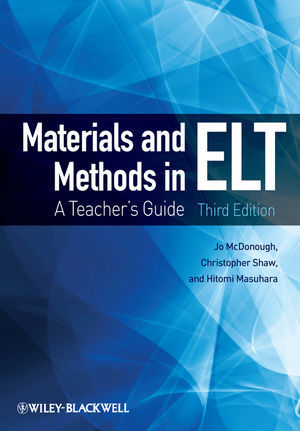
- samples of existing materials McDonough & Shaw (1998, 2003) McDonough, Shaw & Masuhara (2012).
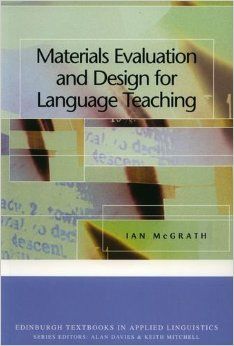
- in the 2000s Fenner & Newby (2000) Richards (2001) McGrath (2002) (Tomlinson 2003 about design, curriculum, evaluation
- Tomlinson & Masuhara (2004), focusing on issues of materials development and attracting large numbers of practitioners from all over South-East Asia
- Tomlinson (2007) (2008) applications of theories to materials development. Research on recasts, on visual imaging, on the use of the inner voice and on comprehension approaches
- Harwood (2010a) explores a genre-based approach to developing materials for writing, reading, and designing materials for community-based adult ESL programs.
- Tomlinson & Masuhara (2010), (2011), (2012), Gray (2010) writing skills, and process drama and problem-solving approaches, textbook development, tasks and new technologies
- Most recent publication of Tomlinson & Masuhara (2012) about applied linguistics
- Tomlinson & Masuhara (2010), (2011), (2012), Gray (2010) writing skills, and process drama and problem-solving approaches, textbook development, tasks and new technologies
- Harwood (2010a) explores a genre-based approach to developing materials for writing, reading, and designing materials for community-based adult ESL programs.
- Tomlinson (2007) (2008) applications of theories to materials development. Research on recasts, on visual imaging, on the use of the inner voice and on comprehension approaches
- Tomlinson & Masuhara (2004), focusing on issues of materials development and attracting large numbers of practitioners from all over South-East Asia
- in the 2000s Fenner & Newby (2000) Richards (2001) McGrath (2002) (Tomlinson 2003 about design, curriculum, evaluation
- samples of existing materials McDonough & Shaw (1998, 2003) McDonough, Shaw & Masuhara (2012).
- journals with articles in the 70's and the 80's. In the 90's Byrd (1995), Cunningsworth (1995), Graves (1996) and Tomlinson (1998) worked on guides for materials writers, books, procedures, papers at conferences
- Cunningsworth (1984) exemplified methods and approaches by quoting extracts from coursebooks. Other principles from coursebooks were Dubin & Olshtain’s (1986) book on course design and Grant’s (1987)
- Books and papers asserted that the good teacher is constantly adapting materials. Some others about evaluating and designing materials
- Madsen & Bowen (1978) and Swales (1980), and Candlin & Breen
Materials evaluation
- Establishing criteria and developing evaluation instruments
- Tucker (1975) proposed a four-component scheme for measuring the internal and external value of beginners’ textbooks, Davison (1976) proposed a five-category scheme for the evaluation and selection of textbooks and Dauod & Celce-Murcia (1979) provided checklists of criteria for evaluating coursebooks.
- Candlin & Breen (1980) evaluating materials. Rivers (1981) provided categories and criteria for evaluating materials. Some others that wrote about it:
- Mariani (1983) evaluation and supplementation, Williams (1983) textbook evaluation and Cunningsworth (1984) evaluation criteria ‘for evaluating teaching material’ (p. 74).
- Breen & Candlin (1987) published a guide for evaluators and producers and Sheldon (1987, 1988) suggested criteria for evaluation in textbook . Skierso (1991) the most comprehensive checklist of criteria by combining checklists from various sources.
- Cunningsworth (1995), Harmer (1991, 1998), Roberts (1996), Ur (1996), Brown (1997), Hemsley (1997) and Gearing (1999) proposed checklists for evaluating. Matthews (1985) specification of the teaching situation, Cunningsworth (1995) criteria to the target learners and Byrd (2001) conection between textbook and the curriculum, students and teachers.
- Tomlinson & Masuhara (2004: 7) proposed questions for evaluating criteria such as: appropiate of an evaluation, asking one question, freedom of dogma, reliability.
- Very few of the lists of criteria proposed in the literature satisfy these conditions, and most of them are not generalisable or transferable. For example: a) ‘Are there any materials for testing?’ (Cunningsworth 1984) is an analysis question in the same checklist as evaluation questions such as ‘Are the learning activities in the course material likely to appeal to the learners...?’ b) ‘Is it attractive? Given the average age of your students, would they enjoy using it?’ (Grant 1987: 122) combines two questions in one criterion.
- c) ‘Does the writer use current everyday language, and sentence structures that follow normal word order?’ (Daoud & Celce-Murcia 1979: 304) contains two questions and both are unanswerable without a data analysis of both a corpus of current language and the complete script of the materials. ‘To what extent is the level of abstractness appropriate?’ (Skierso 1991: 446) is another example of a criterion which is too broad and vague to be answerable.
- d) ‘Are the various stages in a teaching unit (what you would probably call presentation, practice and production) adequately developed?’ (Mariani 1983: 29) is dogmatic in insisting on the use of a Presentation Practice Production (PPP) approach.
- e) ‘Is it foolproof (i.e. sufficiently methodical to guide the inexperienced teacher through a lesson)?’ (Dougill 1987: 32) is unreliable in that it can be interpreted in different ways by different evaluators.
- d) ‘Are the various stages in a teaching unit (what you would probably call presentation, practice and production) adequately developed?’ (Mariani 1983: 29) is dogmatic in insisting on the use of a Presentation Practice Production (PPP) approach.
- c) ‘Does the writer use current everyday language, and sentence structures that follow normal word order?’ (Daoud & Celce-Murcia 1979: 304) contains two questions and both are unanswerable without a data analysis of both a corpus of current language and the complete script of the materials. ‘To what extent is the level of abstractness appropriate?’ (Skierso 1991: 446) is another example of a criterion which is too broad and vague to be answerable.
- Very few of the lists of criteria proposed in the literature satisfy these conditions, and most of them are not generalisable or transferable. For example: a) ‘Are there any materials for testing?’ (Cunningsworth 1984) is an analysis question in the same checklist as evaluation questions such as ‘Are the learning activities in the course material likely to appeal to the learners...?’ b) ‘Is it attractive? Given the average age of your students, would they enjoy using it?’ (Grant 1987: 122) combines two questions in one criterion.
- Tomlinson & Masuhara (2004: 7) proposed questions for evaluating criteria such as: appropiate of an evaluation, asking one question, freedom of dogma, reliability.
- Cunningsworth (1995), Harmer (1991, 1998), Roberts (1996), Ur (1996), Brown (1997), Hemsley (1997) and Gearing (1999) proposed checklists for evaluating. Matthews (1985) specification of the teaching situation, Cunningsworth (1995) criteria to the target learners and Byrd (2001) conection between textbook and the curriculum, students and teachers.
- Breen & Candlin (1987) published a guide for evaluators and producers and Sheldon (1987, 1988) suggested criteria for evaluation in textbook . Skierso (1991) the most comprehensive checklist of criteria by combining checklists from various sources.
- Mariani (1983) evaluation and supplementation, Williams (1983) textbook evaluation and Cunningsworth (1984) evaluation criteria ‘for evaluating teaching material’ (p. 74).
- Candlin & Breen (1980) evaluating materials. Rivers (1981) provided categories and criteria for evaluating materials. Some others that wrote about it:
- Tucker (1975) proposed a four-component scheme for measuring the internal and external value of beginners’ textbooks, Davison (1976) proposed a five-category scheme for the evaluation and selection of textbooks and Dauod & Celce-Murcia (1979) provided checklists of criteria for evaluating coursebooks.
- Establishing criteria and developing evaluation instruments
Materials adaptation
Materials production
Materials exploitation
Issues in materials development
Materials development projects
Research in materials development
Conclusion
Bilder und Dateien der Mindmap
Informationen
- Beschreibung
- Materials can be informative (informing the learner about the target language), instructional (guiding the learner in practising the language), experiential (providing the learner with experience of the language in use), eliciting (encouraging the learner to use the language) and exploratory (helping the learner to make discoveries about the language).
- Erstellt von
- vejhama
- Aufrufe
- 0
- Tags
- Verlauf
-
- Erstellt von vejhama · 29 Feb 2016
- Kopiert von vejhama · 29 Feb 2016
- Kopiert von vejhama · 29 Feb 2016
- Bewertung