
Mindmap
Zermatt
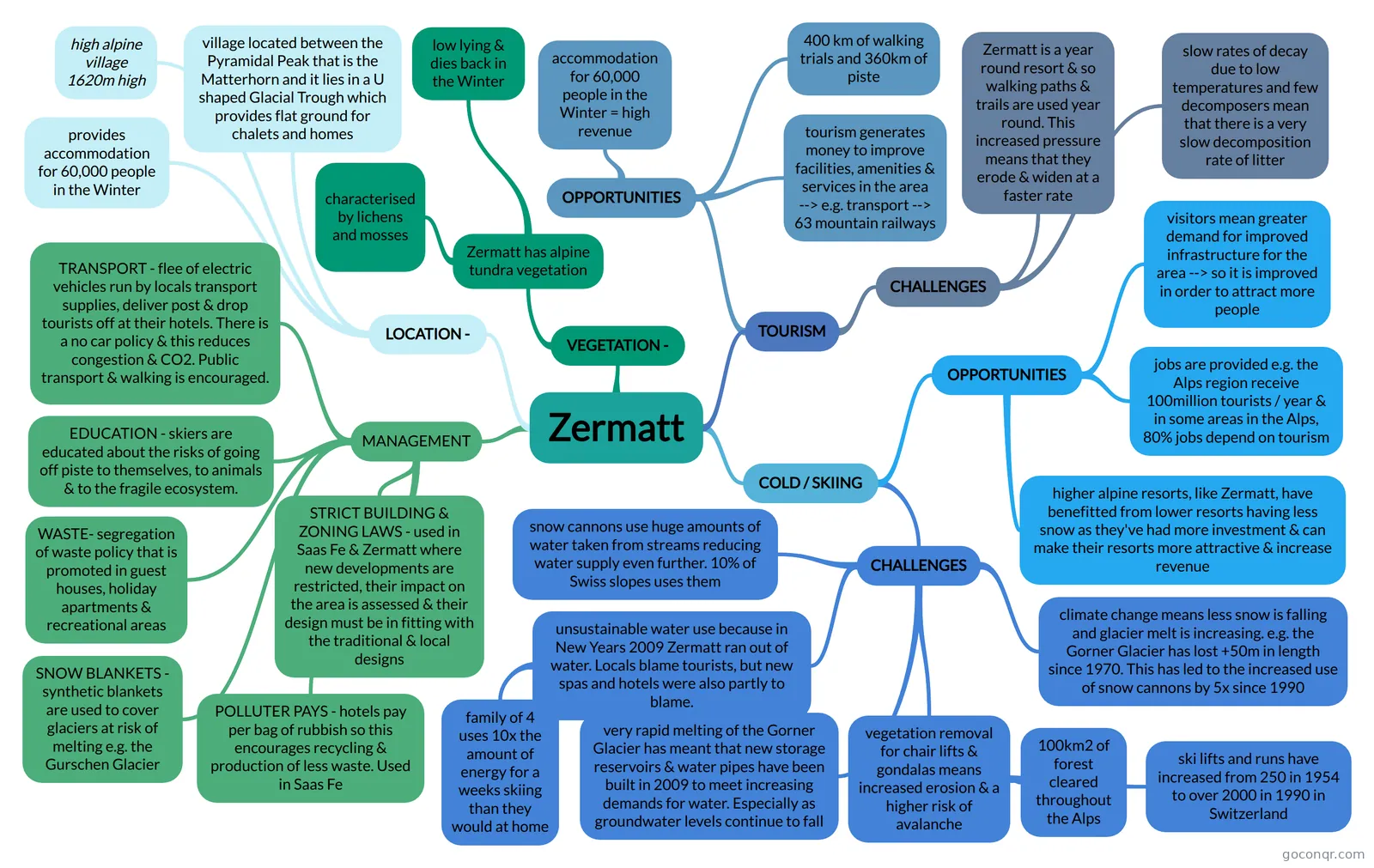
Mind map: Zermatt case study
Inhalt der Mindmap
Zermatt
LOCATION -
- high alpine village 1620m high
- provides accommodation for 60,000 people in the Winter
- village located between the Pyramidal Peak that is the Matterhorn and it lies in a U shaped Glacial Trough which provides flat ground for chalets and homes
VEGETATION -
- Zermatt has alpine tundra vegetation
- characterised by lichens and mosses
- low lying & dies back in the Winter
- Zermatt has alpine tundra vegetation
TOURISM
- OPPORTUNITIES
- accommodation for 60,000 people in the Winter = high revenue
- 400 km of walking trials and 360km of piste
- tourism generates money to improve facilities, amenities & services in the area --> e.g. transport --> 63 mountain railways
- CHALLENGES
- Zermatt is a year round resort & so walking paths & trails are used year round. This increased pressure means that they erode & widen at a faster rate
- slow rates of decay due to low temperatures and few decomposers mean that there is a very slow decomposition rate of litter
- OPPORTUNITIES
COLD / SKIING
- OPPORTUNITIES
- jobs are provided e.g. the Alps region receive 100million tourists / year & in some areas in the Alps, 80% jobs depend on tourism
- visitors mean greater demand for improved infrastructure for the area --> so it is improved in order to attract more people
- higher alpine resorts, like Zermatt, have benefitted from lower resorts having less snow as they've had more investment & can make their resorts more attractive & increase revenue
- CHALLENGES
- climate change means less snow is falling and glacier melt is increasing. e.g. the Gorner Glacier has lost +50m in length since 1970. This has led to the increased use of snow cannons by 5x since 1990
- vegetation removal for chair lifts & gondalas means increased erosion & a higher risk of avalanche
- ski lifts and runs have increased from 250 in 1954 to over 2000 in 1990 in Switzerland
- 100km2 of forest cleared throughout the Alps
- very rapid melting of the Gorner Glacier has meant that new storage reservoirs & water pipes have been built in 2009 to meet increasing demands for water. Especially as groundwater levels continue to fall
- snow cannons use huge amounts of water taken from streams reducing water supply even further. 10% of Swiss slopes uses them
- unsustainable water use because in New Years 2009 Zermatt ran out of water. Locals blame tourists, but new spas and hotels were also partly to blame.
- family of 4 uses 10x the amount of energy for a weeks skiing than they would at home
- OPPORTUNITIES
MANAGEMENT
- TRANSPORT - flee of electric vehicles run by locals transport supplies, deliver post & drop tourists off at their hotels. There is a no car policy & this reduces congestion & CO2. Public transport & walking is encouraged.
- EDUCATION - skiers are educated about the risks of going off piste to themselves, to animals & to the fragile ecosystem.
- WASTE- segregation of waste policy that is promoted in guest houses, holiday apartments & recreational areas
- SNOW BLANKETS - synthetic blankets are used to cover glaciers at risk of melting e.g. the Gurschen Glacier
- POLLUTER PAYS - hotels pay per bag of rubbish so this encourages recycling & production of less waste. Used in Saas Fe
- STRICT BUILDING & ZONING LAWS - used in Saas Fe & Zermatt where new developments are restricted, their impact on the area is assessed & their design must be in fitting with the traditional & local designs
Informationen
- Beschreibung
- Mindmap am Zermatt, erstellt von Liv Pearce am 13/05/2016.
- Erstellt von
- Liv Pearce
- Aufrufe
- 35
- Tags
- Bewertung