
Mindmap
LEARNING ENVIRONMENTS
Inhalt der Mindmap
LEARNING ENVIRONMENTS
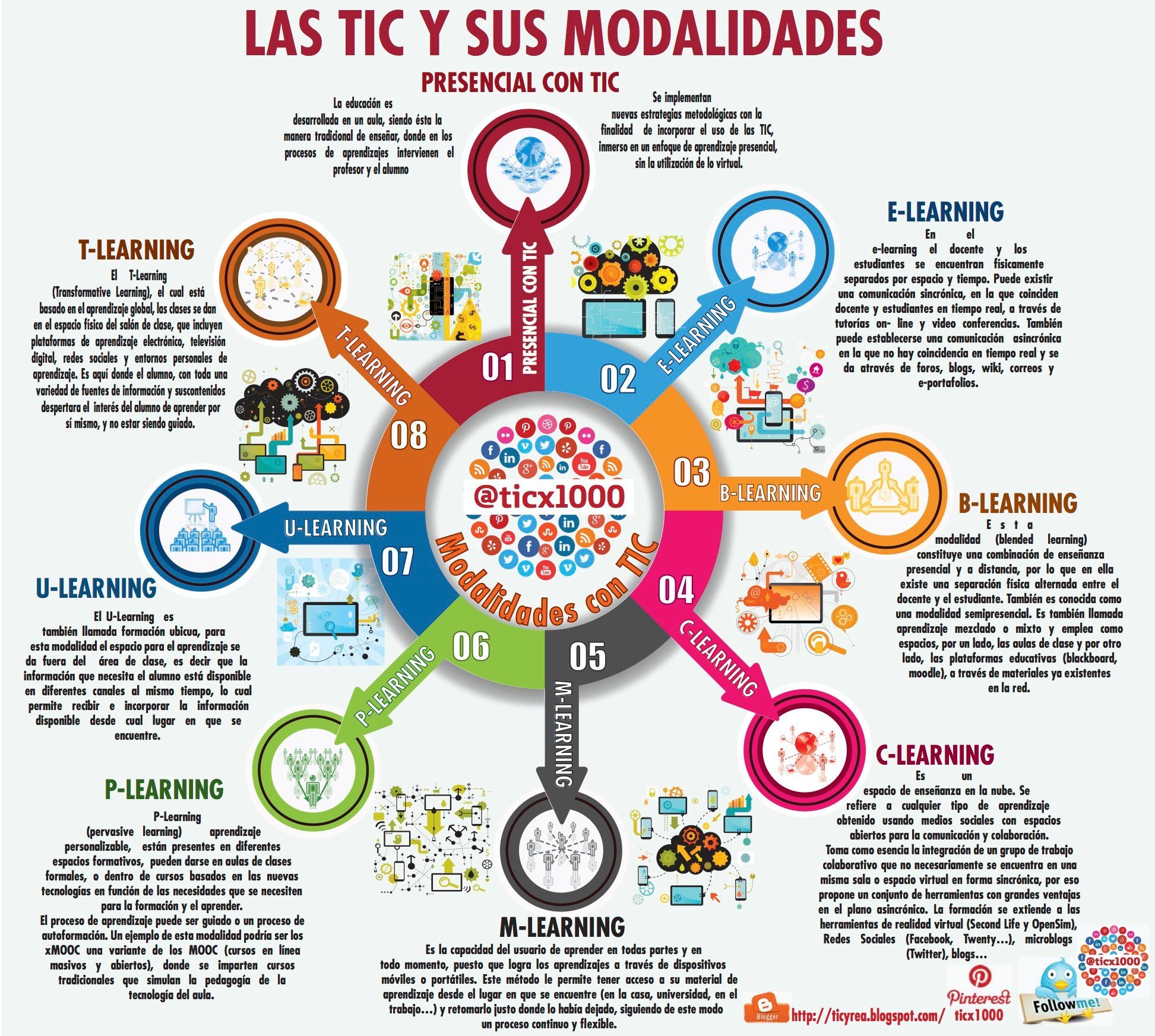
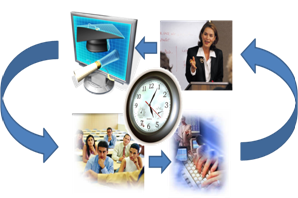
E-LEARNING Is electronic learning, and typically this means using a computer to deliver part, or all of a course whether it's in a school, part of your mandatory business training or a full distance learning course.
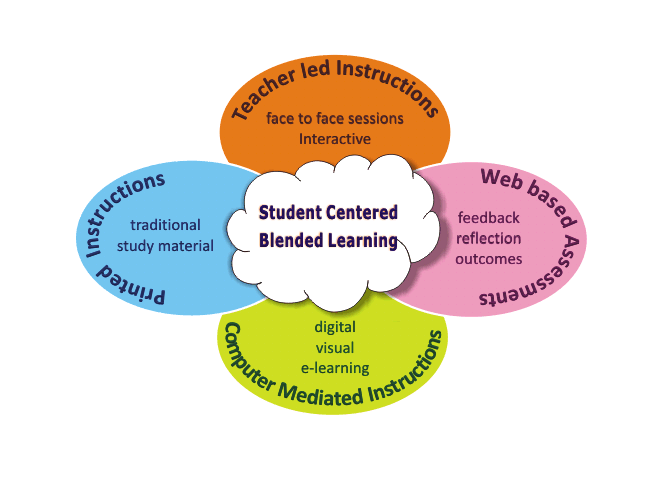
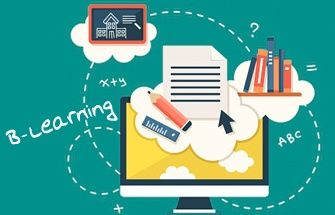
- B-LEARNING: blended learning has inspired educators to redefine traditional roles. The word “facilitator” has emerged as an alternative to “teacher,” bringing with it a slightly different focus. The facilitator places an emphasis on empowering students with the skills and knowledge required to make the most of the online material and independent study time, guiding students toward the most meaningful experience possible.
- C-LEARNING: refers to any type of learning obtained using social media (or virtual classrooms) that allow a horizontal form of community work, with open spaces for communication and collaboration. Open spaces to which it refers may be subject to certain restrictions (working groups on a particular topic, or private courses open to participants -a limit themselves sometimes require accommodation it-, dialogue teams, cloisters center in constant communication, among others).
- M-LEARNING: Include handheld computers, MP3 players, notebooks, mobile phones and tablets. M-learning focuses on the mobility of the learner, interacting with portable technologies. Using mobile tools for creating learning aids and materials becomes an important part of informal learning. is defined as "learning across multiple contexts, through social ... It can also be of value to business people, e.g. sales representatives who do not wish ... including learning for, at and through work, by means of mobile devices"
- P-LEARNING: Group of educators that meets regularly, shares expertise, and works collaboratively to improve teaching skills and the academic performance of students. The term is also applied to schools or teaching faculties that use small-group collaboration as a form of professional development. Shirley Hord, an expert on school leadership, came up with perhaps the most efficient description of the strategy: “The three words explain the concept: Professionals coming together in a group—a community—to learn.”
- U-LEARNING: According to the Ubiquitous Learning Institute at the University of Illinois, the overwhelming presence of things such as smart phones, portable computers, and other computer-like devices, provides the most tangible and practical way for learning to become ubiquitous, "existing or being everywhere at the same time :constantly encountered."
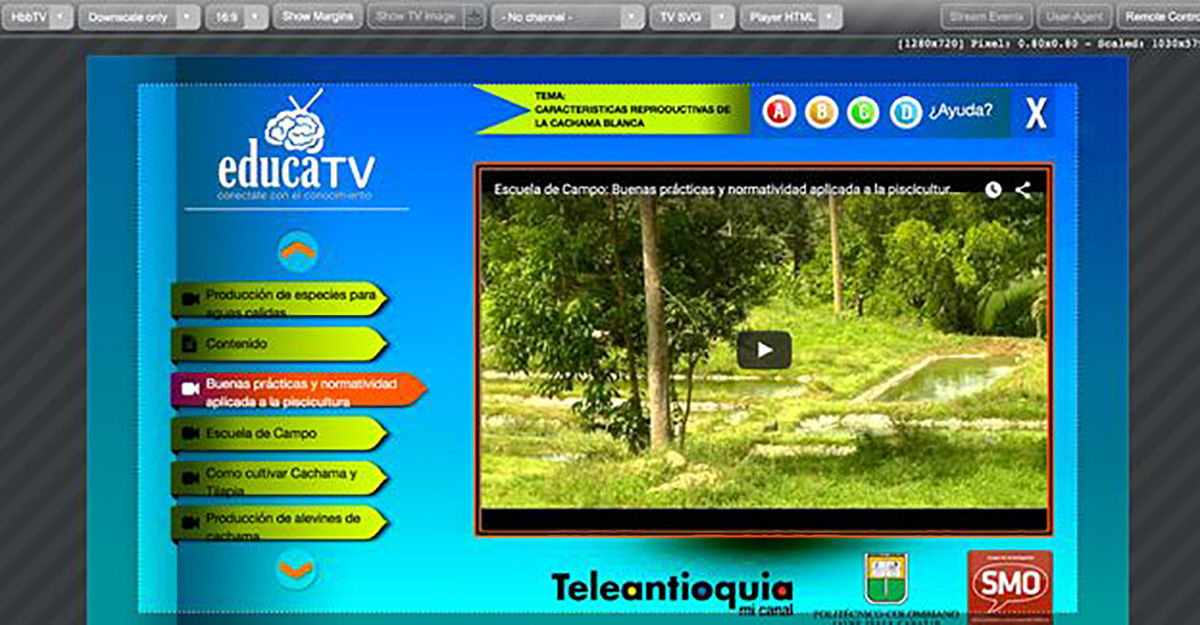
- T-LEARNING: 1. Learning through TV. Learn more in: Interactive Television Research Opportunities 2. Term that defines the TV-based interactive learning. Learn more in: T-Learning Technologies 3. T-learning is a distance learning approach based on accessing interactive educational material of a predominantly audiovisual nature, primarily within the home and using devices that bear usage habits similar to those of watching television.
- U-LEARNING: According to the Ubiquitous Learning Institute at the University of Illinois, the overwhelming presence of things such as smart phones, portable computers, and other computer-like devices, provides the most tangible and practical way for learning to become ubiquitous, "existing or being everywhere at the same time :constantly encountered."
- P-LEARNING: Group of educators that meets regularly, shares expertise, and works collaboratively to improve teaching skills and the academic performance of students. The term is also applied to schools or teaching faculties that use small-group collaboration as a form of professional development. Shirley Hord, an expert on school leadership, came up with perhaps the most efficient description of the strategy: “The three words explain the concept: Professionals coming together in a group—a community—to learn.”
- M-LEARNING: Include handheld computers, MP3 players, notebooks, mobile phones and tablets. M-learning focuses on the mobility of the learner, interacting with portable technologies. Using mobile tools for creating learning aids and materials becomes an important part of informal learning. is defined as "learning across multiple contexts, through social ... It can also be of value to business people, e.g. sales representatives who do not wish ... including learning for, at and through work, by means of mobile devices"
- C-LEARNING: refers to any type of learning obtained using social media (or virtual classrooms) that allow a horizontal form of community work, with open spaces for communication and collaboration. Open spaces to which it refers may be subject to certain restrictions (working groups on a particular topic, or private courses open to participants -a limit themselves sometimes require accommodation it-, dialogue teams, cloisters center in constant communication, among others).
- B-LEARNING: blended learning has inspired educators to redefine traditional roles. The word “facilitator” has emerged as an alternative to “teacher,” bringing with it a slightly different focus. The facilitator places an emphasis on empowering students with the skills and knowledge required to make the most of the online material and independent study time, guiding students toward the most meaningful experience possible.
Bilder und Dateien der Mindmap




Informationen
- Beschreibung
- Learning takes place in multiple settings and the learning environment can be structured or unstructured and the learning in different environments can complement each other. Formal and non-formal education occurs mainly in structured environments in the form of institutions (schools, community centers, multimedia centers, learning villages/cities, etc.). Informal education on the other hand takes place in both structured and unstructured environments. This Analytical Tool focuses on structured.
- Erstellt von
- Sonia Reyes
- Aufrufe
- 81
- Tags
- Bewertung