
Mindmap
Homeostasis & Response
Inhalt der Mindmap
Homeostasis & Response
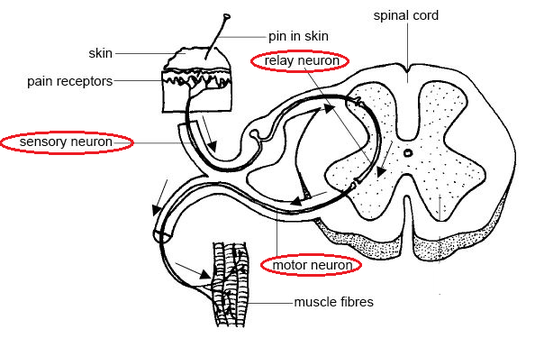
Nervous System
- Electrical Impulses along neurones
- Stimulus
- Change that causes a response
- Sense Organs
- Sensetive to stimuli
- Cluster of receptor cells
- Reflexes
- Automatic
- Rapid
- Protects body from harm
- Basic body functions
- ie. breathing
- Sequences
- Stimulus => Receptor => Coordinator => Motor neurone => Effector => Response
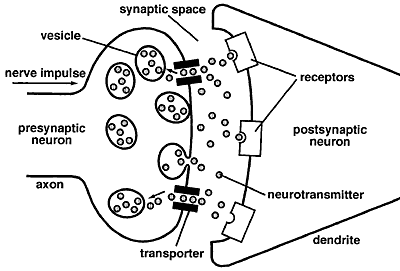
- Synapses
- Junction between 1 neurone and another
- ie. Sensory => Motor
- Junction between 1 neurone and another
Endocrine System
- Homeostasis
- Maintanence of a constant internal organism.
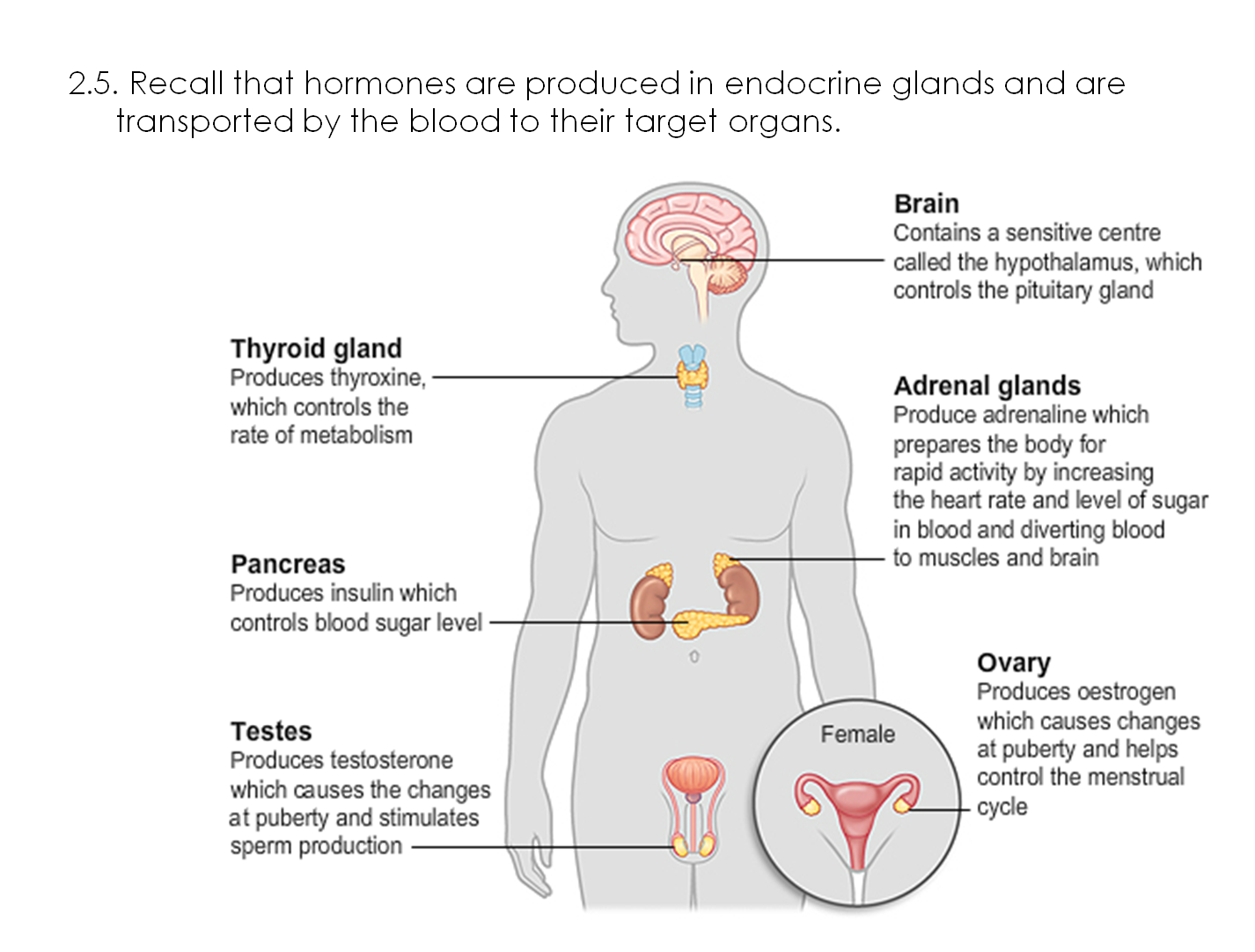
- Hormones
- Chemical substances secreted by glands
- Pituitary gland
- Master gland
- ADH - urine produced by kidneys
- FSH - Follicle Stimulating Hormone - Stimulates ovaries to make Oestrogen
- Egg to mature
- TSH - stimulates thyroid gland to make thyroxine
- LH - Lutenising Hormone - stimulates eggs release
- Thyroid Gland
- Thyroxin
- Regulates metabolism
- Thyroxin
- Adrenal gland
- Adrenaline - fight or flight
- Ovaries
- Oestrogen - Growth + Repair of Uterus wall
- Progesterone - Maintains thickness of Uterus wall
- Testes
- Testerone
- Homeostasis
The Brain
- controls behaviour
- Cerebral Cortex
- Consciousness
- Memory
- Balance
- Intelligence
- Cerebellum
- Coordinating muscular activity
- Balance
- Medulla
- Unconscious Activity
- Heart rate
- Gut movements
- Breathing
- Unconscious Activity
- Hypothalamus
- Controls body temperature
- Studying Brain Damage
- People suffering from damage can be used to map the brain's behavior
- Electrically Stimulating parts of the brain
- Remove top of Skulls
- See effect
- MRI scans
- Brain tumour will affect behaviour
- MRI scan shows where the affected area is
- Brain tumour will affect behaviour
- Brain Tumours
- Conscious patients
- No Nerve endings
- Conscious patients
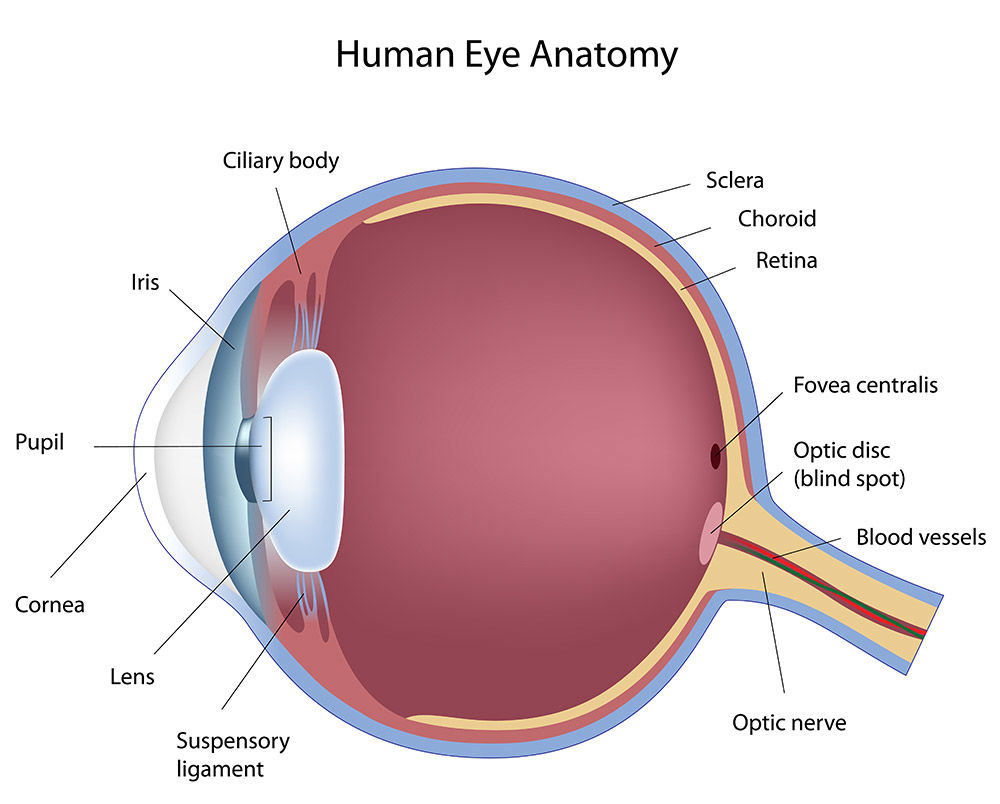
The Eye
- Sense Organ
- Cornea
- Shields the eye from bacteria & Protects front of eye
- Iris
- Controls amountof light entering the eye via pupil
- Dilated pupil
- Circular muscles relaxes
- Radial Muscle contracts
- Pupils constricts
- Circular muscles contracts
- Radial Muscle contracts
- Lens
- Focuses light rays
- Produces image on Retina
- Retina
- Layer of light Sensitive Lights
- Converts light to neural signals
- Optic Nerve
- Transfers visual info => brain
- Sensory Neurones
- Sclera
- Tough / Fibrous
- Resistant to squashing
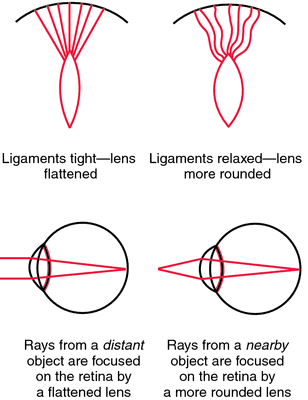
- Ciliary Muscles + Suspensory Ligiment
- Controls shape of lens
- Binocular / Monocular Vision
- Binocular
- Two eyes
- Overlapping fields
- Good depth perception
- Smaller field of view
- Two eyes
- Monocular
- Two eyes used seperately
- Limited depth perception
- Large field of view
- Binocular
- Accomodation
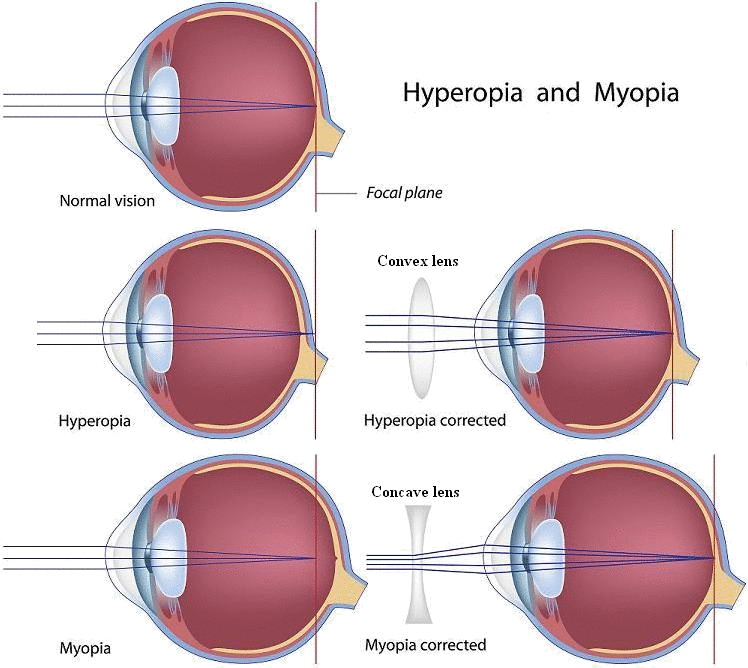
- Vision Problems
- Myopia
- Short Sighted
- Distant objects = blurry
- Hyperopia
- Near objects = blurry
- Long Sighted
- Myopia
Controlling body temperature
- Controlled by thermoregulatory centre in brain
- Hypothalamus
- Hot
- Vasodilation
- Arterioles dilate so more blood enters and more heat is lost
- Sweat
- Sudorific glands remove heat when water changes state
- Pilorelaxation
- Hairs flatten
- Stretching out
- Larger SA
- Vasodilation
- Cold
- Vasoconstriction
- Arterioles get smaller so less blood enter and less heat is lost
- Shivering
- Rapid contraction & Relaxation
- Heat from respiration
- Rapid contraction & Relaxation
- Piloerection
- Hairs on skin stand up
- Curling up
- Smaller SA
- Vasoconstriction
- Controlled by thermoregulatory centre in brain
Controlling Blood Glucose levels
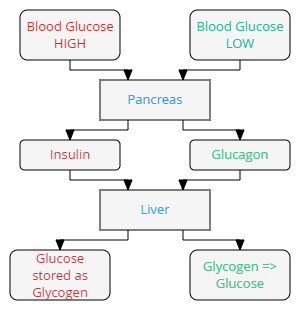
- Blood glucose % monitored by pancreas
- Diabetes
- Cannot control levels of blood glucose
- Type 1
- Treated by daily insulin injections
- Can not be given in tablet form as it would be digested
- Live normal lives
- Genetic problem
- Treated by daily insulin injections
- Type 2
- Links to
- Old age
- Obesity
- Lack of excersise
- Treated by
- Balanced diet
- Losing weight
- Regular excersise
- Otherwise drugs that
- Insulin work better on the body
- Pancreas make more Insulin
- Reduce amount of glucose you absorb
- Links to
Maintaining water + Nitrogen Balance
- Osmoregulation
- Regulating aount of water in the body
- Nitrogen
- Manufacture of proteins
- Removed by Urea
- Filtered from Kidneys + expelled in urine
- Kidneys
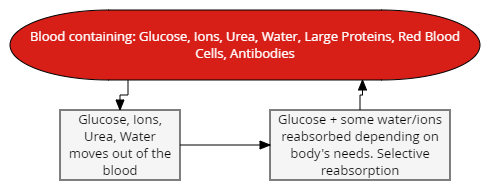
- Filter blood to clean it
- Blood passes once every 5 minutes
- Selective Reabsorption
- Too concentrated = ADH produced
- Tiny tubules
- More ADH = More water absorbed
- Receptor Cells detect concs of solutes in the blood
- Kidney problems
- Dialysis
- Blood leaves body and flows through machine
- Partially permeable membranes
- Dialysis fluid
- % of dissolved substances in a healthy person
- 8 hours for dialysis to be complete
- Disadvantages
- Controlled diet
- Blood leaves body and flows through machine
- Kidney Transplants
- Replaced from donor kidney
- Joined to patient's groin
- Rejection due to different antigens
- Immunosuppressant drugs
- Poor immune system
- Immunosuppressant drugs
- Lasts roughly 9 years
- Dialysis
- Osmoregulation
Bilder und Dateien der Mindmap
Informationen
- Beschreibung
- GCSE Biology Mindmap am Homeostasis & Response, erstellt von Megan Leek am 30/11/2017.
- Erstellt von
- Megan Leek
- Aufrufe
- 360
- Bewertung