
Mindmap
Infective Endocarditis
Inhalt der Mindmap
Infective Endocarditis
Clinical Manifestations
- Nursing Diagnosis
- Diagnostic Studies
- Recent health history
- Procedures (Past 3-6 mo)
- Dental
- Urological
- Gynecolocial
- Normal/abnormal obstetrical delivery
- Infection
- Skin
- Respiratory
- UTI
- IV drug use
- Cardiac
- Valvular/congenital heart disease
- Cardiac catherization
- Intracardiac prosthetic device
- Procedures (Past 3-6 mo)
- Laboratory Data
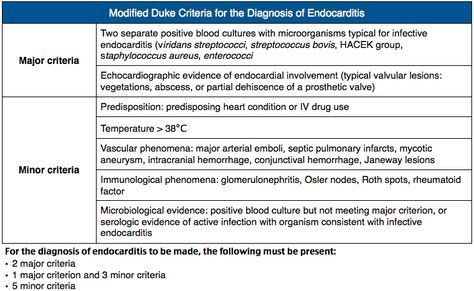
- Blood Cultures
- Two cultures to be drawn 30 min apart
- Culture negative endocarditis
- Pathogen not easily detected ex. Bartonela species
- Associated with antibiotic usage in the previous two weeks
- Slow growing causative organism
- Positive in 90%. of patients
- Culture negative endocarditis
- Two cultures to be drawn 30 min apart
- Mild Leukocytosis
- Occurs in acute endocarditis
- Elevated WBC count, ECR, and CRP
- Occurs in acute endocarditis
- Blood Cultures
- Tests
- Echocardiography
- When blood culture negative
- Transesophageal echocardiogram and digital imaging
- Can detect vegetation, destructive lesions, and abscesses on valves
- Chest radiograph
- Detect presence of enlarged heart
- ECG
- May show 1st or 2nd degree AV block
- Cardiac catheterization
- Used to evaluate coronary artery patency and valvular function when surgical intervention is being considered
- 18F- fluorodeoxyglucose (FDG) positron emission tomography (PET/CT)
- Used in the diagnosis of prosthetic LSIE
- Radiolabeled leukocyte scintigraphy
- Higher specificity detection of prosthetic valve LSIE
- Echocardiography
- Recent health history
- Decreased Cardiac Output
- Related to altered rhythm, valvular insufficiency, and fluid overload
- Hyperthermia
- Related to infection of cardiac tissue
- Activity Intolerance
- Related to generalized weakness, arthralgia, and alteration in O2 transport secondary to valvular dysrhythmia
- Diagnostic Studies
- Nursing Assessment
- Subjective Data
- Important Health History
- Past health history
- Valvular, congenital, or syphilitic cardiac disease (including valve repair or replacement
- Previous endocarditis
- Childbirth
- Staphylococcal or streptococcal infections
- Hospital-associated bacteremia
- Medications
- Immunosupressive therapy
- IV drug abuse
- Surgery or other treatments
- Recent obstetrical or gynaecological prodedures
- invasive techniques: catheterization, cystoscopy, intravascular procedures
- Recent dental or surgical procedure
- Past health history
- Important Health History
- Objective Data
- General
- Fever
- Integumentary
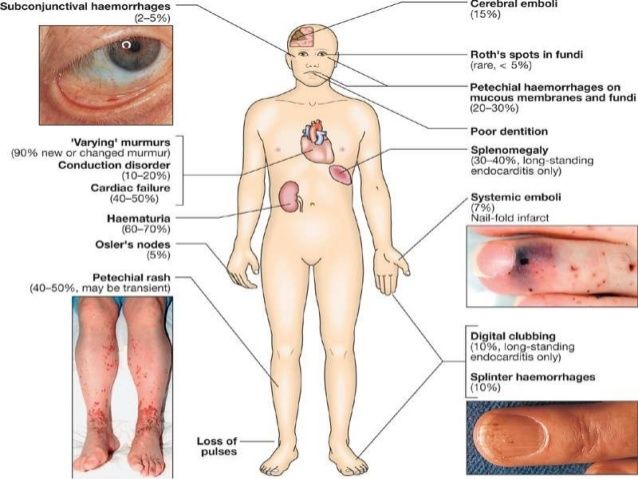
- Oslers nodes on extremities
- Splinter haemorrhages under nail beds
- Janeway's lesions on palms and soles
- Petechiae of skin, mucous membranes, or conjunctivae
- Purpura
- Peripheral edema
- Finger clubbing
- Respiratory
- Tachypnea
- Crackles
- Cardiovascular
- Dysrhythmias
- Tachycardia
- Murmurs (new or enhanced)
- Extra heart sounds
- S3
- S4
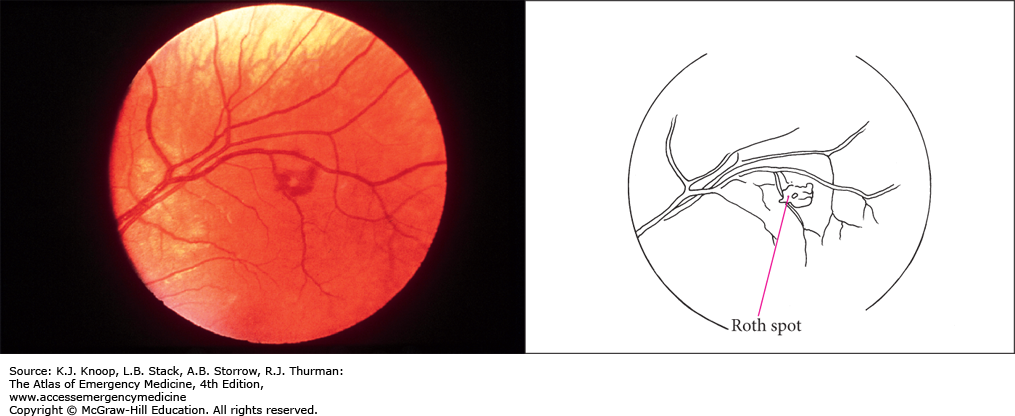
- Retinal hemorrhages/ Roth's spots
- Possible finding
- Leukocystosis, anemia, increased ESR and serum cardiac enzymes; positive blood cultures; microscopic hematuria; echocardiogram showing chamber enlargement, valvular dysfunction, and vegetation; chest radiograph showing cardiomegaly and pulmonary infiltrates; ECG demonstrating ischemia and conduction defects
- General
- Subjective Data
- Nursing Diagnosis
Classification
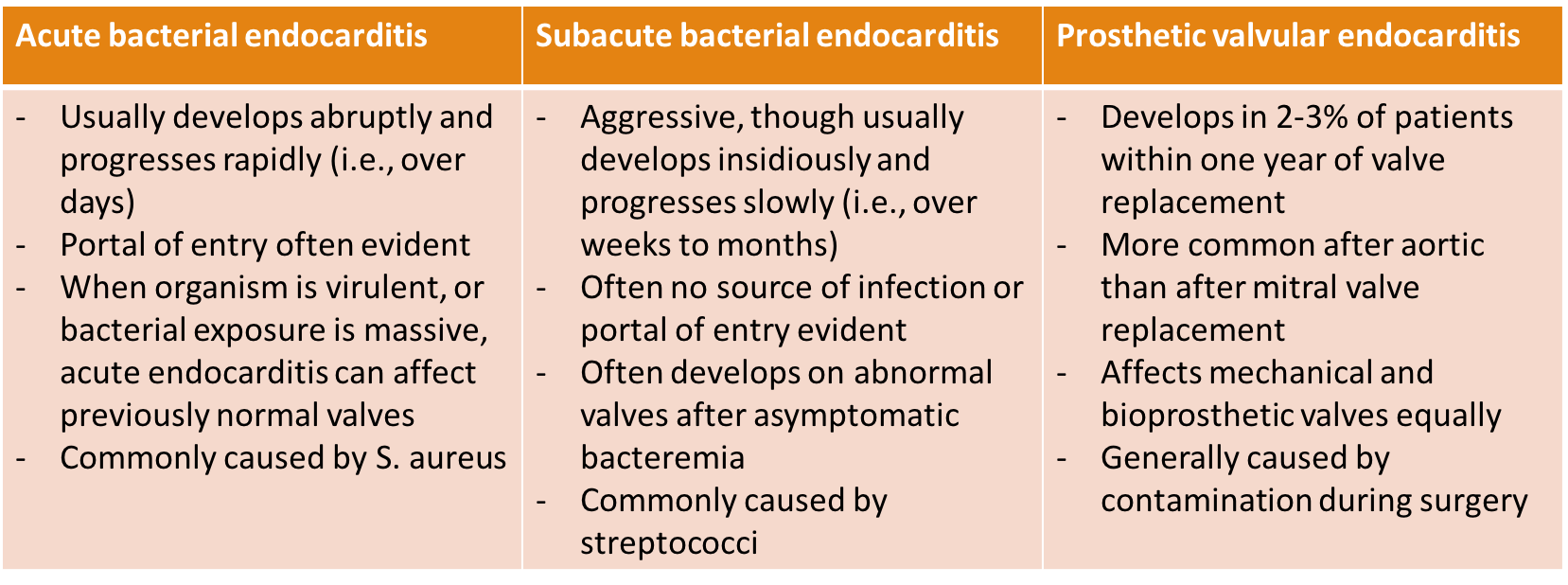
- Site of Infection/ Presence of Cardiovascular Devices/ How IE was Acquired
- Left-sided native valve IE
- Left-sided prosthetic valve IE
- Right-sided IE (included intravenous [IV] drug use)
- Intracardiac devices (eg., pacemaker/defibrillator wires)
- Aqquisition
- Community acquired IE
- Healthcare-associated IE
- Site of Infection/ Presence of Cardiovascular Devices/ How IE was Acquired
Etiology and Pathophysiology
- complete patho
- Predisposing Conditions for the Development of IE
- Cardiac Conditions
- Decreased blood flow turbulence within the heart
- Prior endocarditis
- Prosthetic valves
- Acquired valvular disease
- Cardiac lesions
- Decreased blood flow turbulence within the heart
- Noncardiac Conditions
- Intravenous Drug Abuse
- Noscomial bacteremia
- Procedure-Associated Risks
- Intravascular devices (e.g., hemodialysis catheters)
- Procedures Necessitating Antibiotic Prophylaxis to Prevent Endocarditis
- Oropharyngeal
- All dental procedures likely to produce gingival or mucosal bleeding
- Tonsillectomy or adenoidectomy
- Respiratory
- Surgical procedures or biopsy involving respiratory mucosa
- Integument
- Procedures on inflated skin, skin structures, or musculoskeletal tissues with incision of the tissue
- Oropharyngeal
- Cardiac Conditions
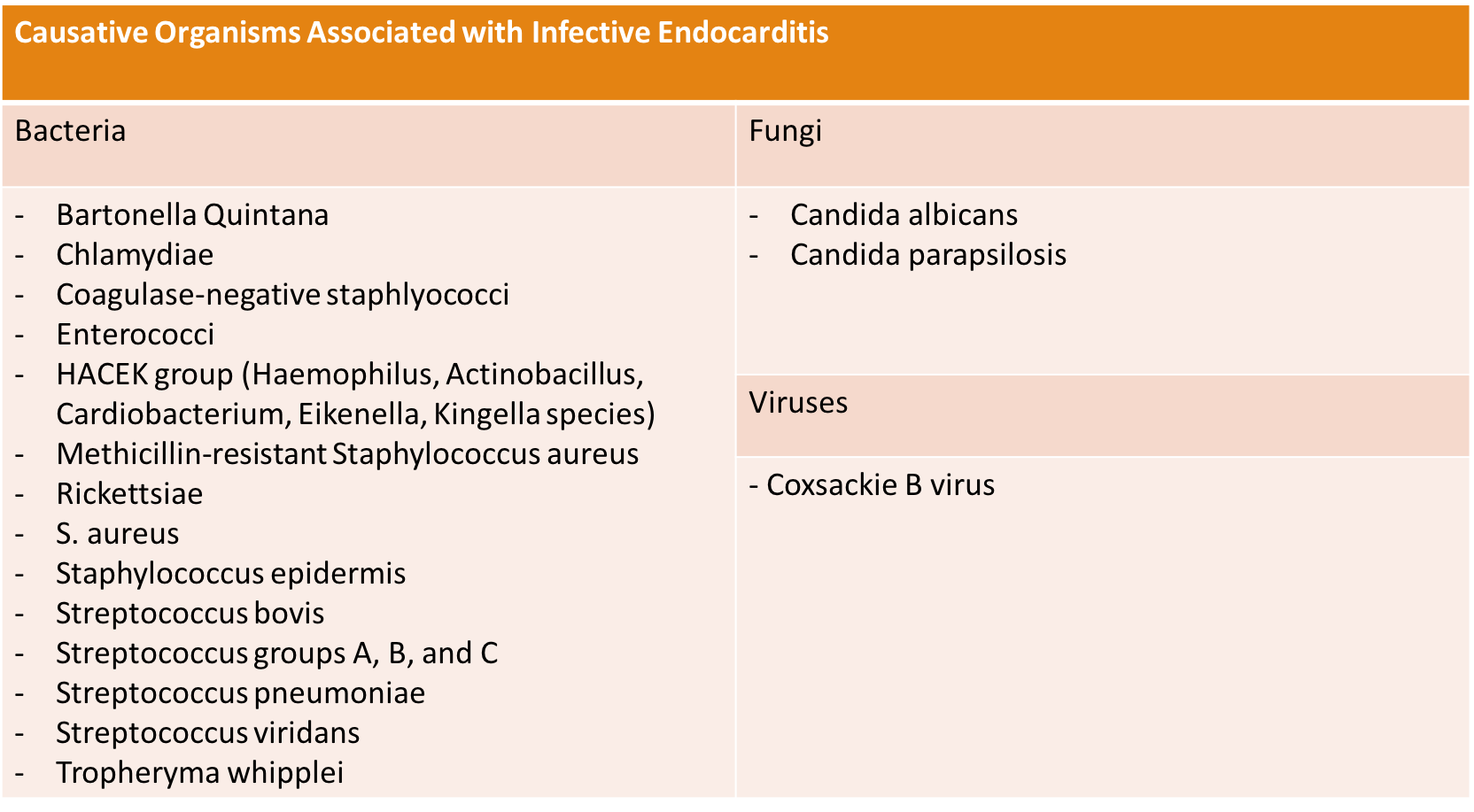
- Causative Organisms
- Bacteria
- Fungi
- Viruses
Nursing Management
- Collaborative Care
- Drug Therapy
- Dependent on Causative Agent
- Streptococcal endocarditis involving native valve
- IV penicillin G or IV/IM ceftriaxone
- Enterococcal endocarditis involving native or prosthetic valve
- IV ampicillin + IV/IM gentamicin
- Staphylococcal endocarditis in absence of prosthetic materials
- IV vancomycin with IV gentamicin and IV rifampin
- Fungal endocarditis in native or prosthetic valves
- Fungizone
- Streptococcal endocarditis involving native valve
- Dependent on Causative Agent
- Prophylactic Treatment (recommended for pt's with specific cardiac conditions before undergoing dental or surgical procedures)
- Prosthetic cardiac valves
- History of endocarditis
- Surgically constructed systemic-pulmonary shunts
- Congenital heart disease
- Vascular grafts
- Cardiac transplantation requiring valvulopathy
- Drug Therapy
- Ambulatory and Home Care
- Treatment with antibiotics for 4-6 wks (dependent on results of blood culture).
- After initial treatment in the hospital, treatment continued in home setting if pt hemodynamically stable
- Continuous Assessment
- Fever (chronic or intermittent)
- Monitor body temperature because persistent, prolonged elevations may mean the drug therapy is ineffective
- Life-threatening complications
- Cerebral emboli
- Pulmonary edema
- HF
- S/S of complications to be monitored by patients and caregivers
- Change in mental status, dyspnea, chest pain
- Laboratory data to determine effectiveness of antibiotic therapy
- Monitor blood cultures to ensure eradication of infecting organism
- IV patency
- Adverse drug reactions
- Fever (chronic or intermittent)
- Care Needs
- Adequate periods of physical and emotional rest
- Ambulation and performance of moderate activity
- Problems related to immobility
- Encourage patient to wear compression stockings
- Range of motion exercises
- Cough and deep breathe q2h
- Strategies to help cope with illness
- Anxiety
- Fear
- Treatment with antibiotics for 4-6 wks (dependent on results of blood culture).
- Health Promotion (to decreased incidence of IE)
- Assessment of the patients history and understanding of the disease process
- Health Teaching
- Adherence to planned treatment regimen
- Avoid people with infection - especially upper respiratory infections
- Report cold, flu and cough symptoms
- Avoid excessive fatigue and need for rest periods before/after activity
- Oral hygiene - daily care and regular dental visits
- Inform all HCP's performing dental, medical or surgical procedures
- Planning
- Goals
- Normal/baseline cardiac function
- Perform ADLs without fatigue
- Have knowledge of therapeutic regimen to prevent reoccurrence of IE
- Goals
- Collaborative Care
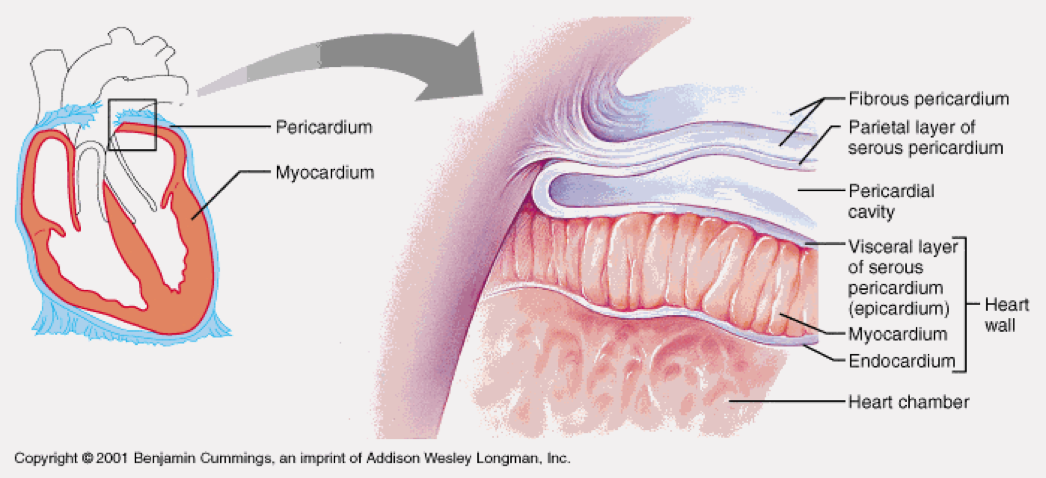
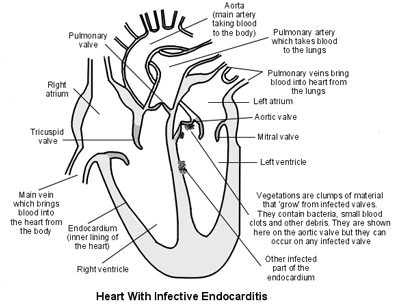
Is a disease caused by a microbial infection of the heart valves or the endocardial surface of the heart (Lewis et al.) The inner layer of the heart, the endocardium, is contiguous with the heart valves as such, inflammation from IE affects the cardiac valves - leads to the formation of bulky, friable vegetation composed of thrombotic debris and organisms. The vegetation, with involvement of the heart valves and endocardium, are characteristic. The majority of patients who develop IE have a previous injury of the cardiac endothelium (Molinos, 2018). The term can also include non-infective endocarditis, in which sterile platelet and fibrin thrombi form on cardiac valves and adjacent endocardium Non-infective endocarditis sometimes leads to infective endocarditis - both can result in embolization and impaired cardiac function.
Sandip Dhillon & Alexandra Glavatskikh
Bilder und Dateien der Mindmap
Informationen
- Beschreibung
- Nursing Mindmap am Infective Endocarditis, erstellt von Sandip Dhillon am 20/02/2018.
- Erstellt von
- Sandip Dhillon
- Aufrufe
- 3
- Bewertung