
8110748
Beschreibung

Mindmap von Snezha Hristova, aktualisiert more than 1 year ago

|
Erstellt von Snezha Hristova
vor mehr als 9 Jahre
|
|
Branding and
Corporate Identity
Management
- Terms
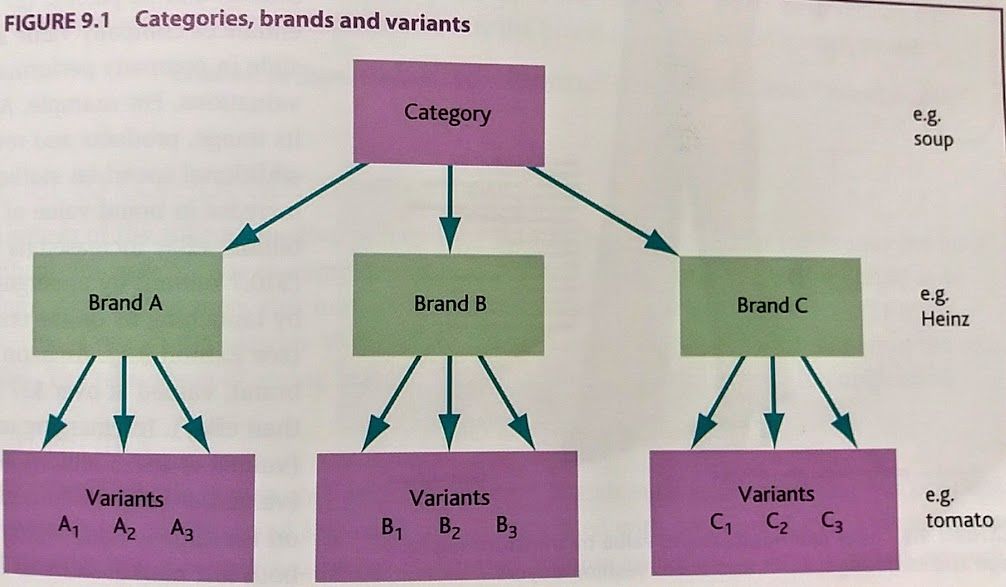
- Brand
- A distinctive product offering created by the use of a
name, symbol, design, packaging, or some combination of
these, intended to differentiate it from its competitors
- A distinctive product offering created by the use of a
name, symbol, design, packaging, or some combination of
these, intended to differentiate it from its competitors
- Product line
- A group of brands that are closely
related in terms of the functions
and benefits they provide
- A group of brands that are closely
related in terms of the functions
and benefits they provide
- Product mix
- A total set of the products
marketed by a company
- A total set of the products
marketed by a company
- Brand
- Brand types
- Manufacturer brands
- Brands that are created
by producers and bear
their chosen brand name
- Responsibility
for marketing
lies within the
producer
- Brands that are created
by producers and bear
their chosen brand name
- Own-label brands
- Brands created
and owned by
distributors or
retailers
- Brands created
and owned by
distributors or
retailers
- Fighter brands
- Low-cost manufacturers'
brands introduced to
combat own-label brands
- Low-cost manufacturers'
brands introduced to
combat own-label brands
- Manufacturer brands
- Benefits
of strong
brands
- Company value
Anmerkungen:
- Търговска репутация
- Influence over
consumer
perceptions and
preferences
- Barrier competition
- High profits
- Base for brand extensions
- Quality certification
- Trust
- Company value
- Brand equity
- Customer-based
brand equity
- The differential effect that brand knowledge has on
consumer response to the marketing of that brand
- Such positive brand equity is
likely to result in high customer
loyalty, low price sensitivity, a
strong base for brand extensions
- Brand awareness
- Increases sales and profits by placing
the brand in the consumers' evoked set
and when brand awareness is the only
determinant in a low-involvement
purchase
- Increases sales and profits by placing
the brand in the consumers' evoked set
and when brand awareness is the only
determinant in a low-involvement
purchase
- Brand image
- Created through the use of all the
elements of the marketing mix
- Created through the use of all the
elements of the marketing mix
- The differential effect that brand knowledge has on
consumer response to the marketing of that brand
- Proprietary-based
brand equity
- Derived from company attributes
that deliver value to the brand
- Patents
- Protect the brand from competitive
threats over the lifetime of the patent
- Protect the brand from competitive
threats over the lifetime of the patent
- Channel relationships
- Experience, knowledge and close
relationships with distributors and suppliers
- Experience, knowledge and close
relationships with distributors and suppliers
- Derived from company attributes
that deliver value to the brand
- Measures the strength of a
brand in the marketplace by
adding tangible value to a
company through the
resulting sales and profits
- Brand valuation
- The process of estimating the financial
value of an individual or corporate brand
- The process of estimating the financial
value of an individual or corporate brand
- Customer-based
brand equity
- Brand building
- Terms
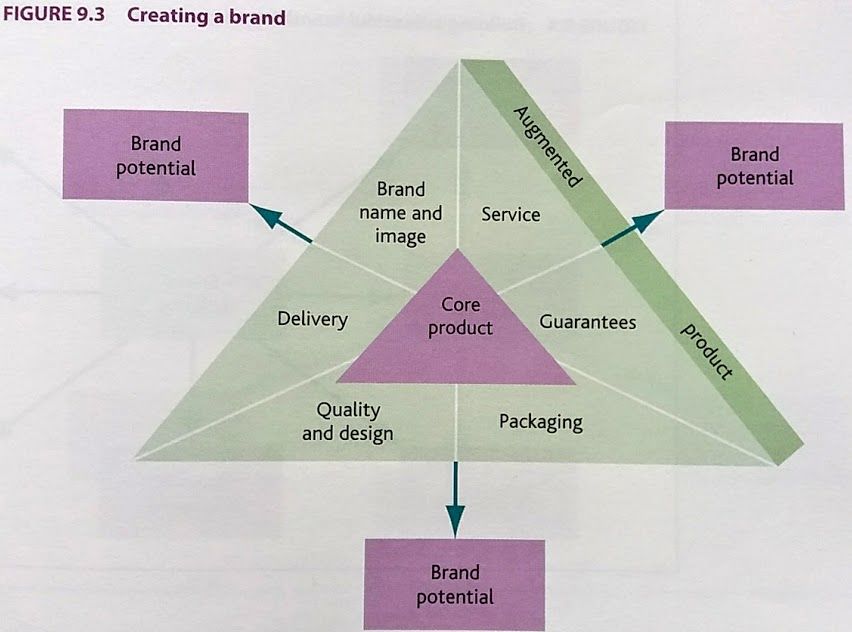
- Core product
- Anything that provides
the central benefits
required by customers
- Anything that provides
the central benefits
required by customers
- Augmented product
- The core product + extra functional and/or emotional
values combined in a unique way to form a brand
- The core product + extra functional and/or emotional
values combined in a unique way to form a brand
- Core product
- Quality
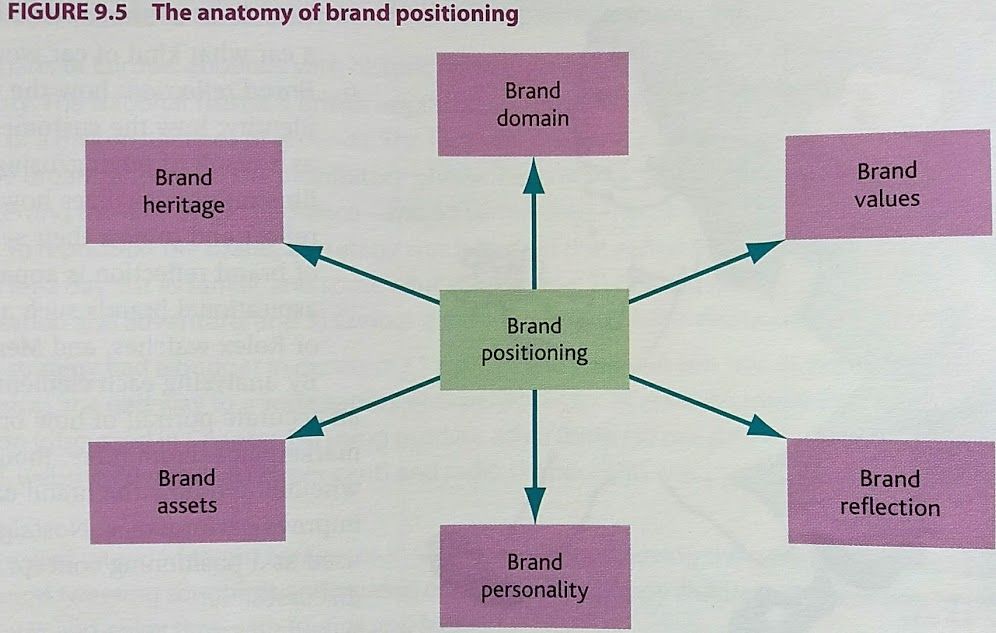
- Positioning
- Brand assets
- Distinctive features - symbols,
images and relationships
- Distinctive features - symbols,
images and relationships
- Brand reflection
- The relationship of the
brand to self-identity
- The relationship of the
brand to self-identity
- Brand assets
- Reposiotioning
- Long-term perspective
- Internal marketing
- Being first
- Advantages: brand establishment, build
customer and distributor loyalty, possible
technological leadership, cost advantages
- Advantages: brand establishment, build
customer and distributor loyalty, possible
technological leadership, cost advantages
- Well-blended
communications
- Terms
- Key branding decisions
- Brand name
strategies and choices
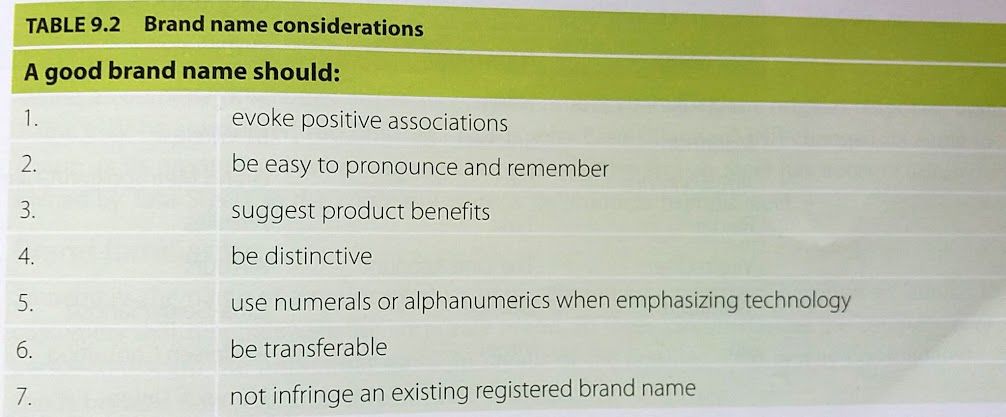
- Criteria for choosing
brand names
- Strategies
- Family brand names
- A brand name used for all products in a range. AKA umbrella branding
- If one of the member brands receives bad reputation,
the image of the whole family can be tarnished
- A brand name used for all products in a range. AKA umbrella branding
- Individual brand names
- A brand name which does not identify a brand with a particular company
- Used when the image of the family company
is incompatible with the new target market
- A brand name which does not identify a brand with a particular company
- Combination brand names
- Family + individual brand names
- Family + individual brand names
- Family brand names
- Criteria for choosing
brand names
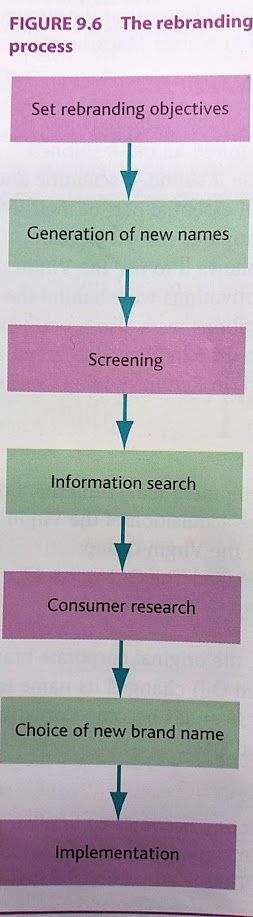
- Rebranding
- The changing of a brand
or a corporate name
- Risky - consumer confusion and
resentment, loss of market share
- Reasons
- Merger or
acquisition
- Desire to create a
new image/position
in the marketplace
- The sale or acquisition
of parts of a business
- Corporate
strategy
changes
- When a company diversifies out of its original product
category and the old name does not fit anymore
- When a company diversifies out of its original product
category and the old name does not fit anymore
- Brand familiarity
- When the product name is more familiar
than the company name, the latter changes
- When the product name is more familiar
than the company name, the latter changes
- International
marketing
considerations
- Harmonize a brand name
accross national boundaries in
order to create a global brand
- Harmonize a brand name
accross national boundaries in
order to create a global brand
- Legal problems
- Merger or
acquisition
- Managing the
rebranding process
- Choosing the
new brand name
- Implementing
the name change
- Consumers, employees and
distributors may feel their
brand loyalty has been betrayed
- Coordination
- Communication
- Understanding what the consumer
identifies with the brand
- Providing assistance to
distributors/retailors
- Avoid double-stocking of both the old and
new brand and ensure barcodes and
product management systems are updated
- Avoid double-stocking of both the old and
new brand and ensure barcodes and
product management systems are updated
- Speed of change
- Consumers, employees and
distributors may feel their
brand loyalty has been betrayed
- Information search
- Making sure the generated brand names
do not infringe on existing brand names
- Making sure the generated brand names
do not infringe on existing brand names
- Choosing the
new brand name
- The changing of a brand
or a corporate name
- Brand extension and stretching
- Brand extension is the use of an established
brand name on a new brand within the
same broad market or product category
Anmerkungen:
- Coca-Cola and Diet coke
- Brand stretching is when an
established brand name is
used for brands in unrelated
markets or product categories
(extreme brand extension)
Anmerkungen:
- Yamaha pianos and Yamaha hi-fi equipment, skis and motorcycles
- Advantages
- Important marketing tactic
- Reduces risk and
expensiveness of launch
strategies for new products
- The introduction of the extension can
benefit the core brand because of the effects
of the accompanying marketing expenditure
- Important marketing tactic
- Dangers
- Failure
- Under-funded launch
resulting in low
awareness and trial
- Cannibalization
- When the new brand gains sales at
the expense of the established brand
- When the new brand gains sales at
the expense of the established brand
- Criticism that the company is
focuses more on small changes
rather than real innovation
- Bad performance of one
brand tarnishing the
image of the family brand
- Difference in the
values held by
different target groups
- Loss of credibility if a brand name
is extended/stretched too far
- Failure
- Brand extension is the use of an established
brand name on a new brand within the
same broad market or product category
- Co-branding
- Product-based
- The linking of two or more existing brands from
different companies or business units to form a product
in which the brand names are visible to the consumers
- Parallel
co-branding
- When two or more independent brands
join forces to produce a combined brand
- When two or more independent brands
join forces to produce a combined brand
- Ingredient
co-branding
- When a supplier explicitly chooses to position
its brand as an ingredient of a product (e.g. Intel)
- When a supplier explicitly chooses to position
its brand as an ingredient of a product (e.g. Intel)
- Advantages
- Added value and differentiation
- The composing brands
should be different so
there's a synergy
- The composing brands
should be different so
there's a synergy
- Positioning
- Position for a particular
target market
- Position for a particular
target market
- Reduction of cost of
product introduction
- Added value and differentiation
- Risks
- Loss of control
- Brand equity loss
- Each or either of the composing brands' image
can be tarnished of the co-brand performs badly
- Each or either of the composing brands' image
can be tarnished of the co-brand performs badly
- Loss of control
- The linking of two or more existing brands from
different companies or business units to form a product
in which the brand names are visible to the consumers
- Communication-based
- The linking of two or
more existing brands
from different
companies or business
units for the purposes
of joint communication
Anmerkungen:
- Whirlpool endorsing Ariel and Finish in co-branding advertising campaignes
- Or when an alliance is formed
to stimulate awareness and
interest, and to provide
promotional opportunities
Anmerkungen:
- McDonald's having the global rights to display and promote material relating to Disney movies
- Or when sponsor's brand
name appears on the
product being sponsored
- Advantages
- Endorsement opportunities
- Cost benefits
- Awareness and interest gains
- Promotional opportunities
- Endorsement opportunities
- Risks
- Loss of control
- Brand equity loss
- Loss of control
- The linking of two or
more existing brands
from different
companies or business
units for the purposes
of joint communication
- Product-based
- Brand name
strategies and choices
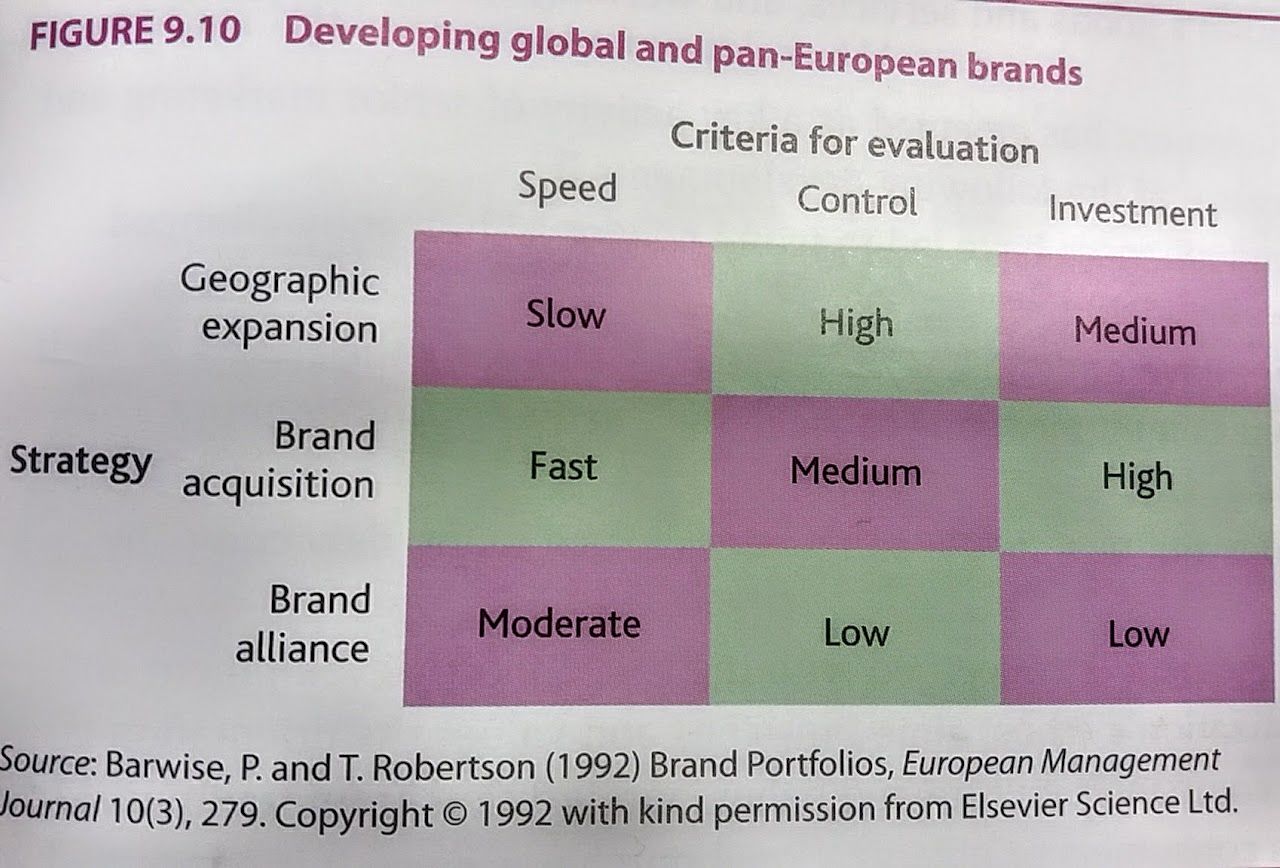
- Global and pan-European branding
- Global brandingis the achievement
of brand penetration worldwide
- The question is which parts of the brand should be
standardized and which should be varied across
countries so to accomodate the local preferences
- Global brandingis the achievement
of brand penetration worldwide
- Corporate identity management
- Corporate identity
- Represents the ethos, aims and values of an organization, presenting a
sense of its individuality, which helps to differentiate it from its competitors
- Represents the ethos, aims and values of an organization, presenting a
sense of its individuality, which helps to differentiate it from its competitors
- Concerned with the conception,
development and communication
of an organization's ethos, aims
(mission) and values
- Based on the company's
culture and behaviour
- Affects
organizational
performance
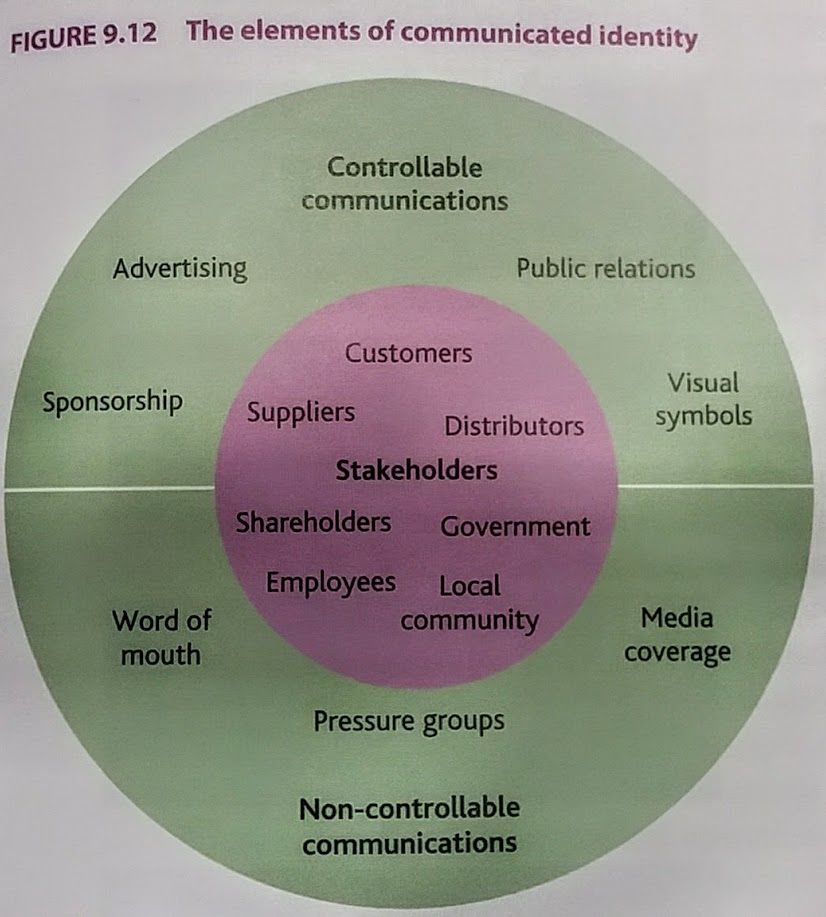
- Dimensions of corporate identity (AC^2ID test)
- Actual identity
- Communicated identity
- Conceived identity
- Ideal identity
- Normally absed on
the organization's
capabilities and
prospects in the light
of its macro- and
microenvironment
- Normally absed on
the organization's
capabilities and
prospects in the light
of its macro- and
microenvironment
- Desired identity
- Lives in the hearts and minds
of corporate leaders. It is the
vision for the organization
- Lives in the hearts and minds
of corporate leaders. It is the
vision for the organization
- Actual identity
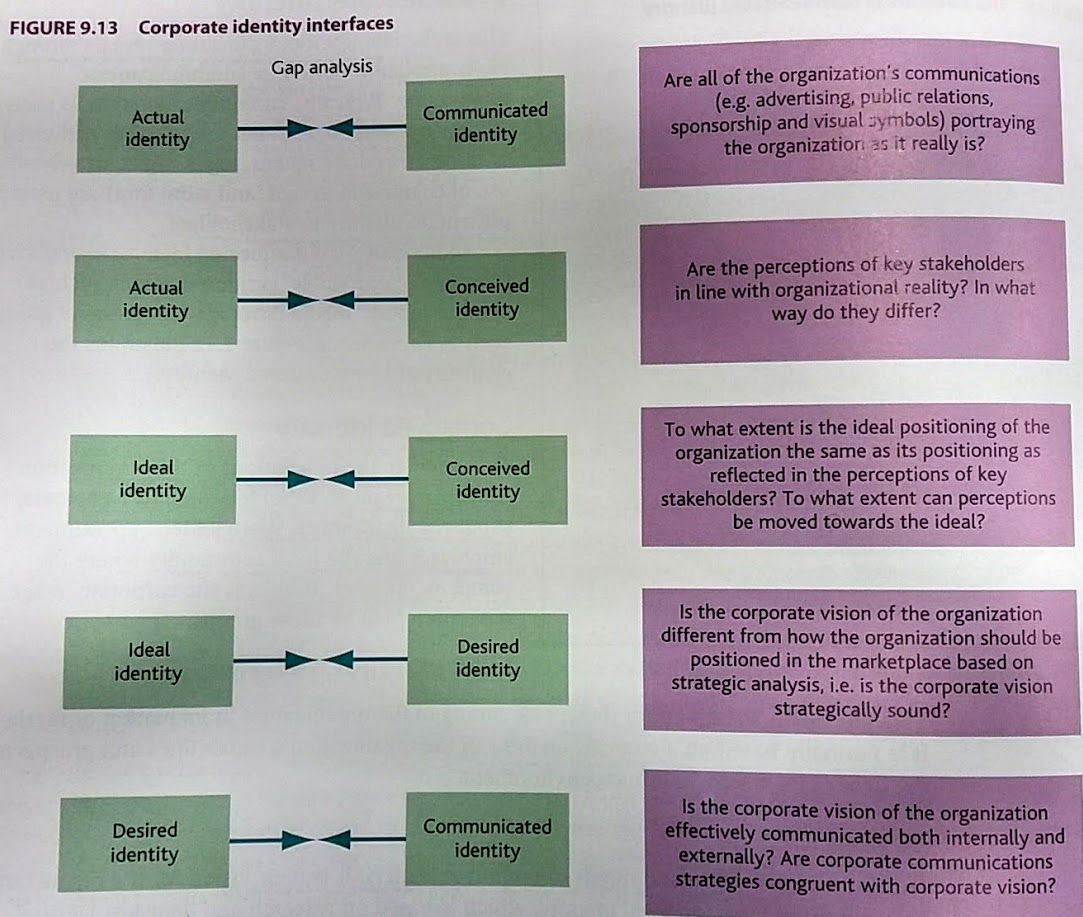
- Managing corporate identity programmes
(REDS^2 AC^2ID test process)
- Reveal the 5 identities (audit them)
- Examine the 10
identity interfaces
Anmerkungen:
- The identity interfaces are 10 pairs that could be made from the 5 identities. the two identities within a pair are compared so to identify the gaps between them and then deal with those gaps
- Diagnose the situation
- What are the problems?
- What are their nature?
- What are the implications?
- What are the problems?
- Select the interfaces for attention
- Strategic choice
- Reality change (incl.
culture change)
- Modifications to
communication strategies
- Strategic repositioning
(incl. moving into new
technologies)
- Changes in corporate
vision and mission
- Reality change (incl.
culture change)
- Reveal the 5 identities (audit them)
- Corporate identity
- Ethical issues and anti-branding
- Ethical issues
- Product safety
- Planned obsolescence
- What is the acceptable time
before replacement is necessary
- What is the acceptable time
before replacement is necessary
- Deceptive packaging
- Oversized package, misleading labels
- Oversized package, misleading labels
- Product safety
- Anti-branding
- The accusation that branding concentrates wealth and power in the already
rich and powerful countries whereas poor countries have to compete on price
- The accusation that branding concentrates wealth and power in the already
rich and powerful countries whereas poor countries have to compete on price
- Ethical issues
Medienanhänge
Möchten Sie kostenlos Ihre eigenen Mindmaps mit GoConqr erstellen? Mehr erfahren.