Notizen
The Carbon Chemistry of Life
Inhalt der Notizen (1)
Seite 1
The Carbon Chemistry of Life
Carbon Chemistry
·
All chemicals of life (except water) are carbon
based. They are referred to as the organic compounds.
·
The 4 major classes of organic chemicals are of
biological importance are produced only in living cells. They include
carbohydrates, proteins, lipids, and nucleic acids.
·
Carbon is the backbone of these molecules.
·
It forms 4 stable bonds.
·
It often bonds with H to form hydrocarbons.
Functional Groups
·
Groups that consist of clusters of reactive
elements such as C, H, O, N, P.
·
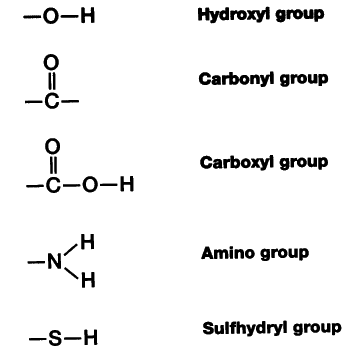
The most common functional groups are:
Group
Major
Classes of Molecules
Hydroxyl
Alcohols
Sulfhydryl
Many cellular molecules
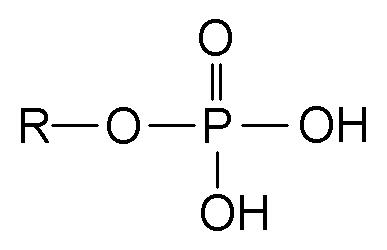
Phosphate
Nucleotides, nucleic acids, many other
cellular molecules
Amino
Amino acids
Carboxyl
Organic acids
Carbonyl
Aldehydes
Ketones
Characteristics
of Functional Groups
·
Makes them very reactive.
·
Important to help the large macromolecules
interactive with other molecules in the body.
·
Compare: ethane (non-polar) and ethanol (polar)
·
Ethanol could dissolve in the cytosol and be used
as an energy source.
·
Carboxyl, COOH, and Phosphate, PO₄, both release
a proton in aqueous solutions, making them act as acids.
·
Amino groups, NH₂, are able to accept a H⁺,
making them a weak base.