
Notizen
Voice of the genome
Inhalt der Notizen (1)
Seite 1
Cell Structures
Description and Function
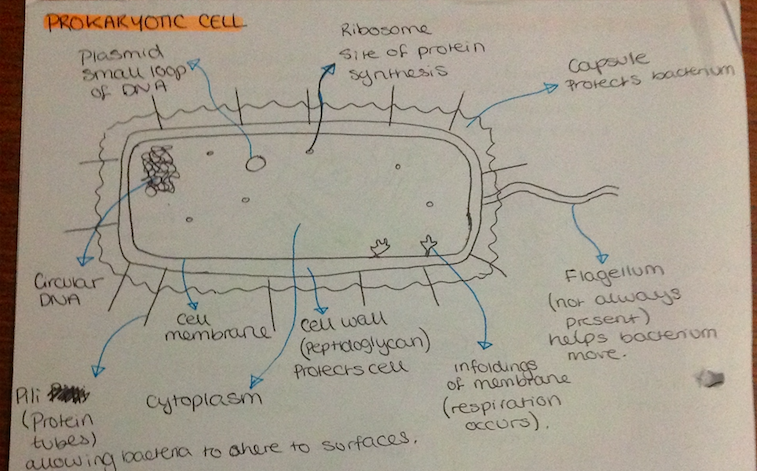
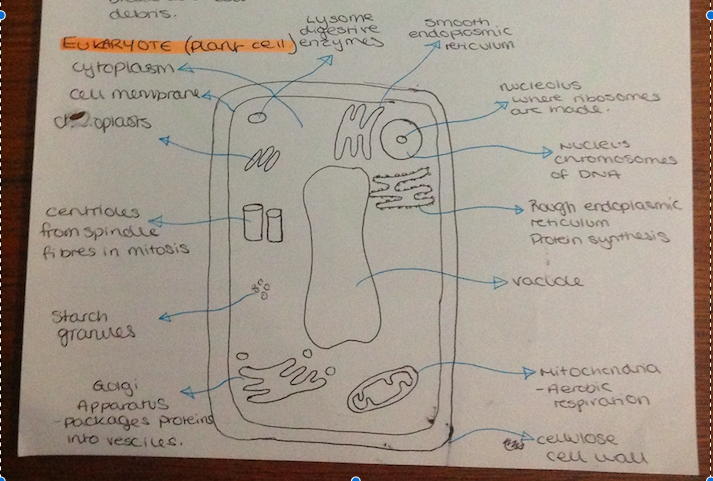
Cell wall: An outer layer of cellulose or chitin; not found in all eukaryotes. Provide rigidity, tensile strength and structure.
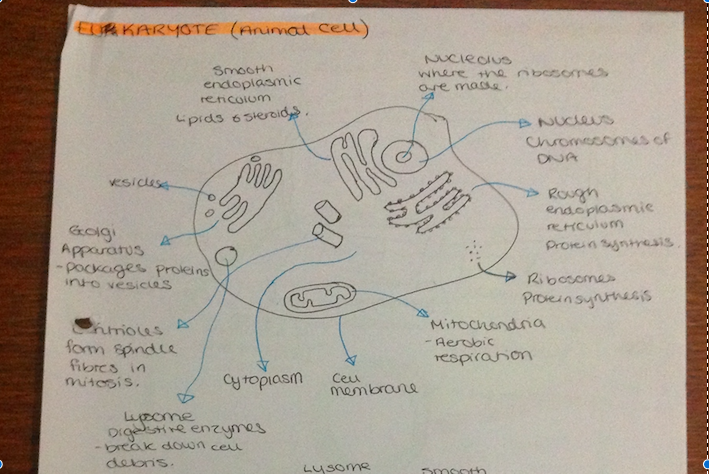
Cell membrane: A phospholipid bilayer containing proteins and other molecules. A partially permeable barrier.
Nucleus: Enclosed by an envelope. Composed of two membranes perforated by pores. Contains chromosomes of DNA.
Nucleolus: A dense body within the nucleus. Assembles ribosomes.
Centrioles: Hollow cylinders made up of a ring of nine protein microtubules. The proteins are arranged in a helix to form a hollow tube. Form spindle fibres in mitosis.
Cytoplasm: Mainly water that also contains enzymes, salts, organelles and various organic molecules. Chemical reactions occur here, substances can be moved around easily.
Smooth endoplasmic reticulum: A system of interconnected membrane-bound flattened sacs. Formation of lipids and steroids.
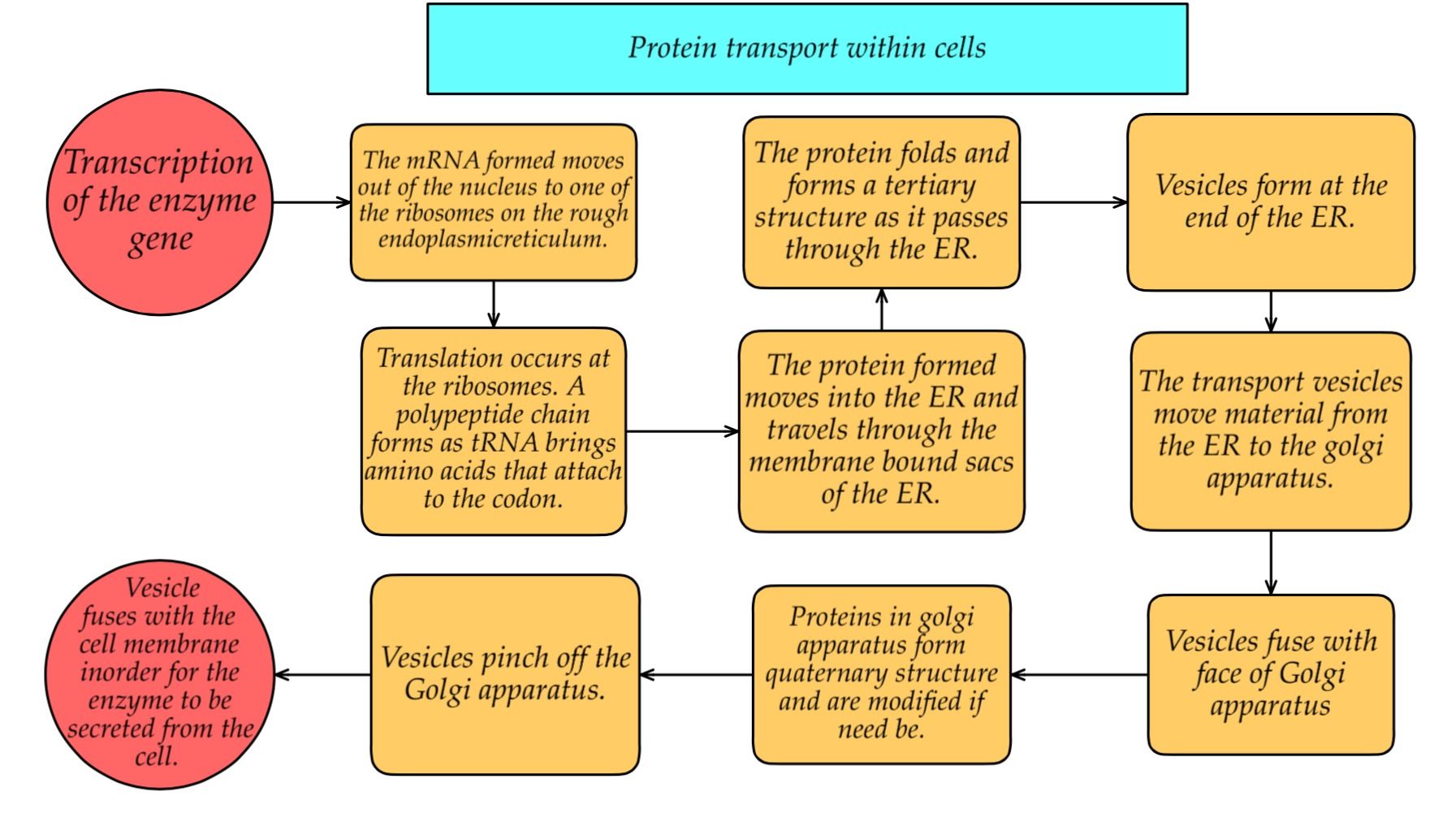
Rough endoplasmic reticulum: A system of interconnected membrane-bound flattened sacs. Ribosomes attached to the outer surface. Formation of proteins.
Golgi apparatus: Stacks of flattened membrane-bound sacs formed by fusion vesicles from the ER. Packages proteins into vesicles.
Lysome: Vesicles containing digestive enzymes. Break down cell debris.
Mitochondria: Have a double membrane. Inner membrane folds into a structure called cristae. Fluid inside the membrane is called the matrix. Aerobic respiration.
Ribosomes: Made of RNA and protein. These small organelles are found free in the cytoplasm or attached to endoplasmic reticulum. Protein synthesis.
Chloroplasts: A structure found in eukaryotic plant cells that contain chlorophyll for photosynthesis.
The Cell Theory
Principles:
All living things are composed of cells and cell products.
New cells are formed only by the division of pre existing cells
The cell contains inherited information that are used as instructions for growth, functioning, and development.
The cell is the functioning unit of life; all chemical reactions of life take place within cells.
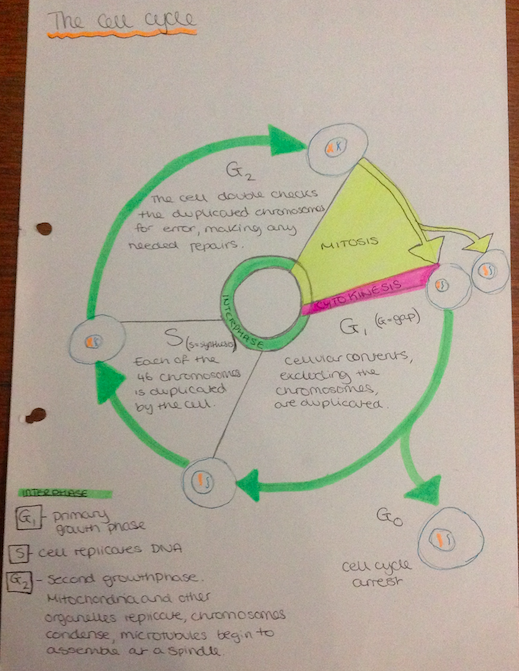
The Cell Cycle
Duration Of Cell Cycle:
Can be 20 mins
Mature cell cycles take longer than in embryos (24 hours)
Liver cell cycle lasts over a year
At any given time most cells in the body are in G0 phase.
Nerve and muscle cells can remain in GO permanently.
The Cell Cycle is regulated by checkpoints to ensure the cell has met certain conditions before it continues into the next phase of the cell cycle.
G1 Checkpoint:
Cell size must be large enough
Sufficient nutrients must be available
Signals from the other cells must have been received.
G2 Checkpoint:
Cell size must be large enough
Replication of chromosomes must have been successfully completed.
Proteins required for mitosis must have been synthesised.
Metaphase Checkpoint:
All chromosomes must be attached to the mitotic spindle.
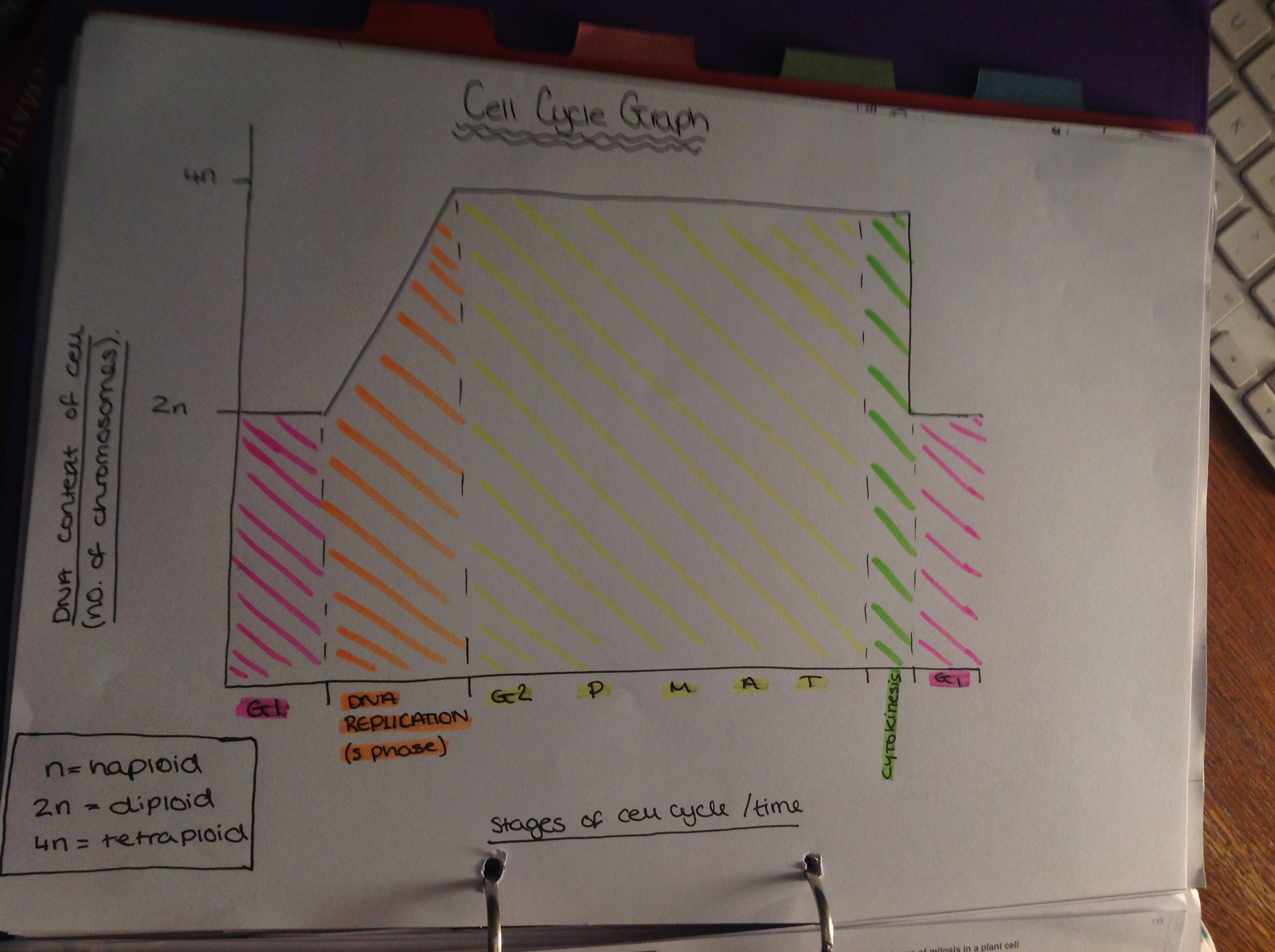
Mitosis - Nuclear division
During Mitosis replicated chromosomes are separated and the cell divides, producing two new identical cells.
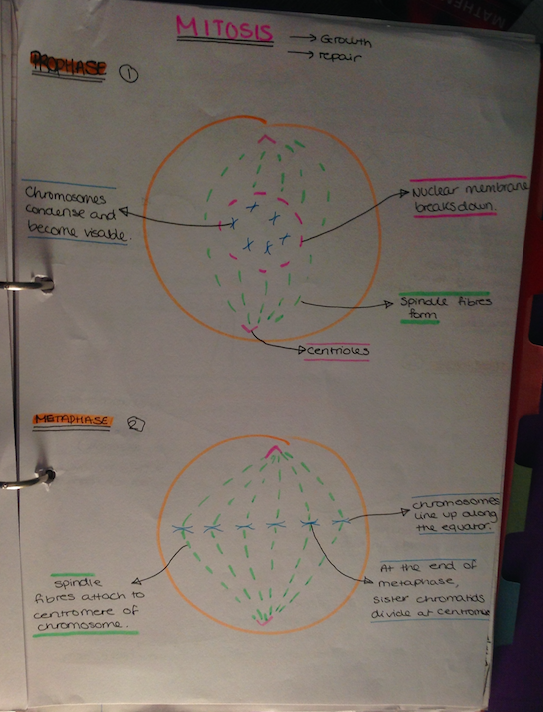
Although mitosis is a continuous process, it is divided into four stages (prophase, metaphase, anaphase and telophase) to more easily describe the processes occurring during its progression.
The purpose of mitosis is for growth and repair.
*Cytokinesis occurs after mitosis and is when the cytoplasm divides and the two cells separate. It is part of the M1 phase but is different to nuclear division.
In plants --> Cytokinesis involves the construction of cell plate in the middles of the cell. cell wall materials are delivered by vesicles. Vesicles become the plasma membranes of the new cell surfaces.
In animals --> In an energy using process, the cleavage furrow moves inward forming a region of separation where the two cells separate.
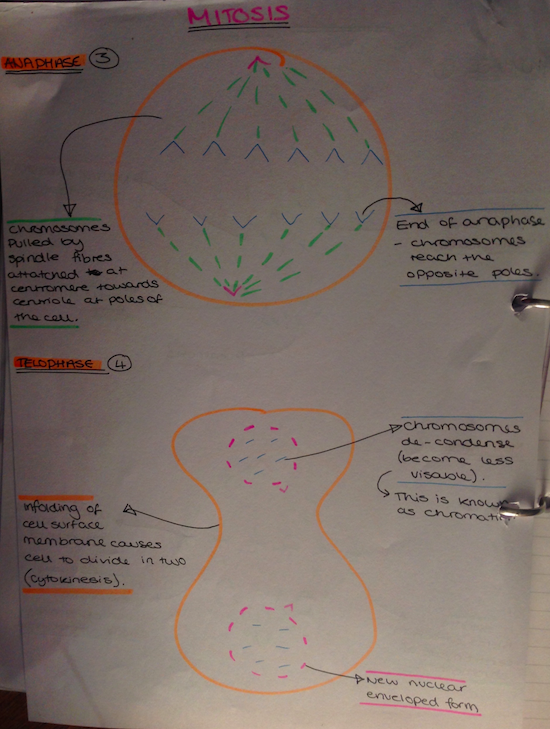
Types of cell division
Mitosis
4n --> 2n
1 round of division
DNA replicated in interphase before mitosis
P, M, A, T, C
Forms somatic cells
Meiosis
Gametes
Sperm
Haploid - formed by meiosis
Produced continuously from puberty
Many mitochondria (for respiration, for energy, for movement)
Flagellum for movement
Ovum
Haploid - formed by meiosis
Produced during embryogenesis, mature during menstrual cycle.
Lipid droplets
Zona pellucida (an outer layer, so that only one sperm can penetrate and fertilise the egg)
How are they made?
- Spermatogenesis and oogenesis
*There are 23 (n/haploid) chromosomes in a gamete. One chromosome from each homologous pair.
STAGES OF MEIOSIS
- Before meiosis : DNA replication (2n --> 4n)
- Meiosis 1 : Homologous chromosomes pair up and then separate
(4n --> 2n)
- Meiosis 2: Chromatids separate and gametes are formed (2n --> n)
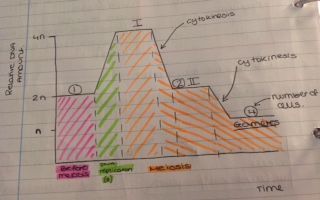
Meiosis
4n --> 2n --> n
2 rounds of division
DNA replicated in interphase before meiosis.
(P, M, A, T) 1 and 2
Crossing over during meiosis
Forms gametes
Variation
Independent assortment:
One chromosome from each homologous pair goes into each gamete
Random process
Crossing over
First division - chromatids break and rejoin at chiasmata
Does not occur in sex chromosomes.
Crossing over and linkage
During Meiosis 1:
--> Homologous pairs come together and all four chromatids come into contact.
--> At contact points chromatids break and rejoin, exchanging sections of DNA between non-sister chromatids.
--> The break points are called chiasmata (sing is chiasma)
--> On average there are the chiasmata per human chromosome.
Linkage refers to genes that are located on the same chromosome. Linked genes tend to be inherited together and fewer genetic combinations of their alleles are possible. Linkage reduces the variety of the offspring that can be produced.
Recombination refers to the exchange of alleles between homologous chromosomes as a result of crossing over. The alleles of parental linkage groups separate and new associations of alleles are formed in the gametes. Offspring formed from these gametes show new combinations of characteristics and are known as recombinants (off spring with genotypes unlike either parent).
Sex Linkage
XX
- Female
- Two copies of each gene
- One X Chromosome inactivated (barr body) so that the correct amount of
protein is produced.
Sex Linkage
XY
- Male
- X chromosome from mother, Y from father
- SRY gene --> testes development
- One copy of each gene on X chromosome
Informationen
- Beschreibung
- Notes for Biology Topic 3 voice of the genome. Edexcel - SNAB
- Erstellt von
- mcgrathjessamie9
- Aufrufe
- 115
- Tags
- Bewertung