
Notizen
Strategic Analysis
Inhalt der Notizen (1)
Seite 1
Strategic decisions are about:
Long term direction of an organisation
Scope of organisations activities
Gaining competitive advantage
Addressing changes in business environment
Building on resources and competence (capability)
Values and expectations of stakeholders
Strategy is the direction and scope of an organisation over the long-term, which achieves advantage in a changing environment through its configuration of resources and competences with the aim of fulfilling stakeholders expectations.
Levels of strategy
Corporate level: Concerned with overall purpose and scope of organisation and how value will be added to the different business units of the organisation (Mission)
Business level: About how to compete successfully in particular markets. Sometimes called competitive strategy (Pricing strategy, innovation or differentiation)
Operational level: Concerned with how the component parts of an organization deliver effectively the corporate and business level strategies in terms of resources, processes and people
Strategic Management includes understanding the strategic position of an organisation, strategic choices for the future and managing strategy in action
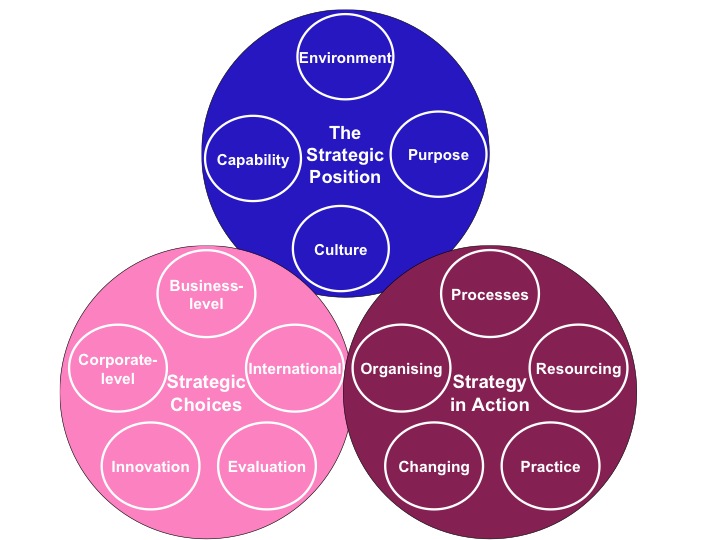
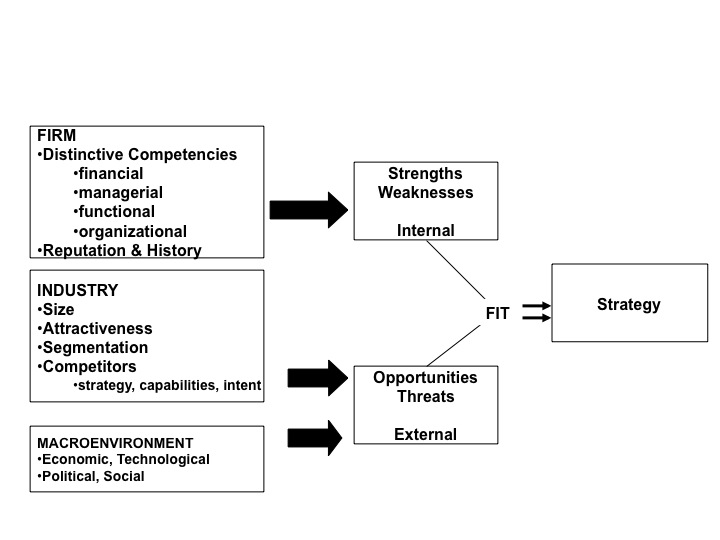
Opportunities & Threats are identified by analysing the external environment of the business.
Strengths & Weaknesses are identified by analysing the internal environment of the business, which includes its resources and capabillities
Strategic Position
PESTLE framework is a macro environmental analysis technique used to provide a comprehensive list of influences on the the possible success or failure of specific strategies. It is important to analyse how these factors are changing now and how they are likely to to change in the future, drawing out implications for the organisation
Porters 5 forces (1979) framework is used in industry analysis. It is useful in understanding the attractiveness of particular industries or sectors and potential threats from outside the present set of competitors. It analyses the competitive forces within the industry. It can provide a useful starting point for strategic analysis. The five forces can help set an agenda for action on te various pinch points that they identify
The environment is what gives organisations their means of survival. It is also the sources of threats. It is vital that managers analyse their environments carefully in order to anticipate and if possible, influence environmental change
For PESTLE analysis it is important to identify the key drivers for change that are likely to have a high impact on the success or failure of strategy. identifying key drivers for change helps managers to focus on PESTLE factors that are most important and which must be addressed in highest priority.
A scenario analysis is usually conducted based on the identified key drivers for change in the PESTLE analysis. It provides managers with different possible scenarios that may occur due to changes in the key driving factors. The point is to consider plausible alternative futures not predict the unpredictable
An industry is a group of firms producing the same principal product or service. It is important for managers to understand the competitive forces in their industry or sector since these will determine the attractiveness of that industry and the likely success or failure of organisations within it

Porters essential message is that where these five forces are too high, then industries are not attractive to compete in. There will be too much competition and too much pressure to allow reasonable profits. The analysis should conclude with whether the industy is a good one o compete in or not.
Threat of New Entry: How easy it is to enter the industry influences competition. Threats of new entry depends on barriers to entry (Factors that need to be overcome by new entrants if they are to compete successfully). High barriers of entry are good for incumbents because it protects them from new competition.
Threat of Substitutes: Products that offer a similar benefit to an industry's products or services but by a different process. Substitutes can reduce demand for a particular class of products as customers switch to alternatives. Risk of substitutes puts a cap on the prices that can be charged in an industry.
Buyer Power: Customers are essential to the survival of any business. Sometimes buyers can have such high bargaining power that their suppliers are hard pressed to make any profits at all. Buyers must be distinguished from ultimate consumers.
Supplier Power: Suppliers supply organisation with what is required to produce the product or service, and include labour and sources of finance. Factors increasing supplier power are the converse to those for buyer power.
Note: Competitive forces change over time. The key drivers for change are likely to alter industry structure and scenario analyses can be used to understand possible impacts.
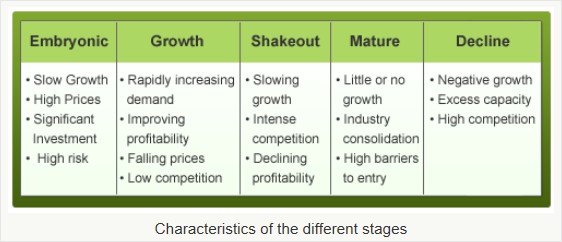
Industry Life Cycle: The power of the competitive forces typically varies with the stages of the industry life cycle. The industry life cycle concept proposes that industries start small in their developmental stage, then go through a period of rapid growth, culminating in a period of "shake out". The final two stages are first a period of slow or zero growth (maturity), before the final stage of decline. Each of these stages have implications for the five forces

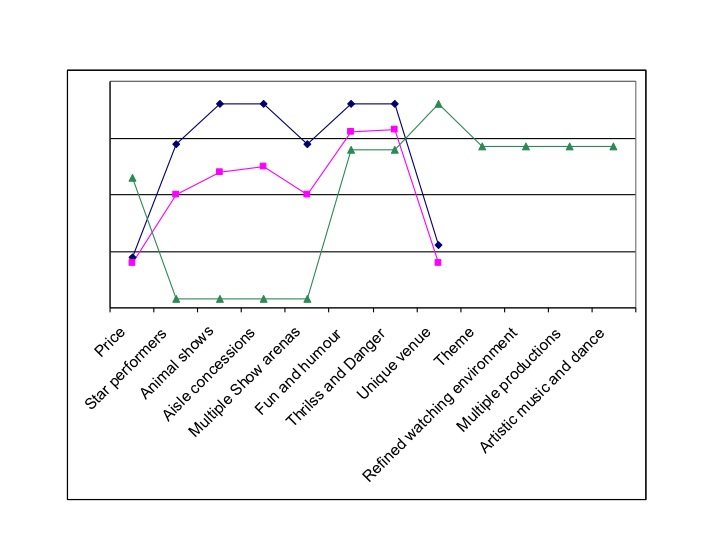
Critical Success Factors are those product features that are particularly valued by a group of customers (Market segment) and therefore, where the organisation must excel
A Strategy Canvas is a simple but useful way of comparing competitors positions in a market and potential in different segments. It is a measure of CSF's. CSF are listed on X-axis (Listed from most important to least important) and Competitors profile on the Y-axis. The key message is that it is important to see value through the eyes of the customer and to be clear about relative strengths.
A Strategic Gap is an opportunity in the competitive environment that is not being fully exploited by competitors
Strategic Capability is the resources and competences of an organisation needed for it to survive and prosper
Sources of Cost Efficiency:
Economies of Scale
Supply costs
Experience
Product process/design
Note: If organisations are to achieve competitive advantage by delivering value to customers, managers need to understand which activities they undertake are especially important in creating that value and which are not (Value Chain)
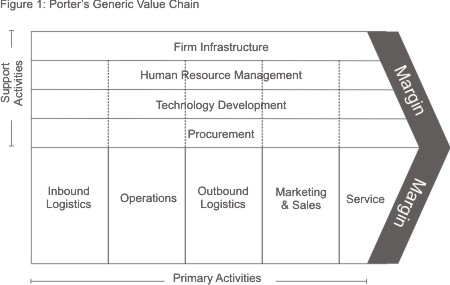
Value Chain describes the categories of activities within and around an organisation, which together create a product or service. It can help with the analysis of the strategic position of an organisation by identifying key areas of value and their influence on strategy. Competitive advantage is achieved through activities within the value chain
Primary Activities are directly concerned with the creation or delivery of a product or service. These group of primary activities are linked to the support activities
Support Activities help to improve the effectiveness or efficiency of primary activities. They are used to obtain or increase competitive advantage in the industry
SWOT Analysis summarises the key issues from the business environment and the strategic capability of an organisation that are most likely to impact on strategy development. It can also be a useful basis against which to generate strategic options and assess future course of action.
Note: The aim is to identify the extent to which strengths and weaknesses are relevant to, or capable of dealing with, the changes taking place in the business environment. It is important to be clear on what is really important and what is less important.
Strategic Purpose:
Corporate Governance
Corporate Social Responsibility
Stakeholder Expectation
Mission, Vision and Objectives
Corporate Governance is concerned with the structures and systems of control by which managers are held accountable to those who have a legitimate stake in the organisation. Avoidance of Agency Problem
Corporate Social Responsibility is concerned with the ways in which an organisation exceeds its minimum obligations to stakeholders specified through regulation.
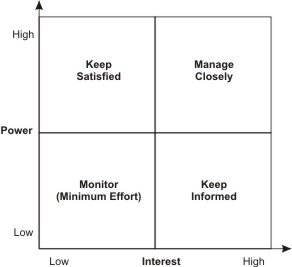
Stakeholder Mapping identifies stakeholder expectations and power and helps in understanding political priorities. An example of this is the Power/Interest Matrix
Power/Interest Matrix describes the context within which a strategy might be pursued by classifying stakeholders in relation to the power they hold and the extent to which they are likely to show interest in supporting or opposing a particular strategy. It helps in thinking through stakeholder influences on the development of strategy
Core Values are the underlying principles that guide and organisation strategy
Mission Statement aims to provide employees and stakeholders with clarity about the overall purpose and raison d'etre of the organisation
Vision Statement is concerned with what the organisation aspires to be
Objectives are statements of specific outcomes that are to be achieved. Must be SMART. Specific, Measurable, Attainable, Relevant and Time-bound
The Ansoff Growth Matrix 1988, provides a simple way of generating four basic alternative directions for strategic development. An organisation typically starts in Box A. The matrix explicitly considers growth options.
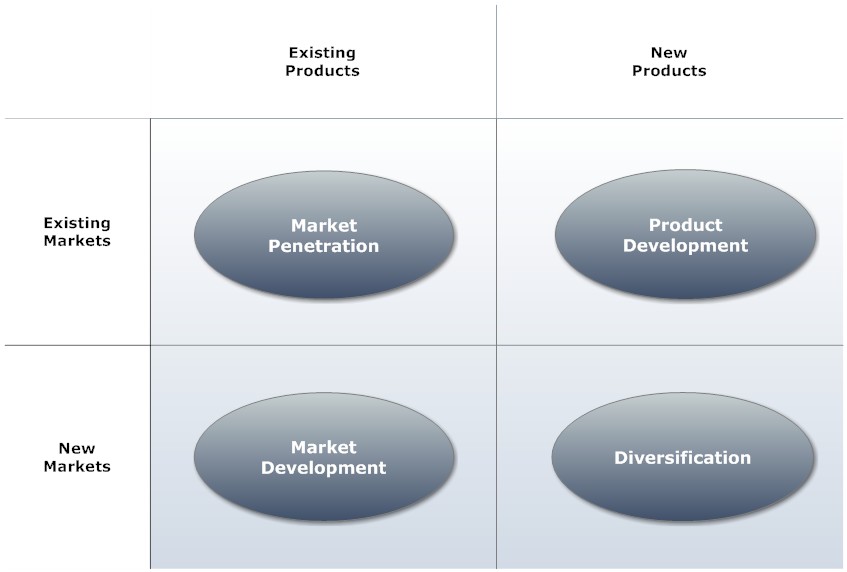
Market Penetration is where an organisation gains market share. in existing market with existing product range. Consolidation is When organisation focus defensively on their current market with current products
Constraints: Retaliation from competitors, Legal constraints (monopoly)
Product Development is where organisations deliver modified or new products to existing markets.Implies greater degree of innovation.
Constraints: New strategic capabilities, Project management risk
Market Development is where existing products are offered in new markets. Could take the form of new segments, new users or new geographies. Market development strategies must be based on CSF of the new market.
Constraints similar to Product Development
Reasons for Diversification:
Efficiency Gains - Economies of Scope (Benefits of Synergy)
Stretching corporate parenting capabilities
Increasing market power
Responding to market decline
Spreading risk
Vertical Vs Horizontal Integragtion
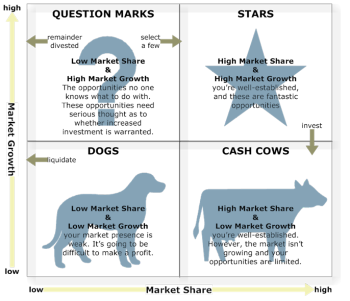
A portfolio of products can be analysed using the Boston Group Consulting Matrix. This categorises the products into one of four different areas, based on:
Market share – does the product being sold have a low or high market share?
Market growth – are the numbers of potential customers in the market growing or not?
The Boston Matrix makes a series of key assumptions:
Market share can be gained by investment in marketing
Market share gains will always generate cash surpluses
Cash surpluses will be generated when the product is in the maturity stage of the life cycle
The best opportunity to build a dominant market position is during the growth phase
How does the Boston Matrix work? The four categories can be described as follows:
Stars are high growth products competing in markets where they are strong compared with the competition. Often Stars need heavy investment to sustain growth. Eventually growth will slow and, assuming they keep their market share, Stars will become Cash Cows
Cash cows are low-growth products with a high market share. These are mature, successful products with relatively little need for investment. They need to be managed for continued profit - so that they continue to generate the strong cash flows that the company needs for its Stars
Question marks are products with low market share operating in high growth markets. This suggests that they have potential, but may need substantial investment to grow market share at the expense of larger competitors. Management have to think hard about “Question Marks” - which ones should they invest in? Which ones should they allow to fail or shrink?
Unsurprisingly, the term “dogs” refers to products that have a low market share in unattractive, low-growth markets. Dogs may generate enough cash to break-even, but they are rarely, if ever, worth investing in. Dogs are usually sold or closed.
To sustain competitive advantage, resources and capabilities should be:
Valuable - Things
that customers are willing to pay for
Rare - At
least rare, even better unique
Inimitable - Difficult
for competitors to imitate
Usable
by the Organisation -The
firm is organised, ready, and able to exploit the resource/capability
Strategy
Strategic Position
Strategic Position 2
Strategic Position and Purpose
Strategic Drection
Informationen
- Beschreibung
- Exam study notes
- Erstellt von
- dekanola · Dez 2013
- Aktualisiert
- 6 Apr 2018
- Aufrufe
- 1.688
- Tags
- Bewertung