
Dr Jekyll and Mr Hyde
Folien in diesem Satz (13)
-
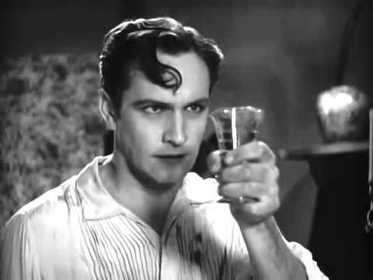
- Bildunterschrift: Dr Jekyll with a potion
- Jekyll is a doctor and experimental scientist.
- He is wealthy and respectable.
- He has been a sociable person in the past, with a circle of friends including the lawyer, Utterson, and another doctor, Lanyon.
- During the course of the novel his behaviour becomes increasingly erratic.
- His
- will states that if he disappears he leaves everything to Hyde. His
- oldest friend, Utterson, knows nothing of Hyde and urges Jekyll to
- change his will. He fears Hyde has a mysterious, perhaps criminal, hold
- over Jekyll, and that Hyde might murder him to benefit from the will.
- In
- the last chapter we learn that Jekyll has been carrying out experiments
- to separate his personality (the 'evil' part embodied in Hyde) from his
- higher nature. Hyde eventually becomes more powerful and takes over.
-
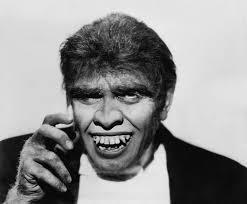
- Bildunterschrift: Mr Edward Hyde
- He is described as small ('dwarfish') and young.
- People
- react with horror and fear when they see him. But there is no single
- thing about him that is especially unpleasant; it is as if his spirit
- affects people.
- He is violent, and has no sense of guilt about
- his crimes. In Chapter 1, Hyde assaults a young girl, and in Chapter 4
- he beats an elderly gentleman to death. He has no motive for either of
- these attacks.
- His appearances in the novel are always brief.
- People only catch impressions of him, before he vanishes into the dark
- or behind a door.
- Hyde is very secretive.
-
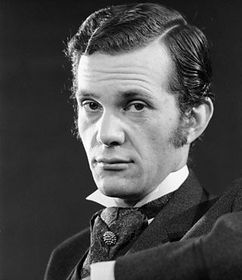
- Bildunterschrift: Mr Utterson
- Utterson is an old friend of Jekyll, and his lawyer.
- He
- is calm and rational, just as lawyers are supposed to be. Rather like a
- scientist, his approach in life is to weigh up the evidence.
- Utterson
- is 'a lover of the sane and customary sides of life'. Stevenson
- probably uses him to represent the attitudes of the average reader of
- his time.
- His sense of shock and horror when he first meets
- Hyde is, by contrast to his normal reaction to things, irrational: 'not
- all these points together could explain the hitherto unknown disgust,
- loathing and fear with which Mr Utterson regarded him.'
- He
- spends much of the novel trying to advise and help Jekyll, giving advice
- about his will and avoiding Hyde, and trying to help him when he shuts
- himself in his room. Jekyll recognises that he is a good friend, but
- rejects all his offers of help.
-
- Bildunterschrift: Richard Enfield
- A distant relative of Utterson, Enfield is a well-known man about town and the complete opposite to Utterson.
-
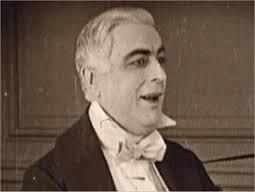
- Bildunterschrift: Richard Poole
- He is Jekyll's man servant.
- Poole appears briefly in the novel from time to time, notably when Utterson goes to visit Jekyll.
- In
- Chapter 8, he goes to Utterson's house to report the strange goings on
- in Jekyll's house. He helps Utterson to break down the door.
- ekyll’s
- butler. Mr. Poole is a loyal servant, having worked for the doctor
- for twenty years, and his concern for his master eventually drives
- him to seek Utterson’s help when he becomes convinced that something
- has happened to Jekyll.
-
- Mr Guest is Utterson's secretary and a handwriting expert. In Chapter 5,
- he comments on the remarkable similarity between Jekyll and Hyde's
- handwriting.
- Guest notices that Hyde's script is the same
- as Jekyll's, but slanted the other way. Sir Danvers Carew - A well-liked
- old nobleman, a member of Parliament, and a client of Utterson.
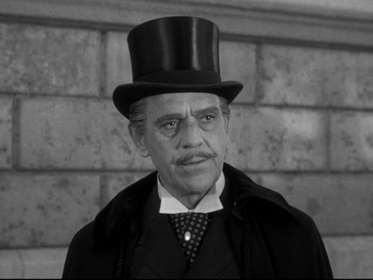
- Bildunterschrift: Mr Guest
-
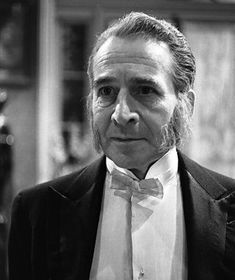
- Dr Jekyll and Dr Lanyon were close friend, however when Dr Jekyll got intreteted about spepraing the bad from the good.
- Lanyon is questioned keenly by Utterson about Jekyll, but Lanyon will
- say nothing definite, just that Jekyll is interested in the perverse
- aspects of science, and for that reason, he is no longer friends with
- him.
- Dr lanyon became termanly after seen the transformation of Mr Hyde to Dr Jekyll.
-
- Chapter 1 – Story of the Door
- Utterson and Enfield are out for a walk when
- they pass a strange-looking door (the entrance to Dr Jekyll's laboratory).
- Enfield recalls a story involving the door. In the early hours of one winter
- morning, he says, he saw a man trampling on a young girl. He pursued the man
- and brought him back to the scene of the crime. (The reader later learns that
- the man is Mr Hyde.)
- A crowd gathered and, to avoid a scene, the
- man offered to pay the girl compensation. This was accepted, and he opened the
- door with a key and re-emerged with some money and a large cheque.
- Utterson is very interested in the case and
- asks whether Enfield is certain Hyde used a key to open the door. Enfield is
- sure he did.
- Chapter 2 – Search for Hyde
- That evening the lawyer, Utterson, is troubled
- by what he has heard. He takes the will of his friend Dr Jekyll from his safe.
- It contains a worrying instruction: in the event of Dr Jekyll's disappearance,
- all his possessions are to go to Mr Hyde.
- Utterson decides to visit Dr Lanyon, an old
- friend of his and Dr Jekyll's. Lanyon has never heard of Hyde, and not seen
- Jekyll for ten years. That night Utterson has terrible nightmares.
- He starts watching the door (which belongs to
- Dr Jekyll's old laboratory) at all hours, and eventually sees Hyde unlocking
- it. Utterson is shocked by the sense of evil coming from him.
- Utterson goes next door to warn his friend,
- Jekyll, against Hyde, but is told by the servant, Poole, that Jekyll is out and
- the servants have all been instructed by Jekyll to obey Hyde.
- Utterson is worried that Hyde may kill Jekyll
- to benefit from the will.
-
- Chapter 3 – Dr Jekyll was Quite at Ease
- Two weeks later, following a dinner party with
- friends at Jekyll's house, Utterson stays behind to talk to him about the will.
- Jekyll laughs off Utterson's worries,
- comparing them to Lanyon's 'hidebound' (conventional and unadventurous)
- attitude to medical science. The reader now sees why Lanyon and Jekyll have
- fallen out, and starts to understand that Jekyll's behaviour has become
- unusual.
- Utterson persists with the subject of the
- will. Jekyll hints at a strange relationship between himself and Hyde. Although
- he trusts Utterson, Jekyll refuses to reveal the details. He asks him, as his
- lawyer not his friend, to make sure the will is carried out. He reassures him
- that 'the moment I choose, I can be rid of Mr Hyde'.
- Chapter 4 – The Carew Murder Case
- Nearly a year later, an elderly gentleman is
- brutally clubbed to death in the street by Hyde. The murder is witnessed by a
- maid who recognises Hyde.
- A letter addressed to Utterson is found on the
- body and the police contact him. He recognises the murder weapon as the broken
- half of a walking cane he gave to Jekyll years earlier. When he hears that the
- murderer is Hyde, he offers to lead the police to his house.
- They are told that Hyde has not been at home
- for two months. But when they search the house they find the other half of the
- murder weapon, a semi-burnt cheque book and signs of a hasty exit.
-
- Chapter 5 – The Incident of the Letter
- Utterson goes to Jekyll's house and finds him
- 'looking deadly sick'. He asks whether he is hiding Hyde. Jekyll assures him he
- will never see or hear of Hyde again. He shows Utterson a letter from Hyde that
- indicates this. Jekyll also hints that it was Hyde who forced him to write his
- will which assures Utterson he was right in thinking Hyde wanted to murder
- Jekyll.
- Utterson asks Guest, his head clerk, to compare
- the handwriting on the letter to that on an invitation from Jekyll. There is a
- resemblance between the two, though with a different slope. Utterson believes
- Jekyll has forged the letter in Hyde's handwriting to cover his escape.
- Chapter 6 – Remarkable Incident of Dr Lanyon
- The police cannot find Hyde. Coincidentally,
- Jekyll seems happier and, for two months, he socialises again.
- Suddenly, however, he appears depressed and will not see Utterson. Utterson
- visits Dr Lanyon to discuss their friend's health, but finds Lanyon on his
- death-bed.
- Lanyon refuses to discuss Jekyll who, he hints, is the cause of his illness.
- Trying to find out what has happened, Utterson writes to Jekyll. He receives a
- reply which suggests Jekyll has fallen into a very disturbed state and talks of
- being 'under a dark influence’.
- Lanyon dies and leaves a letter for Utterson in an envelope marked 'not to be
- opened till the death or disappearance of Dr Henry Jekyll'. Utterson, being a good
- lawyer, locks it away unopened in his safe.
- Utterson tries to revisit Jekyll several
- times, but his servant, Poole, says he is living in isolation in his laboratory
- and will not see anyone.
-
- Chapter 7 - Utterson and Enfield are taking one of their walks, as at the
- opening of the book. They pass Jekyll's window and see him looking like a
- prisoner in solitary confinement. Utterson calls out to him and Jekyll replies,
- but his face suddenly freezes in an expression of ‘abject terror and despair'.
- The change in Jekyll's expression is so sudden
- and horrible it 'froze the very blood of the two gentlemen below’ and they
- depart in silence.
- Chapter 8 – The Last Night
- One evening, Jekyll's servant comes to Utterson and asks him to
- come to Jekyll's house. They go to the laboratory, but the door is locked. The
- voice from inside does not sound like Jekyll's and both men believe it is Hyde.
- Poole says the voice has for days been crying out for a
- particular chemical to be brought, but the chemicals given have been rejected
- as 'not pure'.
- Poole says that earlier he caught a glimpse of a person in the
- lab who looked scarcely human.
- They break down the door and inside find a body, twitching. In
- its hand are the remains of a test tube (or vial). The body is smaller than
- Jekyll's but wearing clothes that would fit him.
- On the table is a will dated that day which leaves everything to
- Utterson, with Hyde's name crossed out. There is also a package containing
- Jekyll's 'confession' and a letter asking Utterson to read Dr Lanyon's letter
- which he left after his death (in chapter
- 6) and is now in Utterson's safe.
- Utterson tells Poole he will return before midnight, when he has
- read all the documents.
-
- Chapter 9
- – Dr Lanyon’s Narrative
- Chapter 9 lists the contents of Dr Lanyon's letter. It tells of
- how Lanyon received a letter from Jekyll asking him to collect a drawer
- containing chemicals, a vial and a notebook from Jekyll's laboratory and to
- give it to a man who would call at midnight.
- Lanyon says he was curious, especially as the book contained
- some strange entries.
- At midnight a man appears. He is small and grotesque, wearing
- clothes that are too large for him.
- The man offers to take the chemicals away, or to drink the
- potion.
- Lanyon accepts and, before his very eyes, Hyde transforms into
- none other than Dr Jekyll.
- In horror at what he has witnessed, Lanyon becomes seriously
- ill.
- Chapter 10 – Henry Jekyll’s Full Statement of the Case
- Jekyll tells the story of how he turned into Hyde.
- It began as scientific curiosity in the duality of human nature
- (or the good and evil), and his attempt to destroy the 'darker self'.
- Eventually, however, he became addicted to the character of Hyde, who increasingly
- took over and destroyed him.
- The novel does not return to Utterson who, at the end of Chapter
- 8, was going to return to Jekyll's house.
Informationen
- Beschreibung
- Year 11 English Folienset am Dr Jekyll and Mr Hyde , erstellt von lewis shore am 05/04/2017.
- Erstellt von
- lewis shore · Apr 2017
- Aktualisiert
- 8 Mai 2017
- Aufrufe
- 228
- Bewertung