
Types of reproduction and cloning
Folien in diesem Satz (15)
-
Different Types Of Reproduction & Cloning
- Reproduction:
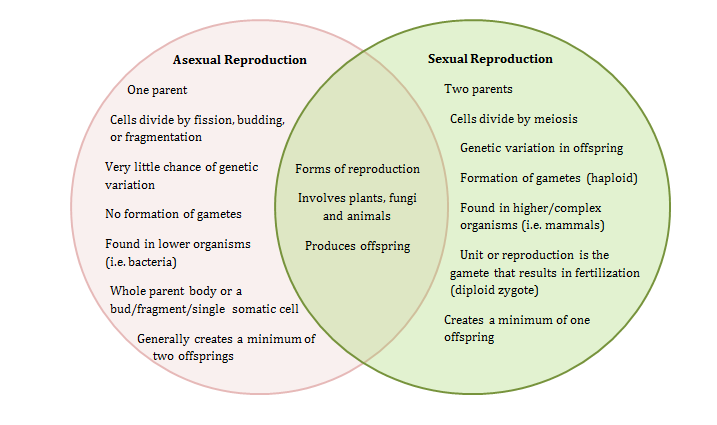
- Sexual Reproduction
- Asexual Reproduction
- Cloning:
- Tissue culture
- Embryo transplanting
- Adult cell cloning
- Genetic engineering
- Making GM Crops
-
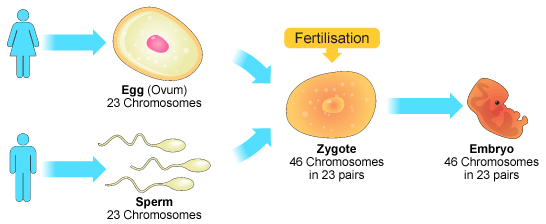
- Occurs when the nucleus of a sperm cell fuses with an egg cell to produce a fertilised egg.
- When gametes are farmed they only receive half of the chromosomes that are in a body cell. Fertilised egg gets half it's chromosomes from the mother (egg cell) and the other half from the father (sperm cell) the process of producing gametes will contain the same variation of genes.
- The variation in the genes in each gamete and the mixing of genes from the father and mother make it unlikely that two offspring from the same parent will be alike (unless they're identical twins which are formed from the same fertilised egg.)
- Bildunterschrift: Diagram of the process of sexual reproduction
-
- Offspring are produced from the division of cells in the parent without the need of fertilisation by a sperm. So the cell offsrping contains exactly the same chromosomes as the parent. All the offspring are genetically identical and called clones.
- Asexual reproduction can happen much faster than sexual reproduction.
- Some plants can reproduce asexually. Plants that live in places where it is either too cold or hot for growth during the year, may form underground storage organs e.g potatoes, each of which can form a new plant in the next growing season.
- Diagram of Asexual Reproduction
-
Applications of sexual reproduction
- We can make clones of plant artificially by copying the natural asexual process, such as taking potatoes from an old plant and planting them separately. For some plants we can also take cuttings. These are parts of a plant usually the stem or leaf. The cuttings grow roots and develop into new plants. This can produce lots of new plants more quickly can sexual reproduction and more cheaply as it is quicker.
- Asexual reproduction is how all plants and animals grow and produce replacement cells.
- Some organisms also produce offspring using asexual reproduction e.g bacteria and certain plants.
-
-
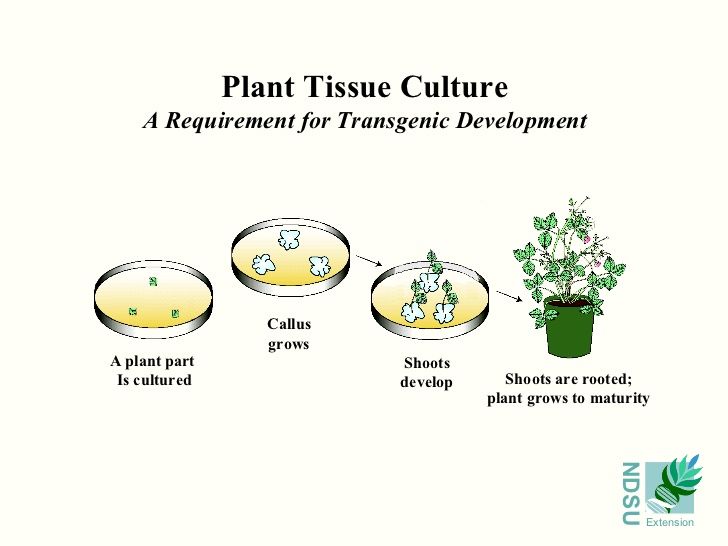
- Tissue Culture - growths of cells and for tissue outside the animal or plant. Whole plants can be grown from plant cells using tissue culture.
- This is a form of cloning.
- Cells are taken from the tip of the shoot and placed on a jelly dish that contains nutrients and chemicals which help the cell divide.
- They make small balls of cells called callus. The callus can be split to make new calluses. Each callus is the put on a jelly that contains different chemicals to encourage roots and shoots to form.
- When the new plant is large enough it is then planted into compost. Tissue culture makes it easier to grow thousands of new plants from the original one.
-
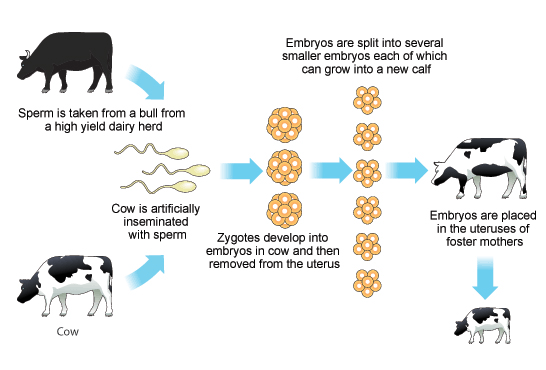
- Embryo transplanting - splitting each embryo into separate cells and placing them into the womb of, surrogate mothers develop.
- When animals reproduce, most of the cells in the embryo specialise before the animal is born.
- Specialised animal cells, cannot change into other kinds of cells. This means that cloning animals is much more difficult than cloning plants but can be done.
- Embryo transplants:
- An egg is fertilised with sperm in a laboratory when it has divided to make 4 or 8 cells, before they start to specialise the cells are separated to make new embryos.
- These are then transplanted into the womb of hostess mothers when they grow until ready to be born.
-
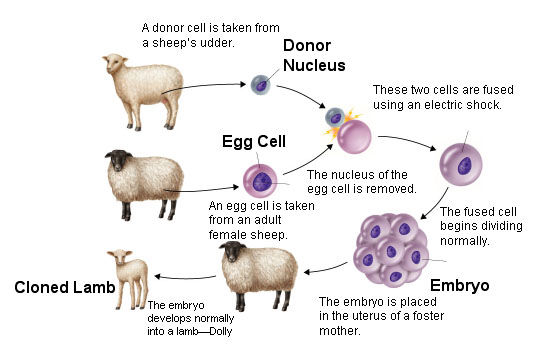
- Another animal cloning technique is called adult cell cloning, where the nucleus of an unfertilised egg cell is removed and replaced with the nucleus and replaced with the nucleus of a body cell e.g skin cell, from an adult animal. The egg cell can be given an electric shock so that it divides like a normal embryo. The embryo will contain the same genetic information as the adult body cell. Although this was first done successfully with sheep it has been repeated for many animals species.
- People are concerned that it could be used to clone humans, but scientist are using the technique to make replacement cells for problems such as spinal cord damage.
- The first lamb born by this process was Dolly the sheep, in 1996.
- Bildunterschrift: Diagram of Adult Cell Cloning
-
- Cloning quickly gets you lots of 'ideal' off spring but you also get a 'reduced gene pod'- this means there are fewer different alleles in the population. I the population are all closely related and a new disease appears, they could all be wiped out.
- There may be no allele in the population giving resistance to the disease.
- But the study of animal clones could lead to a greater understanding of the development of the embryo and of age related disorders.
- Cloning could also be used to help preserve endangered species.
- It's possible that cloned animals might not be as healthy as normal ones e.g the sheep had arthritis, which tends to occur in older sheep.
- Some people worry that humans might be cloned in the future. If it was allowed any success many follow many unsuccessful attempts e.g. children being born severely disabled.
-
- Gardeners can take cuttings from good parent plants and then plant them to produce genetically identical copies (clones) of the parent plant.
- These plants can be produced quickly and cheaply.
- This cloning method is done by taking cuttings from a parent plant, each of these cuttings must have a new bud on it. These cuttings are then placed and kept in moist conditions until they're ready to plant. This will produce a cloned plant.
-
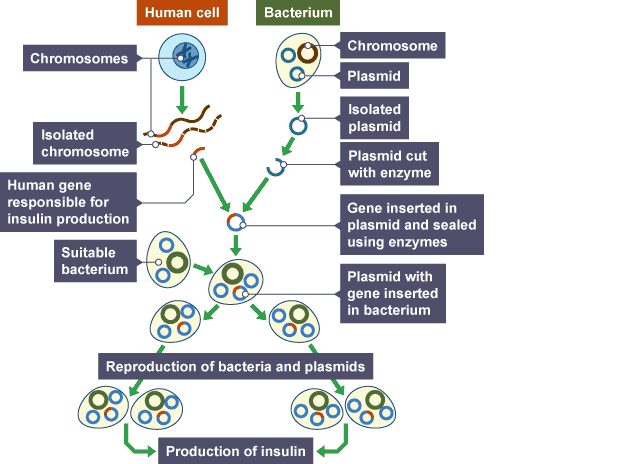
- Genetic Engineering - The process of taking genes from one organism and putting them into cells of another so that cells include the characteristics of the new gene.
- The organism that contains the new gene has been genetically modified (GM) and is called transgenic organisms.
- Genetic Engineering has many practical applications e.g. we can transfer the gene for making the hormone insulin from a human to a bacterium. Insulin is a hormone that is needed by some diabetic people to prevent them becoming ill. It is possible a large scale in bacterial fermenters. This means we can make a lot of human insulin more cheaply and safely than before. We now use GM bacteria to make human growth hormone and a vaccine to protect against infection by the disease hepatitis B. Before we could use GM bacteria to produce insulin. The insulin was extracted from dead animals. This is not only meant there was less insulin available, but the insulin produced was not identical to human insulin ad could cause health problems.
- Bildunterschrift: It's also possible to insert a gene into some of the body cells rather than early embryo . This means than only those body cells make what the gene codes for and the gene cannot be passed on to off spring. Scientists are developing ways of treating human diseases caused by faulty genes such as cystic fibrosis.
-
Transferring genes at an early stage
- Genes can also be transferred into a plant or animal embryo at an early stage in their development. As all the organisms grow all the cells in its body will have a copy of the inserted gene so all cells can develop the desired characteristics. This technique is normally used for causes and treatments of human diseases.
- Mice have been genetically modified so that they can be used to study the effect of changes to particular genes that cause human diseases using mice like this has rapidly increased our knowledge and means treatment would be developed sooner.
-
- Plants can be genetically modified by inserting the required gene into the cells of an early embryo. Often bacterium called agrobacterium is used to get the new gene inside the nucleus of the cells where it can join with the cells DNA.
- This is done by getting cells from a plant and growing them into calluses as tissue culture. Then the cells are separated and mixed with bacteria herbicide gene. Plant cells are then tested and only the bacterium that has taken in the new gene are kept. The cells are then cultured to grow into a new plant. Finally the herbicide resistance [plants produce seeds that can be planted in fields.
-
- Many GM crops have herbicide resistance. While a crop is growing other plants compete for water and nutrients in the soil these weed plants can reduce the amount of food harvested from the crop (the yield). Farmers use herbicides to kill plants, but these chemicals can damage the crop plants as well. Using crops that are resistant to a particular herbicide means that the crops can be sprayed with the herbicide to kill weeds without damaging the crops.
-
- Pros:
- GM crops can increase the yield of a crop, making more food.
- People living in developing countries often lack nutrients in their diets. GM crops could be engineered to contain the nutrients which are missing.
- GM crops are already being grown somewhere else in the world (not UK) often without any problems.
- Cons:
- Some people say that growing GM crops will affect the number of weeds and flowers (& population of insects) that live around the crops- reducing farmland biodiversity.
- Not everyone is convinced that GM crops are safe. People are worried that they may develop allergies to food- although there's probably more risks for this than for eating usual food.
- Transplanted genes may get out into the natural environment e.g. herbicide resistance game may be picked up by weeds creating a new 'superweed' variety.
Informationen
- Beschreibung
- GCSE Biology (Core Biology) Folienset am Types of reproduction and cloning , erstellt von Demi Wilkie am 28/04/2017.
- Erstellt von
- Demi Wilkie · Apr 2017
- Aktualisiert
- 28 Apr 2017
- Aufrufe
- 53
- Bewertung