
Notizen
Crude Oil
Inhalt der Notizen (1)
Seite 1
Crude Oil is a big hydrocarbonic mixture, which contains chains full of carbon and hydrogen
Crude Oil is a mixture, this means that it can be separated by physical means. This process is called Fractional Distillation
This is a fractionating tower:
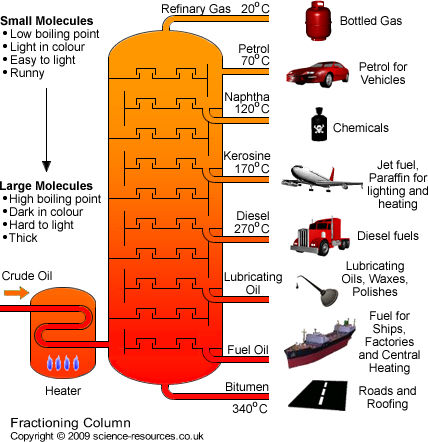
It works like so:
Crude Oil if fed in through the furnace and vapourised. As the vapours float up, The tower gets colder, and then the vapours condense at their appropriate boiling points. The liquid formed runs of into trays and are tapped off later. As you go up the tower, the hydrocarbon chains get shorter, less viscous, more volatile and burn easier.
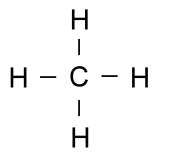
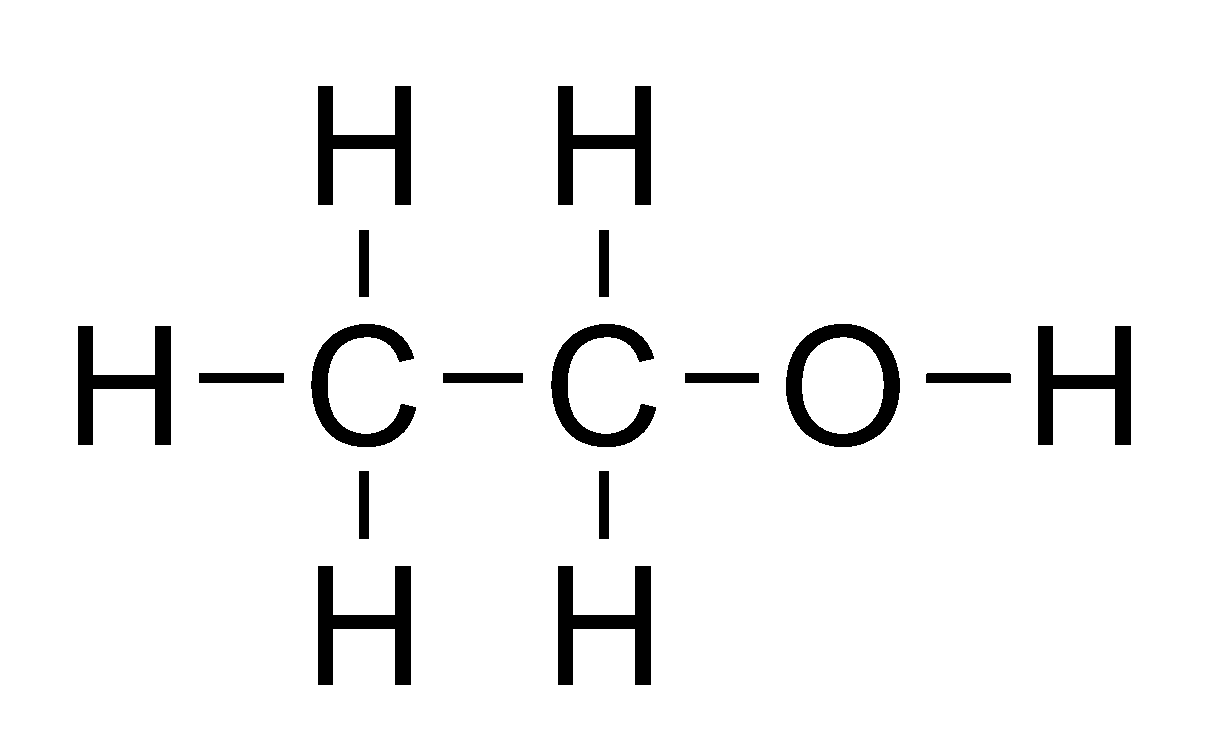
On the left is Methane which IS a hydrocarbon, but on the right, Ethanol isn't a hydrocarbon
Crude OIl was formed from dead sea creatures millions of years ago. When they died they were they were covered with sand and silt. Lack of oxygen in decay caused incomplete decomposition by microbes. Pressure from above and heat from the Earth compressed material and furthered oxygen depression. The resulting matter became Crude Oil.
CRACKING OF CRUDE OIL:
Some hydrocarbons with little wordly demand like paraffin can be cracked into smaller more useful hydrocarbons which are to be sold.
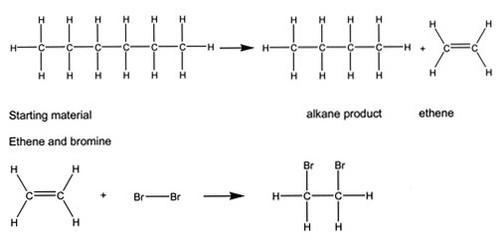
You can crack hydrocarbons using a catalyst ( like aluminium oxide) and high temperatures
There are three different groups of hydrocarbons
Alkanes
Alkenes
Alkynes


Alkanes have single bonds between the carbon atoms and a general formula of Cn H2n+2
the first four:
Mehane
Ethane
Propane
Butane
Alkenes have double bonds between the carbon atoms
1st 4:
ethene
propene
butene
pentene
New Page
Informationen
- Beschreibung
- GCSE Chemistry Notiz am Crude Oil, erstellt von Jawad Karim am 25/05/2014.
- Erstellt von
- Jawad Karim · Mai 2014
- Aktualisiert
- 6 Apr 2018
- Aufrufe
- 193
- Tags
- Bewertung