
Quiz
Edexcel (9-1) Topic 3
Dieses Quiz enthält Fragetypen, die sich im gewohnten Player öffnen.
Fragen in diesem Quiz (12)
1The higher the concentration of hydrogen ions in an acidic solution, the lower the pH
- ARichtig
- BFalsch
2As hydrogen ion concentration in a solution increases by a factor of 10, the pH of the solution decreases by [blank_start]1[blank_end]
- A1
3Complete the diagram to show the different colours indicators turn for these different solutions. Two have been completed for you.
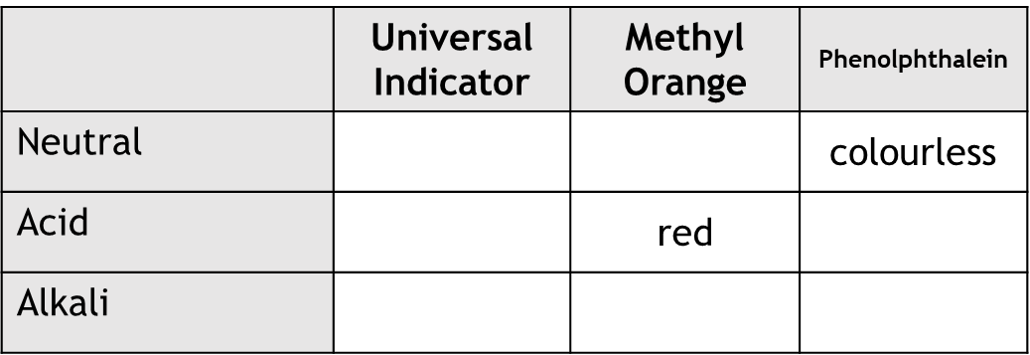
- Agreen
- Borange
- Cred
- Dpurple
- Eyellow
- Fcolourless
- Gpink
4A positive test for hydrogen gas would be to bubble it through limewater, and it turn cloudy/milky.
- ARichtig
- BFalsch
5Which of the following salts are soluble?
- Asodium chloride
- Bsodium nitrate
- Csilver chloride
- Dbarium sulfate
- Ebarium chloride
- Fsodium carbonate
- Gcopper carbonate
- Hcalcium hydroxide
6electrolysis of copper chloride solution will form:
[blank_start]copper[blank_end] at the cathode
[blank_start]chlorine[blank_end] at the anode
electrolysis of sodium chloride solution will form:
[blank_start]sodium[blank_end] at the cathode
[blank_start]chlorine[blank_end] at the anode
electrolysis of sodium sulfate solution will form:
[blank_start]sodium[blank_end] at the cathode
[blank_start]oxygen[blank_end] at the anode
electrolysis of water acidified with sulfuric acid will form:
[blank_start]hydrogen[blank_end] at the cathode
[blank_start]oxygen[blank_end] at the anode
electrolysis of lead bromide will form:
[blank_start]lead[blank_end] at the cathode
[blank_start]bromine[blank_end] at the anode- Acopper
- Bhydrogen
- Cchlorine
- Doxygen
- Esodium
- Fhydrogen
- Gchlorine
- Hoxygen
- Isodium
- Jhydrogen
- Koxygen
- Lsulfur
- Mhydrogen
- Noxygen
- Osulfur
- Poxygen
- Qhydrogen
- Rsulfur
- Slead
- Thydrogen
- Ubromine
- Voxygen
7sodium + [blank_start]hydrochloric[blank_end] acid → [blank_start]sodium[blank_end] chloride + water
[blank_start]copper[blank_end] oxide + sulfuric acid → copper [blank_start]sulfate[blank_end] + water
[blank_start]potassium[blank_end] hydroxide+ [blank_start]nitric[blank_end] acid → potassium nitrate + water
[blank_start]magnesium[blank_end] carbonate + hydrochloric acid → magnesium [blank_start]chloride[blank_end] + water + [blank_start]carbon dioxide[blank_end]- Ahydrochloric
- Bsodium
- Ccopper
- Dsulfate
- Epotassium
- Fnitric
- Gcarbon dioxide
- Hmagnesium
- Ichloride
8When making a soluble salt from an acid and insoluble reactants:
excess of the reactant (a metal, metal oxide, or metal carbonate) is added to make sure all of the insoluble reactant reacts- ARichtig
- BFalsch
9When completing a titration, you need to work out a mean titre, and you must only include results that are concordant in your calculation.
- ARichtig
- BFalsch
10most common sulfates (apart from lead sulfate, barium sulfate, calcium sulfate) are soluble
- ARichtig
- BFalsch
11sulfuric acid + calcium [blank_start]carbonate[blank_end] → calcium [blank_start]sulfate[blank_end] + [blank_start]water[blank_end] + carbon dioxide
- Asulfate
- Bcarbonate
- Cwater
12Label the diagram below
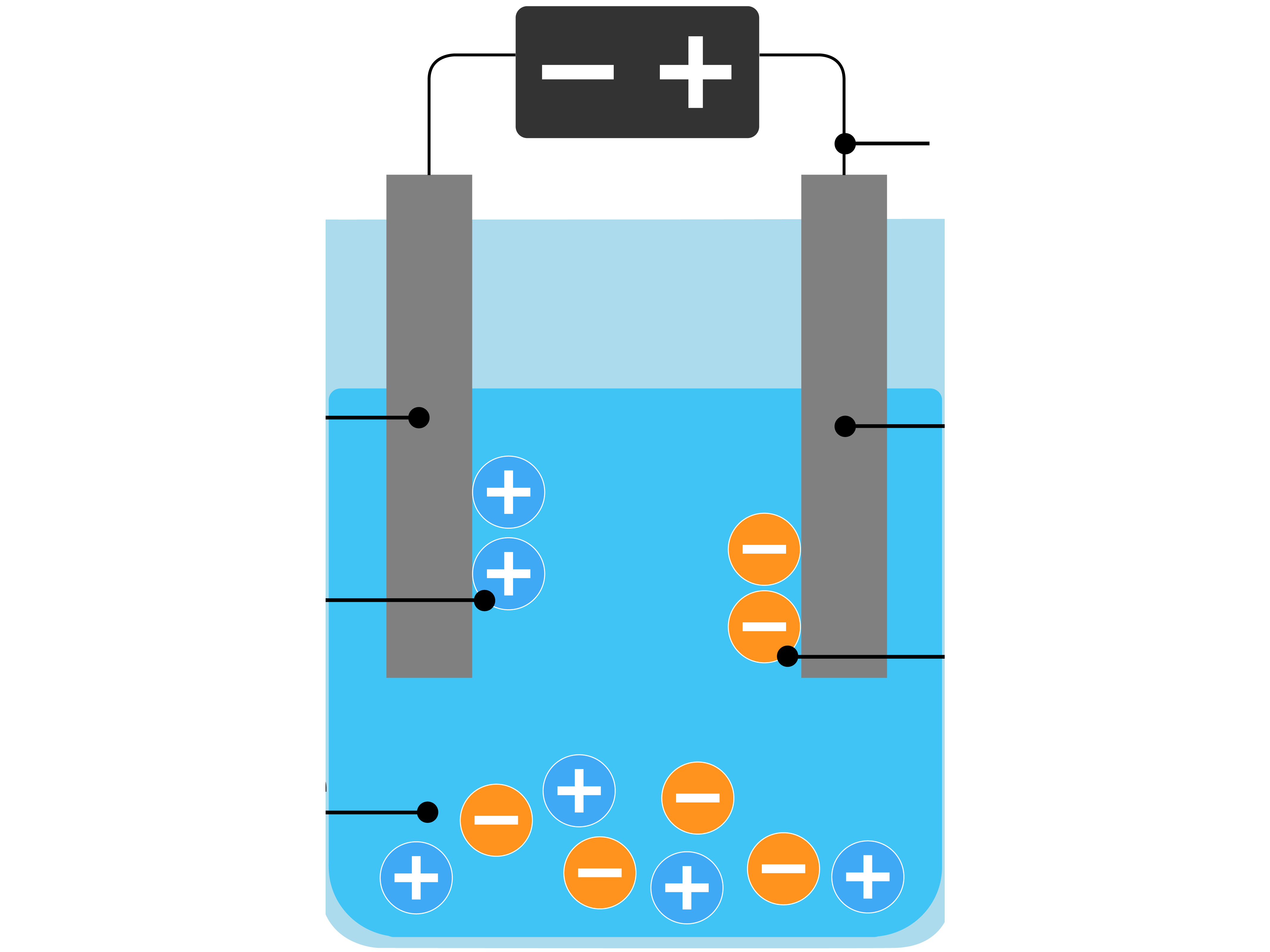
- ADC current
- BAC current
- Celectrolyte
- Dcation
- Ecathode
- Fanion
- Ganode
Informationen
- Beschreibung
- GCSE Chemistry (Edexcel) Quiz am Edexcel (9-1) Topic 3, erstellt von https:// revisechemistry.uk am 16/03/2018.
- Sprache
- English
- Aufrufe
- 405
- Schlagwörter
- Bewertung
- Noch keine Bewertungen Bewerte dieses Quiz