
Quiz
Edexcel (9-1) Topic 3
This quiz has question types that open in the usual player.
Questions in this quiz (12)
1The higher the concentration of hydrogen ions in an acidic solution, the lower the pH
- ATrue
- BFalse
2As hydrogen ion concentration in a solution increases by a factor of 10, the pH of the solution decreases by [blank_start]1[blank_end]
- A1
3Complete the diagram to show the different colours indicators turn for these different solutions. Two have been completed for you.
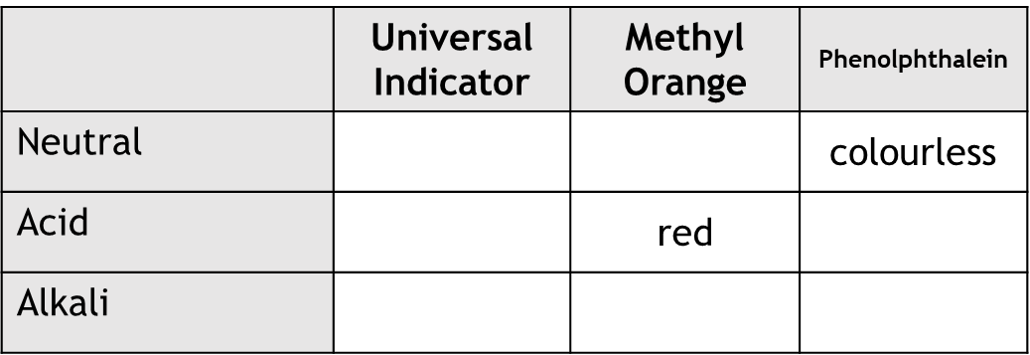
- Agreen
- Borange
- Cred
- Dpurple
- Eyellow
- Fcolourless
- Gpink
4A positive test for hydrogen gas would be to bubble it through limewater, and it turn cloudy/milky.
- ATrue
- BFalse
5Which of the following salts are soluble?
- Asodium chloride
- Bsodium nitrate
- Csilver chloride
- Dbarium sulfate
- Ebarium chloride
- Fsodium carbonate
- Gcopper carbonate
- Hcalcium hydroxide
6electrolysis of copper chloride solution will form:
[blank_start]copper[blank_end] at the cathode
[blank_start]chlorine[blank_end] at the anode
electrolysis of sodium chloride solution will form:
[blank_start]sodium[blank_end] at the cathode
[blank_start]chlorine[blank_end] at the anode
electrolysis of sodium sulfate solution will form:
[blank_start]sodium[blank_end] at the cathode
[blank_start]oxygen[blank_end] at the anode
electrolysis of water acidified with sulfuric acid will form:
[blank_start]hydrogen[blank_end] at the cathode
[blank_start]oxygen[blank_end] at the anode
electrolysis of lead bromide will form:
[blank_start]lead[blank_end] at the cathode
[blank_start]bromine[blank_end] at the anode- Acopper
- Bhydrogen
- Cchlorine
- Doxygen
- Esodium
- Fhydrogen
- Gchlorine
- Hoxygen
- Isodium
- Jhydrogen
- Koxygen
- Lsulfur
- Mhydrogen
- Noxygen
- Osulfur
- Poxygen
- Qhydrogen
- Rsulfur
- Slead
- Thydrogen
- Ubromine
- Voxygen
7sodium + [blank_start]hydrochloric[blank_end] acid → [blank_start]sodium[blank_end] chloride + water
[blank_start]copper[blank_end] oxide + sulfuric acid → copper [blank_start]sulfate[blank_end] + water
[blank_start]potassium[blank_end] hydroxide+ [blank_start]nitric[blank_end] acid → potassium nitrate + water
[blank_start]magnesium[blank_end] carbonate + hydrochloric acid → magnesium [blank_start]chloride[blank_end] + water + [blank_start]carbon dioxide[blank_end]- Ahydrochloric
- Bsodium
- Ccopper
- Dsulfate
- Epotassium
- Fnitric
- Gcarbon dioxide
- Hmagnesium
- Ichloride
8When making a soluble salt from an acid and insoluble reactants:
excess of the reactant (a metal, metal oxide, or metal carbonate) is added to make sure all of the insoluble reactant reacts- ATrue
- BFalse
9When completing a titration, you need to work out a mean titre, and you must only include results that are concordant in your calculation.
- ATrue
- BFalse
10most common sulfates (apart from lead sulfate, barium sulfate, calcium sulfate) are soluble
- ATrue
- BFalse
11sulfuric acid + calcium [blank_start]carbonate[blank_end] → calcium [blank_start]sulfate[blank_end] + [blank_start]water[blank_end] + carbon dioxide
- Asulfate
- Bcarbonate
- Cwater
12Label the diagram below
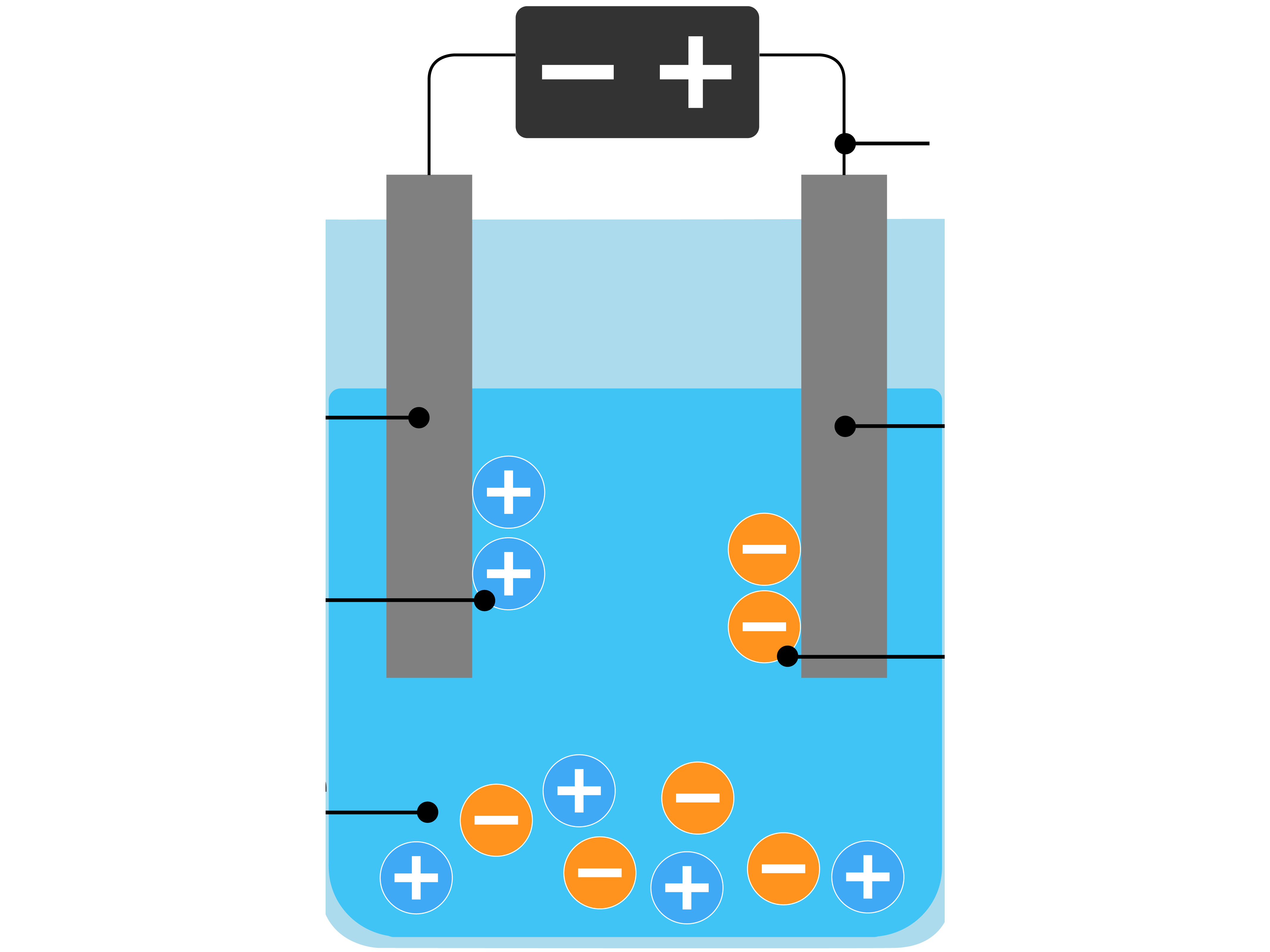
- ADC current
- BAC current
- Celectrolyte
- Dcation
- Ecathode
- Fanion
- Ganode
Information
- Description
- GCSE Chemistry (Edexcel) Quiz on Edexcel (9-1) Topic 3, created by https:// revisechemistry.uk on 16/03/2018.
- Language
- English
- Views
- 405
- Tags
- Rating
- No ratings yet Rate this quiz