
Quiz
practice test
Erstelle ein kostenloses Konto, um dieses Quiz zu beenden
Speichere deinen Fortschritt und sieh dir dein Endergebnis an.
oder mit deiner E-Mail registrieren
Schon ein Konto? Anmelden
Fragen in diesem Quiz (75)
1Which of the following BEST describes a referential montage?
- AThere is potential for electrode contamination.
- BLocalization is by phase reversal.
- CImpedance values are less important.
- DCommon mode rejection will no be effective.
2The ability to remontage while recording on digital equipment is the result of
- ASystem referencing
- BOut of phase cancellation
- CSignal processing
- DCommon mode rejection
3According to RECOMMENDED guidelines, the minimum duration of a significant leg movement is:
- A5 seconds
- B1 second
- C.1 second
- D.5 second
4The MOST COMMON method to monitor blood oxygen saturation during polysomnography is:
- AArterial blood gas
- BEnd-tital CO2
- CPulse oximetry
- DCapnography
5What intermittent 60 Hz activity occurs in the F4-M1 electrodes during REM sleep the BEST IMMEDIATE action would be to:
- AChange F4 electrodes
- BDocument and continue recording
- CRely on F3-M2
- DChange M1 electrode
6The electrode located 30% above the left pre-auricular crease is:
- AF3
- BO1
- CP3
- DC3
7The activity in the respiratory channels is BEST described as:
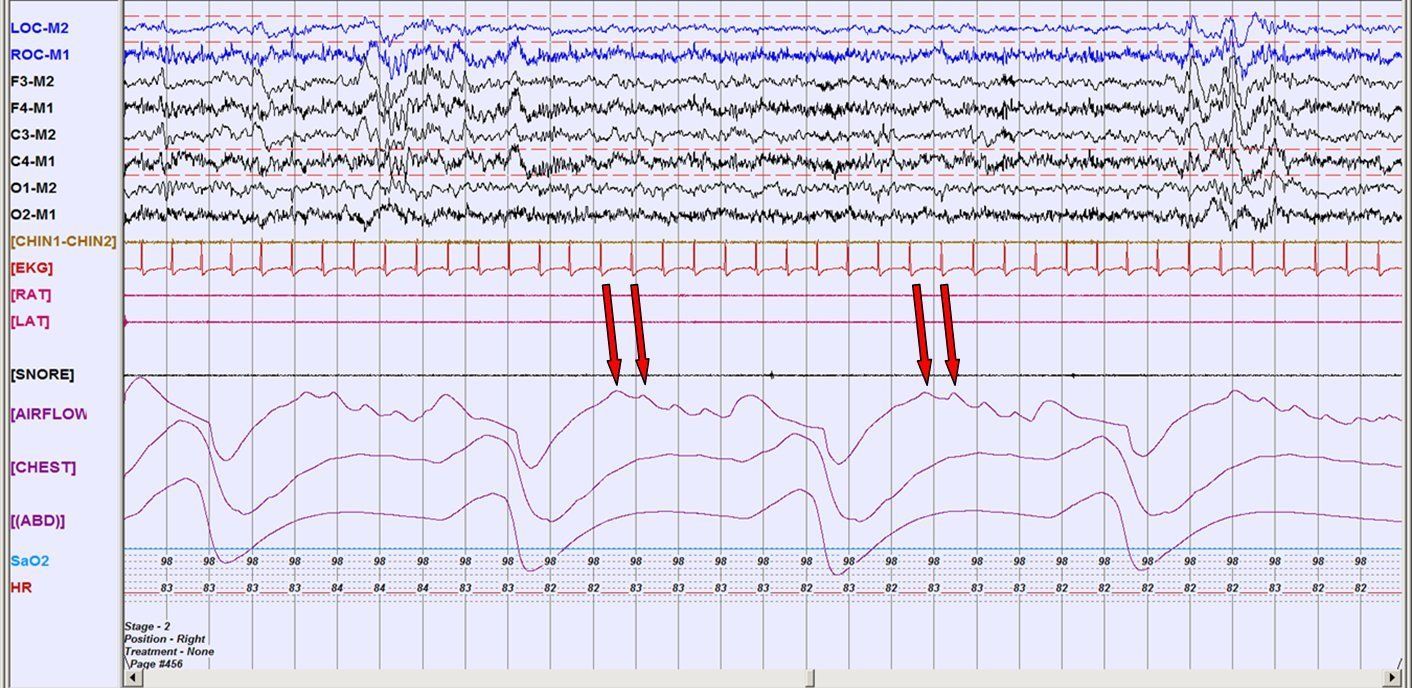
- APulse
- BECG
- C60 Hz
- DCardioballistic
8The MOST appropriate setting a technologist would use to control the frequency band of waveforms on a recording is the:
- ALow filter
- BSampling rate
- CSensitivity
- DDisplay gain
9According to RECOMMENDED guidelines, unattended portable monitoring can be used as an alternative to in-lab testing when:
- AThere is a high probability of moderate to severe OSA without comorbid conditions.
- BThe patient is unable to complete a comprehensive sleep evaluation.
- CComorbid disease processes make in-lab study difficult
- DDifferentiating RBD from OSA
10When the amplitude of a signal exceeds the physical limitations of a channel the MOST important adjustment the technologist can make to optimize waveform display is to:
- AIncrease display gain
- BDecrease sampling rate
- CIncrease HLF
- DDecrease sensitivity
11According to RECOMMENDED guidelines, four nap opportunities on a MSLT would be acceptable when the patient:
- AHad a greater than 8 hours of sleep on the PSG
- BIs unable to initiate sleep on two naps
- CHad REM on at least two nap opportunities
- DIs being evaluated for idiopathic hypersomnia
12According to RECOMMENDED guidelines, the maximum electrode impedence for EEG and EOG recording is:
- A15,000 ohms
- B5000 ohms
- C7500 ohms
- D10,000 ohms
13Which process would be an adequate routine procedure for disinfecting cup EEG electrodes after removing adhesive, gel and organic material, washing in warm water and mild detergent?
- ASoaking in 1:10 bleach and water for 10 minutes
- BPasteurization and allowing to air dry
- CSoaking in alcohol
- DAllowing to air dry and soaking in acetone
14According to RECOMMENDED guidelines, the sampling rate to provide the optimal resolution for recording EEG in a patient with suspected nocturnal seizures is:
- A500 Hz
- B50 Hz
- C100 Hz
- D300 Hz
15Identify the ECG rhythm in the graphic:
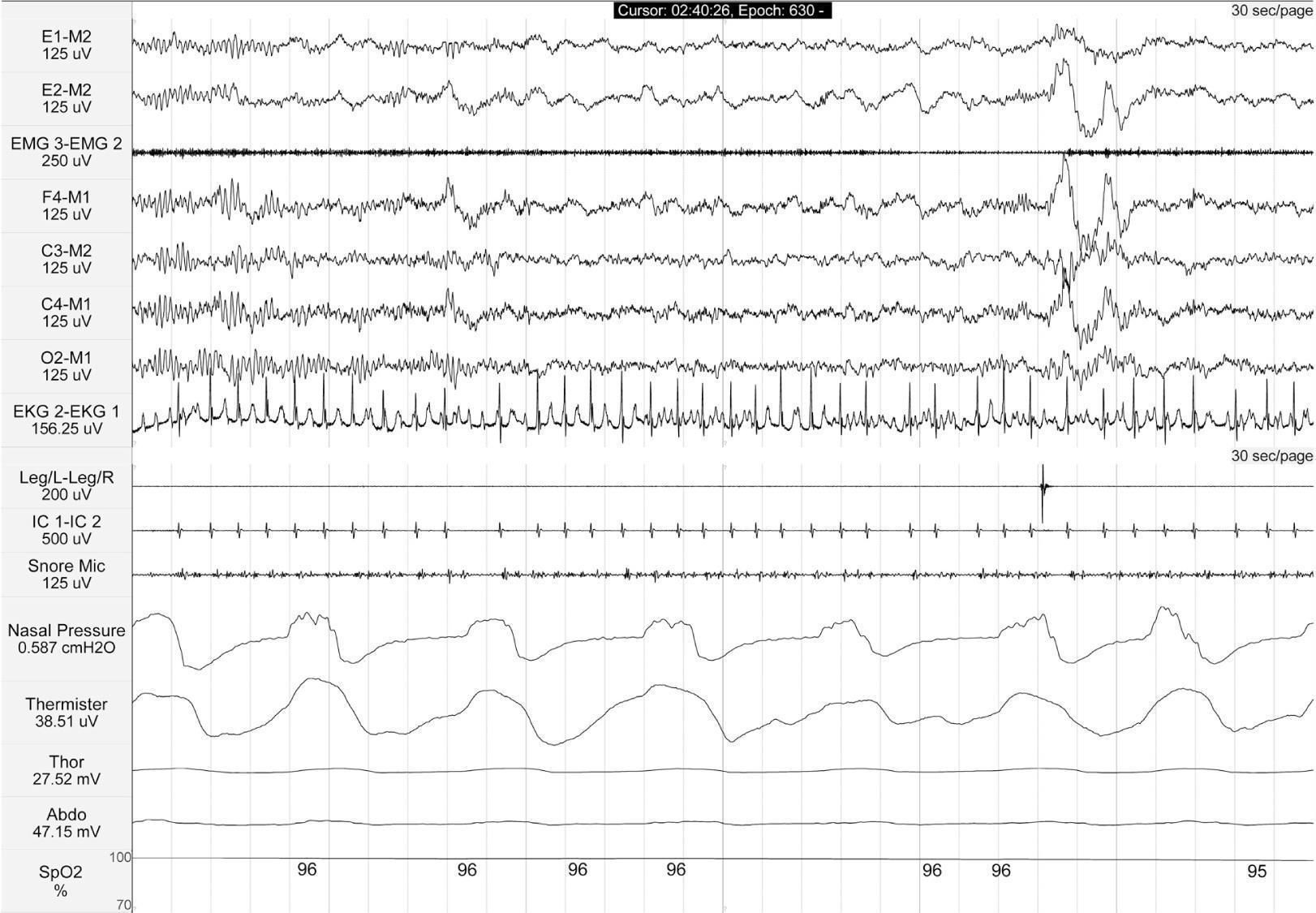
- AAtrial flutter
- BJunctional tachycardia
- CSinus tachycardia
- DAtrial fibrillation
16The most important reason for performing a MWT is to:
- APredict the need for administering stimulant medication
- BCalculate the total sleep time over 5 nap opportunities
- CDifferentiate narcolepsy from idiopathic hypersomnia
- DMeasure the patient's ability to resist the urge to fall asleep
17Which of the following would be the MOST important to document during a polysomnogram?
- APresence of periodic limb movements
- BOccasional Premature Ventricular Contractions (PVCs)
- CPosition changes
- DNumber of awakenings
18According to RECOMMENDED guidelines, an optional parameter to include in the report for an adult polysomnogram is:
- ANumber to periodic limb movements with arousals
- BHighest heart rate during the recording
- COccurrence of hypovetilation during the diagnostic study in adults
- DPercentage of total sleep time in each stage
19According to RECOMMENDED guidelines, the device that should be used to monitor airflow and detect obstructive apnea during a diagnostic study is:
- APressure transducer
- BOronasal thermal sensor
- CIntercostal EMG
- DInductance plethysmography
20Which type of calibration is based on a series of patient instructions intended to verify the signal response and quality?
- AMontage
- BPhysiological
- CMachine
- DAll-channel
21The importance of selecting sampling rates to RECOMMENDED guidelines is to:
- AOptimize common mode rejections
- BMinimize the impact of filter changes
- CLocalized by phase reversals
- DMinimize aliasing effect
22Which of the following can negatively impact all bioelectric channels?
- AContaminated M1
- BDisconnecting end-tital CO2 cable
- CDisplaced respiratory belts
- DDislodged systems reference electrode
23According to RECOMMENDED guidelines for scoring stage N3 in pediatric patients, which of the following is the BEST statement?
- ASlow wave activity is often higher amplitude compared to adults
- BThe epoch should not contain any increase in submental EMG
- CAmplitude should at least 75 uV measured over the central regions
- DFrequency of slow waves should be between 1.0-2.0 Hz
24The MOST appropriate actions a technologist would take when there is confirmed ventricular tachycardia lasting greater than 30 seconds is:
- ANo immediate response is needed
- BAssess, document and continue to monitor
- CDiscontinue recording and transport to emergency room
- DInitiate emergency response system
25According to RECOMMENDED guidelines for scoring arousals in adults, which of the following is the BEST statement?
- AInformation should be incorporated from the majority of EEG channels
- BScoring of arousal during stage R requires either an increase in submental EMG or an increase in leg EMG
- CAbrupt shifts in EEG frequency assoicated with arousal can include alpha, theta, spindles, and/or frequencies greater than 16 Hz
- DThe 10 seconds of sleep required prior to scoring an arousal may begin in the preceding epoch, even if that epoch is scored at stage W
26Calculate the AHI based on the following data:
25 obstructive apneas
5 central apneas
23 mixed apneas
15 hypopneas
48 RERAs
65 arousals
360 min of sleep- A2
- B11
- C32
- D19
27A breathing pattern characterized by at least three cycles of crescendo and decrescendo breathing with duration of at least 10 minutes is:
- AHyperventilation
- BHypoventilation
- CPulmonary hypertension
- DCheyne Stokes respiration
28According to RECOMMENDED guidelines for pediatric CPAP titration, how many hypopneas must occur prior ti increasing pressure?
- AOne
- BFour
- CTwo
- DThree
29According to RECOMMENDED guidelines for scoring cardiac events in adults, which of the following is the BEST statement?
- AAsystole is a cardiac pause for 3 seconds or greater
- BAtrial fibrillation involves irregularly irregular QRS complexes with inconsistent T waves
- CSinus tachycardia is a sustained heart rate of greater than 110 beats per minute
- DBradycardia is a sustained heart rate of less than 50 beats per minute
30The histogram demonstrates:
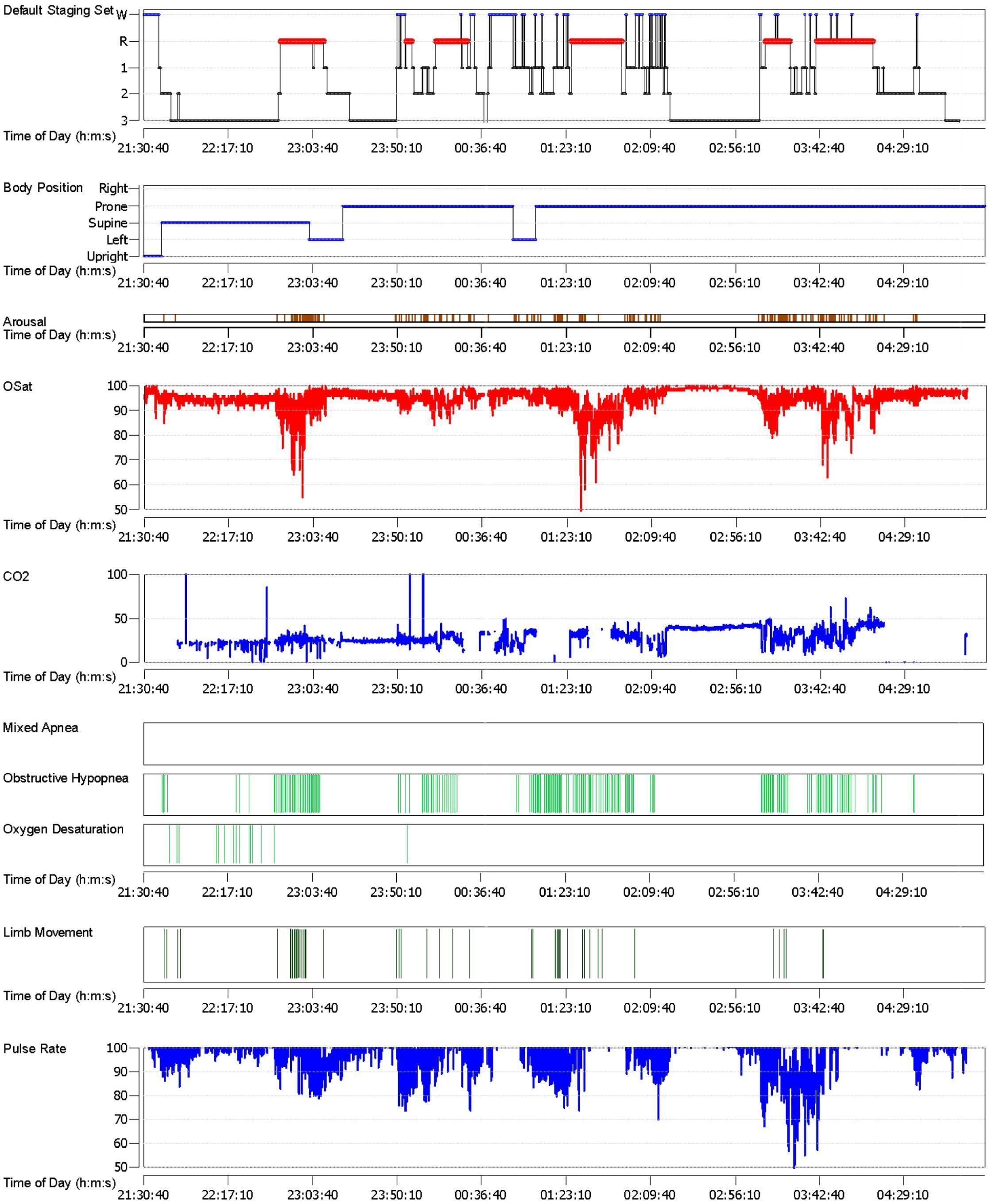
- AREM dependent OSA
- BPositional respiratory events
- CRestless Leg Syndrome
- DHypoventilation
31According to the RECOMMENDED guidelines, which of the following should be included when recording pediatric patients?
- AHolter monitor
- BEnd-tital CO2
- CIntercostal EMG
- DAccelerometer
32According to RECOMMENDED guidelines for scoring stage N2 in adults, which of the following is required?
- AK-complexes anywhere on the epoch
- BSleep spindle or k-complex in the first half of an epoch following an epoch of stage N1
- CAbsence of slow-eye movements and low-amplitude mixed frequency
- DAbsence of an 1 Hz slow wave activity
33The respiratory events in this graphic are BEST described as:
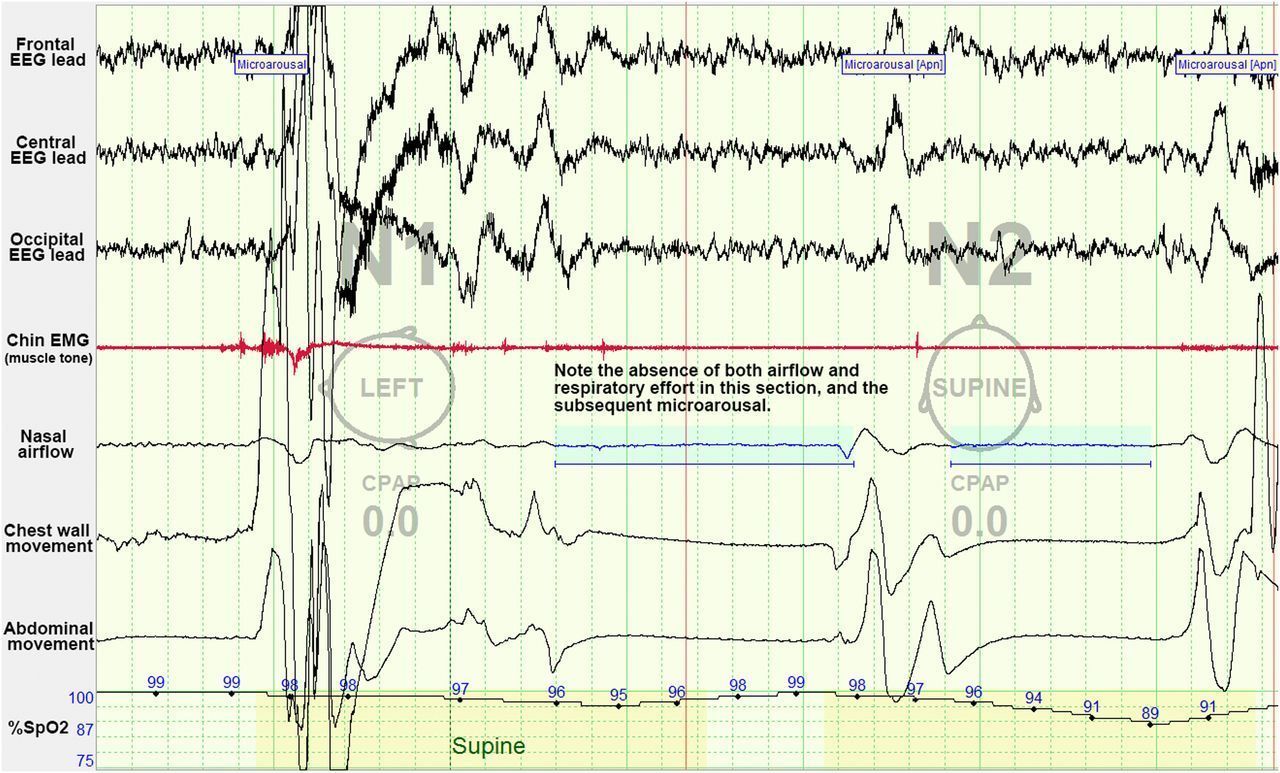
- ARERAs
- BHypoventilation
- CCentral
- DObstructive
34What cortical activity seen in the middle of this graphic is BEST described as a/an:
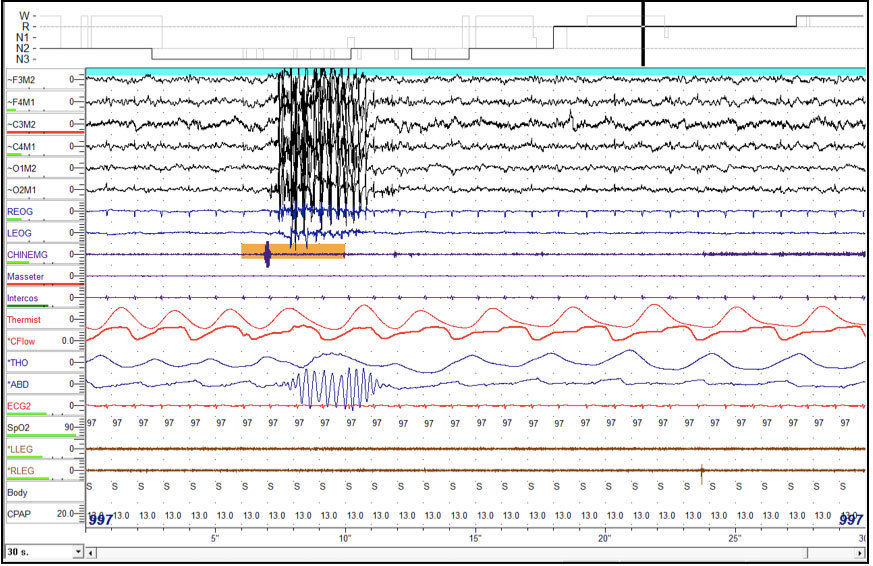
- AHypnagogic hypersynchrony
- BEpileptiform discharge
- CSleep spindle activity
- DSpontaneous arousal
35The graphic would be scored as stage:
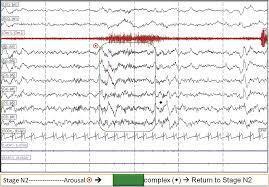
- AN1
- BR
- CN2
- DN3
36The respiratory event that requires oxygen desaturation and/or an arousal as part of the scoring criteria is:
- ACheyne Stokes
- BObstructive hypopnea
- CMixed apnea
- DHypoventilation
37According to RECOMMENDED guidelines, which is a required characteristic for scoring rhythmic movement disorder?
- AThe minimum amplitude of an individual rhythmic burst is 3 times the background EMG activity
- BThe minimum frequency is 1.0 Hz
- CThe maximum frequency is 2.0 Hz
- DThe maximum number of indivdual movements required for a cluster is 3 movements
38According to RECOMMENDED guidelines for scoring stage N1 in adults, which of the following is required?
- ASlow-eye movements with 15 or more seconds of alpha rhythm
- BVertex sharp waves with a duration of <1 second measured at the wave base
- CVertex sharp waves with a duration of <0.5 seconds measured at the wave base
- DLow- amplitude, 4-7 Hz EEG activity
39An important responsibility of the scoring technologist is to:
- AComplete post physiologic calibrations
- Bsummarize treatment options
- CConfirm accuracy of report components
- Dprovide preliminary results
40According to RECOMMENDED guidelines, a requirement for scoring OSA in pediatric patients is:
- AApnea criteria is met for the length of 3 breaths and i associated with respiratory effort throughout this period
- B>90% drop in the peak signal of pre-event baseline effort using thorax and abdominal respiratory belts
- CApnea criteria is met for the length of 2 breaths and is associated with respiratory effort throughout this period
- D>90% drop in the peak signal of pre-event baseline breathing using a nasal pressure transducer.
41According to RECOMMENDED guidelines, when coexisting sleep stages occur in a single epoch, the epoch should be scored:
- AThe stage that sis the greatest portion of the epoch
- BThe same as the preceding epoch
- CAs a titration from one stage to another
- DThe same as the following epoch
42A patient's chart indicates that they are 3.0 L/min of oxygen at home. The technologist notes that the physician's orders for the PSG specifies starting the study without supplimental oxygen and to ass 1.0 L/min oxygen if the SpO2 is less than 89%. the BEST action for the technologist is to:
- AFollow the physician's orders
- BLeave the patient on 3.0 L/min for the study
- CStart the study at 1.0 L/min
- DCall the physician for confirmation
43Which of the following substances can reduce the effectiveness of PAP therapy?
- ADecongestant nasal sprays
- BAntidepressant medication
- CAlcoholic beverages
- DHypertensive medication
44Which of the following is the MOST LIKELY cause of a 35 minute REM latency?
- AFalling asleep with TV on
- BMissed dose of blood pressure medication
- CAlcohol consumption prior to testing
- DUntreated depression
45A patient with a history of obesity, snoring, and excessive daytime sleepiness is referred by their Primary Care Physician for a polysomnogram. the intake questionaire reveals frequent naps, caffeine use throughout the day and evening, a variable bedtime, and a score of 18/24 on the Epworth sleepiness scale.
The patient has an overall AHI of 4, an arousal index of 5, and a sleep efficiency of 56%. What is MOST LIKELY cause of excessive daytime sleepiness in this patient?- AIdopathic Hypersomnia
- BDelayed Sleep Phase Syndrome
- CPoor sleep hygiene
- DNarcolepsy type 1
46What has the LARGEST impact on adherence to PAP therapy?
- ASeverity of snoring
- BSleep duration
- CPatient education
- DType of equipment
47What is the BEST tool that a physician could use to more clearly explain the results of the sleep study and the importance of therapy to a patient?
- APlethsymograph
- BElectrocephalogram
- CHistogram
- DSleep diary
48The syndrome characterized by prolonged episodes of severe hypoxemia and assoicated PaCO2 elevation that worsens during sleep is:
- AGastroesophageal reflux
- BPulmonary hypertension
- CUpper airway resistance
- DObesity hypertension
49The process to decrease fear of artificial circumstances by repeated and controlled exposure to a feared situation is:
- ADesensitization
- BAdherence
- CChronotherapy
- DInsufflation
50A self-reporting tool used to evaluate subjective sleep quality and disturbance over the previous month is:
- ASTOP-Bang
- BOwl-lark Questionnaire
- CPittsburgh Sleep Quality Index
- DBerlin Questionnaire
51Which of the following is the MOST LIKELY effect Zolpidem and Zaleplon on sleep architecture?
- ANo observed changes
- BIncreased sleep latency
- CIncreased sleep efficiency
- DDecreased stage R
52What statement is true regarding CPAP?
- AThe CPAP machine triggers a breath if central events occur
- BThere is one level of pressure for inspiration and expiration
- CThe patient generates negative expiratory pressure
- DPressure varies depending on the patient's own breathing
53When reviewing a patient's history in preparation for a polysomnogram, physiologic findings suggestive hypoventilation include:
- ANocturnal eating and GERD
- BHypoxemia and Hypercapnia
- CHypotension and dizziness
- DHypertension and stridor
54What is the BEST response when a patient asks the technologist if they have sleep apnea and will need to wear a CPAP mask?
- AProvide the patient with educational material about sleep apnea
- BInform the patient that they may be eligible for oral appliance therapy
- CTell the patient they have sleep apnea bu to not address the need or CPAP
- DAvoid engaging in conversation with the patient
55The PRIMARY benefit of heated humidification is to:
- AEnhance oxygenation
- BHelp reduce nasal congestion
- CIncrease REM duration
- DMinimize hypoventilation
56During CPAP titration at 10 cm H2O SpO2 values range between 80 and 85% for 10 minutes despite absence of respiratory events. What is the BEST action for the technologist to take?
- AFollow protocol for supplemental oxygen
- BIncrease CPAP to 15 cm H2O
- CAdd a backup rate
- DContact the on-call physician for ABG order
57According to RECOMMENDED guidelines, adaptive servoventilation can be considered during a titration study when a down titration:
- AFails to maintain oxygen levels consistently above 85% for greater than 10 minutes
- BResults in resolution of central events and emergence of obstructive events
- CHas not eleiminated Cheyne Stokes respiration or central emergent apeans
- DCauses poor sleep efficiency due to continuing respiratory related arousals
58The BEST method for detecting apneas and hypopneas during PAP titration is to use a/an:
- APressure sensor underneath a nasal interface
- BAirflow signal generated by the PAP delivery device
- CThermal sensor places under an oronasal interface
- DVibratory signal produced by a piezoelectric transducer
59According to RECOMMENDED guidelines, CPAP should be iincreased at an interval no less than:
- A4 minutes
- B3 minutes
- C5 minutes
- D2 minutes
60What is the RECOMMENDED starting pressure for pediatric and adult CPAP titration?
- A4 cm H2O
- B3 cm H2O
- C6 cm H2O
- D5 cm H2O
61During stage N2 sleep, the patient changes position and the technologist notes increased snoring and increased leak. The technologist should:
- AReposition and adjust PAP interface
- BDecrease pressure release ventilation
- CIncrease CPAP
- DIncrease heated humidification
62The purpose of intentional leak is to:
- AApply adequate pressure to minimize snoring
- BReduce pressure at the beginning of exhalation
- CProvide negative inspiratory airway pressure
- DWash out CO2 and prevent rebreathing
63The PRIMARY function of EPAP is to:
- AAugment upper airway patency eliminating hypopneas
- BMaintain upper airway patency through inspiration
- CPrevent upper airway obstruction
- DEliminate desaturations and arousals
64During a CPAP titration at 15 cm H2O, the patient is restless and continues to have obstructive respiratory events. The BEST action is to:
- AChange to bilevel
- BAdd a backup rate
- CIncrease humidity
- DInitiate PAP ramp
65According to RECOMMENDED guidelines, what is the minimum and maximum pressure support for bilevel PAP?
- A4 cm H2O, 8 cm H2O
- B6 cm H2O, 8 cm H2O
- C4 cm H2O, 10 cm H2O
- D6 cm H2O, 10 cm H2O
66Excessive warming and humidification will cause:
- AInaccurate CPAP pressures
- BIncrease in the intentional leak
- CWater to pool in the CPAP tubing
- DDecrease in the unintentional leak
67The side effect of CPAP is:
- ACO2 retention
- BIntentional leak
- CAerophagia
- DHyperventilation
68In patients with severe sleep-disordered breathing, the most commonly seen response resulting from successful PAP titration is:
- AAttenuation of alpha activity
- BREM and slow wave rebound
- CIncrease in PLMs
- DIncreased hypoxemia
69During a titration study the patient's apneas are eliminated at 10 cm H2O, but hypopneas and snoring continue at 16 cm H2O. According to RECOMMENDED guidelines, the appropriate pressures to begin a bilevel titration are:
- AIPAP 14
EPAP 10 - BIPAP 10
EPAP 6 - CIPAP 4
EPAP 8 - DIPAP 10
EPAP 14
- AIPAP 14
70The MOST common reason for changing the PAP interface during titiration is:
- ASustained desaturations
- BLow sleep efficiency
- CUnacceptable leak value
- DTreatment emergent central apneas
71When a patient complains of claustrophobia, is unable to tolerate PAP and requests to end the PSG, the next BEST step is to:
- AStart APAP therapy
- BRefer to ENT for consultation
- CSchedule to a re-titration study
- DSchedule desensitization
72A patient reports a complete nasal obstruction prior to PAP titration. The technologist should:
- AUse an oronasal interface
- BPerform a diagnostic study only PSG
- CPerform study with nasal pillows
- DMaximize heated humidification
73Based on the PSG results below, what would be the BEST recommendation for a patient that is non-compliant and refuses to continue with CPAP therapy?
Overall AHI = 8
Overall REM AHI = 38
Supine REM AHI = 28
Supine NREM AHI= 21
Lateral NREM AHI= 1
Lateral REM AHI = 3- ACognitive behavioral therapy
- BAuto titration
- COral appliance
- DPositional therapy
74Which of the following is MOST likely to occur due to an improperly fitting PAP interface?
- AConjunctivitis
- BNasal congestion
- CUvular hypertrophy
- DTemporomandibular joint pain
75According to RECOMMENDED guidelines for the titration of supplemental oxygen during PAP titration:
- ATarget SpO2 should be between 88-94%
- BSupplemental oxygen can be added when SpO2 is less than 88% for greater than 15 minutes
- CSupplemental oxygen should be initiated at 2 L/min then titirated upwards
- DSupplemental oxygen should be connected directly to the PAP mask
Informationen
- Beschreibung
- Quiz am practice test, erstellt von Yadira Acosta am 02/06/2019.
- Autor
- Yadira Acosta
- Sprache
- English
- Aufrufe
- 77
- Bewertung
- Noch keine Bewertungen Bewerte dieses Quiz