
Quiz
practice test
Create a free account to finish this quiz
Save your progress and see your final score.
Already have an account? Sign in
Questions in this quiz (75)
1Which of the following BEST describes a referential montage?
- AThere is potential for electrode contamination.
- BLocalization is by phase reversal.
- CImpedance values are less important.
- DCommon mode rejection will no be effective.
2The ability to remontage while recording on digital equipment is the result of
- ASystem referencing
- BOut of phase cancellation
- CSignal processing
- DCommon mode rejection
3According to RECOMMENDED guidelines, the minimum duration of a significant leg movement is:
- A5 seconds
- B1 second
- C.1 second
- D.5 second
4The MOST COMMON method to monitor blood oxygen saturation during polysomnography is:
- AArterial blood gas
- BEnd-tital CO2
- CPulse oximetry
- DCapnography
5What intermittent 60 Hz activity occurs in the F4-M1 electrodes during REM sleep the BEST IMMEDIATE action would be to:
- AChange F4 electrodes
- BDocument and continue recording
- CRely on F3-M2
- DChange M1 electrode
6The electrode located 30% above the left pre-auricular crease is:
- AF3
- BO1
- CP3
- DC3
7The activity in the respiratory channels is BEST described as:
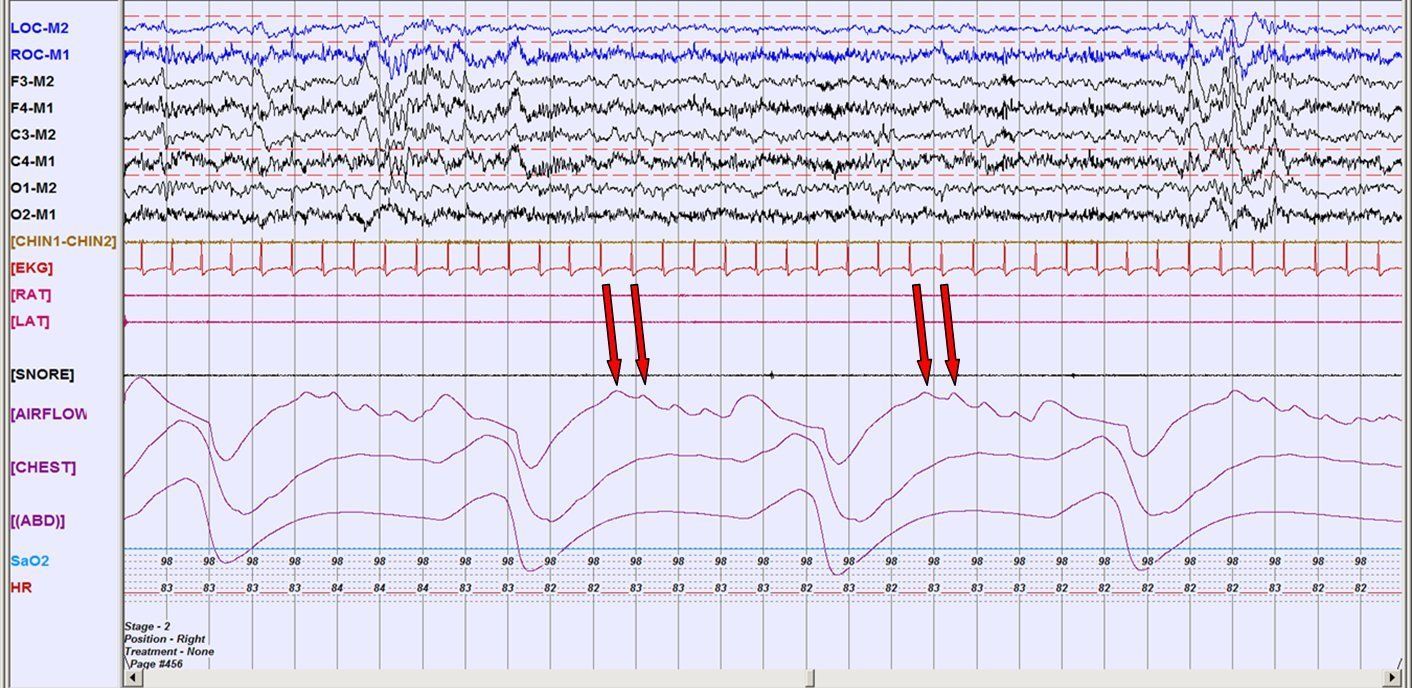
- APulse
- BECG
- C60 Hz
- DCardioballistic
8The MOST appropriate setting a technologist would use to control the frequency band of waveforms on a recording is the:
- ALow filter
- BSampling rate
- CSensitivity
- DDisplay gain
9According to RECOMMENDED guidelines, unattended portable monitoring can be used as an alternative to in-lab testing when:
- AThere is a high probability of moderate to severe OSA without comorbid conditions.
- BThe patient is unable to complete a comprehensive sleep evaluation.
- CComorbid disease processes make in-lab study difficult
- DDifferentiating RBD from OSA
10When the amplitude of a signal exceeds the physical limitations of a channel the MOST important adjustment the technologist can make to optimize waveform display is to:
- AIncrease display gain
- BDecrease sampling rate
- CIncrease HLF
- DDecrease sensitivity
11According to RECOMMENDED guidelines, four nap opportunities on a MSLT would be acceptable when the patient:
- AHad a greater than 8 hours of sleep on the PSG
- BIs unable to initiate sleep on two naps
- CHad REM on at least two nap opportunities
- DIs being evaluated for idiopathic hypersomnia
12According to RECOMMENDED guidelines, the maximum electrode impedence for EEG and EOG recording is:
- A15,000 ohms
- B5000 ohms
- C7500 ohms
- D10,000 ohms
13Which process would be an adequate routine procedure for disinfecting cup EEG electrodes after removing adhesive, gel and organic material, washing in warm water and mild detergent?
- ASoaking in 1:10 bleach and water for 10 minutes
- BPasteurization and allowing to air dry
- CSoaking in alcohol
- DAllowing to air dry and soaking in acetone
14According to RECOMMENDED guidelines, the sampling rate to provide the optimal resolution for recording EEG in a patient with suspected nocturnal seizures is:
- A500 Hz
- B50 Hz
- C100 Hz
- D300 Hz
15Identify the ECG rhythm in the graphic:
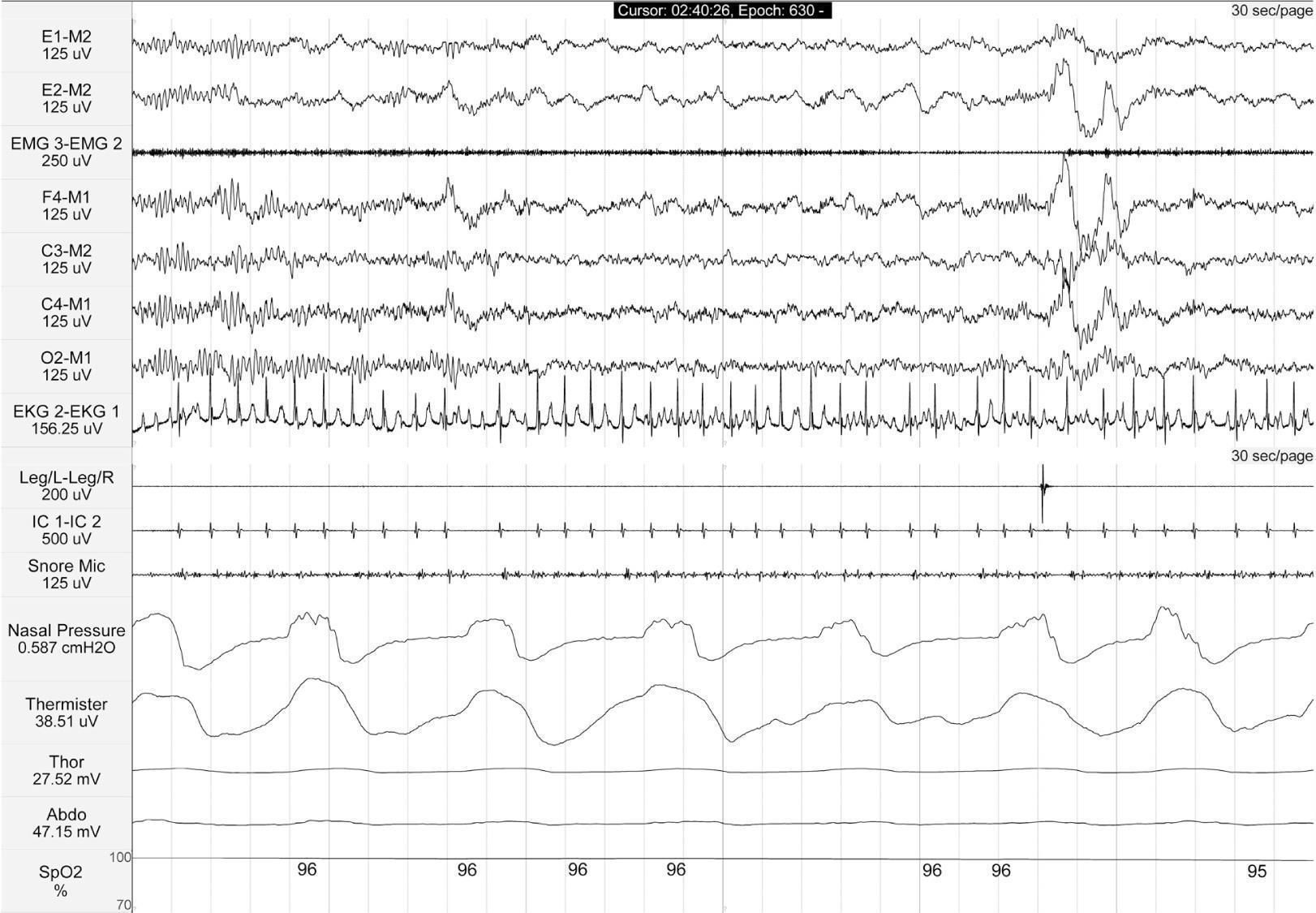
- AAtrial flutter
- BJunctional tachycardia
- CSinus tachycardia
- DAtrial fibrillation
16The most important reason for performing a MWT is to:
- APredict the need for administering stimulant medication
- BCalculate the total sleep time over 5 nap opportunities
- CDifferentiate narcolepsy from idiopathic hypersomnia
- DMeasure the patient's ability to resist the urge to fall asleep
17Which of the following would be the MOST important to document during a polysomnogram?
- APresence of periodic limb movements
- BOccasional Premature Ventricular Contractions (PVCs)
- CPosition changes
- DNumber of awakenings
18According to RECOMMENDED guidelines, an optional parameter to include in the report for an adult polysomnogram is:
- ANumber to periodic limb movements with arousals
- BHighest heart rate during the recording
- COccurrence of hypovetilation during the diagnostic study in adults
- DPercentage of total sleep time in each stage
19According to RECOMMENDED guidelines, the device that should be used to monitor airflow and detect obstructive apnea during a diagnostic study is:
- APressure transducer
- BOronasal thermal sensor
- CIntercostal EMG
- DInductance plethysmography
20Which type of calibration is based on a series of patient instructions intended to verify the signal response and quality?
- AMontage
- BPhysiological
- CMachine
- DAll-channel
21The importance of selecting sampling rates to RECOMMENDED guidelines is to:
- AOptimize common mode rejections
- BMinimize the impact of filter changes
- CLocalized by phase reversals
- DMinimize aliasing effect
22Which of the following can negatively impact all bioelectric channels?
- AContaminated M1
- BDisconnecting end-tital CO2 cable
- CDisplaced respiratory belts
- DDislodged systems reference electrode
23According to RECOMMENDED guidelines for scoring stage N3 in pediatric patients, which of the following is the BEST statement?
- ASlow wave activity is often higher amplitude compared to adults
- BThe epoch should not contain any increase in submental EMG
- CAmplitude should at least 75 uV measured over the central regions
- DFrequency of slow waves should be between 1.0-2.0 Hz
24The MOST appropriate actions a technologist would take when there is confirmed ventricular tachycardia lasting greater than 30 seconds is:
- ANo immediate response is needed
- BAssess, document and continue to monitor
- CDiscontinue recording and transport to emergency room
- DInitiate emergency response system
25According to RECOMMENDED guidelines for scoring arousals in adults, which of the following is the BEST statement?
- AInformation should be incorporated from the majority of EEG channels
- BScoring of arousal during stage R requires either an increase in submental EMG or an increase in leg EMG
- CAbrupt shifts in EEG frequency assoicated with arousal can include alpha, theta, spindles, and/or frequencies greater than 16 Hz
- DThe 10 seconds of sleep required prior to scoring an arousal may begin in the preceding epoch, even if that epoch is scored at stage W
26Calculate the AHI based on the following data:
25 obstructive apneas
5 central apneas
23 mixed apneas
15 hypopneas
48 RERAs
65 arousals
360 min of sleep- A2
- B11
- C32
- D19
27A breathing pattern characterized by at least three cycles of crescendo and decrescendo breathing with duration of at least 10 minutes is:
- AHyperventilation
- BHypoventilation
- CPulmonary hypertension
- DCheyne Stokes respiration
28According to RECOMMENDED guidelines for pediatric CPAP titration, how many hypopneas must occur prior ti increasing pressure?
- AOne
- BFour
- CTwo
- DThree
29According to RECOMMENDED guidelines for scoring cardiac events in adults, which of the following is the BEST statement?
- AAsystole is a cardiac pause for 3 seconds or greater
- BAtrial fibrillation involves irregularly irregular QRS complexes with inconsistent T waves
- CSinus tachycardia is a sustained heart rate of greater than 110 beats per minute
- DBradycardia is a sustained heart rate of less than 50 beats per minute
30The histogram demonstrates:
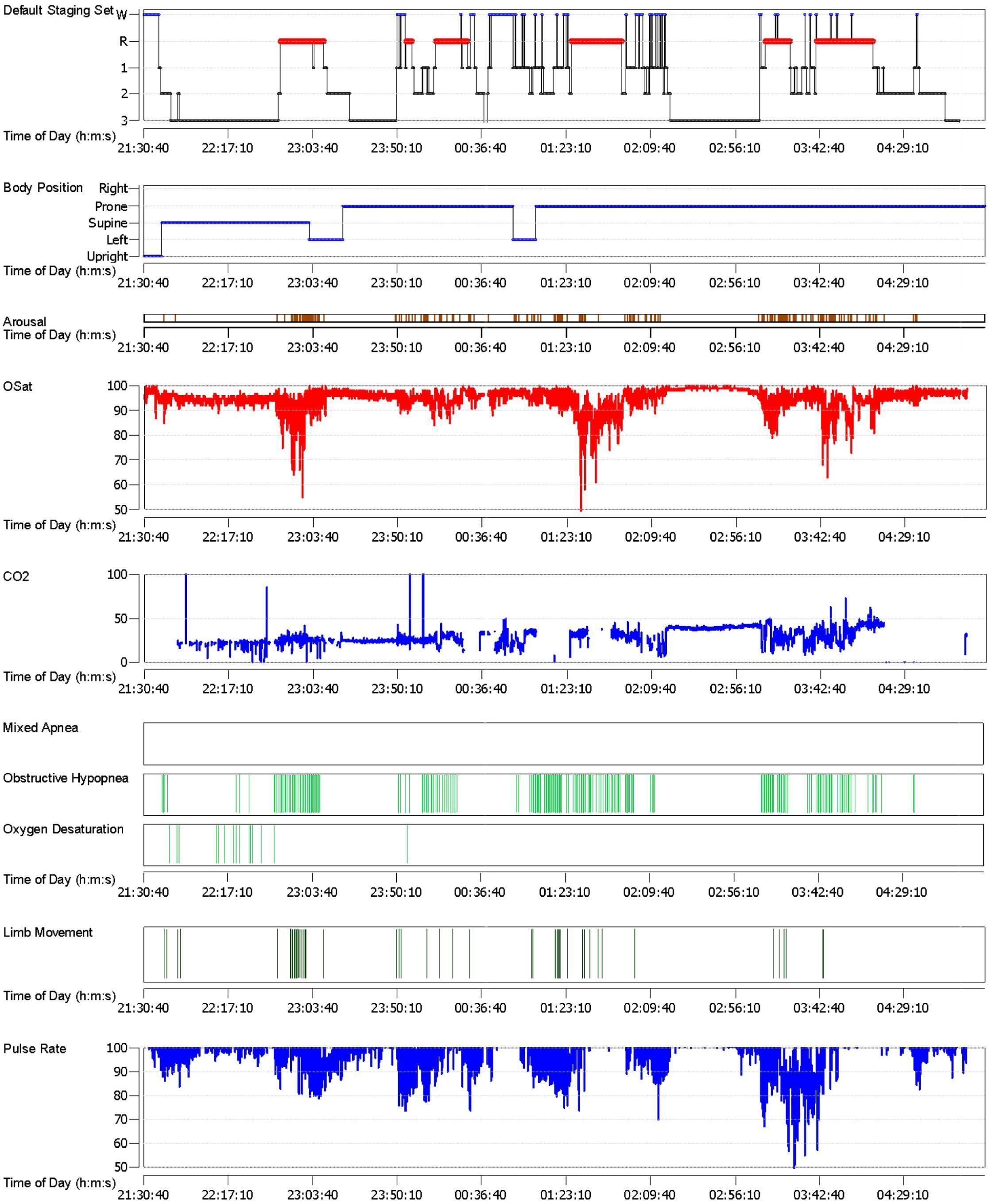
- AREM dependent OSA
- BPositional respiratory events
- CRestless Leg Syndrome
- DHypoventilation
31According to the RECOMMENDED guidelines, which of the following should be included when recording pediatric patients?
- AHolter monitor
- BEnd-tital CO2
- CIntercostal EMG
- DAccelerometer
32According to RECOMMENDED guidelines for scoring stage N2 in adults, which of the following is required?
- AK-complexes anywhere on the epoch
- BSleep spindle or k-complex in the first half of an epoch following an epoch of stage N1
- CAbsence of slow-eye movements and low-amplitude mixed frequency
- DAbsence of an 1 Hz slow wave activity
33The respiratory events in this graphic are BEST described as:
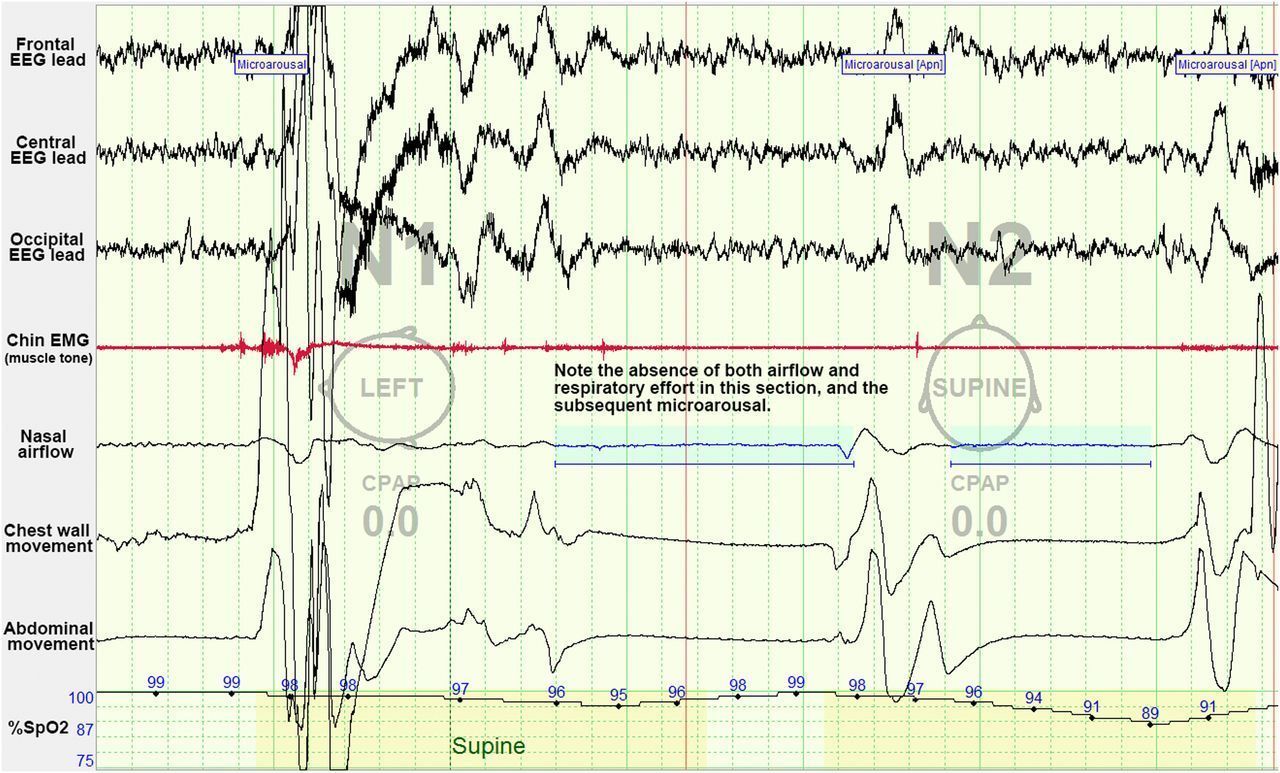
- ARERAs
- BHypoventilation
- CCentral
- DObstructive
34What cortical activity seen in the middle of this graphic is BEST described as a/an:
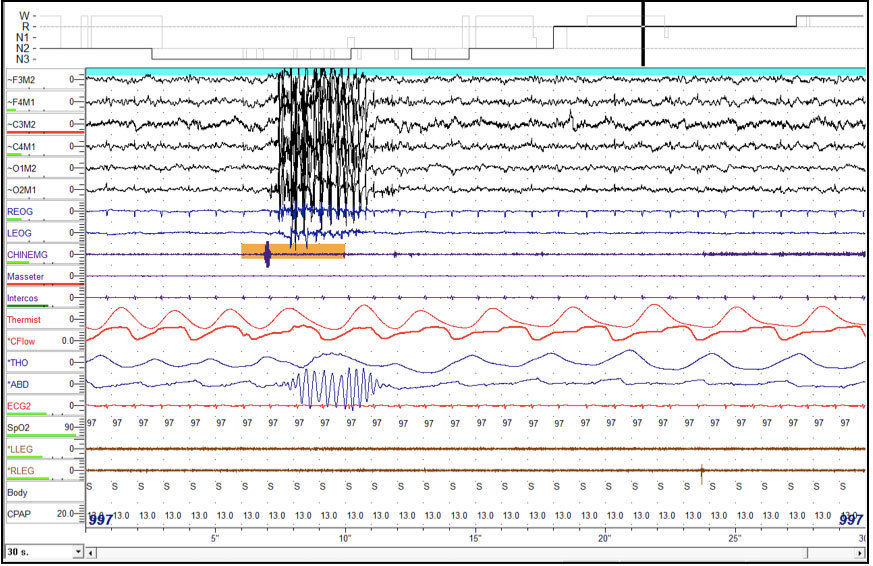
- AHypnagogic hypersynchrony
- BEpileptiform discharge
- CSleep spindle activity
- DSpontaneous arousal
35The graphic would be scored as stage:
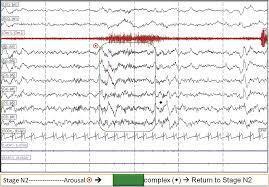
- AN1
- BR
- CN2
- DN3
36The respiratory event that requires oxygen desaturation and/or an arousal as part of the scoring criteria is:
- ACheyne Stokes
- BObstructive hypopnea
- CMixed apnea
- DHypoventilation
37According to RECOMMENDED guidelines, which is a required characteristic for scoring rhythmic movement disorder?
- AThe minimum amplitude of an individual rhythmic burst is 3 times the background EMG activity
- BThe minimum frequency is 1.0 Hz
- CThe maximum frequency is 2.0 Hz
- DThe maximum number of indivdual movements required for a cluster is 3 movements
38According to RECOMMENDED guidelines for scoring stage N1 in adults, which of the following is required?
- ASlow-eye movements with 15 or more seconds of alpha rhythm
- BVertex sharp waves with a duration of <1 second measured at the wave base
- CVertex sharp waves with a duration of <0.5 seconds measured at the wave base
- DLow- amplitude, 4-7 Hz EEG activity
39An important responsibility of the scoring technologist is to:
- AComplete post physiologic calibrations
- Bsummarize treatment options
- CConfirm accuracy of report components
- Dprovide preliminary results
40According to RECOMMENDED guidelines, a requirement for scoring OSA in pediatric patients is:
- AApnea criteria is met for the length of 3 breaths and i associated with respiratory effort throughout this period
- B>90% drop in the peak signal of pre-event baseline effort using thorax and abdominal respiratory belts
- CApnea criteria is met for the length of 2 breaths and is associated with respiratory effort throughout this period
- D>90% drop in the peak signal of pre-event baseline breathing using a nasal pressure transducer.
41According to RECOMMENDED guidelines, when coexisting sleep stages occur in a single epoch, the epoch should be scored:
- AThe stage that sis the greatest portion of the epoch
- BThe same as the preceding epoch
- CAs a titration from one stage to another
- DThe same as the following epoch
42A patient's chart indicates that they are 3.0 L/min of oxygen at home. The technologist notes that the physician's orders for the PSG specifies starting the study without supplimental oxygen and to ass 1.0 L/min oxygen if the SpO2 is less than 89%. the BEST action for the technologist is to:
- AFollow the physician's orders
- BLeave the patient on 3.0 L/min for the study
- CStart the study at 1.0 L/min
- DCall the physician for confirmation
43Which of the following substances can reduce the effectiveness of PAP therapy?
- ADecongestant nasal sprays
- BAntidepressant medication
- CAlcoholic beverages
- DHypertensive medication
44Which of the following is the MOST LIKELY cause of a 35 minute REM latency?
- AFalling asleep with TV on
- BMissed dose of blood pressure medication
- CAlcohol consumption prior to testing
- DUntreated depression
45A patient with a history of obesity, snoring, and excessive daytime sleepiness is referred by their Primary Care Physician for a polysomnogram. the intake questionaire reveals frequent naps, caffeine use throughout the day and evening, a variable bedtime, and a score of 18/24 on the Epworth sleepiness scale.
The patient has an overall AHI of 4, an arousal index of 5, and a sleep efficiency of 56%. What is MOST LIKELY cause of excessive daytime sleepiness in this patient?- AIdopathic Hypersomnia
- BDelayed Sleep Phase Syndrome
- CPoor sleep hygiene
- DNarcolepsy type 1
46What has the LARGEST impact on adherence to PAP therapy?
- ASeverity of snoring
- BSleep duration
- CPatient education
- DType of equipment
47What is the BEST tool that a physician could use to more clearly explain the results of the sleep study and the importance of therapy to a patient?
- APlethsymograph
- BElectrocephalogram
- CHistogram
- DSleep diary
48The syndrome characterized by prolonged episodes of severe hypoxemia and assoicated PaCO2 elevation that worsens during sleep is:
- AGastroesophageal reflux
- BPulmonary hypertension
- CUpper airway resistance
- DObesity hypertension
49The process to decrease fear of artificial circumstances by repeated and controlled exposure to a feared situation is:
- ADesensitization
- BAdherence
- CChronotherapy
- DInsufflation
50A self-reporting tool used to evaluate subjective sleep quality and disturbance over the previous month is:
- ASTOP-Bang
- BOwl-lark Questionnaire
- CPittsburgh Sleep Quality Index
- DBerlin Questionnaire
51Which of the following is the MOST LIKELY effect Zolpidem and Zaleplon on sleep architecture?
- ANo observed changes
- BIncreased sleep latency
- CIncreased sleep efficiency
- DDecreased stage R
52What statement is true regarding CPAP?
- AThe CPAP machine triggers a breath if central events occur
- BThere is one level of pressure for inspiration and expiration
- CThe patient generates negative expiratory pressure
- DPressure varies depending on the patient's own breathing
53When reviewing a patient's history in preparation for a polysomnogram, physiologic findings suggestive hypoventilation include:
- ANocturnal eating and GERD
- BHypoxemia and Hypercapnia
- CHypotension and dizziness
- DHypertension and stridor
54What is the BEST response when a patient asks the technologist if they have sleep apnea and will need to wear a CPAP mask?
- AProvide the patient with educational material about sleep apnea
- BInform the patient that they may be eligible for oral appliance therapy
- CTell the patient they have sleep apnea bu to not address the need or CPAP
- DAvoid engaging in conversation with the patient
55The PRIMARY benefit of heated humidification is to:
- AEnhance oxygenation
- BHelp reduce nasal congestion
- CIncrease REM duration
- DMinimize hypoventilation
56During CPAP titration at 10 cm H2O SpO2 values range between 80 and 85% for 10 minutes despite absence of respiratory events. What is the BEST action for the technologist to take?
- AFollow protocol for supplemental oxygen
- BIncrease CPAP to 15 cm H2O
- CAdd a backup rate
- DContact the on-call physician for ABG order
57According to RECOMMENDED guidelines, adaptive servoventilation can be considered during a titration study when a down titration:
- AFails to maintain oxygen levels consistently above 85% for greater than 10 minutes
- BResults in resolution of central events and emergence of obstructive events
- CHas not eleiminated Cheyne Stokes respiration or central emergent apeans
- DCauses poor sleep efficiency due to continuing respiratory related arousals
58The BEST method for detecting apneas and hypopneas during PAP titration is to use a/an:
- APressure sensor underneath a nasal interface
- BAirflow signal generated by the PAP delivery device
- CThermal sensor places under an oronasal interface
- DVibratory signal produced by a piezoelectric transducer
59According to RECOMMENDED guidelines, CPAP should be iincreased at an interval no less than:
- A4 minutes
- B3 minutes
- C5 minutes
- D2 minutes
60What is the RECOMMENDED starting pressure for pediatric and adult CPAP titration?
- A4 cm H2O
- B3 cm H2O
- C6 cm H2O
- D5 cm H2O
61During stage N2 sleep, the patient changes position and the technologist notes increased snoring and increased leak. The technologist should:
- AReposition and adjust PAP interface
- BDecrease pressure release ventilation
- CIncrease CPAP
- DIncrease heated humidification
62The purpose of intentional leak is to:
- AApply adequate pressure to minimize snoring
- BReduce pressure at the beginning of exhalation
- CProvide negative inspiratory airway pressure
- DWash out CO2 and prevent rebreathing
63The PRIMARY function of EPAP is to:
- AAugment upper airway patency eliminating hypopneas
- BMaintain upper airway patency through inspiration
- CPrevent upper airway obstruction
- DEliminate desaturations and arousals
64During a CPAP titration at 15 cm H2O, the patient is restless and continues to have obstructive respiratory events. The BEST action is to:
- AChange to bilevel
- BAdd a backup rate
- CIncrease humidity
- DInitiate PAP ramp
65According to RECOMMENDED guidelines, what is the minimum and maximum pressure support for bilevel PAP?
- A4 cm H2O, 8 cm H2O
- B6 cm H2O, 8 cm H2O
- C4 cm H2O, 10 cm H2O
- D6 cm H2O, 10 cm H2O
66Excessive warming and humidification will cause:
- AInaccurate CPAP pressures
- BIncrease in the intentional leak
- CWater to pool in the CPAP tubing
- DDecrease in the unintentional leak
67The side effect of CPAP is:
- ACO2 retention
- BIntentional leak
- CAerophagia
- DHyperventilation
68In patients with severe sleep-disordered breathing, the most commonly seen response resulting from successful PAP titration is:
- AAttenuation of alpha activity
- BREM and slow wave rebound
- CIncrease in PLMs
- DIncreased hypoxemia
69During a titration study the patient's apneas are eliminated at 10 cm H2O, but hypopneas and snoring continue at 16 cm H2O. According to RECOMMENDED guidelines, the appropriate pressures to begin a bilevel titration are:
- AIPAP 14
EPAP 10 - BIPAP 10
EPAP 6 - CIPAP 4
EPAP 8 - DIPAP 10
EPAP 14
- AIPAP 14
70The MOST common reason for changing the PAP interface during titiration is:
- ASustained desaturations
- BLow sleep efficiency
- CUnacceptable leak value
- DTreatment emergent central apneas
71When a patient complains of claustrophobia, is unable to tolerate PAP and requests to end the PSG, the next BEST step is to:
- AStart APAP therapy
- BRefer to ENT for consultation
- CSchedule to a re-titration study
- DSchedule desensitization
72A patient reports a complete nasal obstruction prior to PAP titration. The technologist should:
- AUse an oronasal interface
- BPerform a diagnostic study only PSG
- CPerform study with nasal pillows
- DMaximize heated humidification
73Based on the PSG results below, what would be the BEST recommendation for a patient that is non-compliant and refuses to continue with CPAP therapy?
Overall AHI = 8
Overall REM AHI = 38
Supine REM AHI = 28
Supine NREM AHI= 21
Lateral NREM AHI= 1
Lateral REM AHI = 3- ACognitive behavioral therapy
- BAuto titration
- COral appliance
- DPositional therapy
74Which of the following is MOST likely to occur due to an improperly fitting PAP interface?
- AConjunctivitis
- BNasal congestion
- CUvular hypertrophy
- DTemporomandibular joint pain
75According to RECOMMENDED guidelines for the titration of supplemental oxygen during PAP titration:
- ATarget SpO2 should be between 88-94%
- BSupplemental oxygen can be added when SpO2 is less than 88% for greater than 15 minutes
- CSupplemental oxygen should be initiated at 2 L/min then titirated upwards
- DSupplemental oxygen should be connected directly to the PAP mask
Information
- Description
- Quiz on practice test, created by Yadira Acosta on 02/06/2019.
- Author
- Yadira Acosta
- Language
- English
- Views
- 77
- Rating
- No ratings yet Rate this quiz