
Quiz
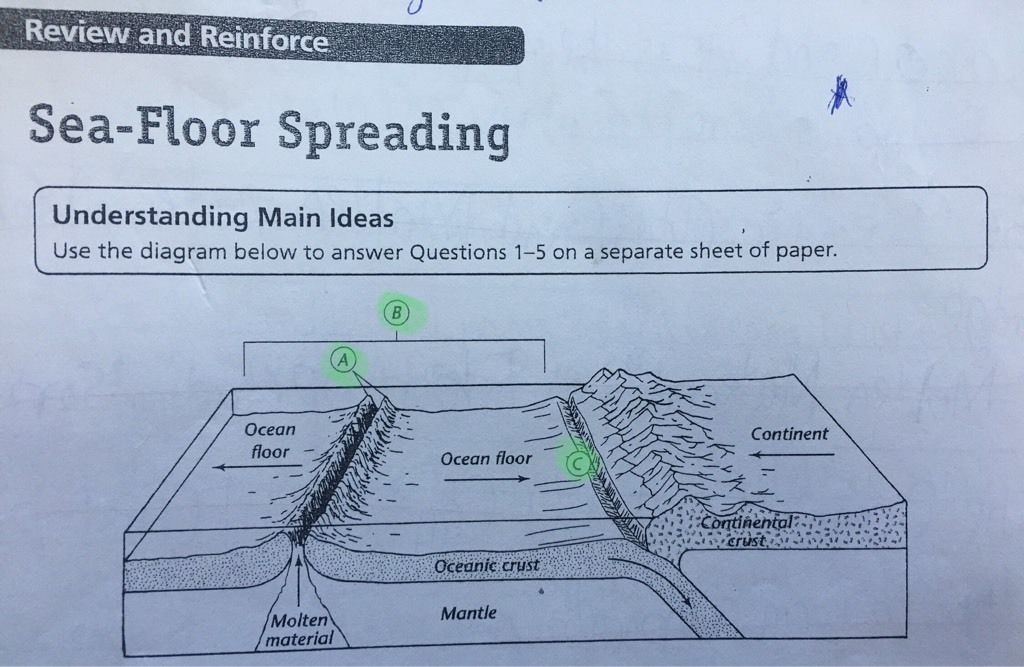
Sea-Floor Spreading: Examining the process
Dieses Quiz enthält Fragetypen, die sich im gewohnten Player öffnen.
Fragen in diesem Quiz (14)
1Name an describe the feature of the ocean floor shown at A

- AMolten material pushes up to the surface from the mantle and a mid ocean ridge is formed
- BSea-floor spreading and the sea floor gets larger
- CNew molten material pushes the old oceanic crust away from the mid ocean ridge
- DPillow lava, magnetic stripes, drilled rock samples
- ESubduction that forms a Trench because two lands hit each other and one goes under the other
2Name the process occurring at B, and explain what results from it

- AMolten materials pushes up to the surface from the mantle and a mid ocean ridge is formed
- BSea-floor spreading and the sea floor gets larger
- CNew molten material pushes the old oceanic crust away from the mid ocean ridge
- DPillow lava, magnetic stripes, and drilled rock samples
- ESubduction that forms a trench because two lands hit each other and one goes under the other
3What happens to the old oceanic crust as new molten material rises from the mantle?
- AMolten material pushes up to the surface from the mantle and a mid ocean ridge is formed
- BSea-floor spreading and the sea floor gets larger
- CNew molten material pushes the old oceanic crust away from the mid ocean ridge
- DPillow lava, magnetic stripes, and drilled rock samples
- ESubduction that forms a trench because two lands hit each other and one goes under the other
4The arrows on the diagram show the ocean floor spreading from the ridge. What are the 3 kids of evidence scientists have found to support this idea?

- AMolten material pushes up to the surface from the mantle and a mid ocean ridge is formed
- BSea-floor spreading and the sea floor gets larger
- CNew molten material pushes the old oceanic crust away from the mid ocean ridge
- DPillow lava, magnetic stripes, and drilled rock samples
- ESubduction that forms a trench because two lands hit each other and one goes under the other
5What process is shown occurring at C, and why does it occur?

- AMolten material pushes up to the surface from the mantle and a mid ocean ridge is formed
- BSea-floor spreading and the sea floor gets larger
- CNew molten material pushes the old oceanic crust away from the mid ocean ridge
- DPillow lava, magnetic stripes, and drilled rock samples
- ESubduction that forms a trench because two lands hit each other and one goes under the other
6Choose three types of evidence, below, for sea-floor spreading
- APillow lava
- BMagnetic stripes
- CDrilled rock samples
- DPresence of sedimentary rock
- EVolcanoes
- FUsing sonar
7When using drilled rock samples to test for sea-floor spreading, OLDER rocks are [blank_start]further away from[blank_end] the ridge
- Afurther away from
- Bcloser to
8When using drilled rock samples to test for sea-floor spreading, NEWER rocks are [blank_start]closer to[blank_end] the ridge.
- Acloser to
- Bfurther away from
9The pattern of stripes is different on both sides of mid ocean ridges
- ARichtig
- BFalsch
10At deep ocean trenches, conduction allows oceanic crust to sink back into the mantle
- ARichtig
- BFalsch
11The Pacific Ocean is shrinking
- ARichtig
- BFalsch
12The Atlantic Ocean is shrinking
- ARichtig
- BFalsch
13What process in Earth’s interior (the mantle) causes sea-floor spreading and subduction?
- AConvection currents
- BMagnetic fields
- CContinental divide
- DCreation of metamorphic rock
14Select the sentences that are true about Earth’s magnetism
- AAt times in the past, a compass needle on Earth would have pointed south.
- BRock that makes up the ocean floor lies in a pattern of magnetized stripes.
- CThe pattern of stripes is different on both sides of mid ocean ridges.
- DThe magnetic memory of rock on the ocean floor changes over time.
Informationen
- Beschreibung
- 6th grade Science (Sea-Floor Spreading) Quiz am Sea-Floor Spreading: Examining the process, erstellt von Jill Hurley am 02/06/2019.
- Autor
- Jill Hurley
- Sprache
- English
- Aufrufe
- 11
- Schlagwörter
- Bewertung
- Noch keine Bewertungen Bewerte dieses Quiz
Mehr zu Continental Drift and Seafloor Spreading