
Test
Sea-Floor Spreading: Examining the process
Este test tiene tipos de pregunta que se abren en el reproductor de siempre.
Preguntas del test (14)
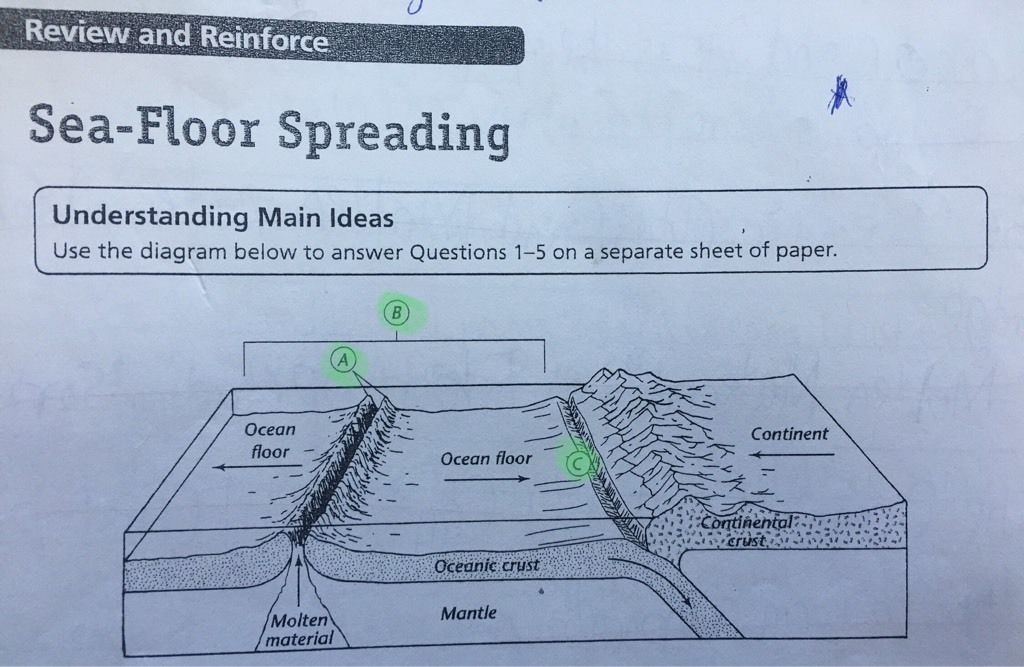
1Name an describe the feature of the ocean floor shown at A

- AMolten material pushes up to the surface from the mantle and a mid ocean ridge is formed
- BSea-floor spreading and the sea floor gets larger
- CNew molten material pushes the old oceanic crust away from the mid ocean ridge
- DPillow lava, magnetic stripes, drilled rock samples
- ESubduction that forms a Trench because two lands hit each other and one goes under the other
2Name the process occurring at B, and explain what results from it

- AMolten materials pushes up to the surface from the mantle and a mid ocean ridge is formed
- BSea-floor spreading and the sea floor gets larger
- CNew molten material pushes the old oceanic crust away from the mid ocean ridge
- DPillow lava, magnetic stripes, and drilled rock samples
- ESubduction that forms a trench because two lands hit each other and one goes under the other
3What happens to the old oceanic crust as new molten material rises from the mantle?
- AMolten material pushes up to the surface from the mantle and a mid ocean ridge is formed
- BSea-floor spreading and the sea floor gets larger
- CNew molten material pushes the old oceanic crust away from the mid ocean ridge
- DPillow lava, magnetic stripes, and drilled rock samples
- ESubduction that forms a trench because two lands hit each other and one goes under the other
4The arrows on the diagram show the ocean floor spreading from the ridge. What are the 3 kids of evidence scientists have found to support this idea?

- AMolten material pushes up to the surface from the mantle and a mid ocean ridge is formed
- BSea-floor spreading and the sea floor gets larger
- CNew molten material pushes the old oceanic crust away from the mid ocean ridge
- DPillow lava, magnetic stripes, and drilled rock samples
- ESubduction that forms a trench because two lands hit each other and one goes under the other
5What process is shown occurring at C, and why does it occur?

- AMolten material pushes up to the surface from the mantle and a mid ocean ridge is formed
- BSea-floor spreading and the sea floor gets larger
- CNew molten material pushes the old oceanic crust away from the mid ocean ridge
- DPillow lava, magnetic stripes, and drilled rock samples
- ESubduction that forms a trench because two lands hit each other and one goes under the other
6Choose three types of evidence, below, for sea-floor spreading
- APillow lava
- BMagnetic stripes
- CDrilled rock samples
- DPresence of sedimentary rock
- EVolcanoes
- FUsing sonar
7When using drilled rock samples to test for sea-floor spreading, OLDER rocks are [blank_start]further away from[blank_end] the ridge
- Afurther away from
- Bcloser to
8When using drilled rock samples to test for sea-floor spreading, NEWER rocks are [blank_start]closer to[blank_end] the ridge.
- Acloser to
- Bfurther away from
9The pattern of stripes is different on both sides of mid ocean ridges
- AVerdadero
- BFalso
10At deep ocean trenches, conduction allows oceanic crust to sink back into the mantle
- AVerdadero
- BFalso
11The Pacific Ocean is shrinking
- AVerdadero
- BFalso
12The Atlantic Ocean is shrinking
- AVerdadero
- BFalso
13What process in Earth’s interior (the mantle) causes sea-floor spreading and subduction?
- AConvection currents
- BMagnetic fields
- CContinental divide
- DCreation of metamorphic rock
14Select the sentences that are true about Earth’s magnetism
- AAt times in the past, a compass needle on Earth would have pointed south.
- BRock that makes up the ocean floor lies in a pattern of magnetized stripes.
- CThe pattern of stripes is different on both sides of mid ocean ridges.
- DThe magnetic memory of rock on the ocean floor changes over time.
Información
- Descripción
- 6th grade (Sea-Floor Spreading) Science Test sobre Sea-Floor Spreading: Examining the process, creado por Jill Hurley el 02/06/2019.
- Autor
- Jill Hurley
- Idioma
- English
- Visitas
- 11
- Etiquetas
- Valoración
- Aún sin valoraciones Valora este test
Más sobre Continental Drift and Seafloor Spreading