
Quiz
AQA (9-1) Topic 4
Dieses Quiz enthält Fragetypen, die sich im gewohnten Player öffnen.
Fragen in diesem Quiz (12)
1Which oxide is a base?
- Acarbon dioxide
- Bmagnesium oxide
- Csulfur dioxide
- Dsilicon dioxide
2Which metal is most reactive?
- Asodium
- Biron
- Czinc
- Dmagnesium
3Iron can be extracted from iron oxide using a process called [blank_start]reduction[blank_end]. This involves heating the ore with [blank_start]carbon monoxide[blank_end] to remove the oxygen from the compound. This process is also called a [blank_start]displacement[blank_end] reaction, and gives two products: iron and [blank_start]carbon dioxide[blank_end].
- Areduction
- Boxidation
- Celectrolysis
- Dcarbon monoxide
- Ecarbon dioxide
- Fsulfur dioxide
- Gcopper
- Hdisplacement
- Icombustion
- Jhydrolysis
- Kcarbon dioxide
- Lcarbon monoxide
- Mcopper
4Zinc is reacted with sulfuric acid, and bubbles form. What gas is this?
- Ahydrogen
- Boxygen
- Ccarbon dioxide
5Sodium hydroxide is added to a flask containing hydrochloric acid and a few drops of universal indicator. A small excess of sodium hydroxide was added. Select the correct colour changes.
- Ared → green → purple
- Bgreen → red → purple
- Cpurple → red → green
- Dgreen → purple → red
6Pick the most likely pH of hydrochloric acid
- A1
- B6
- C8
- D13
7Which metal oxide can be reacted with carbon to produce the metal?
- Aaluminium oxide
- Bsodium oxide
- Ccopper oxide
- Dmagnesium oxide
8A student wants to make a metal salt. He decides he is going to use copper oxide and sulfuric acid as his starting materials, and adds 20 ml of acid to 2 g of the metal oxide. He finds that [blank_start]heating[blank_end] the solution makes the reaction happen faster. Eventually the reaction stops and there is still some copper oxide left, and notes that this must mean the copper oxide was added in [blank_start]excess[blank_end]. He also notes that the solution has now turned blue, and starts to filter off the remaining solid. To get the salt out of solution he needs to [blank_start]evaporate[blank_end] the water off, and sets up his equipment. He decides to only remove a small amount of water, and leave it to crystallise out over night. When he comes back in the morning he finds lovely blue crystals of copper [blank_start]sulfate[blank_end].
- Aheating
- Bexcess
- Cevaporate
- Dsulfate
9The [blank_start]reactivity[blank_end] series can be used to see the relative tendency for metal [blank_start]atoms[blank_end] to form [blank_start]cations[blank_end] - the higher up the series, the more likely it will form a [blank_start]positive[blank_end] ion.
Something similar can be said for a metal's resistance to [blank_start]oxidation[blank_end] - the higher up the series, the more easier it is to [blank_start]oxidise[blank_end].- Areactivity
- Batoms
- Cions
- Dcations
- Eanions
- Fpositive
- Gnegative
- Hoxidation
- Ireduction
- Joxidise
- Kreduce
10A more reactive metal can displace a less reactive metal from a compound in solution.
- ARichtig
- BFalsch
11[blank_start]acid[blank_end] + metal [blank_start]carbonate[blank_end] → salt + water + carbon dioxide
- Aacid
- Bcarbonate
12Label the electrolysis diagram below
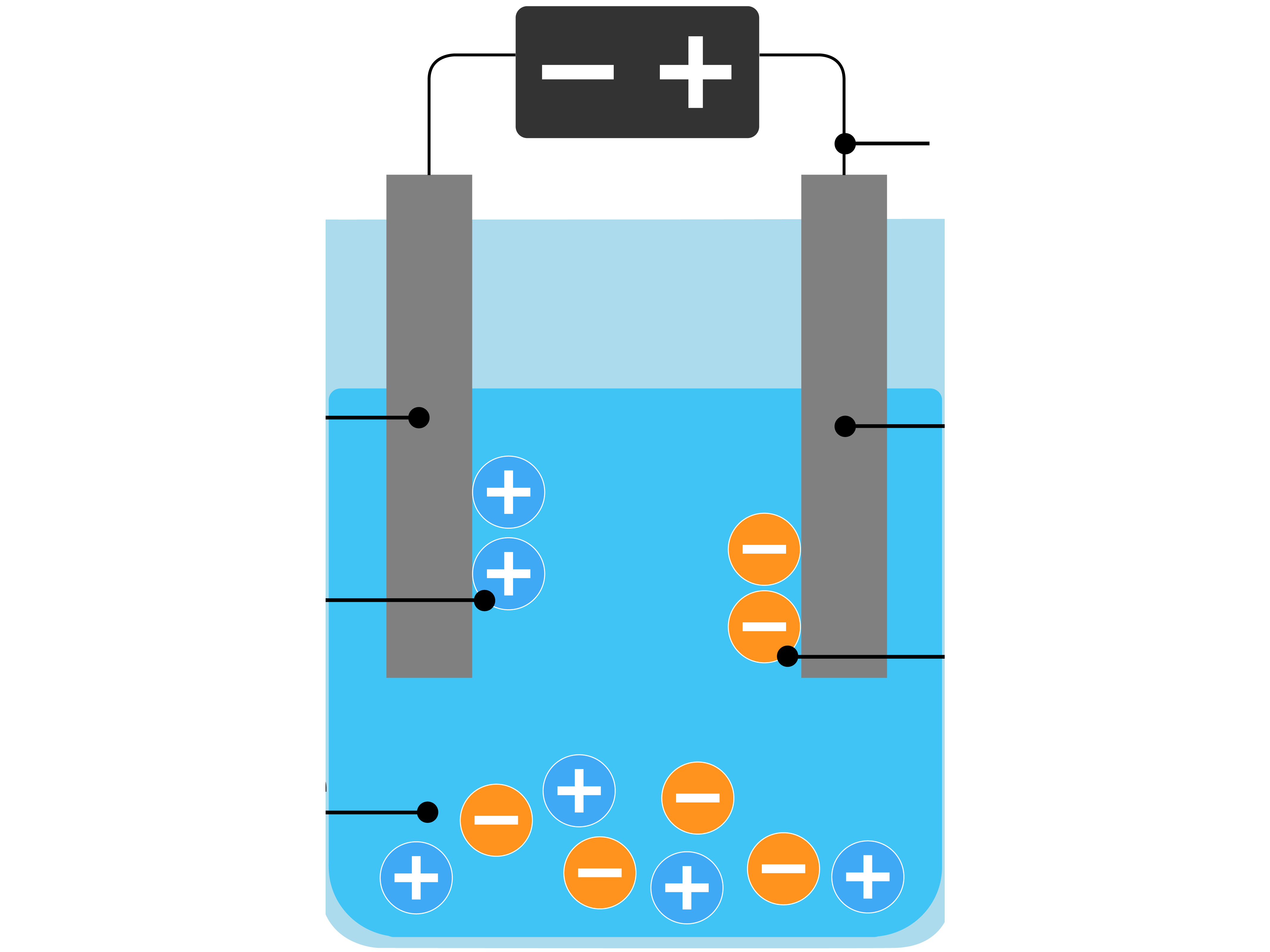
- ADC current
- BAC current
- Canode
- Danion
- Eelectrolyte
- Fcation
- Gcathode
Informationen
- Beschreibung
- GCSE Chemistry (AQA) Quiz am AQA (9-1) Topic 4, erstellt von https:// revisechemistry.uk am 06/02/2018.
- Sprache
- English
- Aufrufe
- 4.063
- Schlagwörter
- Bewertung
- Noch keine Bewertungen Bewerte dieses Quiz