
Karteikarten
01-3 Intro, Organization & Processes
Karten in diesem Stapel (60)
- 1What is a Project?A project is a temporary endeavor undertaken to create a unique product, service, or result.
- 2A project can create:• A product that can be either a component of another item, an enhancement of an item, or an end item
in itself;
• A service or a capability to perform a service (e.g., a business function that supports production or
distribution);
• An improvement in the existing product or service lines (e.g., A Six Sigma project undertaken to reduce
defects); or
• A result, such as an outcome or document (e.g., a research project that develops knowledge that can be
used to determine whether a trend exists or a new process will benefit society). - 3What is Project Management?Project management is the application of knowledge, skills, tools, and techniques to project activities to meet the
project requirements - 4five Process Groups are:• Initiating,
• Planning,
• Executing,
• Monitoring and Controlling, and
• Closing. - 5How many Project Management processes47
- 6Managing a project typically includes• Identifying requirements;
• Addressing the various needs, concerns, and expectations of the stakeholders in planning and executing
the project;
• Setting up, maintaining, and carrying out communications among stakeholders that are active, effective,
and collaborative in nature;
• Managing stakeholders towards meeting project requirements and creating project deliverables;
• Balancing the competing project constraints, which include, but are not limited to:
○○ Scope,
○○ Quality,
○○ Schedule,
○○ Budget,
○○ Resources, and
○○ Risks. - 7Progressive elaboration involvescontinuously improving
and detailing a plan as more detailed and specific information and more accurate estimates become available - 8A program is...is defined as a group of related projects, subprograms, and program activities managed in a
coordinated way to obtain benefits not available from managing them individually - 9Program management isthe application of knowledge, skills, tools, and techniques to a program in order to
meet the program requirements and to obtain benefits and control not available by managing projects individually. - 10Program management focuses onthe project interdependencies and helps to determine the optimal approach
for managing them - 11A portfolio refers toprojects, programs, subportfolios, and operations managed as a group to achieve strategic
objectives. - 12A project management office (PMO) isa management structure that standardizes the project-related governance
processes and facilitates the sharing of resources, methodologies, tools, and techniques - 13Difference between Operations Management and Project ManagementOrganizations sometimes change their operations, products, or systems by creating strategic
business initiatives that are developed and implemented through projects. Projects require project management
activities and skill sets, while operations require business process management, operations management activities,
and skill sets.
Operations are ongoing endeavors that produce repetitive outputs, with resources assigned to do basically the
same set of tasks according to the standards institutionalized in a product life cycle. Unlike the ongoing nature of
operations, projects are temporary endeavors - 14Business value isdefined as the entire value
of the business; the total sum of all tangible and intangible elements. - 15Role of the Project ManagerThe project manager is the person assigned by the performing organization to lead the team that is responsible
for achieving the project objectives - 16Organizational process assetsare the plans, processes, policies, procedures, and knowledge bases specific
to and used by the performing organization - 17Organizational process assets may be grouped into two categories(1) processes and procedures, and (2) corporate knowledge base
- 18Processes and ProceduresInitiating and Planning
Executing, Monitoring and Controlling
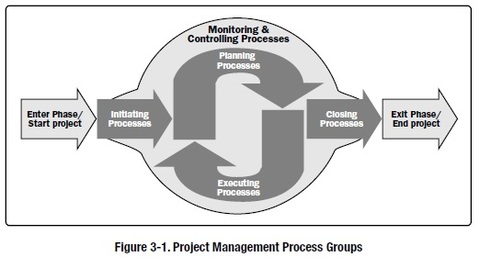
Closing - 19Initiating and PlanningGuidelines and criteria for tailoring the organization’s set of standard processes and procedures
to satisfy the specific needs of the project;
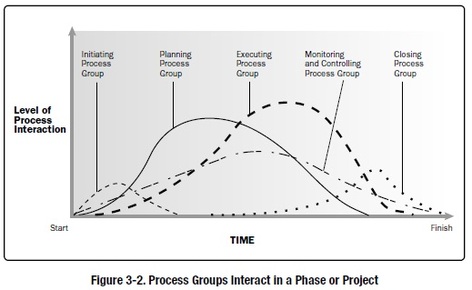
○○ Specific organizational standards such as policies (e.g., human resources policies, health and
safety policies, ethics policies, and project management policies), product and project life cycles,
and quality policies and procedures (e.g., process audits, improvement targets, checklists, and
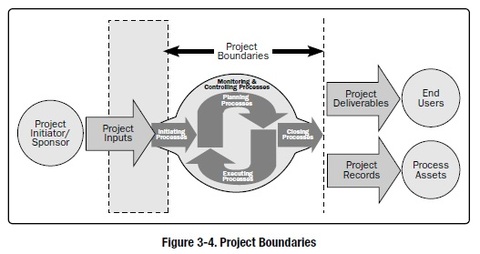
standardized process definitions for use in the organization); and
○○ Templates (e.g., risk register, work breakdown structure, project schedule network diagram, and
contract templates). - 20Executing, Monitoring and Controlling:Change control procedures, including the steps by which performing organization standards,
policies, plans, and procedures or any project documents will be modified, and how any changes
will be approved and validated;
○○ Financial controls procedures (e.g., time reporting, required expenditure and disbursement
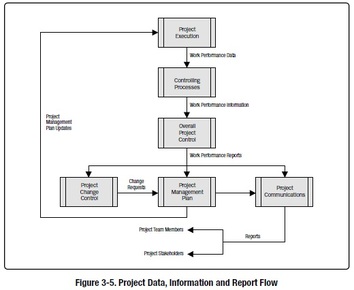
reviews, accounting codes, and standard contract provisions);
○○ I ssue and defect management procedures defining issue and defect controls, issue and defect
identification and resolution, and action item tracking;
Organizational communication requirements (e.g., specific communication technology available,
authorized communication media, record retention policies, and security requirements);
○○ Procedures for prioritizing, approving, and issuing work authorizations;
○○ Risk control procedures, including risk categories, risk statement templates, probability and
impact definitions, and probability and impact matrix; and
○○ Standardized guidelines, work instructions, proposal evaluation criteria, and performance
measurement criteria. - 21ClosingProject closure guidelines or requirements (e.g., lessons learned, final project audits, project
evaluations, product validations, and acceptance criteria). - 22Corporate Knowledge BaseThe organizational knowledge base for storing and retrieving information includes, but is not limited to:
• Configuration management knowledge bases containing the versions and baselines of all performing
organization standards, policies, procedures, and any project documents;
• Financial databases containing information such as labor hours, incurred costs, budgets, and any project
cost overruns;
• Historical information and lessons learned knowledge bases (e.g., project records and documents,
all project closure information and documentation, information regarding both the results of previous
project selection decisions and previous project performance information, and information from risk
management activities);
• Issue and defect management databases containing issue and defect status, control information, issue
and defect resolution, and action item results;
• Process measurement databases used to collect and make available measurement data on processes
and products; and
• Project files from previous projects (e.g., scope, cost, schedule, and performance measurement baselines,
project calendars, project schedule network diagrams, risk registers, planned response actions, and
defined risk impact). - 23Enterprise Environmental FactorsEnterprise environmental factors refer to conditions, not under the control of the project team, that influence,
constrain, or direct the project. are considered inputs to most planning processes,
may enhance or constrain project management options, and may have a positive or negative influence on the
outcome. - 24A stakeholder isan individual, group, or organization who may affect, be affected by, or perceive itself to be
affected by a decision, activity, or outcome of a project - 25Project governancethe alignment of the project with
stakeholders’ needs or objectives—is critical to the successful management of stakeholder engagement and
the achievement of organizational objectives - 26A sponsor isthe person or group who provides resources and support for the project and is
accountable for enabling success. - 27Customers arethe persons or organizations who will approve and manage the
project’s product, service, or result. - 28Users arethe persons or organizations who will use the project’s
product, service, or result - 29Sellers, also called vendors, suppliers, or contractors, areexternal companies that enter into a
contractual agreement to provide components or services necessary for the project. - 30Business partners areexternal organizations that have a special relationship with
the enterprise, sometimes attained through a certification process - 31Organizational groups areinternal stakeholders who are affected by the activities
of the project team. Ex. marketing and sales, human resources, legal, finance, operations, manufacturing, and
customer service - 32Functional managers arekey individuals who play a management role within
an administrative or functional area of the business, such as human resources, finance, accounting, or
procurement - 33Project governance isa critical element of any project, especially on complex and
risky projects. It provides a comprehensive, consistent method of controlling the project and ensuring its success
by defining and documenting and communicating reliable, repeatable project practices. It includes a framework
for making project decisions; defines roles, responsibilities, and accountabilities for the success of the project; and
determines the effectiveness of the project manager. - 34The project governance approach should be described in theproject management plan
- 35the success of the project should be measured in terms ofcompleting
the project within the constraints of scope, time, cost, quality, resources, and risk as approved between the project
managers and senior management. - 36A project life cycle isthe series of phases that a project passes through from its initiation to its closure
- 37A project phase isa collection of logically related project
activities that culminates in the completion of one or more deliverables - 38In a sequential relationship, a phase starts onlywhen the previous phase is
complete - 39In an overlapping relationship, a phase startsprior to completion of the previous
one - 40Predictive life cycles (also known as fully plan-driven) areones in which the project scope, and the time and
cost required to deliver that scope, are determined as early in the project life cycle as practically possible - 41Predictive life cycles are generally preferred whenthe product to be delivered is well understood, there is
a substantial base of industry practice, or where a product is required to be delivered in full to have value to
stakeholder groups. - 42Iterative and incremental life cycles areones in which project phases (also called iterations) intentionally repeat
one or more project activities as the project team’s understanding of the product increases - 43Iterative and incremental life cycles are generally preferred whenan organization needs to manage changing
objectives and scope, to reduce the complexity of a project, or when the partial delivery of a product is beneficial
and provides value for one or more stakeholder groups without impact to the final deliverable or set of deliverables.
Large and complex projects are frequently executed in an iterative fashion to reduce risk by allowing the team to
incorporate feedback and lessons learned between iterations. - 44Adaptive life cycles (also known as change-driven or agile methods) areintended to respond to high levels
of change and ongoing stakeholder involvement.
Adaptive methods are also iterative and incremental, but differ
in that iterations are very rapid (usually with a duration of 2 to 4 weeks) and are fixed in time and cost - 45Types of Life CyclesPredictive Life Cycles (fully plan-driven)
Iterative and Incremental Life Cycles
Adaptive Life Cycles (change-driven or agile) - 46A process isa set of interrelated actions and activities performed to create a pre-specified product, service, or
result. - 47Project management processes are grouped intofive
categories known as Project Management Process Groups (or Process Groups):
• Initiating Process Group. Those processes performed to define a new project or a new phase of an
existing project by obtaining authorization to start the project or phase.
• Planning Process Group. Those processes required to establish the scope of the project, refine the
objectives, and define the course of action required to attain the objectives that the project was undertaken
to achieve.
• Executing Process Group. Those processes performed to complete the work defined in the project
management plan to satisfy the project specifications.
• Monitoring and Controlling Process Group. Those processes required to track, review, and regulate the
progress and performance of the project; identify any areas in which changes to the plan are required;
and initiate the corresponding changes.
• Closing Process Group. Those processes performed to finalize all activities across all Process Groups to
formally close the project or phase. - 48Project Management Process Groups diagram
- 49Processes groups interactions diagram
- 50The Process Groups are notproject life cycle phases.
- 51projects are separated into distinct phases or subcomponents, such asconcept development feasibility study, design, prototype, build, or test, etc.
- 52Initiating Process Group
- 53The Initiating Process Group consists ofthose processes performed to define a new project or a new phase of
an existing project by obtaining authorization to start the project or phase - 54The Planning Process Group consists ofthose processes performed to establish the total scope of the effort,
define and refine the objectives, and develop the course of action required to attain those objectives - 55The Executing Process Group consists ofthose processes performed to complete the work defined in the
project management plan to satisfy the project specifications - 56The Monitoring and Controlling Process Group consists ofhose processes required to track, review, and
orchestrate the progress and performance of the project; identify any areas in which changes to the plan are
required; and initiate the corresponding changes. - 57The Closing Process Group consists ofthose processes performed to conclude all activities across all Project
Management Process Groups to formally complete the project, phase, or contractual obligations - 58Project Data and Information
- 59A Knowledge Area represents acomplete set of concepts, terms, and activities that make up
a professional field, project management field, or area of specialization. - 60The Knowledge Areas are:10
Project Integration Management,
Project Scope
Management,
Project Time Management,
Project Cost Management, Project Quality Management, Project Human
Resource Management,
Project Communications Management,
Project Risk Management,
Project Procurement
Management and
Project Stakeholder Management.
Informationen
- Beschreibung
- PMP PMP - All Chapters Karteikarten am 01-3 Intro, Organization & Processes, erstellt von miguelabascal am 05/07/2013.
- Erstellt von
- miguelabascal
- Aufrufe
- 157
- Tags
- Bewertung