
3401261


| Frage | Antworten |
| Mesopotamia | Land between the rivers; located in the region known as the Fertile Crescent |
| Sumerians | A member of the indigenous non-Semitic people of ancient Babylonia |
| Polytheistic | The belief of many Gods |
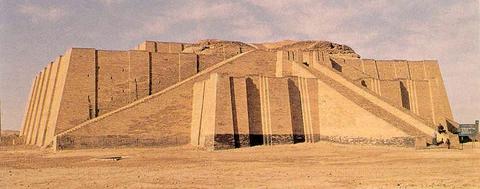
| Ziggurats | A rectangular stepped tower, sometimes surmounted by a temple |
| Theocracy | A system of government in which priests rule in the name of God or a god |
| Cuneiform | System of writing |
| Hammurabi's Law Code | A city-state south of Akkad, in Babylon |
| Patriarchal | Men who dominated the society |
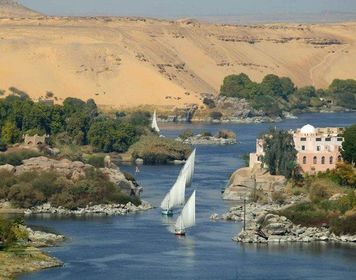
| Nile River | A river in Africa that flows north to Egypt |
| Inundation | The annual flooding of the Nile River |
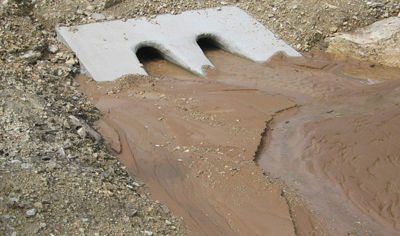
| Silt | Rich black mud left from the flooding of the Nile River |
| King Menes | King who united Lower & Upper Egypt around 3100 BC |
| Dynasty | Means "great house of"; a family of rulers |
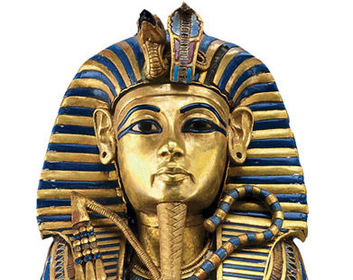
| Pharaoh | Name for Egyptian King |
| "Ka" | Ancient Egyptians thought that when somone died the Ka, or the life force, left the physical body |
| "Ba" | The Ba was part of the soul that embarked on a journey to follow the gods |
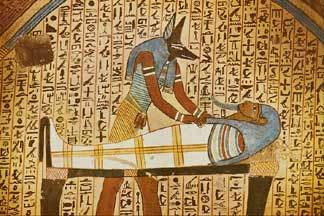
| Mummification | Way of perserving the body |
| Canopic Jars | Containers used to hold the internal organs of the deceased |
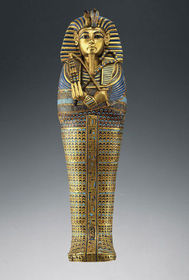
| Sacrophagus | Formed the outer layer of protection for a royal mummy |
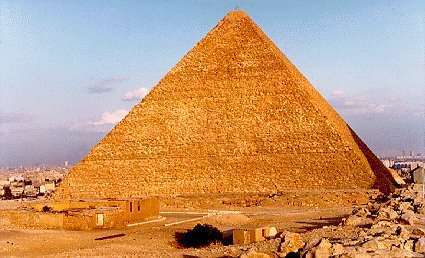
| King Khufu | Earned everlasting fame for being the pharaoh responsible for the Great Pyramid at Giza |
| The Great Pyramid | Largest of the 3 pyramids at Giza; built by King Khufu |
| King Khufu's boat | Discovered in 1952 under the Great Pyramid |
| Great Sphinx | One of the largest and oldest statues in the world |
| Hieroglyphics | Egyptian picture writing |
| The Rosetta Stone | A stone with writing on it in two languages (Egyptian and Greek) |
Möchten Sie mit GoConqr kostenlos Ihre eigenen Karteikarten erstellen? Mehr erfahren.