
Karteikarten
The Cell Theory [COMPLETED]
Karten in diesem Stapel (25)
- 13 tenets of cell theory:1. The cell is the smallest unit of life and it is the basic unit of structure and organisation in an organism.
▪All cells are capable of maintaining its own metabolic activity.
2. All cells come from pre-existing cells.
▪Each cell has its own hereditary materials that are passed down from parent to daughter cells.
3. All living organisms are composed of cells.
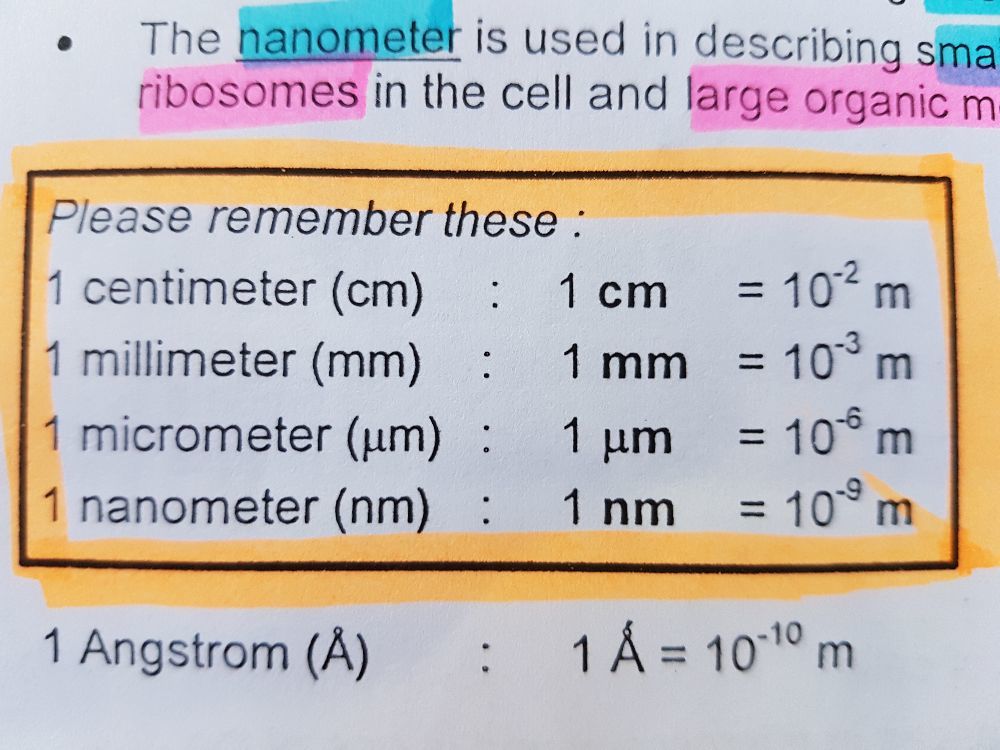
▪ Organisms that are made up of one cell are unicellular and those made up of many cells are multicellular. - 2what unit of measurement is used for whole cells/large cell structures eg chlroplast/nucleus and smaller cell structures (ultrastructures) eg ribosomes and large organic molecules (proteins/lipids)micrometer and nanometer respectively
- 3units of measurement:
- 4formula for magnificationImage size / Actual size
- 5A type of prokaryoteBacteria
- 6A type of EukaryoteAnimal and plant cells
- 7Characteristics of prokaryotic cells1. DNA is not enclosed by nuclear membrane
2. DNA located in nucleoid (distiguishing feature)
3. DNA not complexed with histones
4. Do not have membrane-bound organelles - 8Shape and Size of prokaryotic cellShape: wide diversity
Size: small; 0.5-5.0mm in length; unicellular - 9Structure and Function of Cell WallS: composed of peptidoglycan
F: ▪ Gives the cell shape
▪ Prevents rupture
▪ Serves as an anchorage point for flagella - 10Structure and Function of CapsuleS: sticky layer of polysaccharide or protein
F: ▪Enable bacteria to adhere to their substrate or each other to form a colony
▪ Offer protection against dehydration
and sheild pathogenic bacteria from attacks by their host's immune system. - 11Structure and Function of Pili aka FrimbriaeS: Hair-like protein appendages aka attachment /adhesion pili
F: Enable bacteria to stick to their substrate eg teeth or to one another. - 12Structure and Function of Sex PiliS: longer but less in numbers as compared to attachment pili
F: Are appendages that pull 2 bacteria cells together prior DNA transfer from one cell to another via conjugation - 13FlagellumOne or many can be present
Function: Responsible for motility of the bacteria - 14Function of Plasma MembraneMay form in-foldings which carry out specialised functions like ATP production via mesosomes and photosynthesis (only for cyanobacteria)
- 15How do prokaryotic cells perform photosynthesis and respiration without chloroplast mitochondria?Plasma Membrane
- 16what type of ribosomes do prokaryotic cells have?70S Ribosomes
- 17Structure of 70S ribosomesS: made up of 2 ribosomal subunits - one small ribosomal subunit (30S) and one large ribosomal subunit (50S)
Smaller than 80S ribosomes - 18Structure of Bacterial chromosome1. Single chromosome
2. Circular double stranded
3. Located in nucleoid
4. DNA not complexed with histones - 19Structure of plasmids1. Extra-chromosomal DNA
2. Small, circular and double stranded DNA which replicates independently of the bacterial chromosome
3. One or several plasmids might be present. - 20Structure of prokaryotic cell1. Cell wall
2. Capsule
3. Pili
4. Sex pili
5. Flagellum
6. Lack of membrane-bound organelles
7. Plasma membrane
8. 70S ribosomes
9. Bacterial chromosome
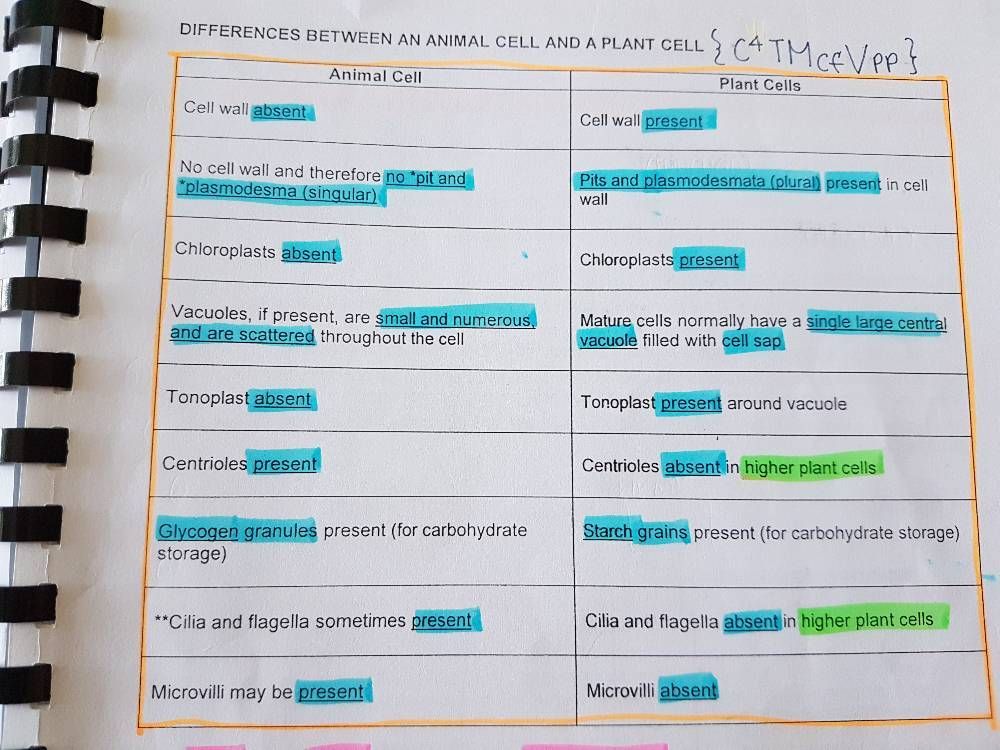
10. Plasmids - 21Differences b/w animal and plant cellsFlagella -Cell movement
Cillia- short hairs moving back and forth across rhe surface of cell to move matter - 22How viruses challenge the cell theory?1. Viruses are acellular, they are not made up of cells
2. Although viruses contain DNA or RNA, they do not grow or reproduce on their own, maintain homeostasis nor metabolize
3. Although viruses can reproduce, they cannot grow and repeoduce on their own, and can only do so by using host's mechanisms (proteins/ATP/enzymes) - 23Living Characteristics of viruses1. Only reproduce/ carry out metabolic activities in the living host cell
2. contains DNA or RNA that can be passed down to progeny
3. can mutate as mutation of genetic material results in a phenotype that is best suited to adapt and survive in a particular environment(undergo natural selection) - 24Non-Living Characteristics of viruses1. Does not contain cytoplasm
therefore cannot carry out metabolic activities (such as synthesis or organic molecules such as sugars, proteins,fats) outside the host cell
2. cannot grow and reproduce on their own
therefore can only replicate inside living cells/obligate parasites
3. contains either DNA or RNA, but never both - 25Why are viruses considered obligate parasites?1. They lack enzymes such as DNA Polmerase and hence relies on the host cell's enzymes to replicate own viral nucleic acid
2. Unable to synthesise ATP on it own. ATP is used as a source of energy to allow metabolic acitivities to occur
3. They lack transcription amd translation machineries such as enzymes and ribosomes to translate DNA to mRNA and mRNA to polypeptides/proteins and hence relies on host cell's enzymes and ribosomes to make viral protein
4. They lack raw materials for reproduction and hence relies on the host cell's nucleotides, amino acids and ATP for the synthesis of nucleic acid and viral proteins
Informationen
- Beschreibung
- Flashcards on The Cell Theory, created by Megan Ching on 31/05/2017.
- Erstellt von
- Megan Ching
- Aufrufe
- 21
- Tags
- Bewertung