
Introduction to the Atom
Slides in this set (7)
-
- The Atom is the smallest part of an element, that still has the properties of that element, i.e. it cannot be broken down any further.
- https://www.youtube.com/watch?v=8hgz0iJih7I&noredirect=1 (Embed)
-
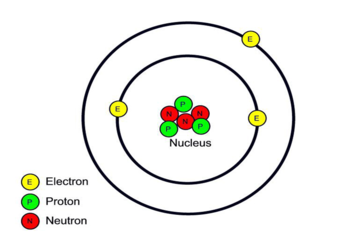
- NUCLEUS:
- the central section of the atom
- made up of sub-atomic particles called protons and neutrons
- ELECTRONS:
- sub-atomic particles that revolve around the nucleus in paths called orbits
- this movement of electrons creates an electron cloud
- Caption: Structure of the atom
-
- Protons have a positive charge (Charge = +1)
- Electrons have a negative charge (Charge = -1)
- Neutrons are neutral (No charge)
- Usually atoms are electrically neutral which means that the number of protons in the atom is equal to the number of neutrons.
- Protons and neutrons have the same mass, but electrons are 2000 times smaller than the mass of proton. (>>>>>>)
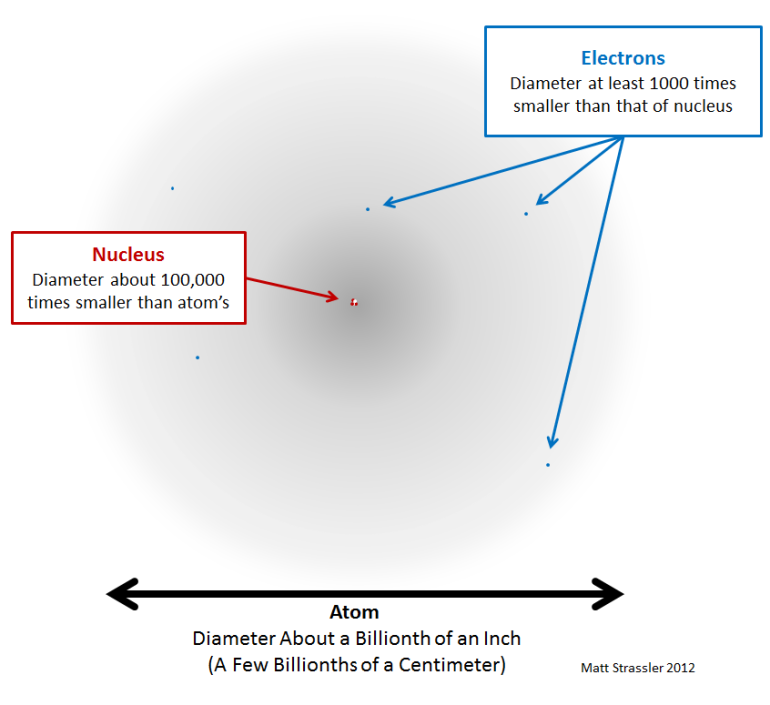
- Caption: From: profmattstrassler.com
-
- Atomic Number: Number of protons in the atom
- Mass Number: Number of protons + Number of neutrons
- this means:
- Number of neutrons in an atom = Mass number MINUS Atomic number
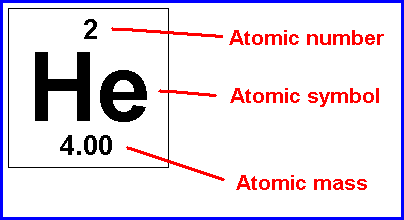
- Caption: Helium: Atomic number = 2, Mass number = 4
-
- The atomic
- number of fluorine is 9 and its mass number is 19. (rounded from 18.998, see left)
- How many (a) protons,
- (b) electrons and (c) neutrons does a neutral fluorine atom have?
- (a) 9 protons
- (b) 9 electrons (same number as the number of protons)
- (c) 10 neutrons (19
- – 9)

- Caption: Flourine
-
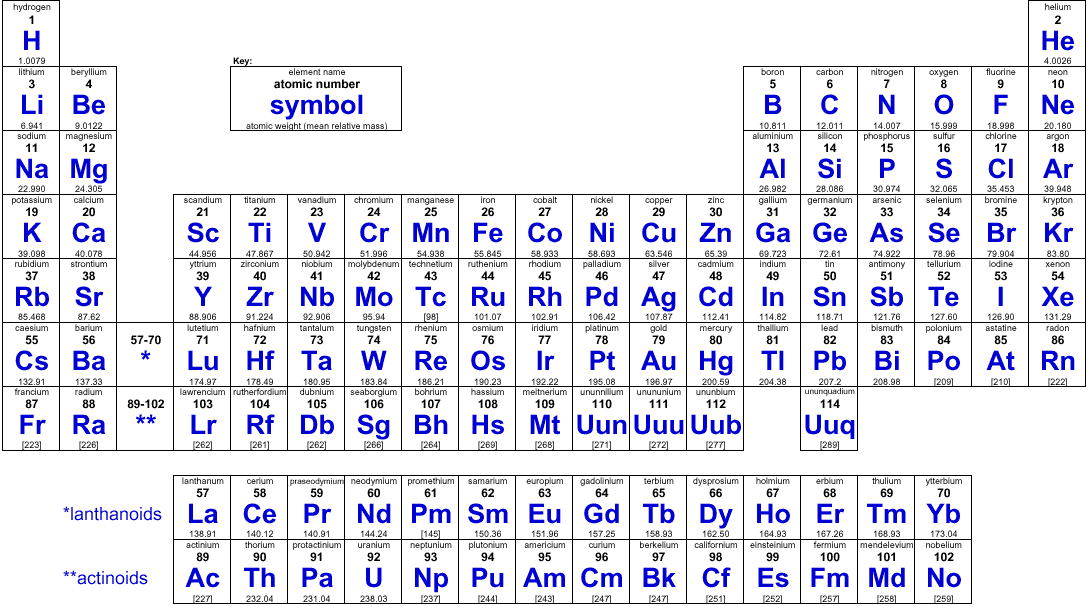
- Caption: Periodic Table of the Elements
-
- Scientists used
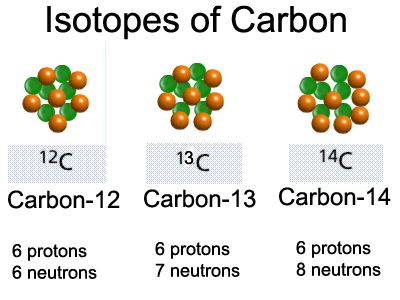
- to think that all atoms of a particular element were identical. We have discovered that some elements have two or three different types of atom.
- They will all
- have the same number of protons but they could have a different number of
- neutrons.
- e.g. some atoms
- of carbon have 6 neutrons, while other atoms of carbon have 7 neutrons, and others have 8 neutrons.
- We say these
- atoms are isotopes of each other.
- Isotopes
- are atoms that have the same atomic number but a different mass number
Information
- Description
- Slide set on the atom, including links to video and quiz
- Created by
- Deleted user · Apr 2019
- Updated
- Apr 4, 2019
- Views
- 24
- Tags
- History
-
- Created by Sarah Egan · Nov 20, 2015
- Copied by Derek Cumberbatch · Nov 20, 2015
- Copied by bill fingleton · Apr 4, 2019
- Rating