
Notes
L01_02 Innate v. Acquired Immunity
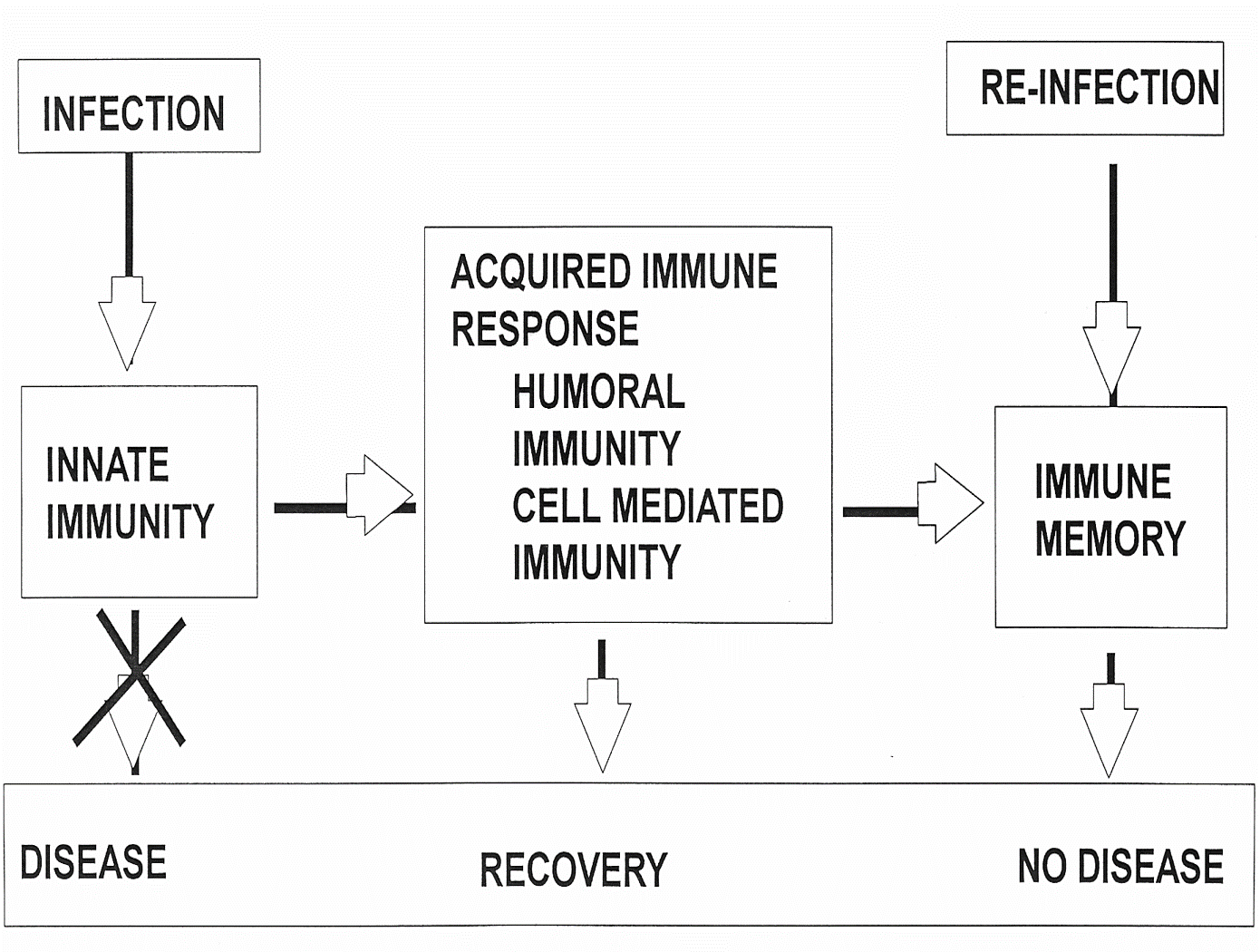
Content of the notes (1)
Page 1
Innate & Acquired Immunity
Innate Immunity
Present since birth (i.e. constitutive), this type of immunity is the first line of defense against foreign substances. As it is not antigen-specific its attack is the same without regards to what type of antigen is present. This also indicates the lack of "memory" of innate immunity.
Acquired Immunity
Acquired immunity is not necessarily present at birth, rather it matures later in life due to its "memory" characteristic. Since it is antigen-specific, the "memory" allows for greater response against the same antigen if it were present in the body again. It must be induced for a response to occur.
Includes Active and Passive immunity
Active immunity involves the individual making his/her own immune products
Passive immunity involves giving immune products to an individual (i.e. vaccination, antidote)
Active immunity is split into Humoral and Cell Mediated Immunity
Humoral Immunity contains B cells which produce antibodies against extracellular bacteria and toxins
Cell Mediated Immunity contains T cells which produce cytokines against intracellular bacteria, viral infections, and cancer cells.
Steps
Healthy individual, go to (2.) OR (7.)
Foreign substance (FS) detected by immune system
Innate immunity kicks in and attacks the FS.
Recovers, go to (1.) OR FS is too much to handle, go to( 5.)
FS level reaches threshold and induces an Acquired Immune Response
FS is eliminated and the Acquired Immunity "remembers" its offensive/defensive tactics for the next time the same FS comes, go to (1.)
FS returns, go to (5.) but with a stronger response by Acquired Immunity
Information
- Description
- None Pharmacy (PHRX 3001 Immunology) Note on L01_02 Innate v. Acquired Immunity, created by Amy Lin on 22/01/2016.
- Created by
- Amy Lin
- Views
- 28
- Tags
- Rating