
Notes
P2a revision (part 1)
Content of the notes (1)
Page 1
Velocity
Speed and Velocity are how fast you are going
Measured in m/s, km/h or mph
Speed is how fast you are going, no matter the direction
Velocity is the same but a direction must be specified
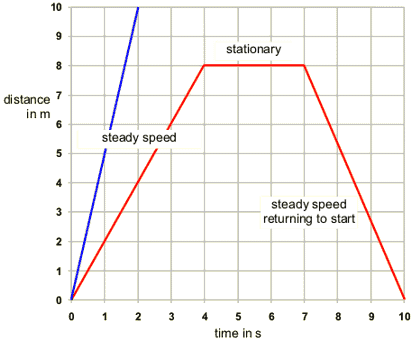
Distance-time Graphs
Gradient tells you the speed
(Rise/run)
Curves represent acceleration or deceleration
Steepening curve means it's going up
Levelling off curve shows it's slowing down
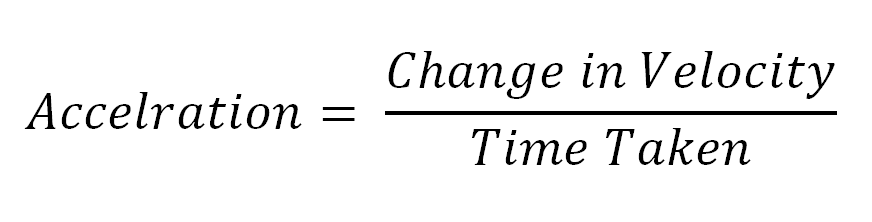
Acceleration
How quickly velocity is changing
this can be change in speed, direction or both
Change in velocity is final velocity minus the original
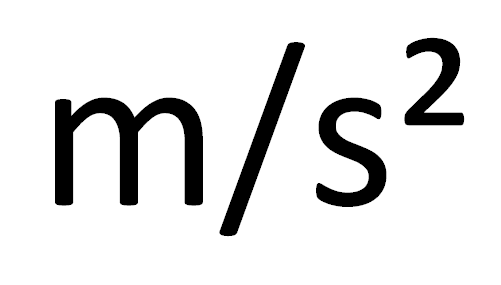
Measured in
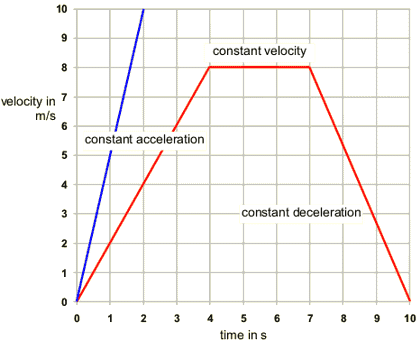
Velocity-time Graphs
Area under any section is equal to the distance travelled in that time interval
A curve is changing acceleration
Acceleration (at a sloping section is the gradient)
When it is constant just read it off the graph
Gravity
Gravity is the force of Attraction between all masses
Has 2 important effects
On the surface of the planet, it makes all things accelerate towards the ground
It gives everything a weight
Mass
the amount of stuff in an object
It's the same anywhere in the universe
Not a force
Measured in Kg
Weight
Caused by the pull of gravitational forces
Mostly the weight of an object is just the force of gravity pulling it towards the centre of the earth
It is different depending on the strength of the gravitational forces
A force measured in newtons
Measured using a newton metre
Measured in Newtons
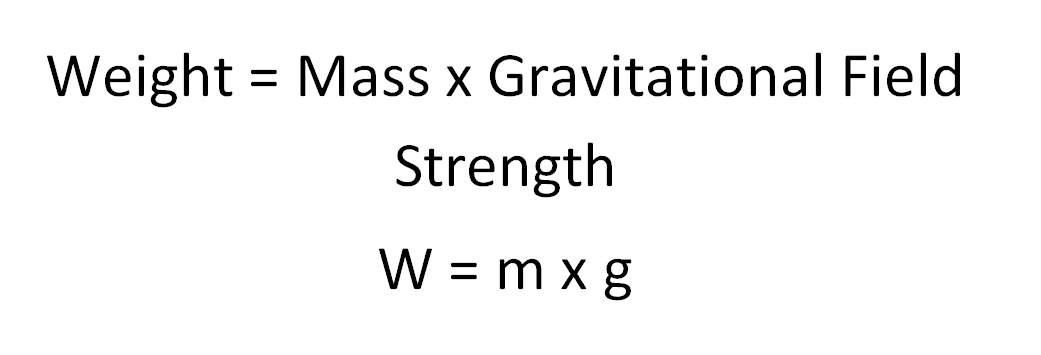
On earth the gravitational strength is 10 N/kg
Resultant Forces
The overall force on a point or object
mostly there are two forces acting
Overall force decides motion of the object
If the forces act along the same line the overall force is found by adding or subtracting them
If there is a resultant force acting on an object
The object will change it's state of rest or motion
It would change the object's velocity
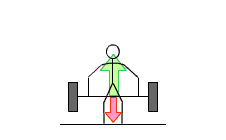
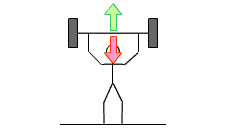
e.g A mug on a table
Gravity is acting downwards
Causes reaction force on the surface pushing up
This makes it balance
The resultant force would be 0
10N-10N=0N
Forces and Acceleration
If the resultant force is 0
The object will stay stationary
There has to be a resultant force to move
If there is o resultant force on an object ti will carry on moving at the same velocity
e.g. a car or train
To move at a constant velocity the forces will be balanced
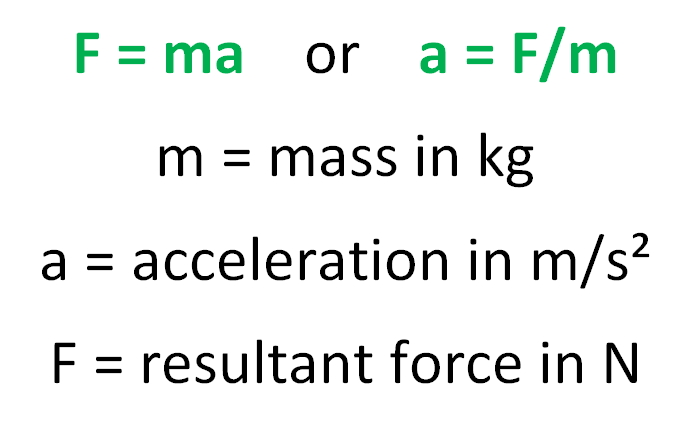
If there is a resultant force (not 0)
The object will accelerate in the direction of force
This acceleration can be in 5 different forms
1. Starting
2. Stopping
3. Speeding up
4. slowing down
5. changing direction
on a diagram the arrows will be unequal
Reaction Forces
When 2 forces interact
The forces they exert on each other are equal and opposite
If you push on something the object will 'push back' twice as hard
The 2 forces are acting on different objects
The sized forces will be the same
But the mass might be different and so there is an acceleration
Friction
if there is not a force making it move
Friction causes everything to slow down and stop
Friction acts in the opposite direction to movement
To travel at a steady speed the driving force need to balance the driving force
You get friction between 2 surfaces in contact
Or when the object passes through a fluid
Resistance in Fluids
mostly cause by air resistance or 'drag'
This can be reduced by giving a streamline shape
like sports cars
Drag increases as speed increases
At 70mph an engine has to wok harder than at 30mph to maintain a steady speed
Terminal Velocity
Objects falling through fluids reach a terminal velocity
when things start falling gravitational force is more than frictional forces
So it accelerates
So friction builds up
This reduces acceleration
Until they are equal
It won't accelerate anymore
It has reached its terminal velocity
Depends on shape and area
The accelerating force on falling objects is gravity
It would make them fall at the same rate
if it wasn't for air resistance
Causes things to fall at different speeds
Terminal velocity is determines by it's drag in comparison to its weight
The frictional force depends on the shape and area
e.g a skydiver
Without parachute there is a small area and a force pulling him down
He reaches a terminal velocity of about 120mph
With the parachute there is more air resistance
there is still the same force pulling him down
The terminal velocity goes down to 15mph
This is a safe speed
Stopping Distances
Thinking Distance + Breaking Distance = Stopping Distances
The total stopping distance is timed from when the driver first spots the hazard to when it stops
Thinking Distance
is affected by:
How fast you're going - whatever reaction time the faster you re going the further you'll travel
How alert you are - tired? Drugs? Alcohol? these all affect reaction time
Braking Distance
is affected by:
How fast you're going - faster you're going the further it takes you to stop
how good the brakes are - brakes must be checked and maintained, faulty brakes make it harder to stop quickly
How good are the tyres - Must hve a dred depth of 1.6mm to be able to get rid of wayer in wet conditions. Stuff on road can make tyres skid
How good is the grip - depends on road durface, weather conditions and tyres
Bad visibility and distractions don't help
e.g. rain and plying with the radio
Driver doesn't notice hazard
Doesn't affect thinking distance it just means there is lees time to think and act
Wet or icy roads make the stopping distance longer as prevent the tyres from getting grip and stopping quickly
Velocity and Acceleration
Gravity, weight and Mass
Acceleration and forces
Terminal velocity
Stopping Distances