
Quiz
Heart anatomy
This quiz has question types that open in the usual player.
Questions in this quiz (13)
1Structure of pericardium
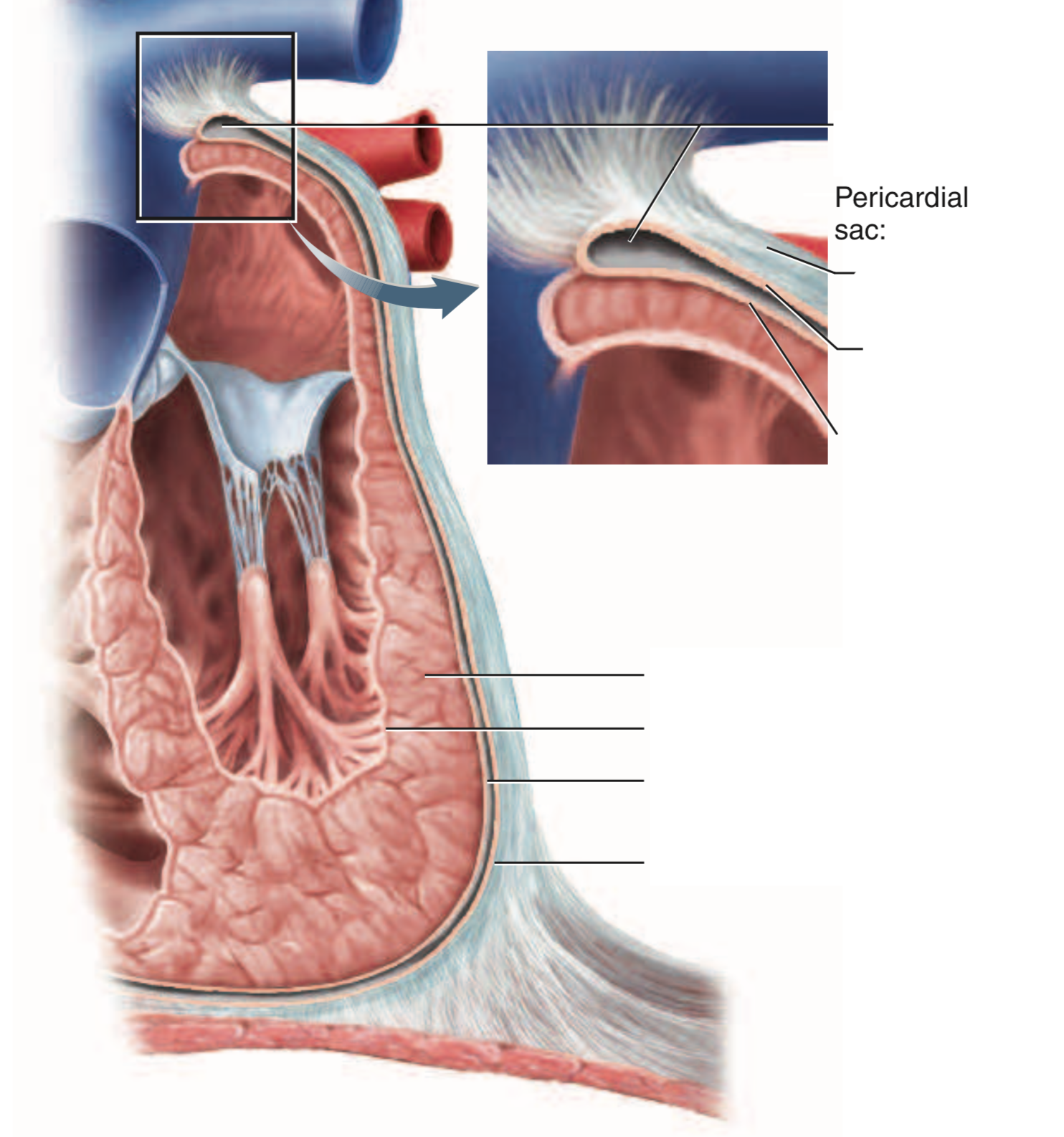
- Apericardial cavity
- Bfibrous pericardium
- Cparietal serous pericardium
- Dvisceral serous pericardium
- Epericardial sac
- Fepicardium
- Gendocardium
- Hmyocardium
2Functions of pericardium
- AFacilitation of secure intrathoracic cardiac stability
- BFriction reduction between heart & the mediastinum structures
- CNutrition of the heart
- DLimitation of cardiac distention and chamber dilation
- EUniform cardiac distribution of pericardial cavity hydrostatic pressure
- FFormation of a barrier to stop infection
- GFacilitation of atrial filling by promoting negative pericardial pressure during ventricular systole
- H(pericardium + pleural fluid): formation of a system that automatically applies compensating hydrostatic pressures to the cardiac periphery when accelerating forces act
3The thickness of the pericardium is [blank_start]1-2 mm[blank_end].
- A1-2 mm
4Fibrous pericardium
- Amade up from tough connective tissue
- Bthick
- Cthin
- Dstong
- Efragile
- Fcomposed mainly of three collagen layers, cross-woven at 150° to each other
5Pericardial relationships
Anteriorly: [blank_start]lungs[blank_end] + [blank_start]pleura coverings[blank_end]
Laterally: [blank_start]pleural coverings[blank_end] of the mediastinal surfaces of the lungs
Superiorly: [blank_start]diaphragm[blank_end]- Alungs
- Bpleura coverings
- Cpleural coverings
- Ddiaphragm
6Visceral layer of serous pericardium = [blank_start]epicardium[blank_end]
- Aepicardium
7The heart is located in the .... mediastinum.
- Aposterior
- Banterior
- Cmiddle
- Dsuperior
8Fill in the gaps of the surfaces and of the margin/borders.
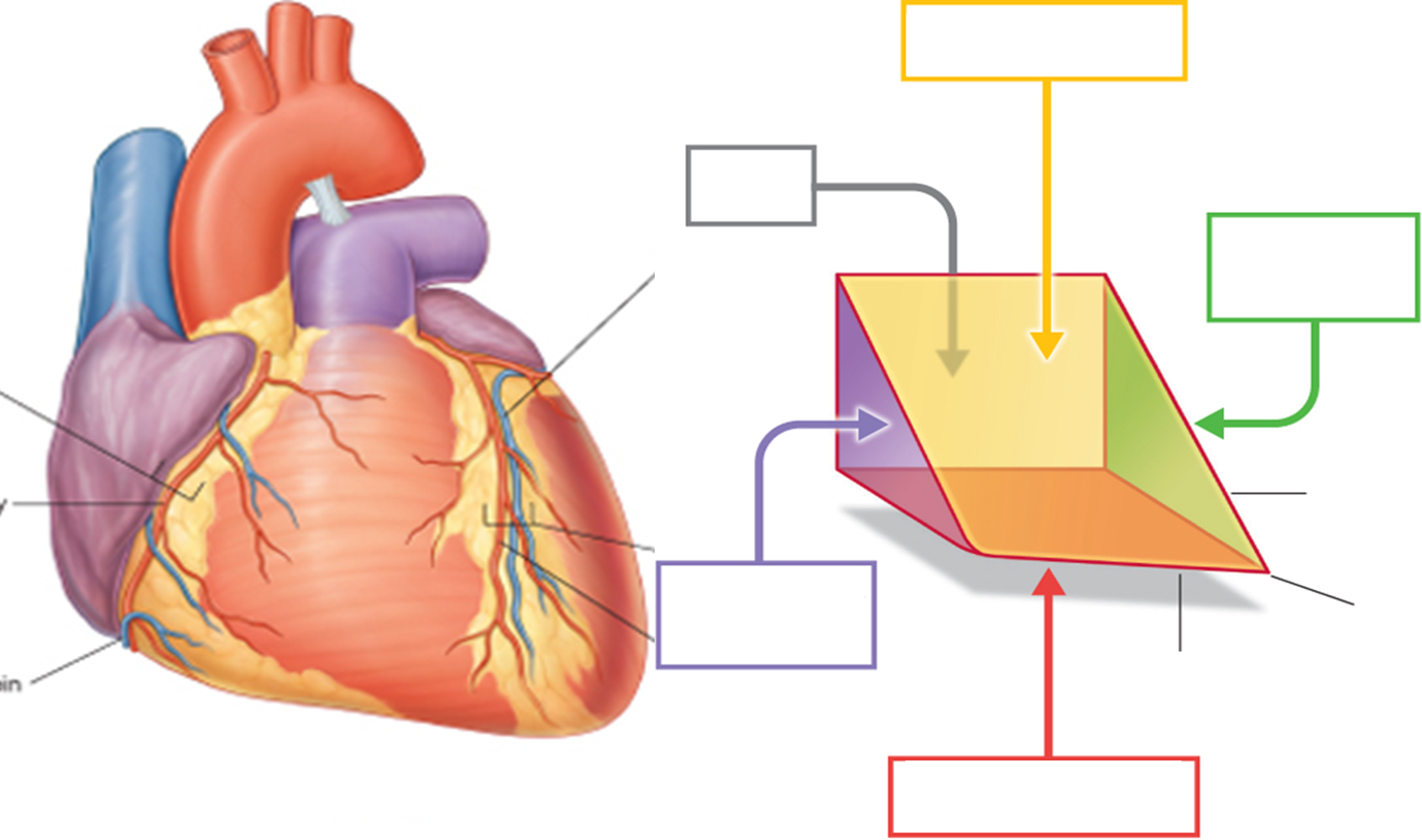
- Aright pulmonary surface
- Bleft pulmonary surface
- Cdiaphragmatic surface
- Dsternocostal surface
- Ebase
- Fapex
- Gacute margin
- Hobtuse margin
9An average adult heart is [blank_start]12[blank_end] cm from base to apex, [blank_start]8–9[blank_end] cm at its broadest transverse diameter and [blank_start]6[blank_end] cm anteroposteriorly. Its weight varies from [blank_start]280 to 340 g (average 300 g)[blank_end] in males and from [blank_start]230 to 280 g (average 250 g)[blank_end] in females
- A14
- B12
- C10
- D6
- E9-12
- F6-8
- G8-9
- H7-9
- I4
- J6
- K8
- L7-10
- M280 to 340 g (average 300 g)
- N230 to 280 g (average 250 g)
- O200 to 240 g (average 220 g)
- P230 to 280 g (average 220 g)
- Q280 to 340 g (average 300 g)
- R180 to 240 g (average 200 g)
- S230 to 280 g (average 250 g)
10Adult weight is achieved between the ages of [blank_start]17[blank_end] and [blank_start]20[blank_end] years. The heart reaches 50% of its adult dimensions [blank_start]at birth[blank_end], 75% by [blank_start]5[blank_end] years and 90% by [blank_start]12[blank_end] years
- A17
- B20
- Cat birth
- D5
- E12
11-The extensive [blank_start]interatrial groove (of Waterston)[blank_end] separates the two atria.
-The [blank_start]atrio- ventricular (coronary) groove[blank_end] separates the atria from the ventricles and contains the main trunks of the coronary arteries.
-Internally, the ventricles are separated by the septum; its mural margins correspond to the ante- rior and inferior (diaphragmatic) [blank_start]interventricular grooves[blank_end].- Ainterventricular grooves
- Batrio- ventricular (coronary) groove
- Cinteratrial groove (of Waterston)
12The apex of the heart is located most commonly behind the [blank_start]fifth left[blank_end] intercostal space, near or a little medial to the [blank_start]midclavicular line[blank_end].
- Afifth left
- Bmidclavicular line
13The diaphragmatic surface of the heart rests mainly on the [blank_start]central tendon[blank_end] but also, apically, on a small area of the left muscular part of the diaphragm.
- Acentral tendon
Information
- Description
- Medicine Quiz on Heart anatomy, created by Michail-Angelos Kaplanis on 07/12/2017.
- Author
- Michail-Angelos Kaplanis
- Language
- English
- Views
- 253
- Tags
- Rating
- No ratings yet Rate this quiz