
Quiz
Semester 1 Study Guide
This quiz has question types that open in the usual player.
Questions in this quiz (39)
1When determining the water quality in a local pond, which piece of information is NOT considered quantitative?
- Athe water temperature
- Bthe pH of the water
- Cthe number of species living in the pond
- Dthe color of the water caused by the algae
2A student has a wagon of a certain mass. He plans to investigate how the acceleration of the wagon changes as the force he exerts on it increases. In his investigation, the independent variable is—
- Athe acceleration of the wagon
- Bthe force acting on the wagon
- Cthe mass of the wagon
- Dthe mass of the student
3Duckweed is a plant that grows on the surface of ponds. Duckweed has leaf-like structures called fronds. A student conducts a lab investigation on duckweed growth and creates a graph shown above.
Which of these is a valid conclusion based on the data from this investigation?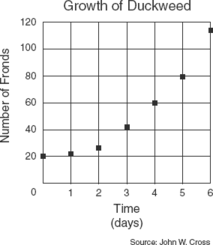
- AThe number of fronds more than doubled between Days 1 & 4.
- BThe number of fronds increased quickly because the plant has a short life span
- CThe number of fronds in related to the number of sunlight hours each day.
- DThe number of fronds increased at a constant rate between Days 1 & 2.
4The graph below shows the percent of seeds from two plant species that sprout when grown in water containing different amounts of salt.
Which of the following best summarizes the effect of saltwater on these plant species?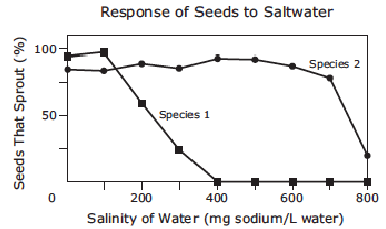
- ASpecies 1 can sprout only in freshwater, and Species 2 can sprout only in salt water.
- BBoth species can sprout in freshwater and saltwater, but Species 2 can sprout in higher salt concentration than Species 1.
- CBoth species need salt in their water, but Species 2 needs more salt than Species 1.
- DSpecies 1 can sprout only in water with a low salt concentration, but Species 2 is not affected by the salt concentration.
5A student decides to set up an experiment to see if detergent affects the growth of seeds. He sets up 10 seed pots. 5 of the seed pots will receive a small amount of detergent in the soil and will be placed in the sun. The other 5 seed pots will not receive detergent and will be placed in the shade. All 10 seed pots will receive the same amount of water, the same number of seeds, and the same type of seeds. He grows the seeds for two months and charts the growth every 2 days. What is wrong with his experiment?
- Amore than one variable is being tested
- Bthe students should have a larger number of pots
- Cthere is no way of measuring the outcome
- Dthere is no control set-up
6Kate was conducting an investigation. She placed four buttons of the same size on a large piece of ice. She used a red button, a black button, a green button, and a white button. She placed the ice in direct sunlight for ten minutes, then checked to see which button had sunk deepest into the ice.
In order for this to be a controlled investigation, what else should Kate do?- AShe should place four buttons of other colors on another piece of ice.
- BShe should repeat the same setup, but put the ice in a dark place for ten minutes.
- CShe should use only two different colored buttons.
- DShe should place the ice in direct sunlight for a longer period of time.
7John has three liquid-filled containers. He wants to know if all three contain the same substance. He conducted an experiment by adding powder to each container. The powder produced bubbles in container A, but not in containers B and C. What can John infer from the bubbles?
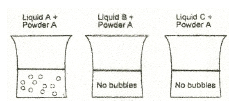
- ALiquids A & B are NOT the same because A formed bubbles while B did not.
- BLiquids A & C are the same because they both did not form any bubbles.
- CLiquids B & C are the same because they both formed bubbles.
- DNone of the liquids are the same
8Sarah’s class collected water density samples from the Gulf of Mexico today as an experiment.
According to the measurements, which group’s data is most accurate?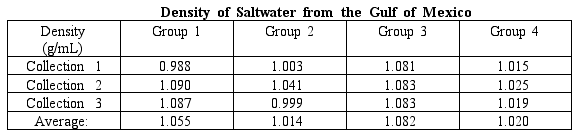
- Agroup 1 because their average is accurate while all other group's averages are not accurate.
- Bgroup 3 because their average is closest in number to their three collections.
- Cgroup 2 because their average is closest in number to their three collections.
- Dgroup 4 because their average is accurate while all other group's averages are not accurate.
9Sarah designed an experiment to find out which mouthwash was most effective against some bacteria. She cut out four different circles from a paper towel and soaked each circle in a different mouthwash. She put the circles on a nutrient agar-coated petri dish that was covered with bacteria commonly found in the mouth. She then incubated the plate for 24 hours. The picture below shows the results of the test.
Which of the following should Sarah do to improve her experiment?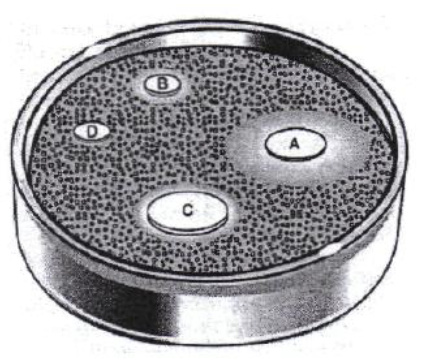
- AUse the same size paper circles for all mouthwashes
- BUse the same type of mouthwash on each paper circle
- CUse different kinds of bacteria
- DUse a smaller Petri dish
10The Hertzprung-Russell diagram below shows how the brightness, surface temperature, and color of stars are related.
Which of these observations of Barnard’s Star is most likely accurate?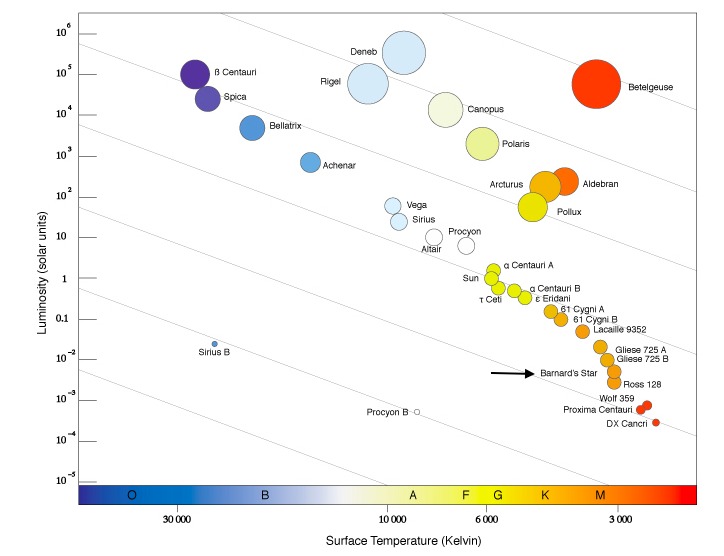
- ABarnard’s Star is less bright than the sun, has a surface temperature below 3,800 K and is red.
- BBarnard’s Star is less bright than the sun, has a surface temperature above 3,800 K, and is red.
- CBarnard’s Star is brighter than the sun, has a surface temperature below 5,300 K, and is yellow.
- DBarnard’s Star is brighter than the sun, has a surface temperature above 5,300 K, and is yellow.
11The chart below lists information on four stars within our galaxy in relation to us on Earth.
According to this data, which star actually IS the brightest in the list?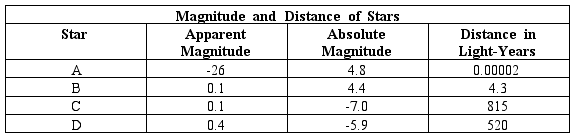
- AA
- BB
- CC
- DD
12Astronomers study a star which is 4.1 light-years away from Earth.
How long does it take light leaving this star to reach Earth?- A4100 years
- B410 years
- C41 years
- D4.1 years
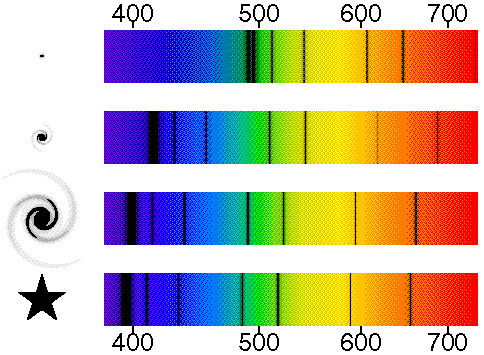
13Which of the following displays the greatest red shift?
- A

- B

- C

- D

- A
14The image is of the Electromagnetic Spectrum. The Electromagnetic Spectrum is arranged from high to low [blank_start]frequencies[blank_end] and sort to long [blank_start]wavelengths[blank_end].
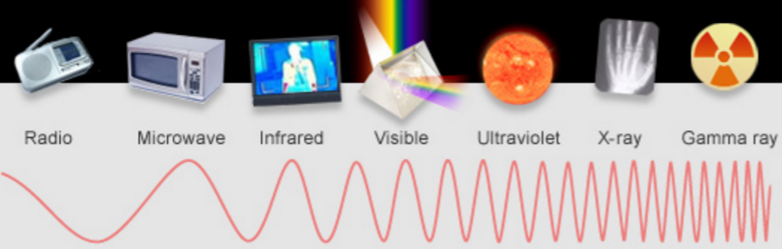
- Afrequencies
- Bmeters
- Cranges
- Dwavelengths
- Ewavelengths
- Ffrequencies
- Gmeters
- Hranges
15Chlorophyll is the primary photosynthetic pigment in plants. There are two types: chlorophyll a and chlorophyll b. A scientist tests the absorbance of all wavelengths of visible light by these pigments and records the results in this graph.
What evidence would help the scientist to explain why most plants are green?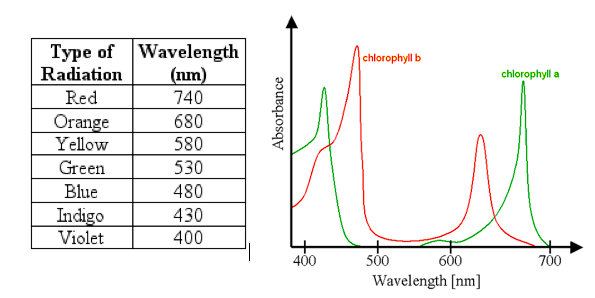
- AGreen light has a wavelength of approximately 530nm, which both chlorophyll a & b absorb strongly.
- BGreen light as a wavelength of approximately 530nm, which both chlorophyll a & b do not absorb.
- CGreen light has a wavelength of approximately 650 nm, which chlorophyll a absorbs strongly, but chlorophyll b does not.
- DGreen light has a wavelength of approximately 650 nm, which chlorophyll b absorbs strongly, but chlorophyll a does not.
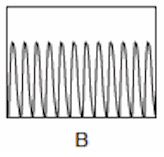
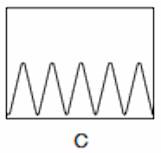
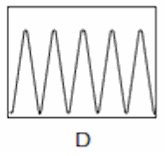
16The drawings below represent four different forms of electromagnetic energy.
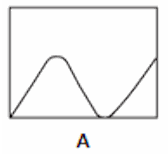
Which diagram represents electromagnetic energy with the shortest wavelength?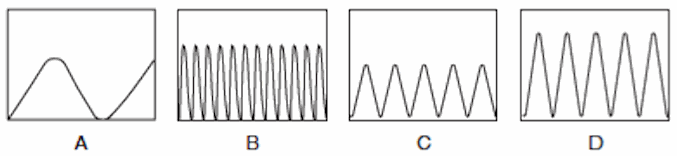
- A
- B
- C
- D
- A
17What kind of weather can you predict for Kansas City today?
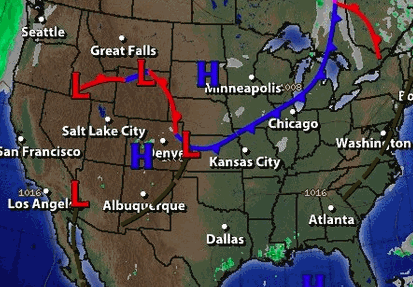
- ASevere thunderstorms followed by clear skies and colder temperatures
- BSevere weather followed by cloudy skies and warmer temperatures
- CLight rain followed by clear skies and warmer temperatures
- DRain for several days followed by cooler temperatures
18What type of weather should be predicted for New Orleans in the near future?
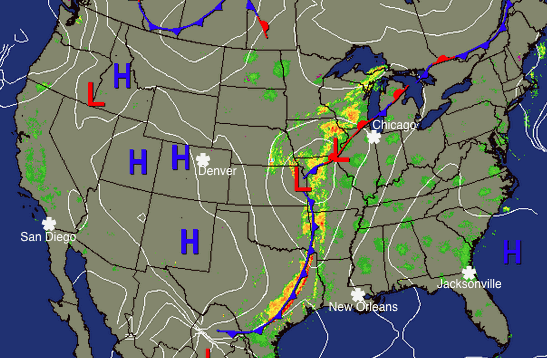
- ARain for several days followed by warmer temperatures
- BSevere thunderstorms followed by clear skies and colder temperatures
- CRain for several days followed by cooler temperatures
- DLight rain followed by cloudy skies and warmer temperatures
19What type of weather should be predicted for Jacksonville, FL today?
- ALight rain followed by cloudy skies and cooler temperatures
- BSevere thunderstorms followed by clear skies and colder temperatures
- CLight rain followed by cloudy skies and warmer temperatures
- DPartly cloudy to clear skies and cooler temperatures
20According to the map, which state should expect the lowest temperatures?
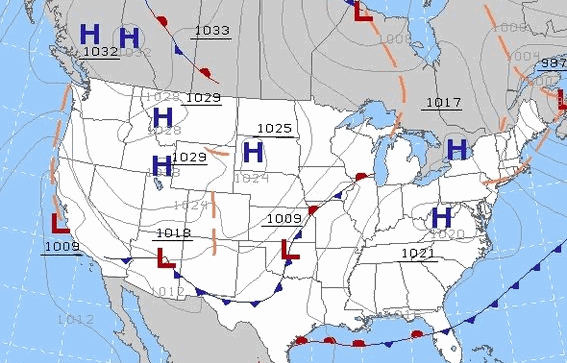
- ATennessee
- BNew Mexico
- CCalifornia
- DSouth Dakota
21Which prediction best describes the hurricane’s movement from Friday to Sunday?
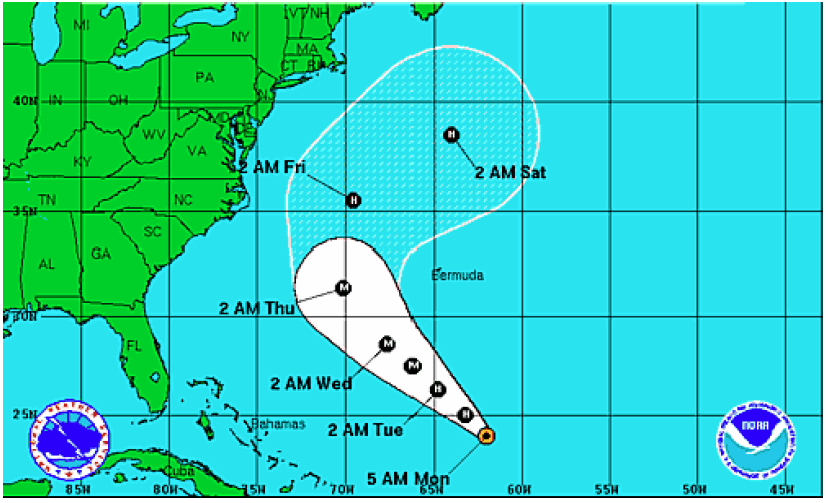
- AThe cold arctic air will carry the hurricane to Europe.
- BThe cold arctic air will force the hurricane back to West Africa.
- CThe cold arctic air will weaken the hurricane before it hits land.
- DThe jet stream will move the hurricane to Europe.
22The map shows the predicted range of location of a hurricane over a 3-day period and a 5-day period. What is likely to happen with the hurricane during the 4–5 day track?
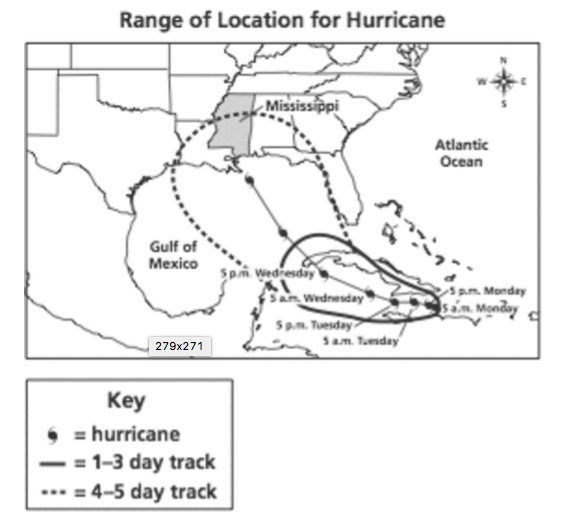
- AHurricane force winds will hit Mississippi sometime Friday morning.
- BHurricane force winds will hit Mississippi sometime Wednesday evening.
- CThe hurricane will make landfall on Wednesday evening, losing energy as it moves north across Mississippi.
- DThe hurricane will become wider as it moves across Mississippi, so that by Friday it will cover the entire state.
23According to the diagram, how many hours of sunlight will the South Pole have on Earth B?
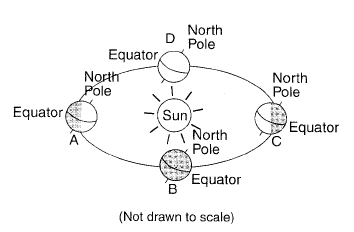
- A12
- B24
- C0
- D6
24The Earth rotates on a [blank_start]23.5[blank_end] degree tilt which allows for seasons.
- A23.5
- B24.5
- C25.5
- D25
25The following diagram shows a cross-section of Earth. Which letter represents the location of the asthenosphere?
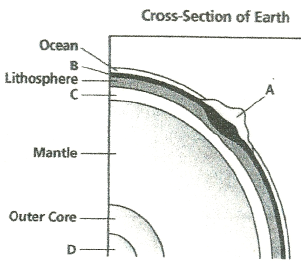
- AA
- BB
- CC
- DD
26Using the diagram below, what type of plate boundary is shown at B?
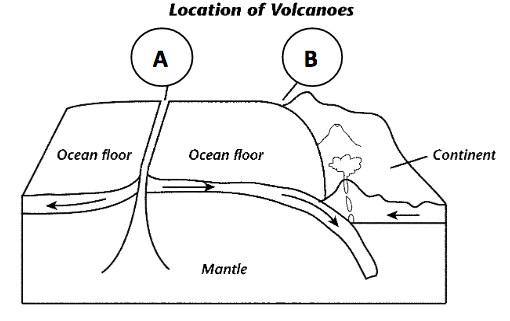
- AConvergent
- BDivergent
- CTransform
- DConstructive
27In which of the following images are the layer of Earth correctly labeled?
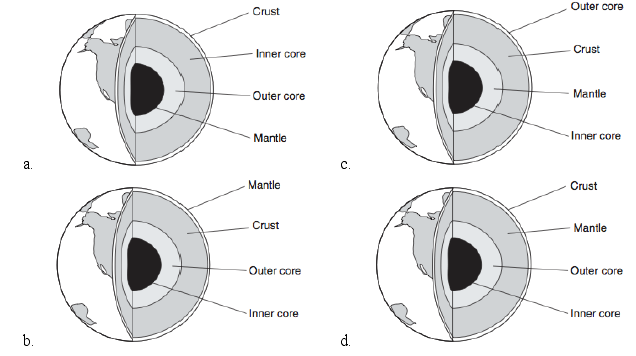
- AA
- BB
- CC
- DD
28label the following image
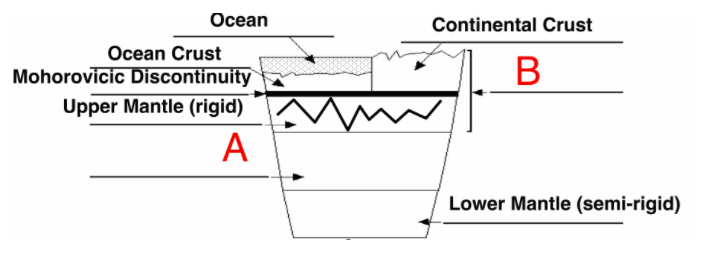
- AAsthenosphere
- BLithosphere
- CAsthenosphere
- DLithosphere
29Which of the following best describes why the volcanoes in the Pacific Ocean area are clustered around the Ring of Fire?
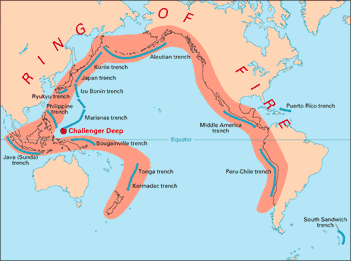
- AIt is because of random chance.
- BThe coasts of the Pacific Ocean are especially vulnerable to volcanic activity.
- CThe heavy weight of ocean water presses upon the Pacific plate, forcing magma to rise to the surface.
- DThe Pacific plate meets the continental plates, allowing magma to rise to the surface.
30At which location would earthquakes be least likely to occur?
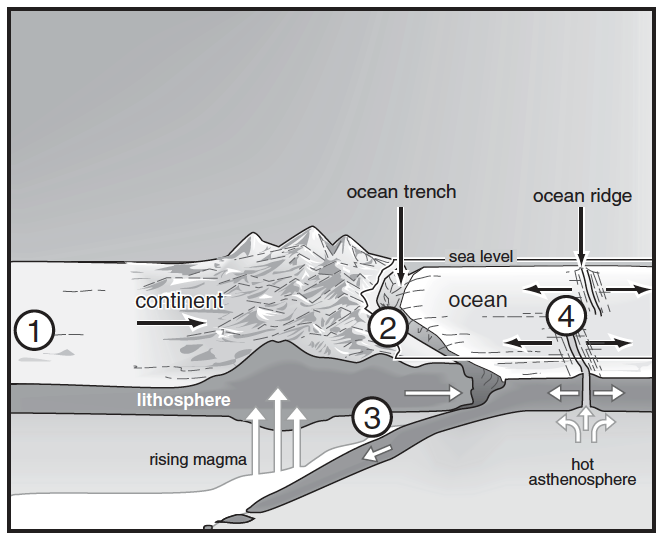
- A1
- B2
- C3
- D4
31Which location in the diagram represents a subduction zone (AKA subducting plate)?
- A1
- B2
- C3
- D4
32Which location in the diagram represents a convergent plate boundary?
- A1
- B2
- C3
- D4
33Which location in the diagram represents a divergent plate boundary?
- A1
- B2
- C3
- D4
34The two maps below show the change in position of South America and Africa over the last 65 million years. Which of the following best describes the process that caused this outcome?
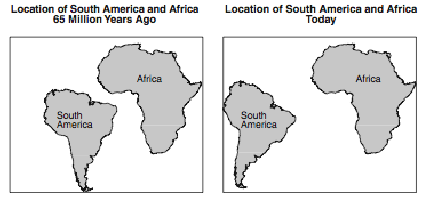
- AThere is a convergent plate boundary between South America and Africa causing them to spread apart.
- BThere is a divergent plate boundary between South America and Africa causing them to spread apart.
- CThere is a divergent plate boundary between South America and Africa causing them to come together.
- DThere is a transform plate boundary between South America and Africa causing them to spread apart.
35Which of these describes the outcome of the collision between oceanic and continental crust?
- AThe oceanic crust will subduct beneath the continental crust.
- BThe continental crust will subduct beneath the oceanic crust.
- CThe two portions of crust will slide past one another, side by side.
- DThe two portions of crust will stop moving.
36Which of the following is most responsible for the formation of new crust at the edge of a tectonic plate?
- Amountain building at a continent-continent convergent boundary
- Bmagma rising up from the mantle at a divergent boundary
- Ctwo tectonic plates sliding past one another at a transform boundary
- Dsubduction of one oceanic plate under another at a convergent boundary
37About 30 miles into Earth, the speed of seismic waves increases. What does this change in speed indicate about the material through which the seismic waves are traveling?
- AThe waves travel from rock into metal material.
- BThe waves travel from cool material in to hot material.
- CThe waves travel from a less dense material into a more dense material.
- DThe waves travel from solid material into liquid material.
38Plant cells use photosynthesis to make food.
Plants cells also use cellular respiration to get energy from the food they make.
How is cellular respiration different from photosynthesis?- APhotosynthesis produces ATP, and cellular respiration produces sugars.
- BPhotosynthesis requires oxygen, and cellular respiration requires carbon dioxide.
- CPhotosynthesis produces oxygen, and cellular respiration produces carbon dioxide.
- DPhotosynthesis requires energy from food, and cellular respiration requires energy from the sun.
39The diagram below shows a microscope view of a unicellular organism. Four cell structures are labeled.
Which statement about the labeled structures is correct?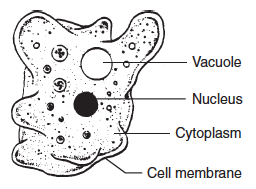
- AThey normally can be seen without magnification
- BThey can survive outside the cell
- CThey help carry on life activities within the cell
- DThey cause disease within the cell
Information
- Description
- 8th grade Science Quiz on Semester 1 Study Guide, created by Kimberly Mancuso on 13/12/2017.
- Author
- Kimberly Mancuso
- Language
- English
- Views
- 1,194
- Tags
- Rating
- No ratings yet Rate this quiz