
Quiz
Unit 1A - Tectonic Hazards
This quiz has question types that open in the usual player.
Questions in this quiz (18)
1A natural hazard is defined as a natural process which could cause death, injury or disruption to humans, or destroy property and possessions.
- ATrue
- BFalse
2Extreme events that do not pose a threat to humans are STILL counted as hazards.
- ATrue
- BFalse
3What are the two main types of natural hazard?
- AGeological
- BAstronomical
- CAstrological
- DMeteorological
- EGeonomical
4Which option is an example of a geological hazard?
- AEarthquake
- BClimate change
- CHurricanes
5Which option is an example of a meteorological hazard?
- AAvalanche
- BCyclone
- CLandslide
6Hazard risk is defined as the probability that a natural hazard occurs. What different factors can affect hazard risk?
(hint: there are 3 answers)- AVulnerability of an area/chance of exposure to natural hazards
- BCapacity to cope with a natural hazard
- CAmount of people concentrated in the area
- DNature of the hazard (e.g. type of hazard)
- EWhether the area is located on high ground or low ground
7Label the earth's surface.
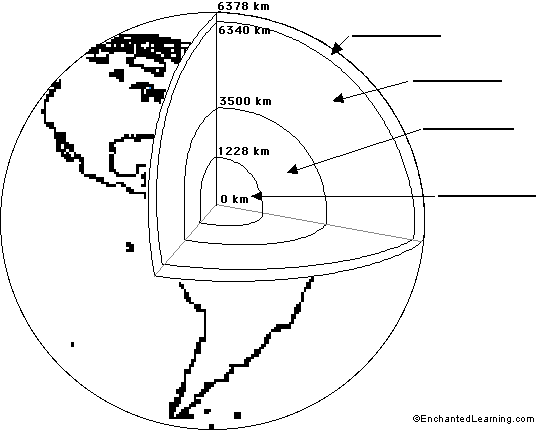
- ACrust
- BMantle
- COuter core
- DInner core
- EHeart
- FMid-core
- GMolten core
- HSurface layer
8The [blank_start]core[blank_end] of the Earth is a ball of [blank_start]solid[blank_end] (inner) and [blank_start]liquid[blank_end] (outer) iron and nickel.
Around the core is the [blank_start]mantle[blank_end], which is semi-molten rock that moves very [blank_start]slowly[blank_end].
The outer layer of the Earth is the [blank_start]crust[blank_end]. The [blank_start]crust[blank_end] is divided into slabs called [blank_start]tectonic[blank_end] plates (that float on the mantle).
Plates are made up of two type of crust: [blank_start]continental[blank_end] and [blank_start]oceanic[blank_end].
The places where plates meet are called plate [blank_start]margins[blank_end] or plate [blank_start]boundaries[blank_end].- Acore
- Bheart
- Csolid
- Dliquid
- Eliquid
- Fsolid
- Gmantle
- Houter layer
- Islowly
- Jquickly
- Kcrust
- Lsurface layer
- Mcrust
- Nsurface layer
- Otectonic
- Pboundary
- Qcontinental
- Rconstructive
- Soceanic
- Tdestructive
- Umargins
- Vcollisions
- Wboundaries
- Xgatherings
9What are the three different types of plate margin?
- ADestructive
- BContinental
- CConstructive
- DConservative
- EOceanic
10[blank_start]Destructive[blank_end] margins occur where two plates are moving towards each other. When a [blank_start]continental[blank_end] plate meets an oceanic plate, the oceanic plate is forced down into the [blank_start]mantle[blank_end] and destroyed. When two [blank_start]continental[blank_end] plates meet the plates collide, fold and are forced [blank_start]upwards.[blank_end]
[blank_start]Constructive[blank_end] margins occur when plates are moving away from each other. This causes [blank_start]magma[blank_end] to rise and cool, filling in the gap and creating new [blank_start]crust[blank_end].
[blank_start]Conservative[blank_end] margins occur when plates move [blank_start]sideways[blank_end] past each other, or move in the same direction but at different [blank_start]speeds[blank_end]. Crust is not [blank_start]destroyed or created[blank_end].- ADestructive
- BConstructive
- Ccontinental
- Ddestructive
- Emantle
- Fcrust
- Gcontinental
- Hoceanic
- Iupwards.
- Jdownwards.
- KConstructive
- LConservative
- Mmagma
- Nlava
- Ocrust
- Pmantle
- QConservative
- RConstructive
- Ssideways
- Tupwards
- Uspeeds
- Vpressures
- Wdestroyed or created
- Xdestroyed or moved
- Ydamaged or moved
11Volcanoes are found at destructive and constructive plate margins.
- ATrue
- BFalse
12At a destructive margin the [blank_start]oceanic[blank_end] plate is forced downwards into the mantle, where it is melted and destroyed. This forms a pool of [blank_start]magma[blank_end], which then rises through cracks in the crust known as [blank_start]vents[blank_end]. The magma then erupts onto the surface of the earth (where it is now described as [blank_start]lava[blank_end]) and forms a [blank_start]volcano[blank_end].
At a constructive margin the magma rises up into the gap caused by plates [blank_start]moving apart[blank_end], creating a volcano.
Volcanoes can also form over parts of the [blank_start]mantle[blank_end] that are extremely hot. These areas are known as [blank_start]hotspots[blank_end].- Aoceanic
- Bcontinental
- Cmagma
- Drock lava
- Events
- Fgap-holes
- Gspacers
- Hlava
- Isurface magma
- Jvolcano
- Klava bubble
- Lmoving apart
- Mmoving past each other
- Nmantle
- Ocrust
- Photspots
- Qvolcanic regions
13At which type(s) of plate margin do earthquakes occur?
- AAll three types of plate margins
- BTwo types of plate margins: constructive and destructive margins
- COne type of plate margin: conservative margins
14Earthquakes are caused when plates get stuck and have to jerk past each other. As they move past each other vibrations (also known as shock waves) are sent out, which form the earthquake.
- ATrue
- BFalse
15The focus of the earthquake is on the Earth's surface.
- ATrue
- BFalse
16Which three types of scales are used to measure earthquakes?
- AMoment magnitude
- BLester
- CRichter
- DMercury
- EMercalli
- FLogarithmic
17When a volcano erupts, what can it emit?
- ALava
- BMagma
- CGases
- DAsh
- ERocks
18What is a pyroclastic flow?
- AA super-heated current of gas and rock
- BA super-heated current of gas, ash and rock
- CA super-heated current of ash and rock
Information
- Description
- Natural hazards, plate margins, volcanoes and earthquakes
- Author
- J K
- Language
- English
- Views
- 203
- Tags
- Rating
- No ratings yet Rate this quiz