
Quiz
Chemistry Unit 1,2,3 Test
This quiz has question types that open in the usual player.
Questions in this quiz (36)
1What is chemistry?
- AChemistry is the central science that connects Physics to Biology
- BChemistry is the science that represents the world through math
- CChemistry is the science that describes all living things
2Bucky balls are carbon lattice structures that contain [blank_start]______[blank_end] carbons.
- A60
3The IUPAC is an organization that regulates the physical laws of chemistry.
- ATrue
- BFalse
4Chemistry is the study of [blank_start]_________[blank_end] and its interactions.
- Amatter
5Around [blank_start]_______[blank_end], early Greek philosophers argued that [blank_start]_________[blank_end] could be subdivided into tiny indivisible particles called [blank_start]_________[blank_end].
- A400 BCE
- Bmatter
- Catomos
- D200 BCE
- Eprotons
- Fquarks
- Gatomns
6Democritus stated that atoms have different sizes, are never in motion and are separated by empty space.
- ATrue
- BFalse
7In around the 17th century, alchemists explored the nature of matter intensely. They searched for exclusive prizes such as the alchemy of life.
- ATrue
- BFalse
8Dalton proposed that...
- all mater is made up of tiny [blank_start]indivisible particles[blank_end] called [blank_start]atoms[blank_end]
- all atoms of the of an element are [blank_start]identical[blank_end]
- atoms of different elements are [blank_start]different[blank_end]
- atoms are rearranged from [blank_start]new substances[blank_end] in chemical reactions, but they are never created nor [blank_start]destroyed[blank_end].
- Aindivisible particles
- Batoms
- Cidentical
- Ddifferent
- Enew substances
- Fdestroyed
- Gatoms
- Hindivisible particles
- Iidentical
- Jdifferent
- Kidentical
- Lnew substances
- Mindivisible particles
- Ndifferent
- Odifferent
- Pidentical
- Qindivisible particles
- Rnew substances
- Satoms
- Tenergy
- Udestroyed
- Vbombarded
- Wconstructed
9Thompson created the [blank_start]plum pudding model[blank_end] from his experiment with a cathode ray and as a result discovered [blank_start]electrons[blank_end]. Ernest Rutherford performed the [blank_start]gold foil experiment[blank_end] and from this he deduced that there was a [blank_start]positively charged nucleus[blank_end]. Chadwick discovered the [blank_start]neutral neutron[blank_end] and Bohr proposed energy levels from his observation of photon emission.
- Aplum pudding model
- Bpomegranate model
- Celectrons
- Dprotons
- Egold foil experiment
- Fcathode ray experiment
- Gpositively charged nucleus
- Hquarks
- Ineutral neutron
- Jpositron
10Bohr Rutherford diagrams look as follows.

- ATrue
- BFalse
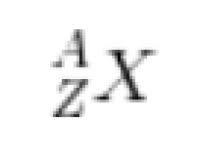
11Z represents the [blank_start]atomic number[blank_end]. A represents the [blank_start]atomic mass[blank_end]. X represents the [blank_start]element symbol[blank_end].
- Aatomic number
- Batomic mass
- Celement symbol
- Datomic mass
- Eatomic number
- Felement symbol
- Gelement symbol
- Hatomic number
- Iatomic mass
12Valence electron are electron on the second outermost shell.
- ATrue
- BFalse
13All atoms are in the search of a full octet to some extent.
- ATrue
- BFalse
14Noble gases are highly reactive as they constantly search to fill their octet.
- ATrue
- BFalse
15Ions are formed when...
- Athere is a loss or gain of electron
- Ba nuclear fusion event occurs
- Ca nuclear fission event occurs
- Dan atoms is bombarded with protons
16Positive ions are [blank_start]cations[blank_end] and negative ions are [blank_start]anions[blank_end].
- Acations
- Banions
17Anions and Cations come together to form a molecular compound.
- ATrue
- BFalse
18Element with multiple ion charges...
- Aare called multivalent
- Bmust have the charge shown when represented in an ionic compound
- Cfound among the transition metals
- Dall of the above
19Polyatomic ions are ions that consist of more than one atom.
- ATrue
- BFalse
20Magnesium ion [blank_start]Na^(2+)[blank_end], Sodium ion [blank_start]Na^(+)[blank_end], Ammonium [blank_start]NH4^(+)[blank_end], Sulphate [blank_start]SO4^(2-)[blank_end], Chlorate [blank_start]ClO3^(-)[blank_end], Carbonate [blank_start]CO3^(2-)[blank_end], Phosphate [blank_start]PO4^(3-)[blank_end], Cyanide [blank_start]CN^(-)[blank_end], Hydroxide [blank_start]OH^(-)[blank_end], Bicarbonate [blank_start]HCO3^(-)[blank_end], Nitrate [blank_start]NO3^(-)[blank_end]
- AMg^(2+)
- BNa^(+)
- CNH4^(+)
- DSO4^(2-)
- EClO3^(-)
- FPO4^(3-)
- GCO3^(2-)
- HCN^(-)
- IOH^(-)
- JHCO3^(-)
- KNO3^(-)
2199% of the human body is made of only 6 elements (oxygen, carbon, hydrogen, nitrogen, calcium and phosphorus).
- ATrue
- BFalse
22Isotopes are atoms of the same element that have different numbers of protons.
- ATrue
- BFalse
23How are isotopes distinguished?
- Aatomic mass
- Bnumber of protons
- Ccharge
24Isotopic abundance is the percentage of an isotope in a sample of an element.
- ATrue
- BFalse
25What do scientists use to find the isotopic abundance of a given isotope?
- Amass spectronomer
- Bchemical analysis machine (CNM)
- Cmasser
26Alpha particles have the same structure as a [blank_start]helium atom nucleus[blank_end] and can be blocked by [blank_start]paper[blank_end]. Beta particles are [blank_start]negatively charged electrons[blank_end] that can pass through paper but not through [blank_start]aluminium[blank_end]. [blank_start]Gamma rays[blank_end] are a high-energy electromagnetic radiation but it cannot pass through [blank_start]lead[blank_end].
- Ahelium atom nucleus
- Bnegatively charged electrons
- Cpaper
- Daluminium
- EGamma rays
- Flead
27Radioactive isotopes are isotopes that decay to form nuclear radiation.
- ATrue
- BFalse
28Element X has isotopes X-200 (80%) and X-201(20%),. Calculate the atomic mass of element X.[blank_start]________[blank_end] amu
- A200.2
29The periodic table contains almost all of the known elements.
- ATrue
- BFalse
30Hydrogen does not belong to a specific group of elements as it is an exception.
- ATrue
- BFalse
31What are the properties of alkali metals?
- ASoft, sliver coloured element that is solid at room temperature and is highly reactive with water
- BLight, very reactive metal that is solid at room temperature and reacts with oxygen to form oxides
32Transition metals are the metals that are found near the center of the periodic table. They are strong , hard metals with high melting points as well as good conductors of electricity. Many react with oxygen to form oxides. Some are multivalent.
- ATrue
- BFalse
33Metalloids are found along the staircase.
- ATrue
- BFalse
34Transuranic metals are those that have an atomic number greater then [blank_start]_________[blank_end].
- A93
35Noble gases are gases at room temperature with high melting and boiling points. They are extremely unreactive.
- ATrue
- BFalse
36Halogens may be solid liquid or gas at room temperatures and are extremely reactive. They also exhibit non-metallic properties such as no lustre and non-conduction.
- ATrue
- BFalse
Information
- Description
- Grade 11 Chemistry Quiz on Chemistry Unit 1,2,3 Test, created by Bohdan Hrotovytskyy on 14/10/2018.
- Author
- Bohdan Hrotovytskyy
- Language
- English
- Views
- 59
- Tags
- Rating
- No ratings yet Rate this quiz