
Quiz
Marketing 2nd Lecture
This quiz has question types that open in the usual player.
Questions in this quiz (64)
1Marketers must work in harmony with other company departments to create customer value and relationships.
- ATrue
- BFalse
2Customers are the most important actors in the company's microenvironment.
- ATrue
- BFalse
3A Microenvironment consists of the company → suppliers → marketing intermediaries → customer markets → competitors → publics and then finally → customers
- ATrue
- BFalse
4Physical distribution firms help the company with the design process of their products.
- ATrue
- BFalse
5Marketing services agencies help companies target and promote their product.
- ATrue
- BFalse
6financial intermediaries include banks, credit companies and more.
- ATrue
- BFalse
7"publics" describes any group that has potential interest or impact in an organisations ability to reach their goals.
- ATrue
- BFalse
8large societal forces on Macroenviroment are Demographics, economics, technological, political, cultural and public -sectors.
- ATrue
- BFalse
9Concern for the natural environment has not risen in the past years.
- ATrue
- BFalse
10the cultural "force" is the thought of marketers to behave more like a socially responsible citizen.
- ATrue
- BFalse
11Demographics show the statistics of the different age groups and their spending behaviour.
- ATrue
- BFalse
12Major generational groups include
(more then oner answer)- ABaby Boomers
- BGeneration X
- CMillenials (also Generation Y)
- DGeneration Z
- EGeneration W
- FGI Generation
- GDie Piraten
- HDie Grünen
- INeanderthaler
13Baby Boomers are born between the years following WW2 - 1964
- ATrue
- BFalse
14Generation X people are born in the 20's.
- ATrue
- BFalse
15We can be considered Millenials
- ATrue
- BFalse
16Generation Z are not able to walk yet and are therefore not a valid demographic group.
- ATrue
- BFalse
17Major developments in economic environment include changes in income and distribution of customer spending
- ATrue
- BFalse
18Natural environment: all resources are made chemically.
- ATrue
- BFalse
19Technological environment: forces that prevent companies from creating new products or technologies.
- ATrue
- BFalse
20Political environment: Laws and other groups that influence and limit various organizations
- ATrue
- BFalse
21Core beliefs and values are highly persistent while secondary beliefs and values are rather open for change.
- ATrue
- BFalse
22the cultural environment overall includes everything about moral behaviour.
- ATrue
- BFalse
23Marketing information by itself has little value.
- ATrue
- BFalse
24Customer insights: fresh understanding of customers
- ATrue
- BFalse
25MIS stands for
- AMarketing ist super
- BMarketing Information System
- CMarketing Insights Sphere
26MIS (Marketing Information System) helps by assessing the informations that are needed an developing said need information in order to generate and validate customer and market insights.
- ATrue
- BFalse
27MIS have to be effectively built in order to receive the right information at the right time to build customer value and stronger customer relationships.
- ATrue
- BFalse
28Developing needed Information include
(more than 1 answer)- Ainternal databases
- Bmarketing intelligence
- Ccustomer insights
- Dspending behaviour
- Eage groups
- Fmarketing research
29The marketing environment consists of Target marketers, marketing channels, competitors, publics and macroenvironment forces
- ATrue
- BFalse
30assessing marketing information needs include a balance between value of insights and costs
- ATrue
- BFalse
31Internal databases are electronic collections of consumer and market information obtained by external companies.
- ATrue
- BFalse
32competitive marketing intelligence: systematic collection and analysis of publicly available information about consumers, competitors and developments in the marketing environment.
- ATrue
- BFalse
33Marketing research is not relevant to a specific marketing situation
- ATrue
- BFalse
34The Marketing research Process consists of [blank_start]defining[blank_end] the problem, [blank_start]developing[blank_end] the research plan, implementing the [blank_start]research[blank_end] plan, interpreting and reporting the [blank_start]findings[blank_end].
- Adefining
- Bcreating
- Cdrawing
- Ddefining
- Edeveloping
- Fcolouring
- Gresearch
- Hschmesearch
- Iwesearche
- Jfindings
- Kquantitive goods
- Lcustomers
35Exploratory research is
- Amarketing research to preliminary information that will help define problems and suggest hypotheses.
- BMarketing research to better describe marketing problems, situation or markets, such as the market potential for a product or the demographics and attitudes of consumers.
36Descriptive research:
- AMarketing research to better describe marketing problems, situations, or markets, such as the market potential for a product or the demographics and attitudes of consumers.
- BMarketing research to gather preliminary information that will help define the problems and suggest hypotheses.
37Causal research:
- AMarketing research to test hypotheses about cause-and-effect relationships.
- BMarketing research to better describe marketing problems, situations, or markets, such as the market potential for a product or the demographics and attitudes of consumers.
38The Research Plan obtains data by going on the streets and do surveys.
- ATrue
- BFalse
39secondary data is new data that has been discovered.
- ATrue
- BFalse
40primary data is collected for a specific purpose.
- ATrue
- BFalse
41contact methods include
(more than 1)- Amail
- Bonline
- Cpersonal
- Dtelephone
42research approaches are
(more than 1)- Aobservation
- Bsurvey
- Cdemographics
- Dtechnological instruments
- Eexperiment
43Questionnaire is a research instrument.
- ATrue
- BFalse
44survey researches gather data by observing relevant people, actions and situations.
- ATrue
- BFalse
45observational researches gather data by asking people questions about they knowledge, attitude, preferences and buying behaviour.
- ATrue
- BFalse
46experimental research gathers information by selecting groups of randomly assigned subjects, making them do something and testing their reactions.
- ATrue
- BFalse
47online marketing collects data by internet survey or tracking consumers online behaviour.
- ATrue
- BFalse
48behavioral targeting uses factors like state, income and family status.
- ATrue
- BFalse
49a sample is representative for the whole population.
- ATrue
- BFalse
50Three decisions are important for sample and sampling plan. Which ones?
- Asampling unit, sample size, sampling procedure
- Bsampling customers, sampling unit, sampling reactions
- Csampling reactions, sampling food, sampling actions
51There are two types of samples.
- ATrue
- BFalse
52questionnaires are flexible and ask open-ended and closed-ended questions. wording and ordering is crucial for the development of measures instruments.
- ATrue
- BFalse
533 Steps:
→Implementing the research plan
→Interpretation of findings
→report to management- ATrue
- BFalse
54CRM (customer relationship management) manages detailed informations about individuals and then carefully manages customer touch points in order to maximize customer loyalty.
- ATrue
- BFalse
55Scarcity bedeutet Knappheit.
- ATrue
- BFalse
56a big issue with international marketing research is that there are to many secondary data informations
- ATrue
- BFalse
57people in different countries show different attitudes toward being researched.
- ATrue
- BFalse
58cultural differences are no problem when collecting data for international marketing research purposes.
- ATrue
- BFalse
59Ethics are not important in Marketing research.
- ATrue
- BFalse
60REVIEW QUESTIONS (1):
Cultural core beliefs and values are more open to change than secondary beliefs and values.- ATrue
- BFalse
61REVIEW QUESTIONS (2):
Explortory marketing research typically gathers preliminary information that will help define problems and suggest hypotheses.- ATrue
- BFalse
62REVIEW QUESTIONS (3):
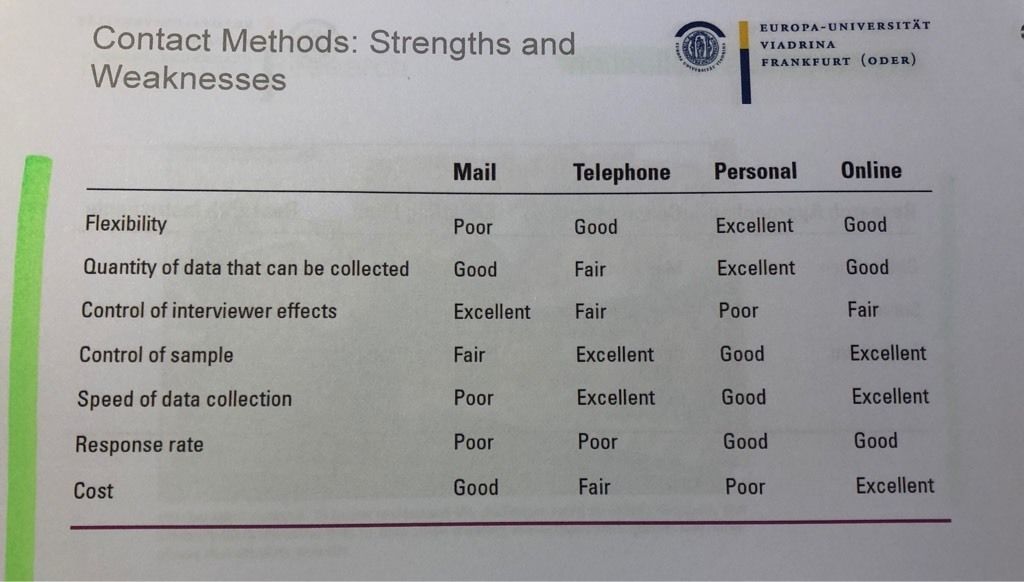
Telephone as a contact method in marketing research has a very high response rate, but the control of the sample is considered very poor.- ATrue
- BFalse
63REVIEW QUESTIONS (4):
In a simple random sample, every member of the population has a known and equal chance of selection.- ATrue
- BFalse
64Considering this table, the most efficient contact method would be online.
- Aonline
Information
- Description
- Marketing Information
- Author
- Kirsten Küss
- Language
- Deutsch
- Views
- 24
- Rating
- No ratings yet Rate this quiz