
Quiz
Drug molecules - properties and actions & functional groups
This quiz has question types that open in the usual player.
Questions in this quiz (50)
1What shape is a sp3 hybridised C?
- ATetrahedral
- BTrigonal planar
- CLinear
2What shape is a sp2 hybridised C
- ATetrahedral
- BTrigonal planar
- CLinear
3What shape is a sp hybridised C
- ATetrahedral
- BTrigonal planar
- CLinear
4Alkanes are unsaturated hydrocarbons. True or false?
- ATrue
- BFalse
5Alkenes are [blank_start]more[blank_end] reactive than alkanes because the delocalised electrons make them susceptible to attack by electrophiles.
- Amore
6Alkenes undergo [blank_start]electrophilic addition reactions[blank_end]
- Aelectrophilic addition reactions
7Alkynes are [blank_start]less[blank_end] reactive than alkenes.
- Aless
8Alkynes undergo
- ASubstitution reactions
- BElectrophilic addition reactions but at a quicker rate than alkenes
- CNucleophilic substitution reactions
- DElectrophilic addition reactions but at a slower rate than alkenes
9Arenes are [blank_start]highly unsaturated[blank_end] and [blank_start]cyclic.[blank_end]
- Ahighly unsaturated
- Bcyclic.
10Arenas do not behave like alkenes and alkynes because they [blank_start]do not decolourise bromine water.[blank_end]
- Ado not decolourise bromine water.
11What type of molecule is benzene?
- ATrigonal planar
- BPlanar
- CLinear
- DTetrahedral
12Benzene is a colourless liquid.
- ATrue
- BFalse
13Boiling point of benzene?
- A90 degrees
- B100 degrees
- C70 degrees
- D80 degrees
14Melting point of benzene
- A5.5 degrees
- B10 degrees
- C3 degrees
- D2.5 degrees
- E1 degrees
15Label this drug molecule

- AAspirin
16Label this drug molecule

- AIbuprofen
17Label this drug molecule
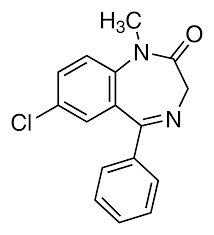
- ADiazepam
18The halogen atom on an alkylhalide atom is attached to what other atom?
- ATrigonal sp2 carbon atom
- BTetrahedral sp carbon atom
- CTrigonal sp3 carbon atom
- DTetrahedral sp3 carbon atom
- ETrigonal sp carbon atom
19The bond in alkylhalide are non-polar.
- ATrue
- BFalse
20[blank_start]Cl-, Br- and I-[blank_end] are good leaving groups in nucleophilic substitution reactions.
- ACl-, Br- and I-
21Alkyl fluorides and fluorocarbons are relatively unstable.
- ATrue
- BFalse
22Although the halogen-alkane bond is polar, they do not have a [blank_start]corresponding electron deficient region.[blank_end]
- Acorresponding electron deficient region.
23Although the halogen-alkane bond is polar, they do not [blank_start]interact strongly with water molecules.[blank_end]
- Ainteract strongly with water molecules.
24Although the halogen-alkane bond is polar, they are generally _____
- Aless lipophilic than corresponding non-halogenated molecules
- Bmore hydrophilic than corresponding non-halogenated molecules
- Cmore lipophilic than corresponding non-halogenated molecules
- Dless hydrophilic than corresponding non-halogenated molecules
25Tick all that is correct about halogens in drugs
- AGenerally make the drug more lipophilic than corresponding non-halogenated molecules
- BGenerally make the drug less lipophilic than corresponding non-halogenated molecules
- CHalogenated drugs are less readily metabolised than non-halogenated forms
- DHalogenated drugs are more readily metabolised than non-halogenated forms
26Label this drug molecule

- ADDT
27Tick all that is correct about DDT
- APersistent in the environment
- BChemically unstable
- CChemically stable
- DHighly resistant to metabolism
- ENot very resistant to metabolism
28Short-chain alcohols are [blank_start]freely miscible with water.[blank_end]
- Afreely miscible with water.
29The interaction between short-chain alcohols and water can be explained [blank_start]by hydrogen bonding.[blank_end]
- Aby hydrogen bonding.
30A permanent dipole exists in alcohol because of ...
- AElectronegativity of the hydrogen
- BElectronegativity of the oxygen
- CElectropositive oxygen
- DElectropositive hydrogen
31R-OH dissociates to give [blank_start]R-O-[blank_end]
- AR-O-
32R-OH accepts a [blank_start]proton to give R-OH2+[blank_end]
- Aproton to give R-OH2+
33Acidity of alcohols depends on the [blank_start]R-group[blank_end]
- AR-group
34pKa is the [blank_start]negative log[blank_end] of acid dissociation constant
- Anegative log
35Acidity of molecule is increased if it has [blank_start]electron withdrawing group[blank_end] near the -OH group
- Aelectron withdrawing group
36Acidity of molecule is also dependent on if the rest of the molecule can [blank_start]stabilise the negative charge.[blank_end]
- Astabilise the negative charge.
37Phenols are [blank_start]stronger acids[blank_end] than alcohols.
- Astronger acids
38Phenoxide ions are [blank_start]resonance stabilised.[blank_end]
- Aresonance stabilised.
39What does the -OH functional group do and in what condition?

- ARelease H+ in aqueous solution.
40Relate the O- to the stability of the molecule

- AResonance stabilises the negative charge
41Fluorine is strongly electronegative.
- ATrue
- BFalse
42The C-F bond in fluorine is polarised.
- ATrue
- BFalse
43In fluorine, the partially positive charge on the carbon [blank_start]stabilises[blank_end] the negative charge on the hydroxyl group.
- Astabilises
44Tick all that is correct about the reactivity of phenols.
- AReadily oxidised
- BNot so readily oxidised
- CProducts are colourless because of the conjugated bonds
- DProducts are frequently coloured because of the conjugated bonds
45Contribution of alcohols to the properties of drugs: tick all that is correct about hydrogen bonding
- ADecreases the polarity of molecule
- BIncreases the polarity of molecule
- CAdds to water solubility but generally not sufficient alone to ensure full water solubility
- DEnsures full water solubility
- EInvolved in drug-target interactions as either a hydrogen bond donor or acceptor
46Label this molecule

- ADiethylether
47Label this molecule
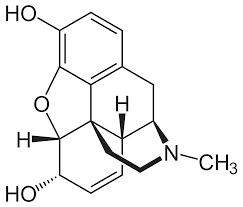
- AMorphine
48Tick all this correct about ethers
- ADo not have hydrogen attached to the oxygen
- BCan be hydrogen bond donors
- CCan be hydrogen bond acceptors
- DShow full water solubility
- EShow partial water solubility
- FSolubility increases with chain length
- GSolubility decreases with chain length
49Ethers can form [blank_start]peroxides in contact with air.[blank_end]
- Aperoxides in contact with air.
50Ethers are generally non-reactive
- ATrue
- BFalse
Information
- Description
- Masters Degree Pharmacy (Case 1 - Introduction) Quiz on Drug molecules - properties and actions & functional groups, created by Alyssa B on 02/01/2016.
- Author
- Alyssa B
- Language
- English
- Views
- 192
- Tags
- Rating
- 3.0 out of 5 · 1 rating Rate this quiz