
Quiz
DNA structure, replication and repair
This quiz has question types that open in the usual player.
Questions in this quiz (15)
1What are the differences between prokaryotic and eukaryotic cells? Check all that apply.
- AEukaryotic cells have multiple linear chromosomes whereas prokaryotic cells have a singular circular chromosome
- BEukaryotic cells contain more genetic information
- CEukaryotic cells contain membrane bound organelles
- DProkaryotic cells contain no nucleus
- EProkaryotic DNA is complexed by histones
2DNA polymerase I is important in the coordination of leading and lagging strand synthesis
- ATrue
- BFalse
3You receive a nasty sunburn. Your DNA initially attempts to repair this damage through [blank_start]Nucleotide Excision Repair[blank_end].This initial attempt is unsuccessful but the DNA replication blockage is bypassed by [blank_start]Translesion Synthesis[blank_end].
- ANucleotide Excision Repair
- BTranslesion Synthesis
- CTranslesion Synthesis
- DNucleotide Excision Repair
- EPhotoreactivation
- FMismatch Repair
- GPhotoreactivation
- HMismatch Repair
4What DNA repair process is shown here?
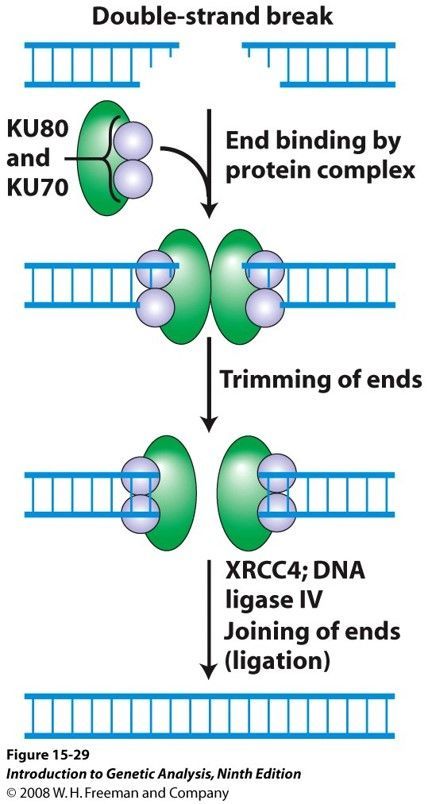
- AHomologous End Recombination
- BNon-Homologous End joining
- CTranslesion Synthesis
5This diagram shows [blank_start]Nucleotide Excision Repair[blank_end]
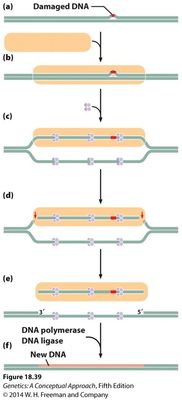
- ANucleotide Excision Repair
- BBase Excision Repair
- CMismatch Repair
- DRecombination
- ETranslesion Synthesis
6This diagram shows [blank_start]Translesion synthesis[blank_end]
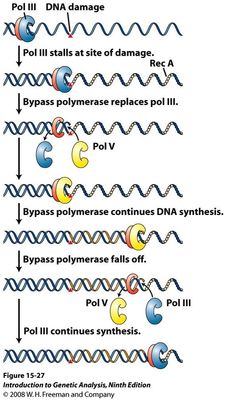
- ATranslesion synthesis
- BNucleotide excision repair
- CPhotoreactivation
- DBase excision repair
7Label the newly synthesised strand and the template strand in this diagram of mismatch repair.
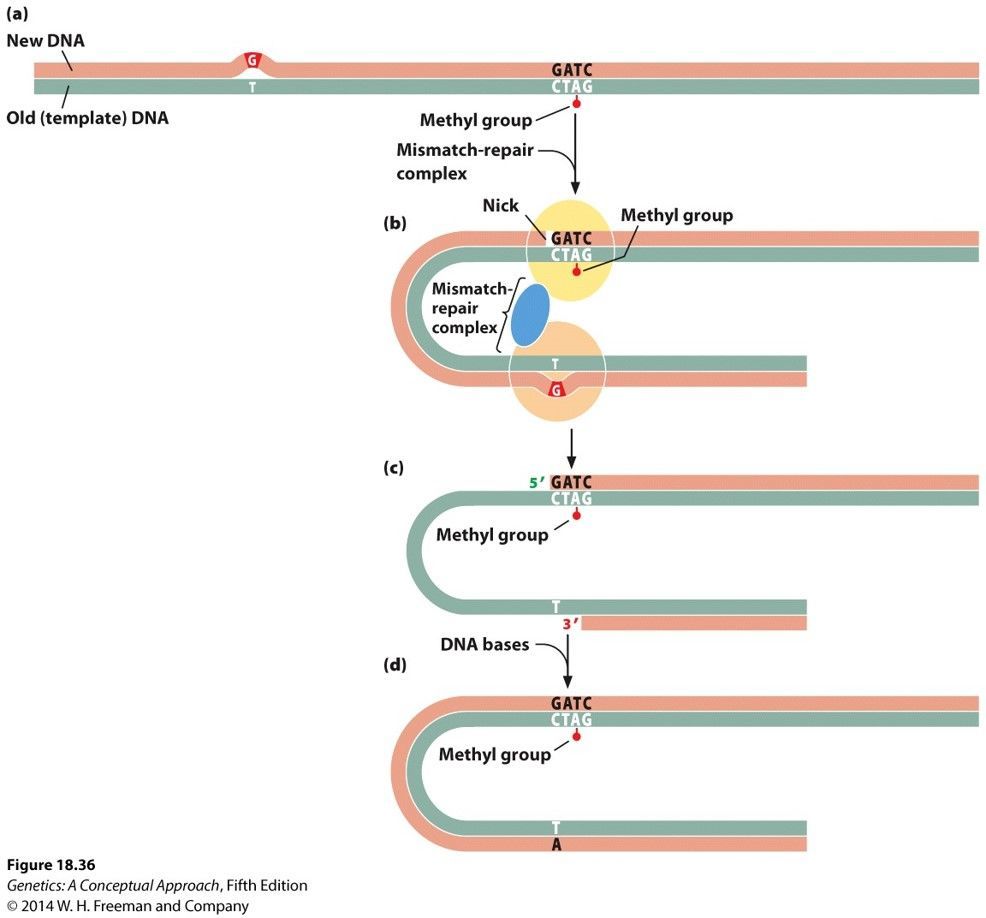
- ANew DNA
- BTemplate (old) DNA strand
8[blank_start]End-joining repair[blank_end] fixes double stranded breaks and it is an [blank_start]inaccurate[blank_end] repair system.
- AEnd-joining repair
- BMismatch repair
- Cinaccurate
- Daccurate
9Origins of replication are usually [blank_start]AT-rich[blank_end] because they are joined by only 2 hydrogen bonds (compared to 3 for [blank_start]G-C pairs[blank_end]) so it requires [blank_start]less[blank_end] energy to separate the DNA strands for replication to begin.
- AAT-rich
- BGC-rich
- CAU-rich
- DG-C pairs
- EA-T pairs
- FA-U pairs
- Gless
- Hmore
10[blank_start]Single strand binding protein[blank_end] binds to unwound DNA during replication to prevent the formation of secondary structure or hairpins (or hold the unwound DNA in a rigid, unpaired structure).
- ASingle strand binding protein
- BPrimase
- CHeliscase
- DDNA polymerase
11Label the diagram.
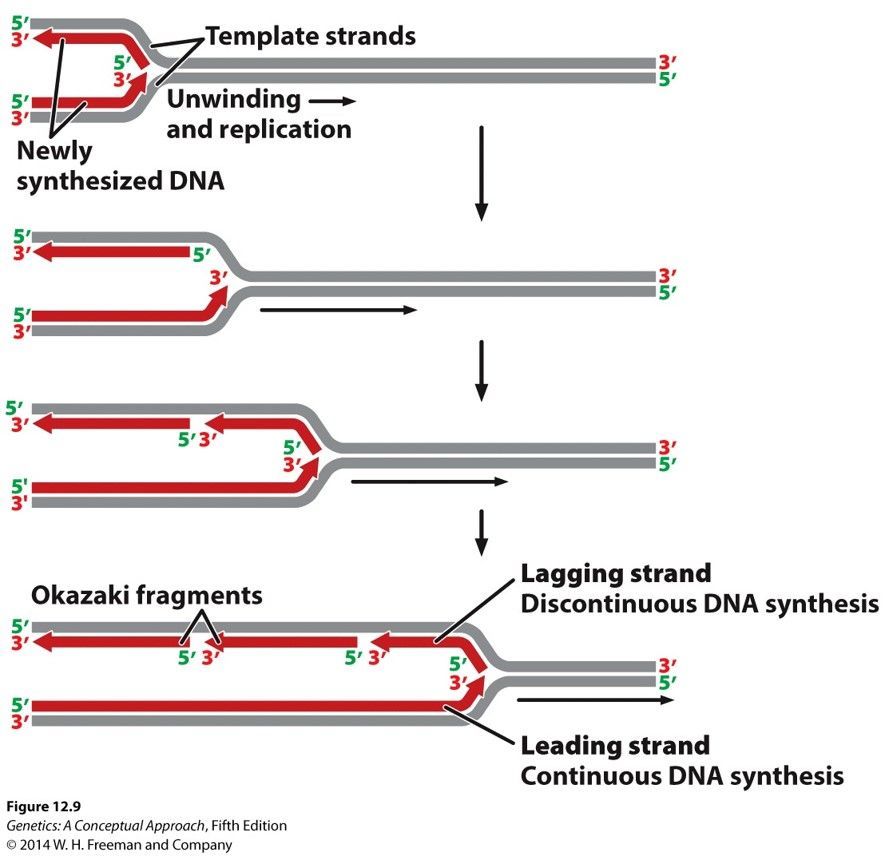
- ALagging strand
- BLeading strand.
- COkazaki Fragments
- DParent strand
- ERNA primer
12DNA replication is [blank_start]semi-conservative[blank_end]
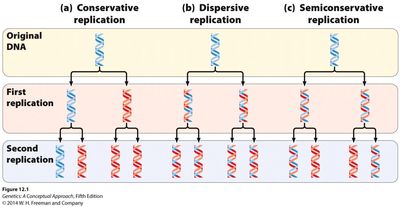
- Asemi-conservative
13What are some differences between base excision repair and mismatch repair.
- ARepair different types of base mismatches: replication errors for MR and modified bases eg by deamination for BER
- BMismatches are detected differently - MR distinguishes between the parental and newly synthesised strand shortly after DNA replication and corrects the new strand; BER recognises particular incorrect pairs, e.g. those that have arisen by common deamination events and corrects the base that has been deaminated (eg C to U or methylC to T)
- CMR acts straight after replication while BER acts at any time.
- DFirst step involves removal of base only in BER but involves cutting the DNA backbone in MR, or could express this as glycosylase involved (to remove base) in BER but not MR (if you just mentioned the removal of a base, you needed to specify this was in the first step as both processes involve loss of backbone and repair)
- EStretch of backbone removed in MR but only 1 nucleotide in BER
- FThe backbone is removed by exonuclease in MR but an endonuclease in BER (like point 4 in similarities, you needed to be fairly specific here.
- GThe backbone is removed by endonuclease in MR but an exonuclease in BER (like point 4 in similarities, you needed to be fairly specific here.
14Label the diagram
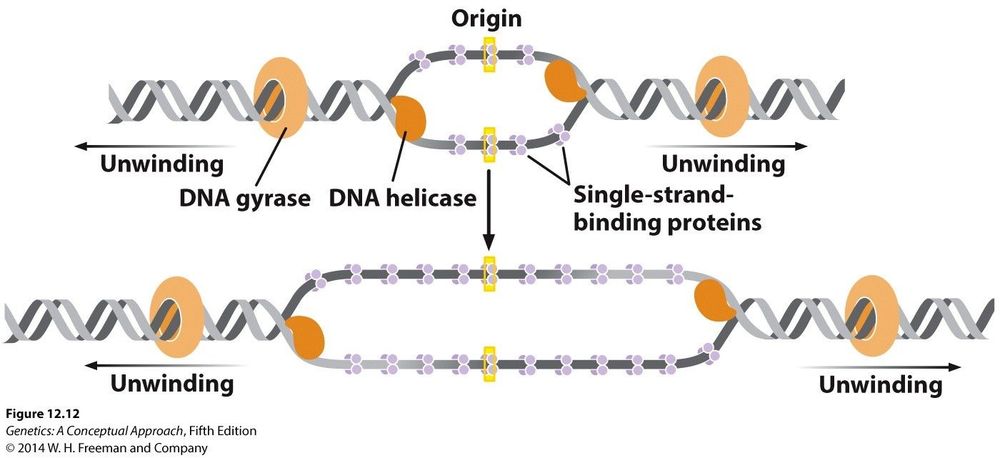
- ADNA gyrase
- BOrigin
- CSingle-strand binding proteins
- DDNA helicase
15Histone [blank_start]H1[blank_end] binds outside the nucleosome and has a structural role
- AH1
- BH2A
- CH2B
- DH3
- EH4
Information
- Description
- Quiz on DNA structure, replication and repair, created by Natalina Laria on 03/06/2016.
- Author
- Natalina Laria
- Language
- English
- Views
- 139
- Tags
- Rating
- No ratings yet Rate this quiz