
Flashcards
321L, Lab Practical II, UAH
Cards in this deck (68)
- 1What is this test for? List media, purpose(s), indicator, molecule, as well as incubation temp & time, as well as procedureTest: H2S & motility
-Positive for H2S if black precip.
-Positive for motility if turbidity is seen
-Media: sim agar
-Molecule: sodium thiosulfate
-Indicator: ferrous sulfate
-Differ. betwn motile/nonmotile bact. as well as H2S & non-H2S producing bact.
- 37 degrees C, 24-48 hours
-Stab really straight w/ needle aseptic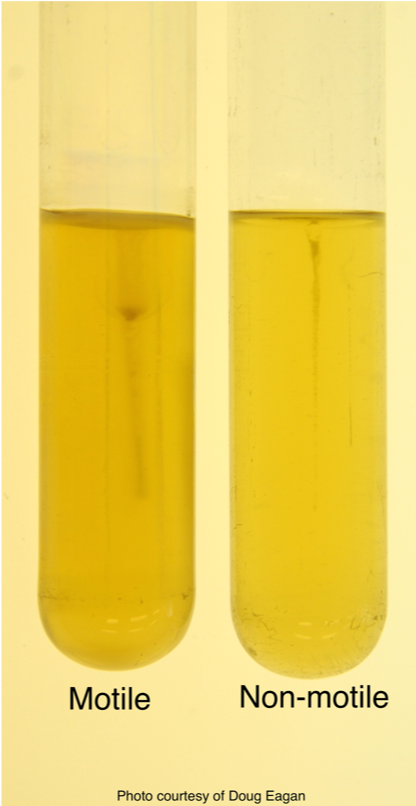
- 2What is this test for? List media, purpose(s), indicator, molecule, as well as incubation temp & time, as well as procedure-Positive for motility if turbidity is seen
-Media: sim agar
-Molecule: sodium thiosulfate
-Indicator: ferrous sulfate
-Differ. betwn motile/nonmotile bact. as well as H2S & non-H2S producing bact.
- 37 degrees C, 24-48 hours
-Stab really straight w/ needle aseptic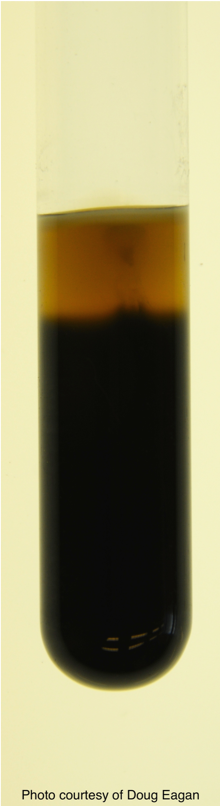
- 3What Bacteria used for H2S & Motility?Escherichia coli
Proteus vulgaris
Staphylococcus aureus - 4What is this pathway?H2S production via pathway 1, please memorize for practical
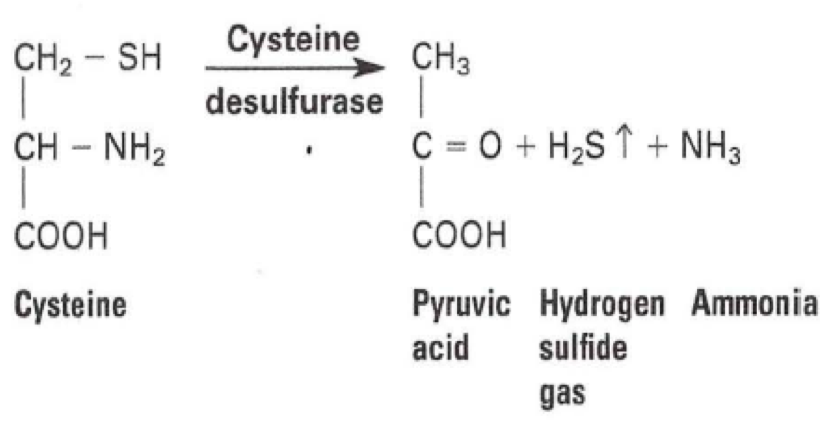
- 5—H2S production via pathway 2, please memorize for practical
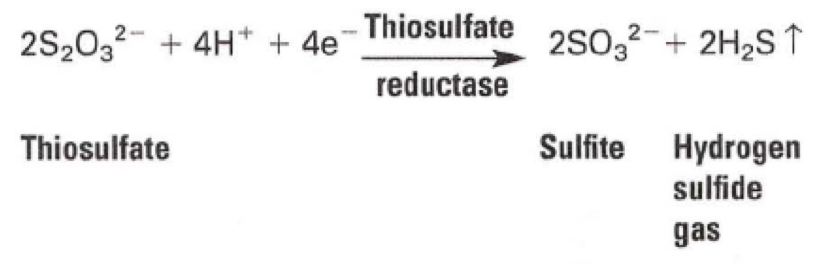
- 6Enterobacter aerogenes, what is this also known as?Also known as Klebsiella aerogenes
- 7Lab 9: IMViC Series: All enterics initially produce _____ from ______.produce pyruvic acid from glucose metabolism
- 8Lab 9 IMViC series: Pyruvic acid further metabolized by which 2 pathways?1. mixed acid pathway
2. butylene glycol pathway - 9final electron acceptor in aerobic respiration?O2
- 10final electron acceptor in anaerobic respiration?inorganic molecule such as NO3- or SO 2-/4
- 11final electron acceptor fermentation?an organic molecule that is carbon containing
- 12what are two parts to gelatin slant?slant & butt
- 13what bacteria used for lactose fermentation?Escherichia coli
G(-) rod
Micrococcus luteus
G(+) cocci
Staphylococcus aureus
G(+) cocci - 14Was a durham tube used for lactose fermentation?yes
- 15Which test had these purposes: ferment specific sugars (glu, lac, suc) produce gas (CO2) produce hydrogen sulfide (H2S) by reducing sulfurTriple Sugar Iron test
- 16Which test had this purpose: to determine if microbes reduce sulfur-containing compounds to sulfides during the process of metabolism & to determine if a microbe is motilesim agar deep
- 17Which test had this purpose: To determine if a microbe ferments the carbohydrate lactose and to determine if they produce gas as a by-product of carbohydrate fermentationPr-lactose fermentation
- 18Which test used these bacteria? Escherichia coli Proteus vulgaris Staphylococcus aureusH2S and Motility Test
- 19Which test used these control org.? Escherichia coli Alcaligenes faecalis Salmonella typhimurium Staphylococcus aureus Shigella flexneri Proteus vulgarisTriple Sugar Iron Test (TSI)
- 20What control organisms used for Lipid Hydrolysis?Staphylococcus aureus
G(+) cocci
Escherichia coli
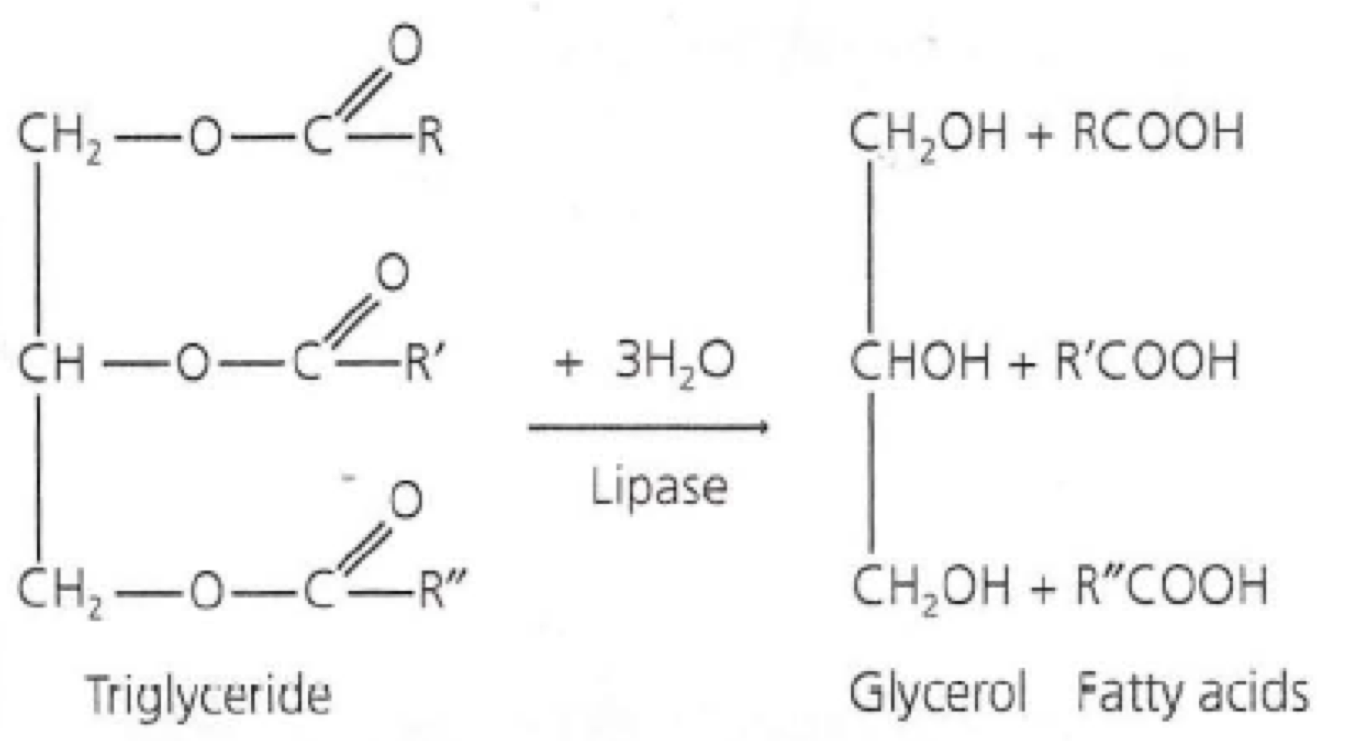
G(-) rod - 21What test purpose is this: To determine whether a microbe can hydrolyze a lipid (fat) to fatty acid and glycerol, which can be further reduced and used as a source of ATPLipid Hydrolysis
- 22What test used Spirit Blue Agar (SBA) media plates?Lipid Hydrolysis
- 23What was the enzyme and indicator for Lipid Hydrolysis?Enzyme= lipase
Indicator=olive oil - 24What was incubation for lipid hydrolysis?37 degrees C for 24 hours
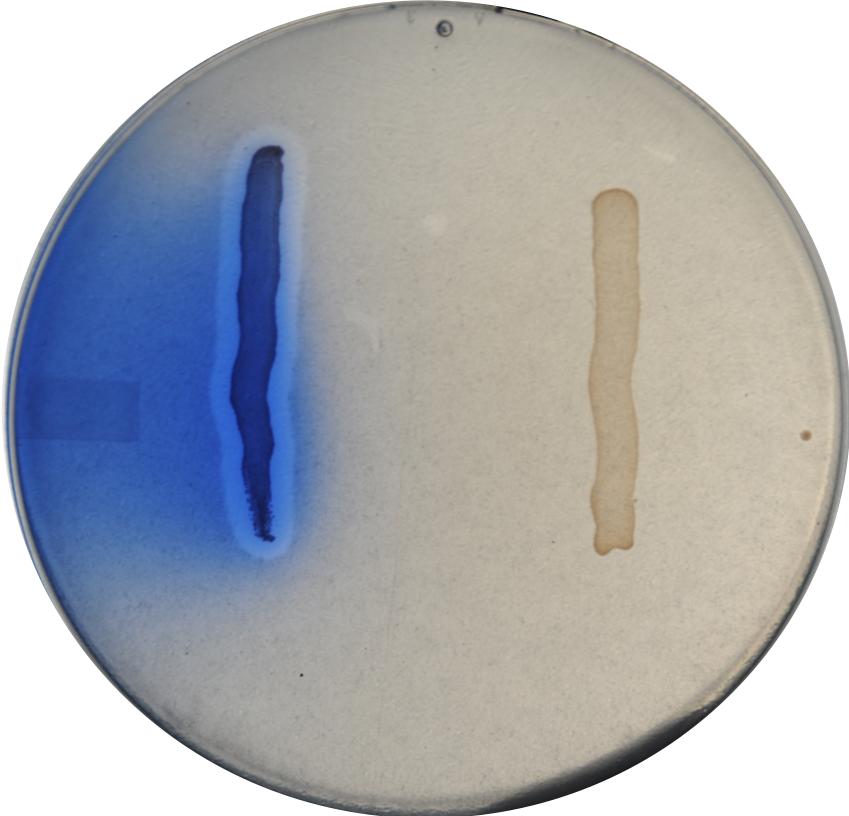
- 25What is this and what are the results?Lipid hydrolysis on SBA plate; left shows positive (S. aur) zone of clearing for enzyme lipase production, right shows negative (E. coli) zone of clearing
- 26What control organisms used for Gelatin Hydrolysis?Bacillus cereus
G(+) rod
Escherichia coli
G(-) rod
Micrococcus luteus
G(+) cocci
Staphylococcus aureus
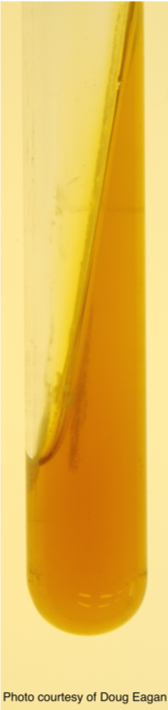
G(+) cocci - 27What is this result for TSI test say?yellow slant/butt = fermentation of lactose and/or sucrose
- 28What is this result for TSI test say?red slant / red butt = no fermentation
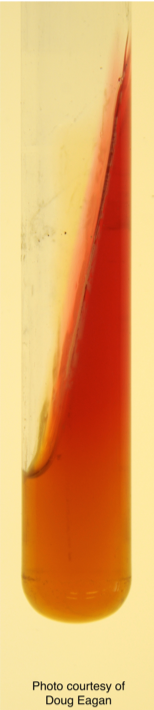
- 29What does this TSI result say?red slant/yellow butt= glucose fermentation
- 30Tubes showing black precipitate in TSI tubes mean what?H2S production
- 31Tube displaying displaced/broken agar means what?CO2 production
- 32_________?for gas by-product = no air bubble in Durham tube (Lactose Fermentation Test)Negative
- 33____________?for carbohydrate utilization with acidic end product = yellow color (Lactose Fermentation Test)positive
- 34_______?for carbohydrate utilization with acidic end product = yellow color (lactose fermentation test)Positive
- 35________? gas by-product = air bubble in Durham tube (lactose fermentation test)positive
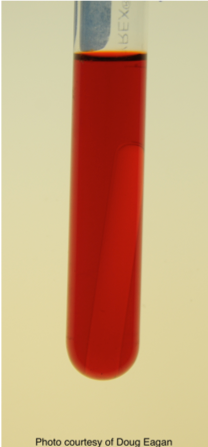
- 36___________?for carbohydrate utilization but growth was present as shown by peptone use to produce alkaline end product = dark pink/fuchsia color (lactose fermentation test)Negative
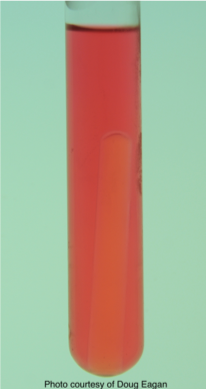
- 37______________?seen by neutral end products = original orange/red color (same as negative control) (Lactose fermentation test)No growth
- 38Is this negative or positive for lactose fermentation?Negative for carbohydrate utilization but growth was present as shown by peptone use to produce alkaline end product = dark pink/fuchsia color
- 39Why is this no growth in lactose fermentation test?No Growth seen by neutral end products = original orange/red color (same as negative control)
- 40what reaction pathway is this?Lipid Hydrolysis
- 41TSI results for Alcaligenes faecalis?red slant, orange butt, no fermentation or gas production
- 42What test is this?Gelatin Hydrolysis:
3 types of results as well:
-positive for rapid liquefaction (after 2 day incubation)
-positive for slow liquefaction (after 7 day incubation)
-negative for liquefaction (no liquefaction in agar deeps after 7 days incub.)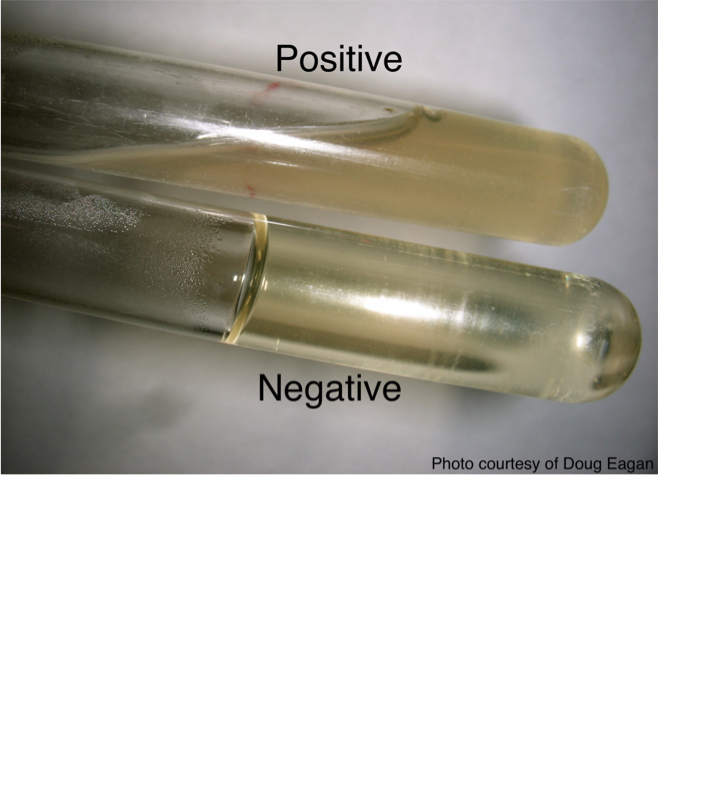
- 43What does IMViC stand for?Indole Test
Methyl Red Test
Voges-Proskauer test
i (nothing)
Citrate Test - 44What is IMViC tests mainly used for?Mainly used to identify bacteria found in the family, Enterobacteriaceae
•Short, G(-), non-spore forming, rod-shaped bacteria that can be found in the intestinal tract - 45Normal intestinal floraEscherichia coli & Enterobacter aerogenes
- 46Opportunistic pathogens such asProteus vulgaris, & Klebsiella pneumoniae
- 47Full names for short G (-) non-spore forming rod-shaped bact. in intestinal tract? S. typhimurium S. flexneriSalmonella typhimurium
Shigella flexneri - 48What test purpose is this: To determine if a microbe can split indole from the amino acid tryptophanIndole test
- 49What test is this: Media = 1% tryptone broth (Not SIM agar like your lab manual says)• Enzyme = Tryptophanase •Indicator = Kovac’s reagentIndole Test
- 50What test is this: selects for organisms found in the family, Enterobacteriaceae, and differentiates between members of that family that can produce tryptophanase & those that cannotIndole Test
- 51What test and what are results?Indole Test
- Positive: pink top after Kovac reagent (E. coli)
-Negative: yellow top after Kovac's reagent (E. aero)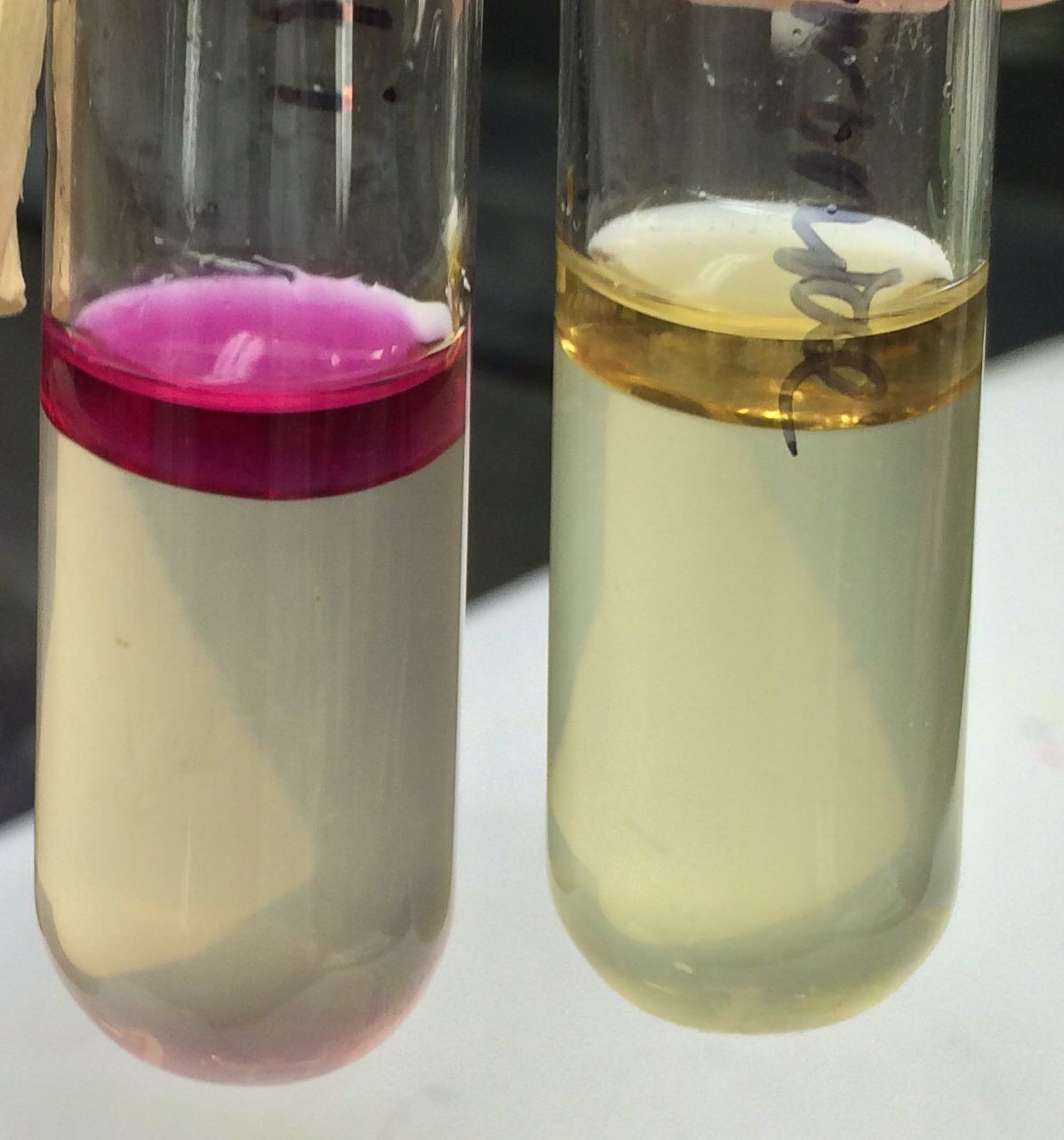
- 52What was positive result in Methyl Red test? What was negative?-positive E. coli
-negative E. aero - 53What were the two bacterial species used in IMViC tests?Escherichia coli
Enterobacter aerogenes - 54What did use to inoculate in indole test?loop
- 55Which test? Is positive/negative? What bacteria?Citrate Test
Positive
Enterobacter aerogenes (bromothymol blue indicator)
- 56Which test? Is positive/negative? What bacteria?Citrate Test
Negative
Esherichia coli (no growth/color change)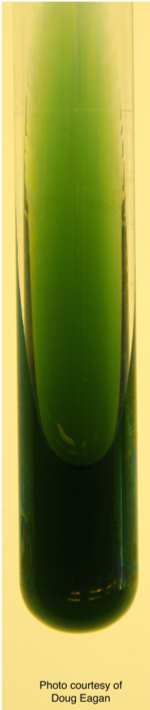
- 57Describe Urease test purpose, media, enzyme, and indicatorPurpose: To determine if a microbe can hydrolyze urea to ammonia (NH3) and carbon dioxide (CO2)
Media = Urea broth
Enzyme = urease
Indicator = phenol red - 58Organisms used in Urease Test?Control organisms:
Escherichia coli
Proteus mirabilis - 59How long to incoluate Urease?37°C for 24-48 hours
- 60Describe Nitrate reduction test purpose, media, enzyme, and indicator:Purpose: to determine if microbes can reduce nitrate (NO3-) to nitrite (NO2-) or even further to nitric oxide (NO), nitrous oxide (N2O), ammonia (NH3), or nitrogen (N2)
Media = Nitrate broth (Potassium nitrate: KNO3)
Enzyme = nitrate reductase and/or nitrite reductase
Indicator = sulfanilic acid (Solution A), α-naphthylamine (Solution B), & zinc dust - 61What organisms used for nitrate test?Control organisms:
Alcaligenes faecalis
Escherichia coli
Pseudomonas aeruginosa - 62What test is this?: Purpose: to determine if microbes can break down hydrogen peroxide (H2O2) into H2O and O2 Media = Tryptic Soy Agar plates Enzyme = catalase Indicator = H2O2Catalase Test
- 63What organisms used in Catalase Test?Control organisms:
Enterococcus faecalis
Escherichia coli - 64What test is this?: Purpose: to determine if a microbe uses the electron transport chain as the final phase in aerobic respiration Media = Tryptic Soy Agar plates Enzyme = cytochrome oxidase Indicator = p-aminodimethylaniline oxalate (Oxidase reagent)Oxidase Test
- 65Control Organisms for Oxidase Test?Control organisms:
Klebsiella pneumoniae
Pseudomonas aeruginosa - 66Did Urease, Nitrate, Catalase, and Oxidase test all need 37 degrees C for 24-48 hours incubation?Yes
- 67What test? What results- which bacteria?Mannitol Salt Agar Test
-Positive mannitol ferm.= yellow (S. aureus) (S. epi)
-Negative mannitol ferm.= pink/red (S. sapro)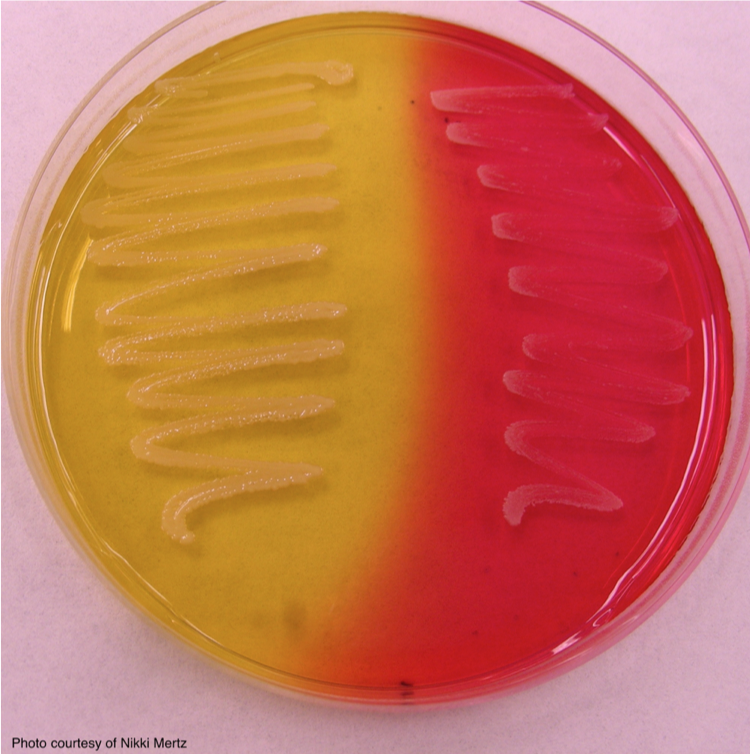
- 68—