
Flashcards
Chemistry 1A - Products from rocks
Cards in this deck (50)
- 1Chemistry 1A Products from rocksAtoms and electrons
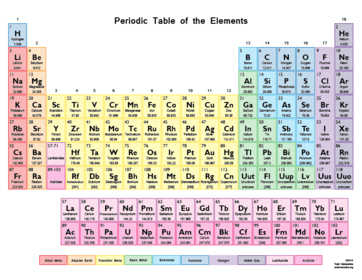
Periodic table
Electron shells
Compounds
Balancing equations
Using limestone
Getting metals from rocks
Impacts of extracting metals
Properties of metals
Alloys
Fractional distillation of crude oil
Properties and uses of crude oil
Environmental problems - 2Atoms and elementsAtoms have a small nucleus surrounded by electrons
THE NUCLEUS
It's in the middle of the atom
Contains protons and neutrons
Protons are positively charged
Neutrons have no charge
The nucleus has a positive charge overall because of the protons
THE ELECTRONS
Move around the nucleus
Negatively charged
Tiny, but cover lots of space
Occupy shells around the nucleus - 3Number of protons equals number of electrons Atoms have no charge overall, they're all neutral The charge on the electrons is the same size as the charge on the protons The number of protons always equals the number of electrons in an atom If some electrons are added or removed, the atom becomes charged and is then an ionElements consists of one type of atom only
Atoms can have different numbers of protons, neutrons and electrons
The number of protons in the nucleus decides what type of atom it is
(an atom with 1 proton is hydrogen, with 2 it's helium)
If a substance only contains one type of atom, it's called an element
There are 100 different elements
(copper, aluminium, iron) - 4The Periodic TableAtoms of each element can be represented by a 1 or 2 letter symbol
(C = Carbon O = Oxygen Mg = Magnesium Fe = Iron Na = Sodium Pb = Lead) - 5The periodic table puts elements with similar properties together and they form columns. (groups) All of the elements in a group have the same number of electrons in their outer shell For example - Group 1 are all metals that react the same way and Group 0 are noble gases
- 6Electron ShellsElectrons always occupy shells (energy levels)
The lowest energy levels are always filled first (closer to nucleus)
Only a certain number of electrons are allowed on each shell
1st shell - 2
2nd shell - 8
3rd shell - 8
Noble gases (group 0) have full electron shells
In most atoms, the outer shell is not full and this makes them want to react to fill it - 7Working out the electronic structureFind the element in the periodic table
Work out which group it's in and draw that number of circles around the nucleus
Work out which group the element is in and draw that amount of electrons in the outer circle - 8CompoundsAtoms join together to make compounds
When different elements react, atoms form chemical bonds with other atoms to form compounds
Making bonds involves atoms giving away, taking or sharing electrons. Only the electrons are involved
A compound which is formed from a metal and a non metal consists of ions - 9The metal atoms lose electrons to form positive ions and the non metal atoms gain electrons to form negative ions. The opposite charges (positive & negative) of the ions mean they're strongly attached yo each other. This is IONIC BONDINGA compound formed from non metals consists of molecules. Each atoms shares an electron with another atom.
This is called a covalent bond.
Each atom has to make enough covalent bonds to fill up its outer shell

- 10The properties of a compound are different from the properties of the original elements. For example - Iron (shiny magnetic metal) and sulfur (yellow powder) react, the compound formed (iron sulfide) is a dull, grey solid lump and doesn't behave like iron or sulfur.Compounds can be small molecules like water, or great lattices like sodium chloride

- 11A formula shows what atoms are in a compound CO2 is a compound formed from a chemical reaction between carbon and oxygen. It contains 1 carbon atom and 2 oxygen atomsBRACKETS IN A FORMULA
calcium hydroxide - Ca(OH)2
The number outside the bracket applies to everything inside the bracket
(1 calcium atom, 2 oxygen atoms and 2 hydrogen atoms) - 12BALANCING EQUATIONSAtoms aren't lost or made in chemical reactions
You still have the same atoms at the end of a reaction as you had at the start, they're just arranged in different ways
- 13Balanced symbol equations show the atoms at the start and at the end, and how they're arranged.Atoms aren't gained or lost, the mass of the reactants equals the mass of the products, so if you react 6g of magnesium with 4g of oxygen, you end up with 10g of magnesium oxide

- 14BALANCING THE EQUATION, MATCH THEM UP ONE BY ONE There must always be the same number of atoms on both sides You balance the equation by putting the numbers in front of the formulas where neededThe formulas are all correct but the numbers of atoms don't match up on both sides. (3 H's on the left but only 2 on the right)
You can't change formulas like H20 to H30, you can only put numbers in front of them
- 15METHOD - Balance one type of atom at a time - 1) Find an element that doesn't balance and write in a number to try and sort it out 2) It may create another imbalance, if so just write in another number 3) Carry on chasing unbalanced elements and it 'll sort itself outWe are short of H atoms on the right
All we can do is make it 2H2O instead if just H20
H2SO4 + NaOH → Na2SO4 + 2H2O
But now there are too many H and O atoms on the right, so to balance that you could put 2NaOH on the left
H2SO4 + 2NaOH → Na2SO4 + 2H2O
- 16USING LIMESTONELimestone is quarried out of the ground and is great to make in to blocks for building
It's mainly calcium carbonate (CaCO3)
When it's heated, it thermally decomposes to make calcium oxide and carbon dioxide
(thermal decomposition - when 1 substance chemically changes into at least 2 new substances when it's heated) - 17When magnesium, copper, zinc and sodium carbonates are heated, they decompose in the same way E.g - Magnesium carbonate → magnesium oxide + carbon dioxideCalcium carbonate also reacts with acid to make a calcium salt, carbon dioxide and water
The type of salt produced depends on the type of acid ( a reaction with hydrochloric acid would make a chloride)
Other carbonates that react with acids are magnesium, copper, zinc and sodium - 18Calcium oxide reacts with water to produce calcium hydroxide Calcium hydroxide is an alkali which can be used to neutralise acidic soil in fields. Powdered limestone can be used for this too but the advantage of calcium hydroxide is that it works fasterCalcium hydroxide can be used in a test for carbon dioxide. If you make a solution of calcium hydroxide in water (limewater) and bubble gas through it, the solution will turn cloudy if carbon dioxide is present.
The cloudiness is formed by the formation of calcium carbonate - 19Powdered limeston is heated in a kiln with powdered clay to make cement. Cement can be mixed with sand and water to make mortar. Mortar is used to stick bricks together. You can mix cement with water and aggregate (water and gravel) to make concreteDISADVANTAGES OF QUARRYING LIMESTONE -
Lots of noise & dust
Destroys habitats of animals
It's transported in lorries, causing more pollution
Energy is needed to produce cement and quicklime, the energy comes from burning fossil fuels which also causes pollution - 20ADVANTAGES OF LIMESTONE - Limestone provides things that people want (houses, roads) Limestone products are used to neutralise acidic soil. The quarry and associated businesses provide jobs and bring money in to the local economyLIMESTONE PRODUCTS ADVANTAGES & DISADVANTAGES
Limestone is widely available and is cheaper than granite or marble
Some limestone is more hard wearing than marble
Limestone, concrete and cement don't rot when they get wet, and aren't gnawed away by insects & rodents
Concrete doesn't corrode - 21GETTING METALS FROM ROCKSA metal ore is a rock that contains enough metal to make it worthwhile extracting metal from it
The ore is an oxide of the metal. E.g - the main aluminium ore is called bauxite, it's aluminium oxide (AL203)
Most metals need to be extracted from their ores using a chemical reaction - 22A metal can be extracted from it's ore chemically, by reduction or by electrolysis. Some ores may have to be concentrated before the metal is extracted. This involves getting rid of the unwanted rock material Electrolysis can also be used to purify the metalA metal can be extracted from it's ore chemically by reduction using carbon
When an ore is reduced, oxygen is removed from it
- 23The position of the metal in the reactivity series determines whether it can be extracted by reduction with carbon.Metals higher than carbon have to be extracted by electrolysis which is expensive.
Metals below carbon can be extracted by reduction using carbon
This is because carbon can only take the oxygen away from metals which are less reactive than carbon itself
- 24Metals that are more reactive than carbon have to be extracted using electrolysis of molten compounds (e.g - aluminium) However the process is much more expensive than reduction because it uses lots of energyCopper is purified by electrolysis
Copper can easily be extracted by reduction with carbon. The ore is heated in a furnace (smelting)
However this way, the copper is impure and doesn't conduct electricity. This isn't useful because copper is usually used to make electrical wiring
Electrolysis purifies it making it a better conductor - 25Electrolysis is the breaking down of a substance using electricity It requires a liquid to conduct the electricity, called the electrolyte Electrolytes are usually metal salt solutions made from the ore or molten metal oxides The electrolytes has free ions that conduct electricity Electrons are taken away by the positive anode and given away by the negative cathodeHOW ELECTROLYSIS IS USED TO GET COPPER -
Electrons are pulled off copper atoms at the anode, causing them to go into solution as Cu2+ ions
Cu2+ ions near the cathode gain electrons and turn back into copper atoms
The impurities are dropped at the anode as a sludge whilst pure copper atoms bond to the cathode - 26You can extract copper from a solution using a displacement reaction More reactive metals react vigorously than less reactive metals If you put a reactive metal into a solution of dissolved metal compound, the reactive metal will replace the less reactive metal in the compoundThis is because the more reactive metal bonds more strongly to the non metal bit of the compound and pushes out the less reactive metal
If a piece of silver metal is put into a solution of copper sulfate, nothing happens. The more reactive metal (copper) is already in the solution - 27New methods to extract copper are bioleaching and phytomining - BIOLEACHING - This uses bacteria to seperate copper from copper sulfide. The bacteria get energy from the bond between copper and sulfur separating out the copper from the ore in the process. The leachate (solution produced by the process) contains copper, which can be extractedPHYTOMINING -
This involves growing plants in soils that contains copper
The plants can't use or get rid of the copper so it gradually builds up in the leaves. The plants can be harvested and burned in a furnace. The copper can be collected from the ash left in the furnace - 28IMPACTS OF EXTRACTING METALS Metal extraction can be bad for the environment People have to balance the social, economic and environmental effects of mining the ores. Most of the issues are the same as quarrying limestoneADVANTAGES
Useful products can be made
Provides jobs for local people
Brings money in to the area
DISADVANTAGES
Bad for the environment
Causes noise
Loss of habitats
Can be dangerous - 29Recycling metals is important - Mining and extracting metals takes lots of energy (comes from fossil fuels) Fossil fuels are running out so we need to conserve them. Burning them also leads to acid rain, global dimming and climate changeRecycling metals only uses a small fraction of the energy needed to mine and extract new metal
Recycling saves money
Cuts down the amount of rubbish that's sent to the landfill (takes up space and causes pollution) - 30PROPERTIES OF METALSMetals are strong and bend are good conductors
Most of the elements are metals so they cover most of the periodic table
All metals have similar basic properties -
Strong
Good at conducting heat
Conduct electricity well - 31—Transition metals (centre block of periodic table) have lots of everyday uses
Strong and bendy - bridges and car bodies
Good conductors of electricity for electrical wires
Good conductors of heat for heat to travel through (saucepan base)
- 32A metal's properties decide how it's best used COPPER is a good conductor of electricity, so it's ideal for electrical wiring. It's hard and strong but can be bent. It doesn't react with waterALUMINIUM is corrosion resistant and has a low density. Pure aluminium isn't strong but it forms hard, strong alloys
TITANIUM is another low density metal, unlike aluminium it's very strong and is also corrosion resistant - 33Different metals are useful for different things. E.g - for an aeroplane, you'd want a light metal that is strong but can be bent into shape like aluminiumMetals are useful structural materials, but some corrode when exposed to air and water, so they need to be protected.
Metals can get tired when stresses and strains are repeatedly put on them. This is called metal fatigue and leads to metal breaking - 34ALLOYSIron straight from the blast furnace is only 96% iron, the other 4% is impurities such as carbon
Impure iron is used as cast iron and doesn't have many uses because it's brittle.
All the impurities are removed from most of the blast furnace iron. The pure iron has a regular arrangement of identical atoms
This layer of atoms can slide over each other which makes the iron soft and easily shaped - 35Most of the pure iron is converted into steel - an alloy. Steels are formed by adding small amounts of carbon and sometimes other metals to the ironAlloys are harder than pure metals
Different elements have different sized atoms, so when an element (e.g carbon) is added to pure iron, the smaller carbon atom will upset the layers of pure iron atoms making it harder for them to slide over each other. Alloys are harder
Many metals used today are alloys (bronze, aluminium, gold) - 36FRACTIONAL DISTILLATION OF CRUDE OILCRUDE OIL IS A MIXTURE OF HYDROCARBONS
A mixture consists of 2 (or more) elements or compounds that aren't chemically bonded
Hydrocarbons are fuels such as petrol and diesel
There are no chemical bonds between the different parts of a mixture so they keep all their original properties - 37Crude oil is split into separate groups of hydrocarbons The fractionating column works continuously with heated crude oil piped in at the bottom. The vaporised oil rises up the column and the various fractions are constantly tapped off at the different levels where they condense
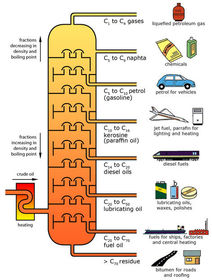
- 38PROPERTIES AND USES OF CRUDE OILCrude oil is mostly alkanes
All the fractions of crude oil are hydrocarbons called alkanes
Alkanes are made up of chains of carbon atoms surrounded by hydrogen atoms
Different alkenes have different lengths - 39—The first 4 alkenes are methane (natural gas), ethane, propane and butane
Carbon atoms form 4 bonds and hydrogen atoms only form 1 bond
Alkanes all have the general formula CnH2n+2
So if an alkane has 5 carbons, it's got to have (2x5)+2=12 hydrogens
- 40THE BASIC TRENDS - The shorter the molecules, the more runny the hydrocarbon is The shorter the molecules, the more volatile they are (turn into gas at a lower temp) The shorter the molecules, the more flammable the hydrocarbon isUSES OF HYDROCARBONS DEPENDS ON PROPERTIES
Volatility helps decide what the fraction is used for. The refinery gas fraction has the shortest molecules, so it has the lowest boiling point.
The petrol fraction has longer molecules, so it has a higher boiling point.
The viscosity also helps decide how the hydrocarbons are used. The really gloopy (viscous) hydrocarbons are used for lubricating engine parts and covering roads - 41USING CRUDE OIL AS A FUELCrude oil provides an important fuel for modern life
Crude oil fractions burn quickly so they make good fuels. Most modern transport is fuelled by crude oil (cars, trains, planes)
Parts of crude oil are also burned in central heating systems in homes and in power stations to generate electricity. - 42Crude oils also provides raw materials for making various chemicals, including plastics. Alternatives to using crude oil fractions as fuel are possible e.g - electricity can be generated by nuclear power or wind power. There are ethanol powered cars and solar energy can be used to heat waterCrude oil fractions are often the easiest and cheapest thing to use
Crude oil fractions are often more reliable too, e.g solar and wind power won't work without the right weather conditions. Nuclear energy is reliable but there are concerns about its safety - 43ENVIRONMENTAL PROBLEMSBurning fossil fuels releases gases and particles
Power stations burn huge amounts of fossil fuels to make electricity
Most fuels (crude oil and coal) contain carbon and hydrogen - 44During combustion, the carbon and hydrogen are oxidised so that carbon dioxide and water vapour are released into the atmosphere. Energy (heat) is also produced hydrocarbon + oxygen → carbon dioxide + waterIf the fuel contains sulfur impurities, the sulfur will be released as sulfur dioxide when the fuel is burnt
Oxides of nitrogen will also form if the fuel burns at a high temperature
When there's lots of oxygen, all the fuel burns (complete combustion)
If there's not enough oxygen, some of the fuel doesn't burn (partial combustion)
carbon monoxide, solid particles (particulates) of soot and unburt fuel are released - 45Sulfur dioxide is one of the gases that causes acid rain. When the sulfur dioxide mixes with clouds, it forms dilute sulfuric acid. This then falls as acid rain In the same way, oxides of nitrogen cause acid rain by forming dilute nitric acidAcid rain causes lakes to become acidic and many plants and animals die as a result
Acid rain kills trees, and damages limestone buildings and ruins stone statues
There may be links between acid rain and human health problems - 46The benefits of electricity and travel have to be balanced against the environmental impacts Governments have recognised the importance of this and international agreements have been put in place to reduce emissions of air pollutants (sulfur dioxide)You can reduce acid rain by reducing sulfur emissions
Most of the sulfur can be removed from fuels before they're burnt, but it costs more to do it
Removing sulfur from fuels takes more energy - 47Increasing carbon dioxide causes climate change The level of carbon dioxide in the atmosphere is increasing because of the large amounts of fossil fuels burnt This causes global warming Global warming is a type of climate change and causes other types of climate change (flooding due to the polar ice caps melting)Particles cause global dimming
Scientists think it's caused by particles of soot and ash that are produced when fossil fuels are burnt. These particles reflect sunlight back in to space, or they can help to produce more clouds - 48Renewable alternative fuels ETHANOL - Produced from plant material so it's known as biofuel. Made by fermentation of plants and can be used to power cars. Often mixed with petrol to make a better fuelPROS -
The CO2 released when it's burnt is taken in by the plant as it grew. So it's 'carbon neutral'. The only other product is water
CONS - Engines need to be converted before they work with ethanol fuels
Ethanol fuel isn't widely available - 49BIO-DIESEL - Another type of biofuel. Can be produced from vegetable oils (rapeseed, soybean) Bio-diesel can be mixed with ordinary diesel fuel and used to run a diesel enginePROS -
Bio-diesel is carbon neutral
Engines don't need to be converted
Produces less sulfur dioxides and particulates
CONS -
Can't make enough to replace diesel
Expensive to make - 50HYDROGEN GAS - Used to power vehicles. You get the hydrogen from the electrolysis of water. There's plenty of water but it takes electrical energy to split it up. This energy comes from a renewable source (solar)PROS -
Hydrogen combines with oxygen in the air to form just water, so it's very clean
CONS -
Needs a special expensive engine
Hydrogen isn't widely available
Needs energy from another source
Hard to store
Information
- Description
- Flashcards on Chemistry 1A - Products from rocks, created by mariamdarwish on 19/05/2015.
- Created by
- mariamdarwish
- Views
- 67
- Tags
- Rating