Flashcards
Chemistry iGCSE - Atomic Structure - 3
Cards in this deck (33)
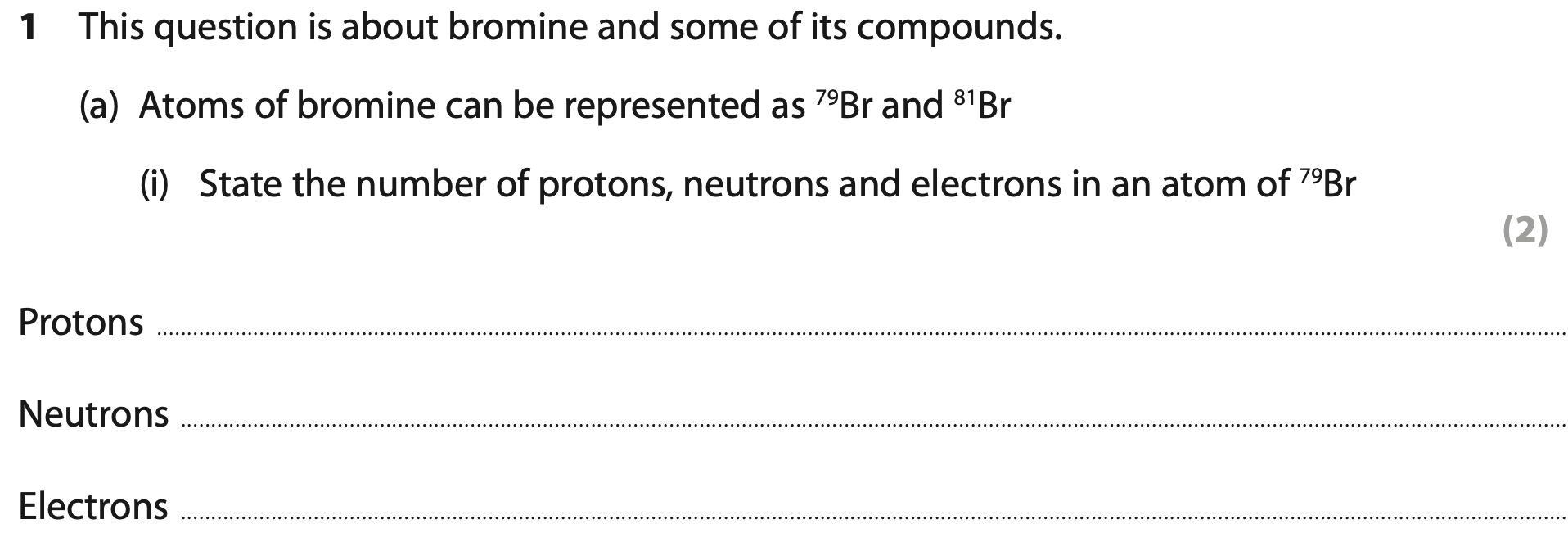
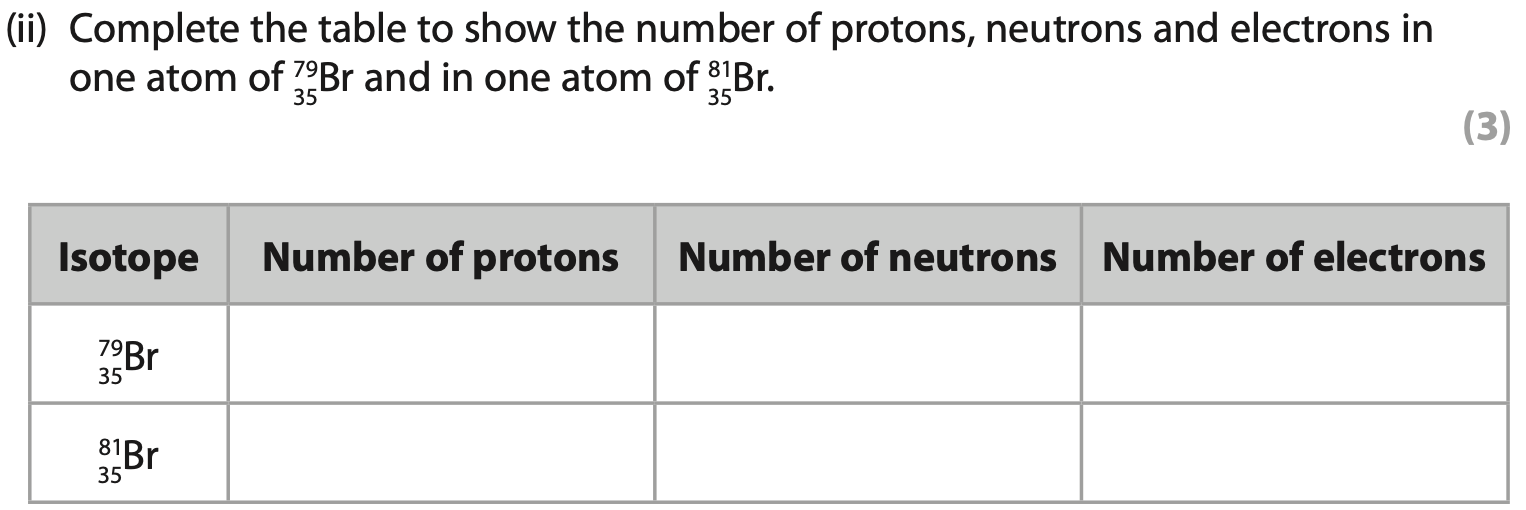
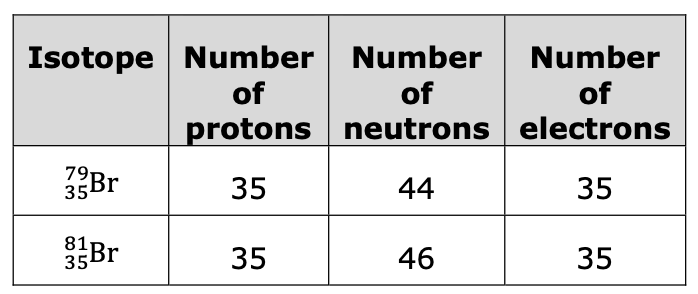
- 1—Protons = 35
Neutrons = 22
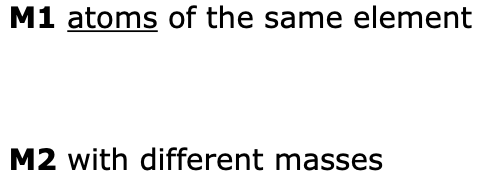
Electrons = 35 - 2What name is used for atoms of bromine that have different numbers of neutrons?isotopes
- 3Why do all atoms of bromine have the same chemical properties?same number of electrons (in outer shell)
- 4—


- 5Hydrogen bromide (HBr) and sodium bromide (NaBr) are compounds of bromine. Draw a dot and cross diagram to represent a hydrogen bromide molecule. Show only the outer electrons in each atom.
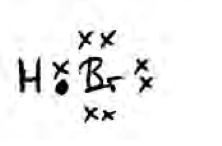
- 6Explain how the atoms are held together in a hydrogen bromide molecule. (2)M1 - shared (two / pair of) electrons
M2 - attracted to BOTH nuclei - 7Explain why sodium bromide has a higher melting point than hydrogen bromide. (3)
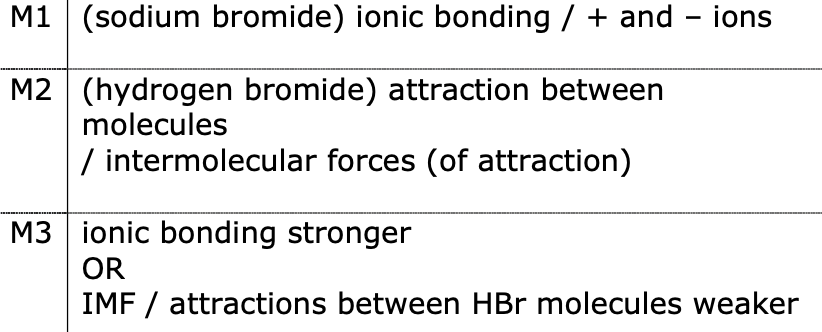
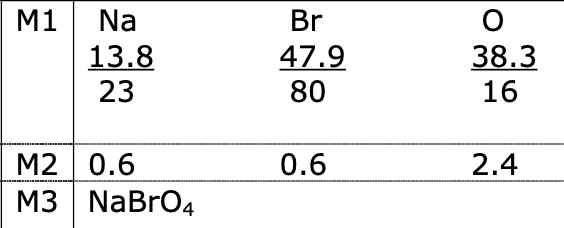
- 8Acompoundhasthepercentagecomposition13.8%sodium,47.9%bromineand 38.3% oxygen by mass. Calculate its empirical formula. Empirical formula = ................ (3)
- 9is a metal A - B - C - D (1)B
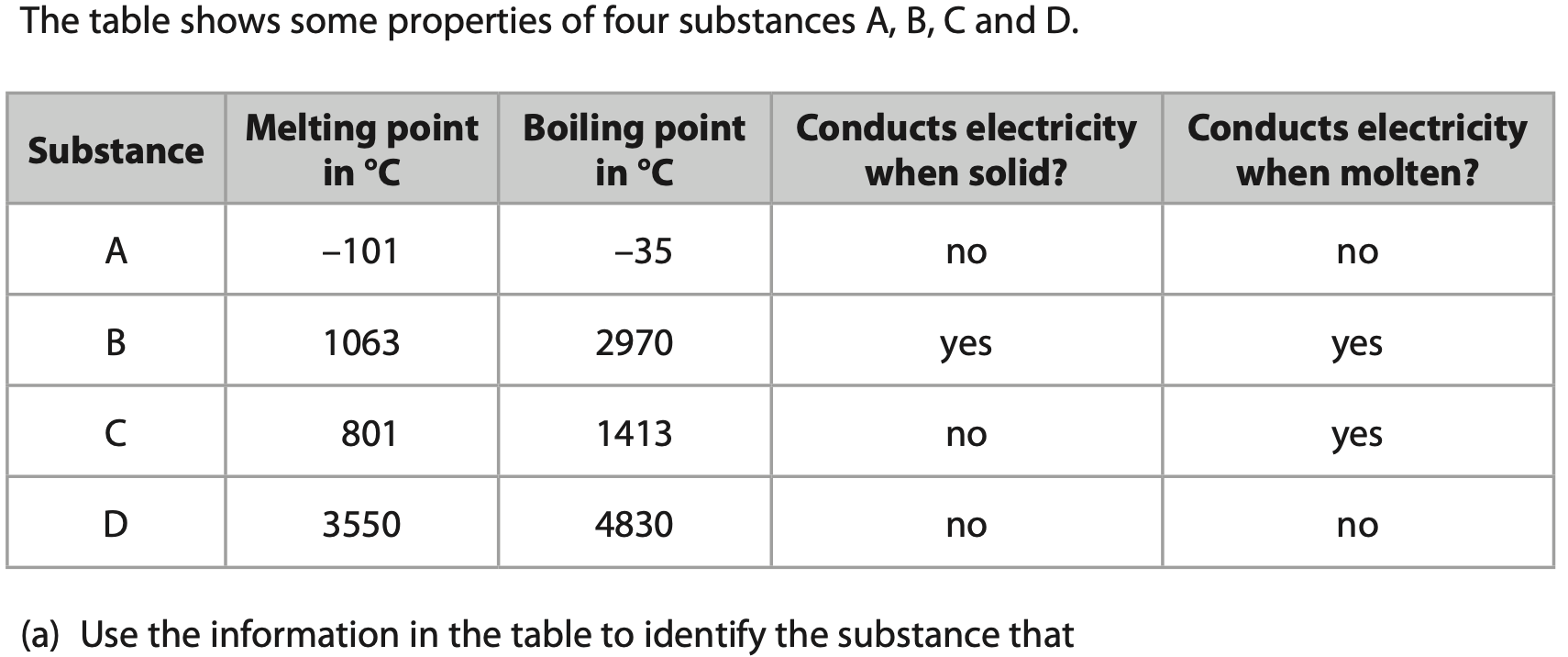
- 10could be diamond A - B - C - D (1)D
- 11is a gas at 20*C A - B - C - D (1)A
- 12contains oppositely charged ions A - B - C - D (1)C
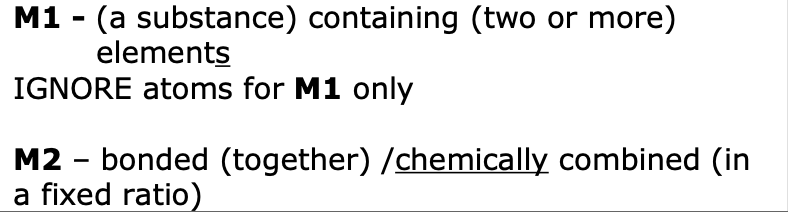
- 13Some of the substances in the table are compounds. What is meant by the term compound? (2)
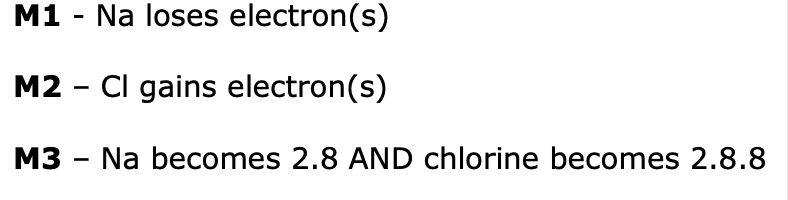
- 14The electronic configurations of atoms of sodium and chlorine are Na 2.8.1 Cl 2.8.7 Describe the changes in the electronic configurations of sodium and chlorine when these atoms form sodium chloride (3)
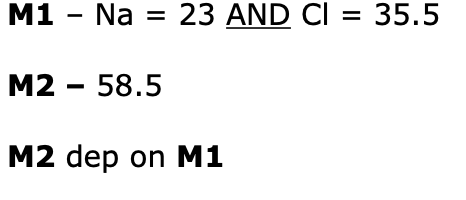
- 15Calculate the relative formula mass of sodium chloride (NaCl). Use the Periodic use table to help you. relative formula mass = ..............(2)
- 16Use the the Periodic Table on page 2 to answer this question. The symbol for silver is Ag - As - S - SiAg
- 17The element with an atomic number of 40 is AI - Ar - Ca - ZrZr
- 18An atom of an element has the electronic configuration 2.8.3 State the number of the group in the Periodic Table in which this element is found.3
- 19An atom of an element has the electronic configuration 2.8.3 Explain your answer in terms of the atom’s electronic configuration.(The atom has) three electrons in its outer / valence shell
- 20An atom of an element has the electronic configuration 2.8.3 State the number of the period in the Periodic Table in which this element is found.3
- 21An atom of an element has the electronic configuration 2.8.3 Explain your answer in terms of the atom’s electronic configuration.(The atom has) electrons in three shells / three shells are occupied (with electrons)
- 22An atom of an element has the electronic configuration 2.8.3 Identify the element.aluminium / Al
- 23—
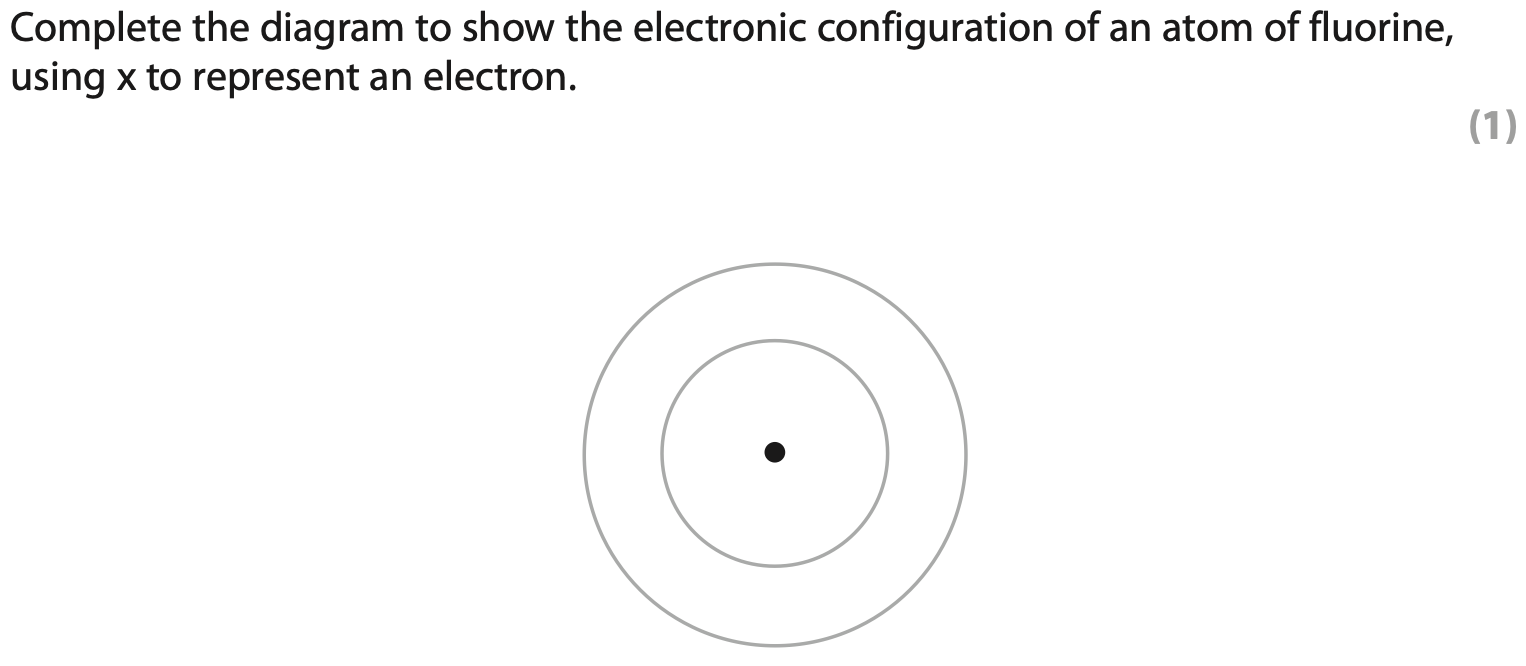
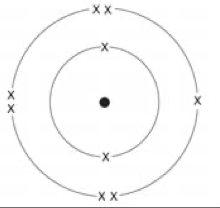
- 24Bromine is an element in Group 7 of the Periodic Table. (a) What is the name given to the Group 7 elements? alkali metals - alkaline earth metals - halogens - noble gaseshalogens
- 25—

- 26—
- 27—ethane – no change (in colour)
ethene – (orange to) colourless / decolourises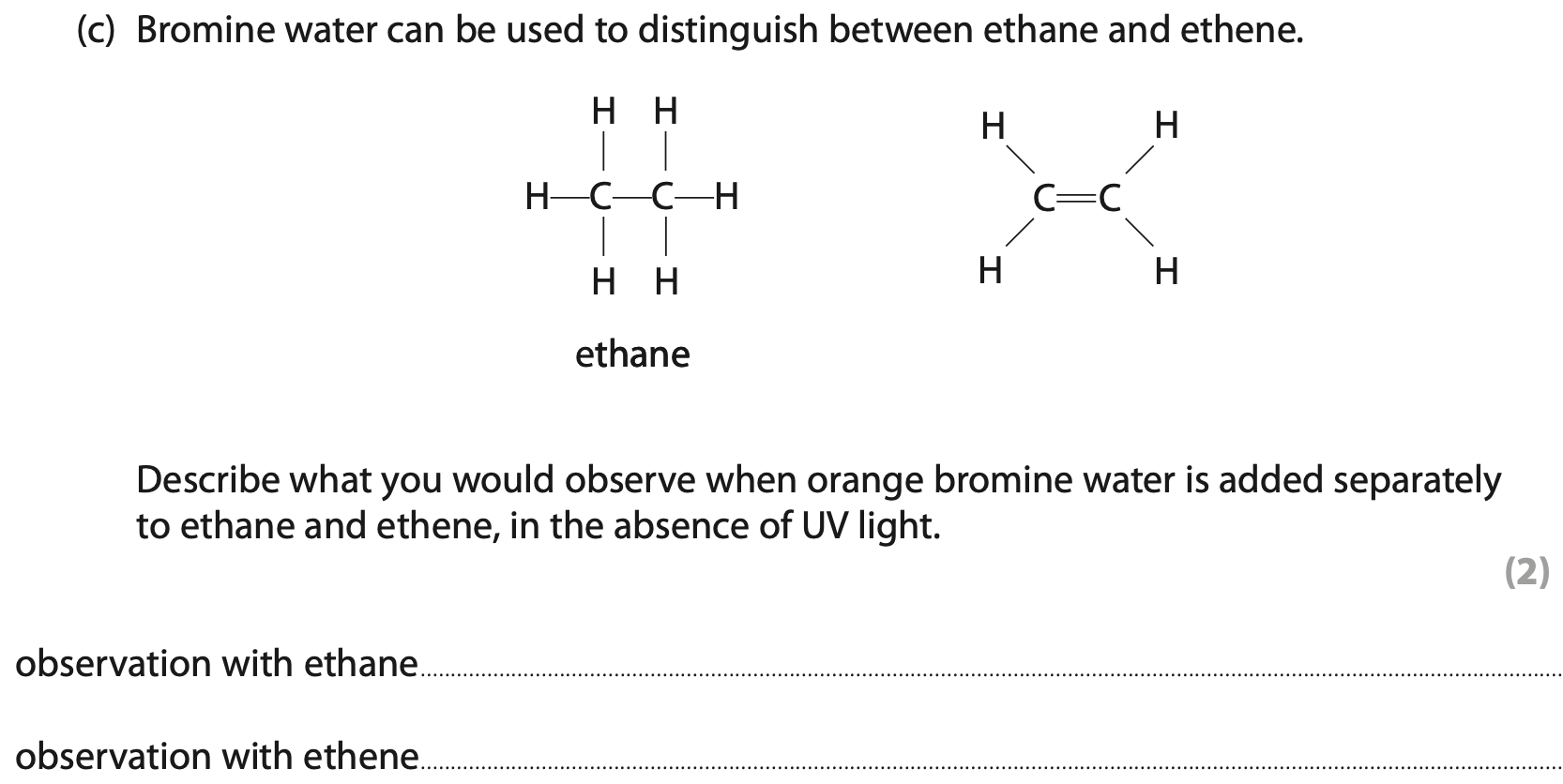
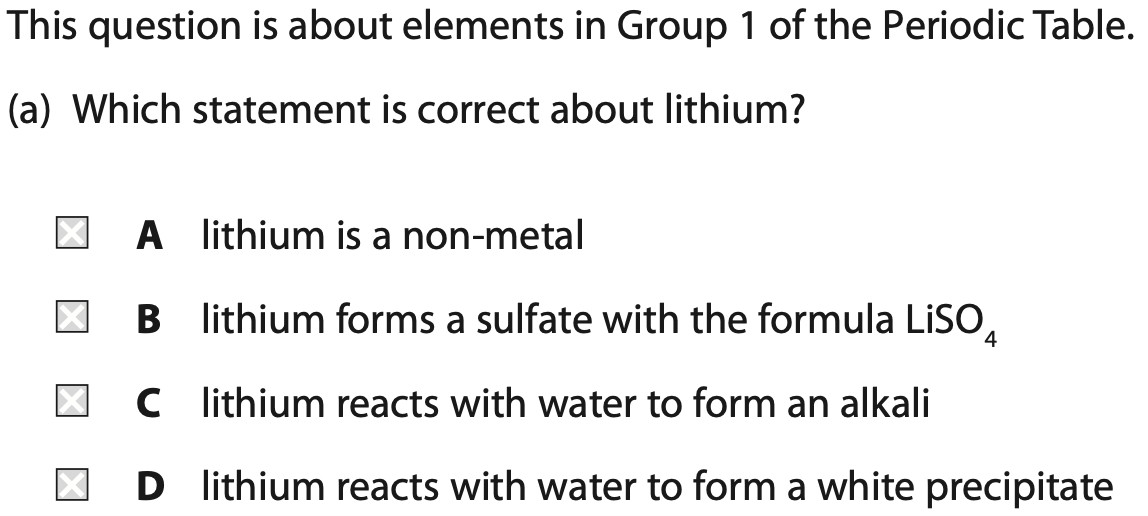
- 28—lithium reacts with water to form an alkali
- 29—have the same number of outer shell electrons
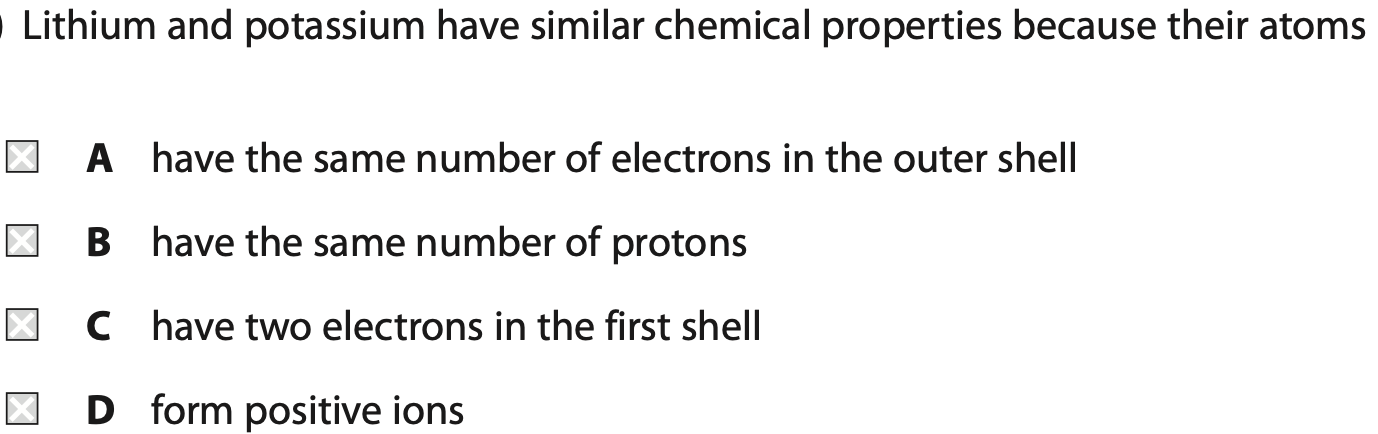
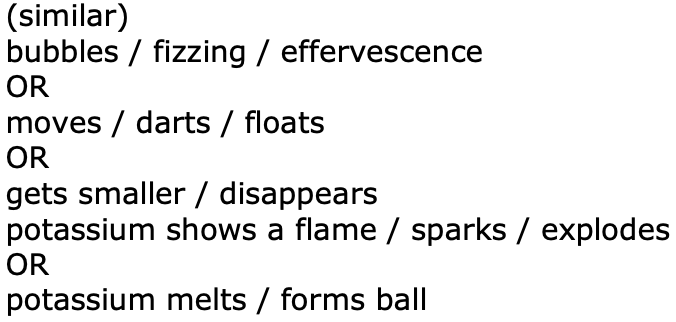
- 30Small pieces of lithium and potassium are added to separate large troughs of water. State one observation that would be similar for each element, and one that would be different for each element. (2) similar................. different......................
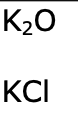
- 31Suggest the formula of the compound formed when potassium reacts with oxygen, and when potassium reacts with chlorine. oxygen ........ chlorine .......
- 32—


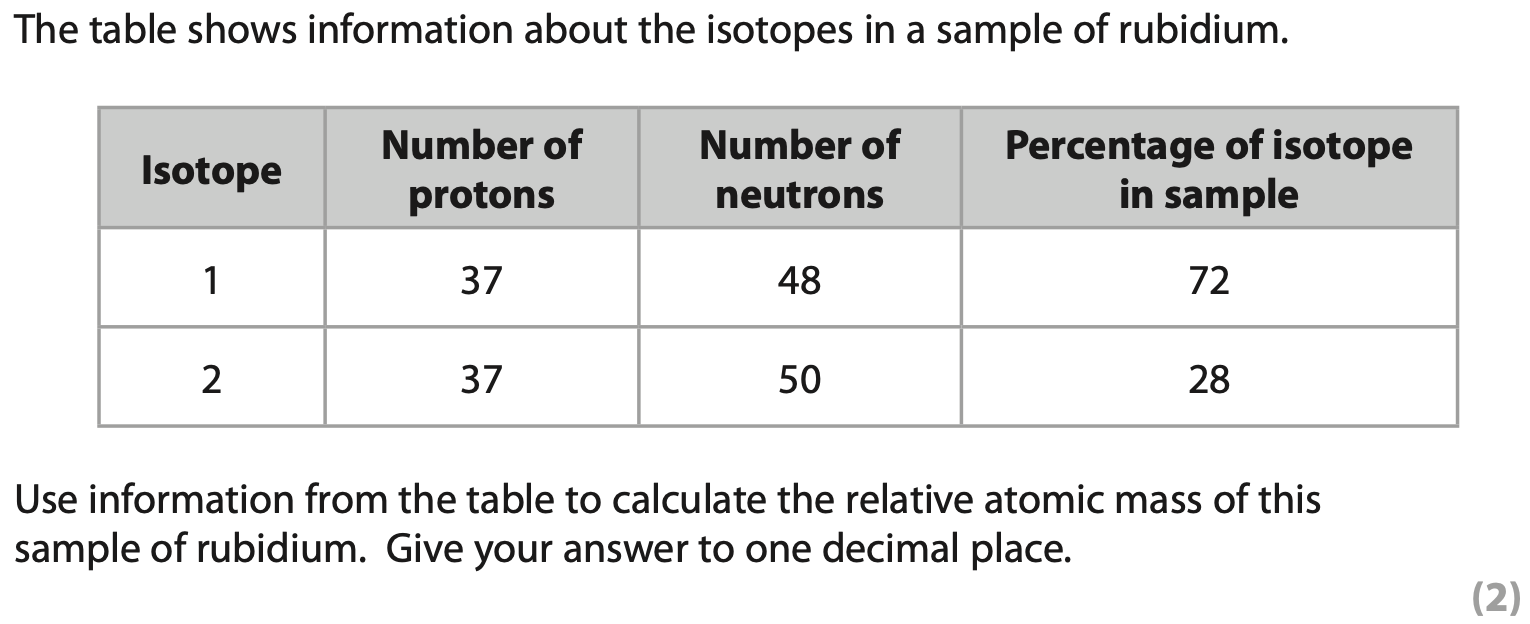
- 33relative atomic mass = ............ (2)85 AND 87 calculated
(85 × 0.72) + (87 × 0.28) = 85.6