
Flashcards
Mid semester test

Cards in this deck (28)
- 1Mid semester testSiti Qurratu Ain
- 2Pathophysiology of diabetes mellitus (1 marks)An abnormal elevated plasma concentration resulting from inadequate insulin secretion and/or abnormal target cell responsiveness
- 3Type 1 diabetes mellitus (5 marks)polyuria polyphagia polydypsia
#Autoimmune
#Occurs when pancreas are damaged by immune system
#Body uses ketone bodies instead of glucose
#More prevalent in children
#Insulin injection - 4Type 2 Diabetes Mellitus (4 marks)polyuria polyphagia polydypsia
#Metabolic disorder
#Occurs when body cells do not respond to insulin (insulin resistance)
#Insulin concentration increase, Insulin sensitivity decrease
#More prevalent in adults aged 40 above
#Medications to increase release of insulin and/or to increase the
effectiveness of insulin (or slow down the digestion of food). - 5How to measure GFR (1 mark)#Blood urea nitrogen level (creatinine)
#Inulin (creatinine clearance) - 6Importance characteristics of creatinine that make its renal clearance useful to estimate GFR (2 marks)#Is naturally produced constantly by breakdown product of creatinine phosphate in muscle
#Good GFR index because it has no/little reabsorption and secretion (unlike Urea)
Increase in Creatinine = Decrease in GFR - 7Describe renin-angiotensin-aldosterone system (5 marks)
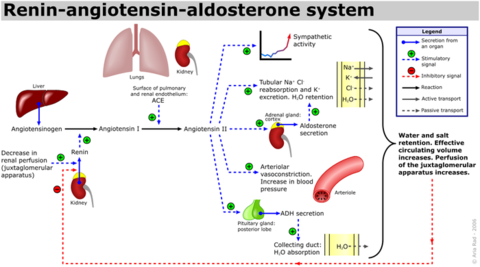
- 8The role of renin-angiotensin-aldosterone system in regulating GFR (5 marks)#Increase aldosterone: increase NaCl reabsorption at LoH, DCT, CD.
#Increase arteriolar vasoconstriction: Increase BP >>> Increase glomerular filtration pressure
#Increase ADH and thirst: Increase H2O reabsorption at CD
#Incrase NaCl reabsorption at PCT - 9How ADH functions (4 marks)#Produced in hypothalamus
#Secreted from posterior pituitary gland
#Triggered by osmolarity and angiotensin II
#Targets on DCT and CD walls to become more permeable to H2O - 10How does ADH form dilute/concentrated urine (4 marks)#Attaches Vasopressin II receptor
#Increase aquaporin synthesis
#Allows exocytosis of H2O via aquaporin
#Increase H2O reabsorption
#Concentrated urine
Decrease in ADH = Diabetes insipidus - 11Metabolic acidosis (2 marks)#H+ retention
#Loss of HCO3-
-Diarrhoea
-Excess acid consumption
-Lactic acid: Anaerobic respiration
-Phosphoric acid: Protein breakdown
-Ketoacid: Type I Diabetes
#Compensate by:
Hyperventilation
Elimination of H+ in urine (renal)
Conserve HCO3- (renal) - 12Danger of metabolic acidosis (1 mark)#Lower pH
#Damage enzymes in the body - 13Difference from respiratory acidosis (2 marks)#Increase in arterial CO2 (hypercapnia)
–Hypoventilation
–COPD
–Asthma attack
–Pneumonia
#Compensate by
-Loss in H+ (renal)
-HCO3- retention (renal) - 14Normal physiology of glucose reabsorption in the renal tubules (1 mark)In normal glucose reabsorption, Na+ facilitates glucose diffusion from PCT to ICF via co-transport
- 15How does diabetes mellitus result in glycosuria? (4 marks)#In diabetes mellitus, glucose level exceeds concentration of transport mechanism Na+, #So its binding sites are all occupied making it #saturated.
#As a result, not all glucose in the urine can be completely reabsorbed into ICF and;
#What is left in the urine is the leftover glucose - 16What is proteinuria? (1 mark)A condition in which urine contains an abnormal amount of protein which advances Renal Failure
- 17How glomerular disease result in proteinuria? (4 marks)#The glomerular base membrane is size selective and charge selective.
#Thus, it usually does not allow negatively charged molecules like albumin to cross. #However when renal injury occurred, many nephrons are lost and the remaining ones get injured.
#This increase glomerular permeability and filtration.
#Consequently, protein start to cross GBM into the filtrate starting with the smallest protein: albumin.
#The presence of protein in the urine is what we call as proteinuria. - 18Describe the role of neural regulation of smooth muscle in the respiratory system and its role in asthma (3 marks)Sympathetic: noradrenaline cause smooth muscle relaxation via B2 receptor
Parasympathetic: acetylcholine cause smooth muscle constriction via M3 receptor - 19Describe the role of hormonal regulation of smooth muscle in the respiratory system and its role in asthma (3 marks)Mast cell degranulation to cause bronchioconstriction
- 20Obstructive lung disease (5 marks)#An increase in resistance to airflow owing to complete/partial obstruction at any level
#Problem getting air out
#Decrease maximum expiratory level
#Decrease in FEV1
#Relative preservation of FVC
# Decrease in FEV1/FVC ratio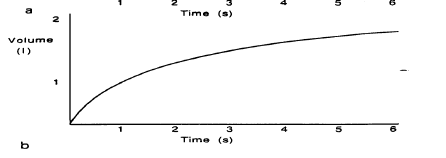
- 21Restrictive lung disease (5 marks)#Reduced expansion of lung parenchyma with decreased tidal lung capacity
#Problem getting air in and out
#Decrease FEV1
#Decrease FVC
#Normal/increase FEV1/FVC ratio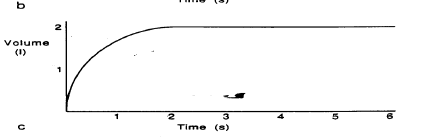
- 22Early pathophysiological response to antigen exposure in asthma (5 marks)....
- 23Late pathophysiological response to antigen exposure in asthma (5 marks)....
- 24Explain how COPD results from elastin loss (6 marks)#By genetically lack of a1-antigen or increase in antiprotease in smokers
#Both reduce elasticity
#Chemical mediators released as an inflammatory response to smoke antigens
#ciliated epithelium cells increase in number (hypertrophy)
#airway becomes narrowed
#globet cells increase in number
#so mucus secretion increased
#as a response to antigen
#airway becomes swollen
#squamous cells take place to withstand harsher environment (metaplasia)
#ciliated epithelium cells loss its function to clear mucus (block the airway)
#airway becomes infected with bacteria because of its humidity, warmth and nutritions. - 25Pathophysiology of chronic bronchitis (5 marks)#
#
#
#
# - 26Pathophysiology of emphysema (5 marks)#
#
#
#
# - 27Pathogenesis of pulmonary hypertension...
- 28Pathogenesis of pulmonary corpulmonale....
Information
- Description
- Module3: Diabetes Module4: Chronic renal failure and renal pathophysiology Module5: Chronic pulmonary disease and its implications
- Created by
- Siti Ain
- Views
- 1
- Rating