Flashcards
RANKS
Cards in this deck (28)
- 1PRIVATE (PVT)Private is the lowest rank. Most Soldiers receive this rank during Basic Combat Training. This rank does not carry an insignia.
- 2PRIVATE SECOND CLASS (PV2)Enlisted Soldiers generally receive this rank after either completion of Basic Combat Training, or six months of Army service.
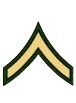
- 3PRIVATE FIRST CLASS (PFC)Soldiers are generally promoted to this level within a year by request of a supervisor. Soldiers serving at this rank make up the backbone of the Army. Their primary role is to carry out orders and complete missions.

- 4SPECIALIST (SPC)A specialist can manage other lower-ranked enlisted Soldiers. A Soldier can be promoted to this rank after serving a minimum of two years and attending a training class. Recruits with a four-year degree may enter Basic Combat Training as a specialist.

- 5CORPORAL (CPL)Corporal is the base level of the noncommissioned officer (NCO) ranks. Corporals serve as team leader of the smallest Army units. Like sergeants, they are responsible for individual training, personal appearance and cleanliness of Soldiers.
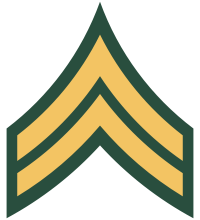
- 6SERGEANT (SGT)Sergeants typically command a fire team of around five Soldiers. Sergeants oversee Soldiers in their daily tasks, and are expected to set a standard for lower-ranked Soldiers to live up to

- 7STAFF SERGEANT (SSG)A staff sergeant commands a squad (nine to 10 Soldiers). Often, a staff sergeant will have one or more sergeants under his or her leadership. They are responsible for developing, maintaining and utilizing the full range of a Soldier's potential.

- 8SERGEANT FIRST CLASS (SFC)As the key assistant and advisor to the platoon leader, the sergeant first class generally has 15 to 18 years of Army experience.

- 9MASTER SERGEANT (MSG)The master sergeant is the principal noncommissioned officer at the battalion level and higher.
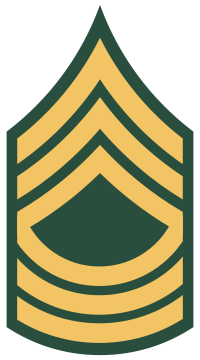
- 10FIRST SERGEANT (1SG)The first sergeant is the principal NCO and life-blood of a company. He is the disciplinarian and counselor. He instructs other sergeants, advises the commander and helps train all enlisted Soldiers. He assists officers at the company level (62 to 190 Soldiers).
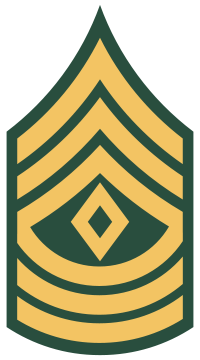
- 11SERGEANT MAJOR (SGM)Sergeants major serve as the chief administrative assistants for an Army headquarters, but their sphere of influence regarding leadership is generally limited to those directly under their charge. They are key enlisted members of staff elements at battalion level or higher.
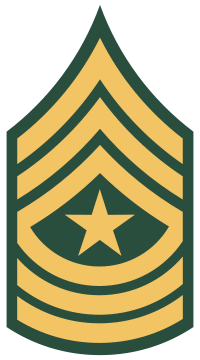
- 12COMMAND SERGEANT MAJOR (CSM)Command sergeants major are the senior enlisted advisors to the commanding officer. They carry out policies and standards and advise the commander on the performance, training, appearance and conduct of enlisted Soldiers. A command sergeant major is assignable to battalion level or higher.
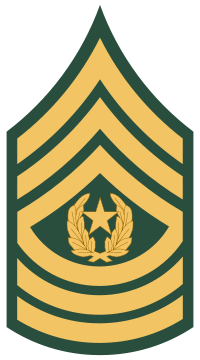
- 13SERGEANT MAJOR OF THE ARMYThere's only one Sergeant Major of the Army. The SMA oversees all noncommissioned officers. He serves as the senior enlisted advisor and consultant to the Chief of
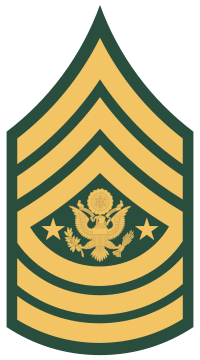
- 14Warrant Officer 1They are officially appointed by the the Secretary of the Army. Responsibilities of a Warrant Officer are ones that would typically call for the authority of a commissioned officer but require also the intricate technical abilities and experience a commissioned officer would not have has the opportunity to achieve.

- 15Chief Warrant Officer 2They are intermediate level experts of both the technical and tactical aspects of leading in their field. Responsibilities of a Chief Warrant Officer 2 are ones that would typically call for the authority of a commissioned officer but require also the intricate technical abilities and experience a commissioned officer would not have has the opportunity to achieve. They have responsibilities of leading at the battalion level.

- 16Chief Warrant Officer 3They are advanced level experts of both the technical and tactical aspects of leading in their field.They provide the guidance, assistance and supervision their subordinates need to perform their duties. They typically support operations from team to brigade levels.

- 17Chief Warrant Officer 4They are senior level experts of both the technical and tactical aspects of leading in their field.They are mentors to the lower Warrant Officers and speak to commanders about WO issues. They typically support operations at battalion, brigade, division, corps, and echelons levels above corps operations.

- 18Chief Warrant Officer 5They are master level experts of both the technical and tactical aspects of leading in their field. CW5s have extra leadership and representation responsibilities as well as the typical Warrant Officer responsibilities. Responsibilities of a Chief Warrant Officer 5 require intricate technical abilities and experience. They help with leader development, mentor-ship and advising Warrant and Branch Officers. They typically support operations at battalion, brigade, division, corps, and echelons levels above corps and other major operations.

- 19Second LieutenantSecond Lieutenant is the entry-level commissioned officer rank in the United States Army. A Second Lieutenant is generally placed in command of a platoon consisting of 16 to 44 soldiers, including two or more rifle squads lead by a senior non-commissioned officer. Second Lieutenants are often unofficially referred to as "butterbars" or "nuggets", in reference to their golden bar insignia.

- 20First LieutenantFirst Lieutenant is the second junior commissioned officer rank after Second Lieutenant, and is generally awarded as an automatic promotion to Second Lieutenants who have served for 18 to 24 months. First Lieutenants may serve as the Platoon Leader of a specialized weapons platoon, or as the executive officer of a company consisting of 70 to 250 soldiers. Some officers receiving a promotion to First Lieutenant may receive a further promotion to higher ranks with more leadership responsibility.

- 21CAPTAINA Captain is a commissioned officer at company level, and will generally serve as a Company Commander in control of 62 to 190 soldiers. As a Company Commander, Captains will be placed in charge of the tactical and everyday operations of their troops, assisted by several junior commissioned officers and one or more senior non-commissioned officers. Captains may also have teaching roles at combat schools or special training sessions as well as serve as staff officers at battallion level command posts.

- 22MAJORMajor is the first field officer rank in the United States Army, ranked above Captain but below Lieutenant Colonel. Majors usually serve as specialized executive or operations officers for battallion-sized unit of 300 to 1,200 soldiers, but they may also be found leading specialized companies, such as Service Support and Special Operations units, or serving as staff officers in high-level command posts.

- 23Lieutenant ColonelA Lieutenant Colonel generally serves as a Battalion Commander of a battalion consisting of 300 to 1,000 soldiers. As a Battalion Commander, Lieutenant Colonels are assisted by one or more Majors, many junior non-commissioned officers, and a Command Sergeant Major as principal enlisted advisor. A Lieutenant Colonel may also serve as an Executive Officer or Staff Officer in a variety of high-level units or command posts.

- 24COLONELColonel is the senior field-officer grade commissioned officer rank, directly above Lieutenant Colonel and below Brigadier General. Colonels typically command a brigade-sized unit consisting of 3,000 to 5,000 soldiers, with the assistance of several junior commissioned officers and a Command Sergeant Major as a primary non-commissioned officer advisor. Colonels may also be responsible for leading division-level special agencies.

- 25Brigadier GeneralA Brigadier General is a one-star General Officer grade rank, and the lowest-ranking of the General Officer ranks. A Brigadier General serves as the advisor and Deputy Commander to a Major General commanding a division-sized unit of 10,000 to 15,000 soldiers, and assists in overseeing the tactical planning and coordination of division operations.

- 26Major GeneralMajor General is a two-star General Officer rank, and the highest permanent peacetime rank in the Army. A Major General commands a division-sized unit of 10,000 to 15,000 soldiers.

- 27Lieutenant GeneralLieutenant General is a temporary position reserved for times of war, and expires with the end of the general's active tour of duty, usually 3 to 5 years. A Lieutenant General commands a corps-sized units of 20,000 to 45,000 soldiers, or occasionally as a senior staff officer or department head in various domestic and overseas headquarters.

- 28GENERALThe Army can have a maximum of seven four-star generals at any one time, with several of these slots filled permanently, like the Army Chief of Staff, who is a four-star general. A General typically has over 30 years of Army experience, and commands all operations taking place within their geographical area.
A four-star general is nominated for office by the President, and must be confirmed for duty by the Senate before they may begin their term of service.