
Flashcards
Line types/dimensioning
Cards in this deck (35)
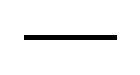
- 1—Continuous thick
Used for visible outlines and edges. - 2—Continuous thin:
Used for projection, dimensioning, leader lines, hatching and short centre lines.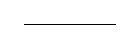
- 3—Continuous thin straight with zigzags:
Used for limits of partial or interrupted views and sections if the limit is not an axis.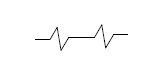
- 4—Dashed thin line:
Used for hidden outlines.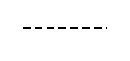
- 5—Chain thin:
Used for centre lines.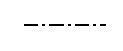
- 6—Chain thin double:
Used for ghost outlines.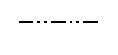
- 7—Continuous thin irregular:
Used as the limit to an interrupted view when an axis is not present.l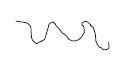
- 8—Chain thin thick at both ends and changes in direction:
Used on cutting planes.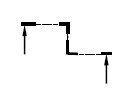
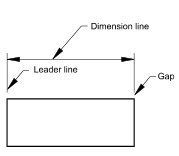
- 9—Remember the names of these lines! Leader lines are narrow lines which lead from points on a view to the arrowhead dimension lines. A small gap should be left between the view and the leader line.
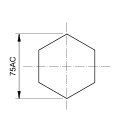
- 10—This is "across corners" dimensioning.
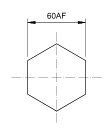
- 11—This is "across flats" dimensioning.
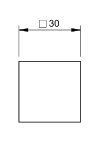
- 12—This is "square" dimensioning.
- 13—Linear dimensioning
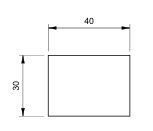
- 14—Radial dimensioning
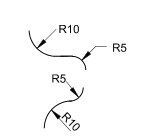
- 15—Diameter dimensioning
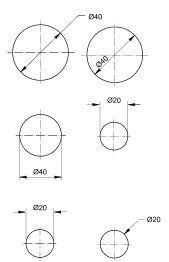
- 16—Running dimensioning
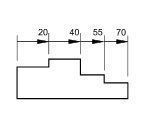
- 17—Chain dimensioning
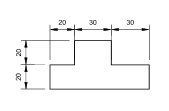
- 18—Parallel dimensioning
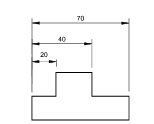
- 19Name the axis:Long = Major axis
Short = Minor axis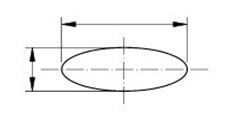
- 20—Pitch Circle Diameter
(the distance between two diameters)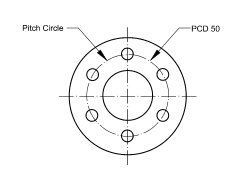
- 21—Angular Dimension
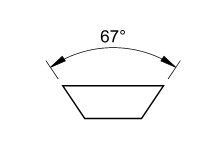
- 22—Internal Screw Threads
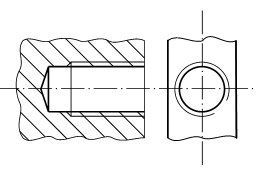
- 23—External Screw Threads
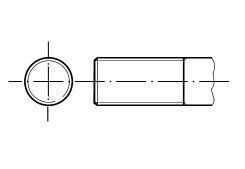
- 24—Third Angle Projection Symbol
(Indicates the method of projection used on orthographic drawings).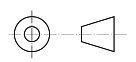
- 25—Common Tolerance:
The common method shows the upper limit of the size placed above the lower limit.
- 26—Asymmetrical Tolerance:
The asymmetrical method shows the nominal size (size measured) plus the upper and lower limits of the tolerance.
- 27—Symmetrical Tolerance:
The symmetrical method shows the nominal size and the symmetrical tolerance expressed as a plus and minus.
- 28—Functional Tolerance:
A dimension that is essential to the function of a component or space.
- 29—Non-functional Tolerance:
A dimension that is not essential to the function of a component or space.
- 30—Cutting Plane
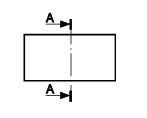
- 31—Straight Knurling
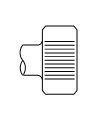
- 32—Diamond Knurling
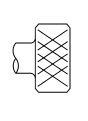
- 33—Helical Spring:
(Complex View)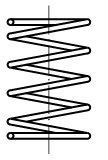
- 34—Helical Spring:
Sectioned view of spring.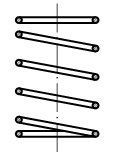
- 35—Helical Spring:
Simplified view.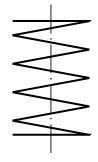
Information
- Description
- Higher Graphics (Drawing Standards) Flashcards on Line types/dimensioning, created by Meg McAteer on 01/04/2016.
- Created by
- Meg McAteer · Apr 2016
- Updated
- Apr 6, 2018
- Views
- 4
- Rating