
Mind map
AQA GCSE Science P1b Waves
Map content
AQA GCSE Science P1b Waves
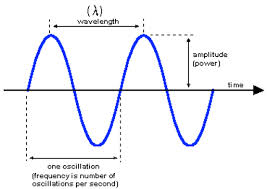
Wave Basics
- High amplitude - High Volume
- High Frequency - High Pitch
- High Frequency - Short Wavelength
- Wave speed (m/s) = Frequency (Hz) x Wavelength (m)
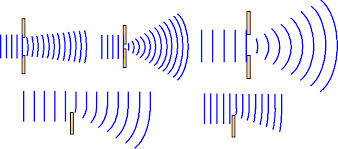
Diffraction
- To increase diffraction, decrease the gap or increase the wavelength
- Waves diffract when they go through a gap that is larger than their wavelength
- The most diffraction happens when the gap is the same size as the wave
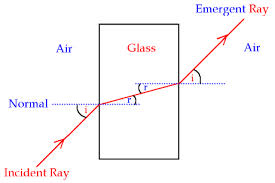
Refraction
- Waves refract because when they enter a medium they change speed
- Waves slow down entering the medium and speed up exiting it
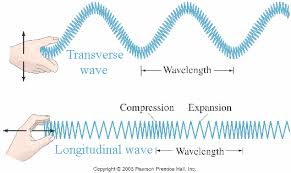
Types of waves
- Transverse
- Electromagnetic waves
- Longitudinal
- Sound waves
- Seismic Waves
- Transverse
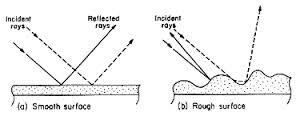
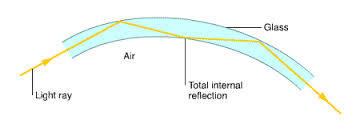
Reflection
- Angle of incidence = Angle of reflection
- The normal is an imaginary line perpendicular to the surface
Uses of waves
- Infrared
- TV Remotes
- Optical Cables
- Visible Light
- Optical Cables
- Camera
- The aperture determines the amount of light let in
- The shutter time determines how long the sensor/film is exposed to the light
- Microwaves
- Satellites
- TV
- GPS
- Phone
- Can go through the cloud and water vapour layer in the atmosphere
- Satellites
- Infrared
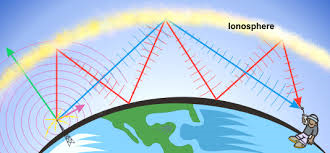
Radio Waves
- Transverse
- Short length radio waves reflect off the ionosphere and the earth.
- Short length radio waves do not work around hills and valleys as the wave has to directly reach the receiver as it can not go far through buildings or land masses
- Long radio waves diffract around the earth and so are not blocked by landmasses such as hills or valleys
Electromagnetic Spectrum
- Radio Waves
- Microwaves
- Infrared
- Visible Light
- Ultra violet
- X-Ray
- Gamma Ray
- Frequency increases along the spectrum and so wavelength decreases
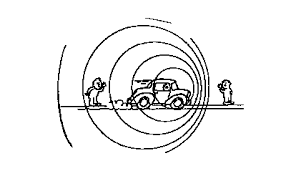
Doppler Effect
- Observed frequency of wave increases as object moves towards you so the sound seem higher
- Observed frequency of wave decreases as object moves away from you so the sound seems lower
- As galaxies move further away from us they shift towards the red end of the spectrum
Origin of the Universe
- The Big Bang Theory
- Everything as we know it was compressed into the tiniest space imaginable and then it exploded
- This isn't quite right because the rate of expansion should be slowing down but it's speeding up
- Cosmic Background Microwave Radiation
- This is proof for The Big Bang Theory
- Everything is cooling down after the expansion and so the frequency of the radiation is now given off as microwaves
- Steady State Theory
- The theory that everything was always here and will always continue to be
- The major flaw is expansion
- Matter cannot be created so how then can the universe be expanding?
- The Big Bang Theory
Images and files in the map
Information
- Description
- A-Level Physics Mind Map on AQA GCSE Science P1b Waves, created by Joseph Tedds on 26/10/2014.
- Created by
- Joseph Tedds · Oct 2014
- Updated
- Dec 16, 2016
- Views
- 506
- Tags
- Rating