
Mind map
SECTION ONE: tHE dESIGN pROCESS
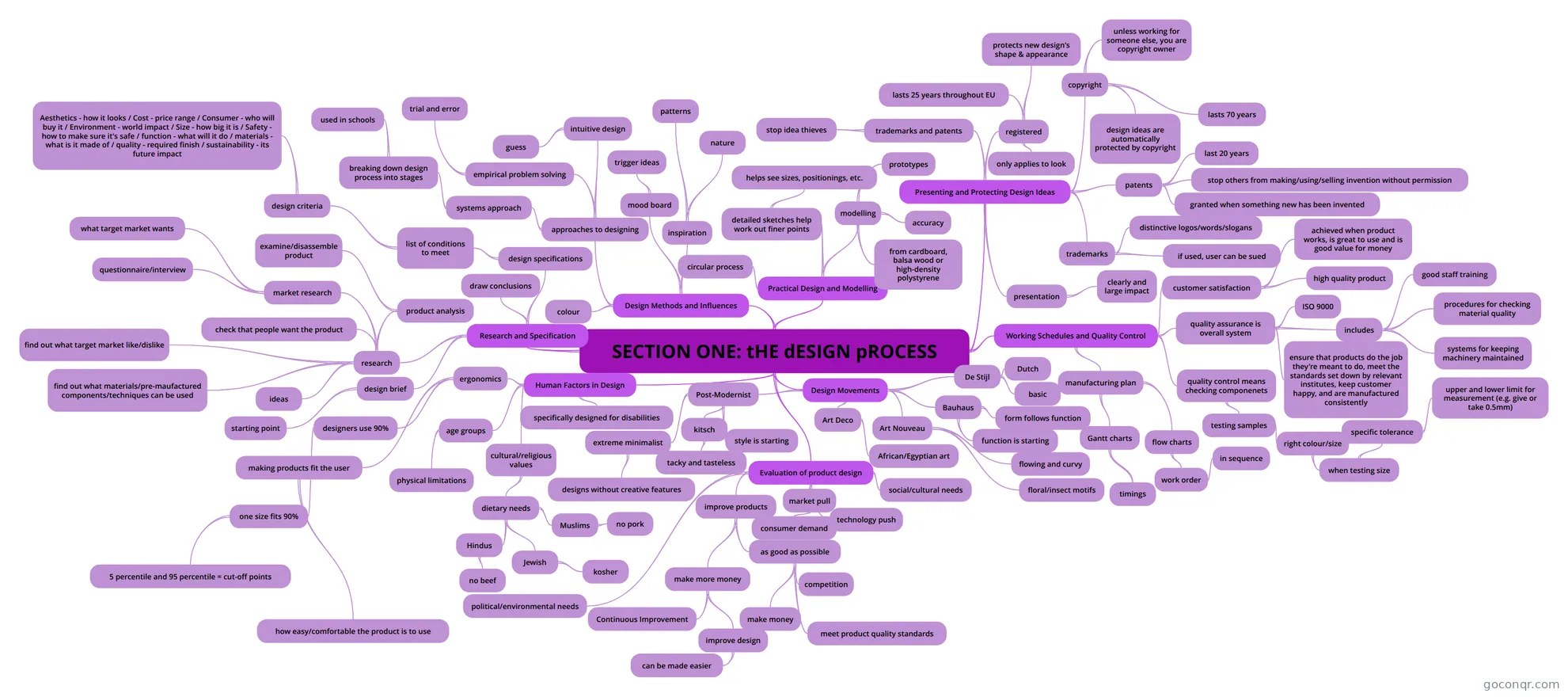
Mind map: the design process
Map content
SECTION ONE: tHE dESIGN pROCESS
Evaluation of product design
- improve products
- make more money
- Continuous Improvement
- improve design
- can be made easier
- as good as possible
- make money
- competition
- meet product quality standards
- make more money
- market pull
- consumer demand
- technology push
- political/environmental needs
- social/cultural needs
- improve products
Design Movements
- Post-Modernist
- style is starting
- kitsch
- tacky and tasteless
- extreme minimalist
- designs without creative features
- De Stijl
- Dutch
- basic
- Bauhaus
- form follows function
- function is starting
- Art Deco
- African/Egyptian art
- Art Nouveau
- flowing and curvy
- floral/insect motifs
- Post-Modernist
Human Factors in Design
- specifically designed for disabilities
- cultural/religious values
- dietary needs
- Muslims
- no pork
- Jewish
- kosher
- Hindus
- no beef
- Muslims
- dietary needs
- age groups
- physical limitations
- ergonomics
- making products fit the user
- how easy/comfortable the product is to use
- designers use 90%
- one size fits 90%
- 5 percentile and 95 percentile = cut-off points
- one size fits 90%
- making products fit the user
Research and Specification
- design brief
- starting point
- research
- ideas
- check that people want the product
- find out what target market like/dislike
- find out what materials/pre-maufactured components/techniques can be used
- market research
- questionnaire/interview
- what target market wants
- product analysis
- examine/disassemble product
- draw conclusions
- design specifications
- list of conditions to meet
- design criteria
- Aesthetics - how it looks / Cost - price range / Consumer - who will buy it / Environment - world impact / Size - how big it is / Safety - how to make sure it's safe / function - what will it do / materials - what is it made of / quality - required finish / sustainability - its future impact
- design criteria
- list of conditions to meet
- design brief
Design Methods and Influences
- approaches to designing
- systems approach
- breaking down design process into stages
- used in schools
- breaking down design process into stages
- empirical problem solving
- trial and error
- intuitive design
- guess
- systems approach
- inspiration
- patterns
- nature
- colour
- mood board
- trigger ideas
- approaches to designing
Practical Design and Modelling
- circular process
- detailed sketches help work out finer points
- helps see sizes, positionings, etc.
- modelling
- from cardboard, balsa wood or high-density polystyrene
- accuracy
- prototypes
Presenting and Protecting Design Ideas
- trademarks and patents
- stop idea thieves
- trademarks
- distinctive logos/words/slogans
- if used, user can be sued
- patents
- granted when something new has been invented
- stop others from making/using/selling invention without permission
- last 20 years
- copyright
- design ideas are automatically protected by copyright
- unless working for someone else, you are copyright owner
- lasts 70 years
- registered
- protects new design's shape & appearance
- only applies to look
- lasts 25 years throughout EU
- presentation
- clearly and large impact
- trademarks and patents
Working Schedules and Quality Control
- customer satisfaction
- achieved when product works, is great to use and is good value for money
- high quality product
- quality assurance is overall system
- ISO 9000
- includes
- good staff training
- procedures for checking material quality
- systems for keeping machinery maintained
- ensure that products do the job they're meant to do, meet the standards set down by relevant institutes, keep customer happy, and are manufactured consistently
- quality control means checking componenets
- testing samples
- right colour/size
- when testing size
- specific tolerance
- upper and lower limit for measurement (e.g. give or take 0.5mm)
- specific tolerance
- when testing size
- right colour/size
- testing samples
- manufacturing plan
- flow charts
- work order
- in sequence
- work order
- Gantt charts
- timings
- timings
- flow charts
- customer satisfaction