
Mind map
COLOUR
Map content
COLOUR
Colour
- It forms part of the real world, nature and objects
- Eyes take in the sensations produced by colours and transmit them to the brain, it encodes them and makes us perceive the colours
- Colour is more than simple variations
Discovery
- Isaac Newton discovered that if a ray of light pass through a glass prism, the ray became a spectrum of separate colours
- Based on this, Newton proved that light is the unit and colour is a part of it
According to Roy Fox Lichtenstein colour is crucial in painting but it is very hard to talk about.
Creating colour mixtures
- Harmony is a combination of colours that produces attractive and balanced colour effects. We can create colour harmony by consonance oranalogy
- Contrast is produced when the colours in a composition do not have anything in common with each other or any similarity.
Classification systems
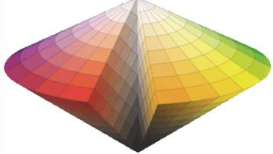
- Ostwald system recognises four primary and four secondary colours and differentiates between 24 tones for all of them, which are organised on a colour wheel at their maximum saturations. Ostwald positions two cones with their bases facing each other.At the top vertex is white and at the bottom one, black
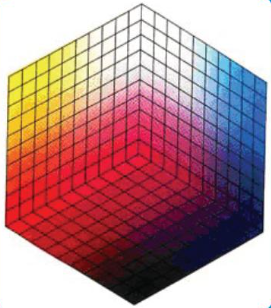
- Hickethier's system is based on a figure standing on a vertex that contains the colour black (minimum value); at the opposite end, at the top, is white (maximum value). On the rest of the vertices of the figure, we have the three basic colours and the three secondary ones
Symbolism of colour
- The symbolic colour forms part of a code. It changes from being a general element into a fact or phenomenon. Colour symbolism covers very diverse fields
- White symbolises the absolute, unity and innocence. It represents peace or surrender
- Black represents evil, mystery or making an error. It is occasionally attributed to something impure or malignant it also conveys nobility and elegance
- Yellow means envy, rage and cowardliness. It evokes bad impulses. It symbolises arrogance, gold, strength, willpower and stimulus. This colour is also interpreted as jovial, affectionate, exciting and impulsive
- Red is related to an extroverted personality and has a vital, ambi- tious, materialistic temperament. It symbolises blood, fire, warmth, revolution, happiness...
- Violet is the colour of virtue, lucidity and reflection. It conveys depth and experience. Violet is related to what is emotional and spiritual. It symbolises royalty, dignity and magnificence
- Blue symbolises intangible depth and cold. The sense of tranquillity that it provokes is different from the calm or repose associated with green. Blue symbolises knowledge, friendship, peace and quiet, calm, eternal truth and immortality or purity
- Green is associated with intelligent, social people and symbolises kindness and the spring. It means reality, hope, reasoning, logic and youth.
- The symbolic colour forms part of a code. It changes from being a general element into a fact or phenomenon. Colour symbolism covers very diverse fields
Colour wheel
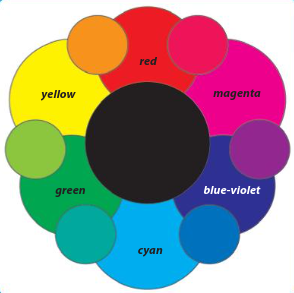
- It is divided into three groups of colours: primary, secondary and tertiary. Between each primary and secondary, we can create successive rings of tertiary colours based on possible combinations among primary and secondary colours
- Cool palette
- Blue is the coolest colour. Cool colours are soft, calm and serene. They convey a sense of repose, amplitude and distance.
- Warm palette
- Red is the warmest colour. Warm colours are stimulating, dynamic and aggressive.
Colour perception
- Depending on its nature and properties, the chemical composition of the surfaces of objects absorbs or reflects electromagnetic waves, Absorbed colours disappear on the object while the reflected ones are the colours that reach our sight, the colours that we see are the colours that the objects propagate because they do not absorb them.
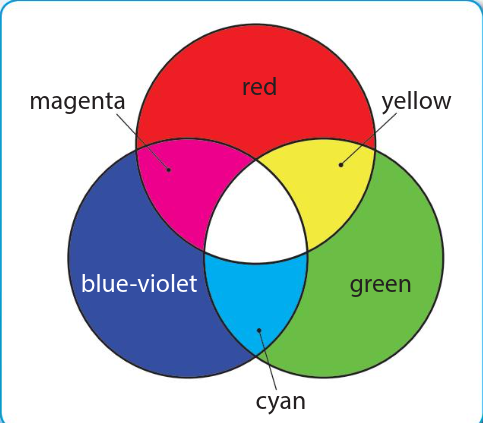
Additive blend or coloured lights
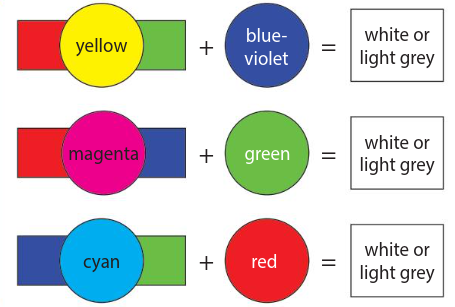
- Complementary colours
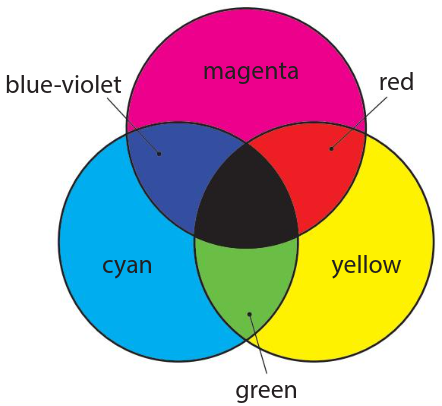
- Secondary colours
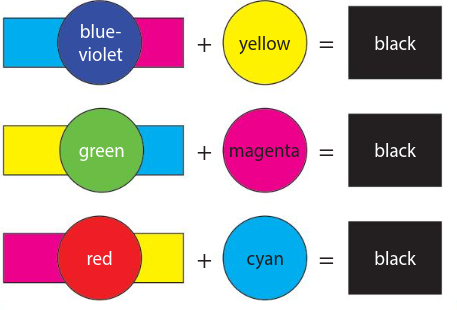
Substractive blend or coloured pigments
- Coloured pigments, or subtractive colours, absorb or take away the light's energy
- Pigments are materials with the capacity to take away some light.
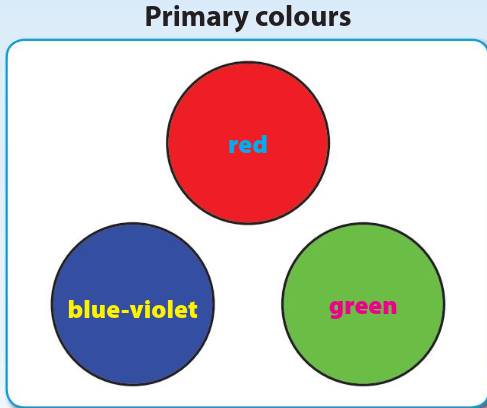
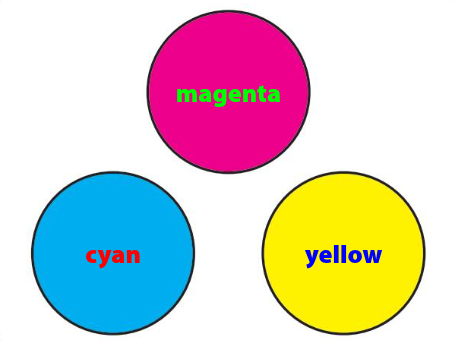
- Primary colours
- Secondary colours
- Complementary colours
Qualities or properties of colours
- Value
- It refers to the amount of white or black colour found in its composition, and we use this value to indicate the level of lightness or darkness of a colour
- Adding certain amounts of white or black to the colour facilitates its transition from light to dark. This is known as the colour gradient.
- Other terms used to refer to value are brightness, luminance or shine.
- Saturation
- Is the property that indicates colour purity. The primary colours have the highest saturation levels while greys have the lowest saturation levels
- Tone
- Is the specific name or attribute given to a colour that makes it distinct. Intermediate values or composites are found within each tone.
- Value
Images and files in the map
Information
- Description
- Mind Map on COLOUR, created by MIGUEL COSTA HUERGA on 11/11/2020.
- Created by
- MIGUEL COSTA HUERGA · Nov 2020
- Updated
- Nov 26, 2020
- Views
- 4
- Rating