Mind map
Interpreting Activity
Map content
Interpreting Activity
STAGES
- Communicative Function
- Speaker-interpreter
- Mental Proccess
- Interpreter
- Simoultaneous multiple mental proccessess
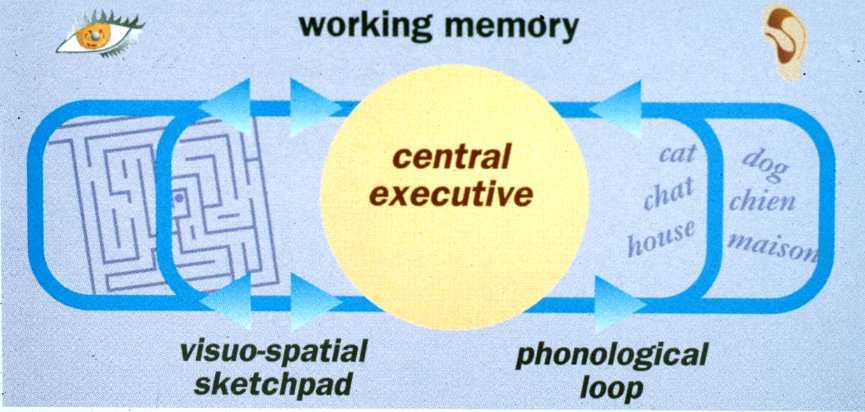
- Working Memory Model (Baddeley:1986, 1990)
- Working Memory
- Recovery of passive info
- Information processing
- Working Memory
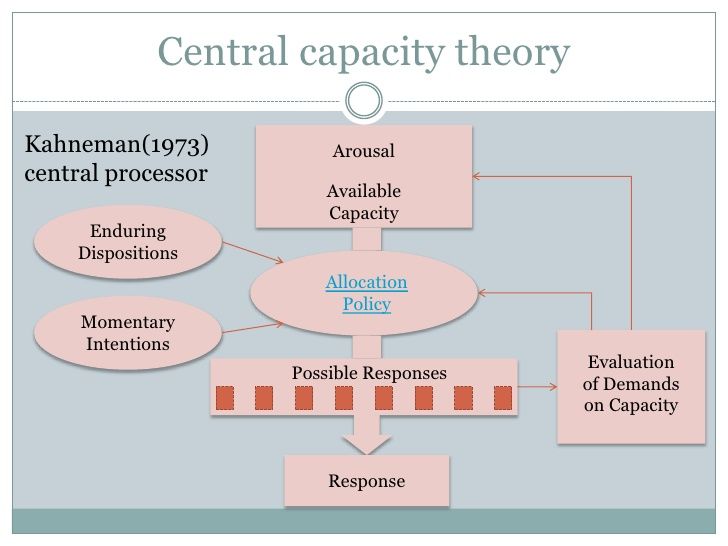
- Capacity Model of Attention (Kahneman, 1973)
- The Effort Model (Gile, 1995) Balance in the use of the interpreter's mental capacities for interpretation. There is a division between attention and memory effort
- Processing Memory Model (Craig & Lockhart,1972) Semantic analysis is carried in the deeper levels of the model structure. Deeper processing does improve memorizarion, thus some things are better remembered.
- The Role of Attention (Daró, 1989) In SI, the interpreter's ability to control, diverse and allocate his attention on different parallel activities like listening, analysis, synthesis and production of chunks.
- Two levels of attention in SI
- Reception of the chunk (high level of attention)
- Recodification of the received chunk (low level of attention)
- Two levels of attention in SI
- Working Memory Model (Baddeley:1986, 1990)
- Simoultaneous multiple mental proccessess
- Interpreter
- Communicative Function
- Interpreter-audience
- Communicative Function
An oral text (SL) is decodified and reformulated in the TL.
- CONSECUTIVE (CI)
- SIMULTANEOUS (SI)
- Seleskovitch's model (1978): 1) Speaker's speech and interpreter's speech are simultaneously performed; 2) Interpreter's listening and speaker's speech are performed simultaneously; 3) Interpreter's listening and speech are performed at the same time as the speaker's speech; 4) Content is delivered at the same time
- COMPREHENSION PHASE
- MEMORY
- a) UNITS OF SENSE: The interpreter needs to store the message and organize it into content units. Memory is used to process the contents of the message. Usage of strategies.
- b) PSYCHOLINGUISTIC RESEARCH: construction of certain cognitive pegs as a helping tool when analysing and memorising the content of the text.
- 1980: The MAIN FOCUS: the PROBLEM of the organization of memory and mental structures.(INPUTS & OUTPUTS)
- COGNITIVE STRUCTURE: 1) Prose material is encoded in a hierarchically organized format; 2) Prose structures predict comprehension; 3) Comprehension change the memory representation.
- TEXTLINGUISTICS: considers the text as a grammatical and semantic unit.
- COHESION
- COHERENCE
- TEXTLINGUISTICS: considers the text as a grammatical and semantic unit.
- ANALYSIS
- MEANING OF THE TEXT
- Analysis of its content in order to understant it.
- Students' of interpreting need to create visual images out of the information supplied by the text and relate it to previous knowledge.
- Analysis of its content in order to understant it.
- MEANING OF THE TEXT
- MEMORY
- COMPREHENSION PHASE
- Seleskovitch's model (1978): 1) Speaker's speech and interpreter's speech are simultaneously performed; 2) Interpreter's listening and speaker's speech are performed simultaneously; 3) Interpreter's listening and speech are performed at the same time as the speaker's speech; 4) Content is delivered at the same time
- EXTERNAL FACTORS
1) Listening & Analysis of the SL chunck; 2) Memorizing it; 3) Reformulating that chunk into the TL.