
Mind map
Action Research Methodology for Gamification in ELT
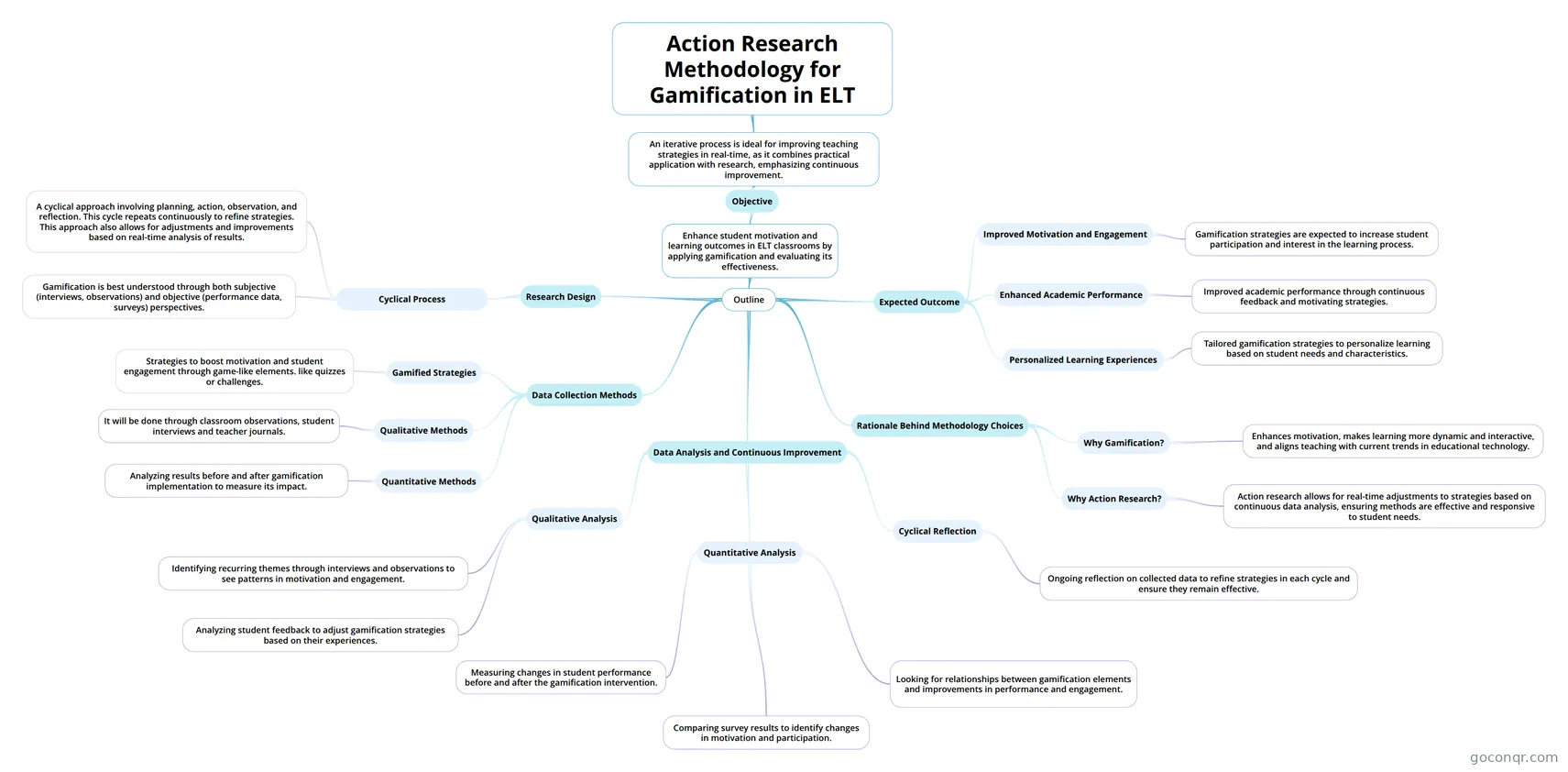
Mind map: Action research methodology for gamification in ELT
Map content
Action Research Methodology for Gamification in ELT
An iterative process is ideal for improving teaching strategies in real-time, as it combines practical application with research, emphasizing continuous improvement.
- Objective
- Enhance student motivation and learning outcomes in ELT classrooms by applying gamification and evaluating its effectiveness.
- Outline
- Research Design
- Cyclical Process
- A cyclical approach involving planning, action, observation, and reflection. This cycle repeats continuously to refine strategies. This approach also allows for adjustments and improvements based on real-time analysis of results.
- Gamification is best understood through both subjective (interviews, observations) and objective (performance data, surveys) perspectives.
- Cyclical Process
- Data Collection Methods
- Gamified Strategies
- Strategies to boost motivation and student engagement through game-like elements. like quizzes or challenges.
- Qualitative Methods
- It will be done through classroom observations, student interviews and teacher journals.
- Quantitative Methods
- Analyzing results before and after gamification implementation to measure its impact.
- Gamified Strategies
- Data Analysis and Continuous Improvement
- Qualitative Analysis
- Identifying recurring themes through interviews and observations to see patterns in motivation and engagement.
- Analyzing student feedback to adjust gamification strategies based on their experiences.
- Quantitative Analysis
- Measuring changes in student performance before and after the gamification intervention.
- Comparing survey results to identify changes in motivation and participation.
- Looking for relationships between gamification elements and improvements in performance and engagement.
- Cyclical Reflection
- Ongoing reflection on collected data to refine strategies in each cycle and ensure they remain effective.
- Qualitative Analysis
- Rationale Behind Methodology Choices
- Why Gamification?
- Enhances motivation, makes learning more dynamic and interactive, and aligns teaching with current trends in educational technology.
- Why Action Research?
- Action research allows for real-time adjustments to strategies based on continuous data analysis, ensuring methods are effective and responsive to student needs.
- Why Gamification?
- Expected Outcome
- Improved Motivation and Engagement
- Gamification strategies are expected to increase student participation and interest in the learning process.
- Enhanced Academic Performance
- Improved academic performance through continuous feedback and motivating strategies.
- Personalized Learning Experiences
- Tailored gamification strategies to personalize learning based on student needs and characteristics.
- Improved Motivation and Engagement
- Research Design
- Outline
- Enhance student motivation and learning outcomes in ELT classrooms by applying gamification and evaluating its effectiveness.
- Objective
Information
- Description
- Mind Map on Action Research Methodology for Gamification in ELT, created by Daniela Cutiva on 20/11/2024.
- Created by
- Daniela Cutiva
- Views
- 3
- Rating