
Mind map
Observational Activities
Map content
Observational Activities
Learning Outcomes
- After studying the booklet, you should be able to:
- Use the Celestial Coordinate System
- Describe the effect on the positions of Stars and the Sun of the daily and annual motions of the Earth
- Plan and carry out basic observational activities
- Manipulate and display numerical data and their uncertainties in basic ways
- Write a clear and concise account for an observational activity
- After studying the booklet, you should be able to:
1: The sky: the view from the Earth's surface
- 1.2 Celestial Coordinates
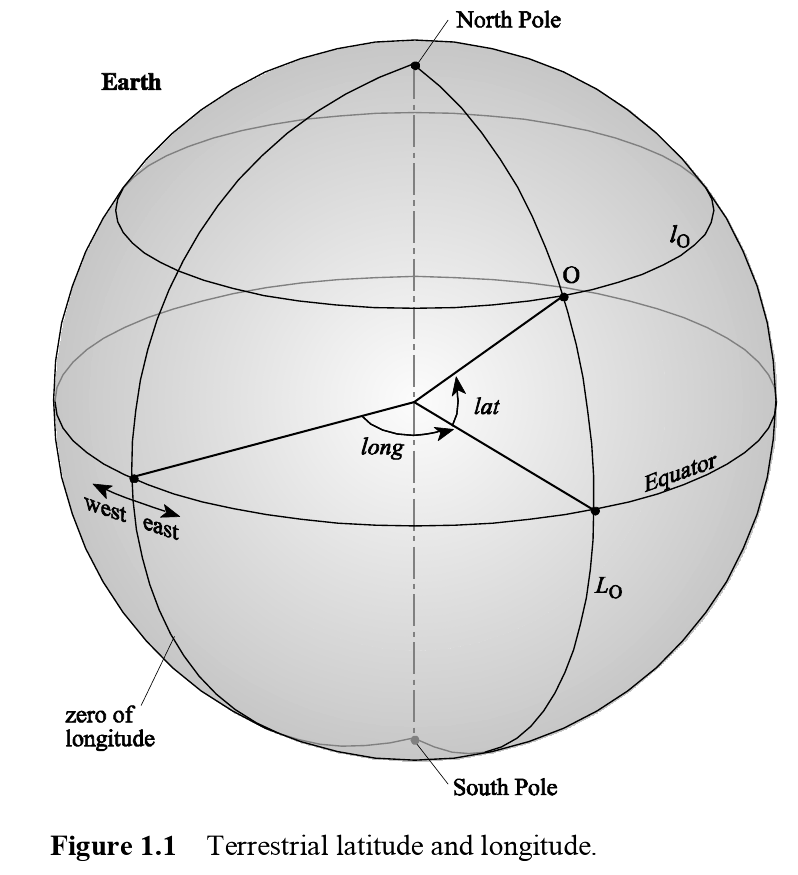
- The terrestrial coordinate system forms the basis of the Celestial coordinate system
- Position of ANY point on the Earth's surface (point O in Fig 1.1), can be specified by 2 angles
- LATITUDE
- Anywhere on the line l_o has the same latitude as O
- Anywhere on the line l_o has the same latitude as O
- LONGITUDE
- LATITUDE
- Position of ANY point on the Earth's surface (point O in Fig 1.1), can be specified by 2 angles
- The terrestrial coordinate system forms the basis of the Celestial coordinate system
- 1.3 Star maps and names
- 1.4 A constantly changing view
- Summary
- 1.2 Celestial Coordinates
2: Planning and carrying out Observational Activities
- 2.2 Choosing a site
- 2.3 Equipment
- 2.4 Getting started
- Summary
3: Handling Numerical Data
- 3.1 Uncertainties in Measurements
- 3.2 Uncertainties and graphs
- Summary
4: Writing an effective account of Observational Activities
- 4.1 Structure of a write-up
- 4.2 Example of an Observational activity write-up
- Summary
Images and files in the map
Information
- Description
- S282: Astronomy (An Introduction to the Sun & Stars) Mind Map on Observational Activities, created by Amarpreet Doal on 09/11/2016.
- Created by
- Amarpreet Doal
- Views
- 0
- Rating