
Mind map
Exponential & Logarithms
Map content
Exponential & Logarithms
Log Properties
- Product Property
- The logarithm of a product is the sum of the logarithms.
- Log(b)mn=Log(b)m+Log(b)n
- The logarithm of a product is the sum of the logarithms.
- Division Property
- The logarithm of division is the subtraction of the logarithms.
- Log(b)m/n=Log(b)m-Log(b)n
- The logarithm of division is the subtraction of the logarithms.
- Power Property
- The exponent in a logarithm is moved to the front of the logarithm.
- Log(b)m^n=nLog(b)m
- The exponent in a logarithm is moved to the front of the logarithm.
- Change of Base Formula
- To get a base of 10 in a Logarithm, you have to divide the Log of the answer by the Log of the base.
- Log(b)X=LogX/Log(b)
- To get a base of 10 in a Logarithm, you have to divide the Log of the answer by the Log of the base.
- Product Property
Solving
- Logarithm Equations
- log(4)x=log(4)3+log(4)(x-2)
- *condense into single logarithms on each side*
- log(4)x=log(4)(3x-6)
- *if the bases are the same, the logarithms will cancel each other out*
- x=3x-6
- *solve for x*
- x-x+6=3x-x-6+6 6/2=2x/2 3=x
- *solve for x*
- x=3x-6
- *if the bases are the same, the logarithms will cancel each other out*
- log(4)x=log(4)(3x-6)
- *condense into single logarithms on each side*
- log(4)x=log(4)3+log(4)(x-2)
- Exponential Equations
- 4^(x+2)=16^(x-3)
- *find the smallest number that each coefficient can be squared by*
- (2^2)^(x+2)=(2^4)^(x-3)
- *distribute the exponents*
- 2^(2x+4)=2^(4x-12)
- *set the exponents equal to each when the bases are the same*
- 2x+4=4x-12
- 2x-2x+4+12=4x-2x-12+12 16/2=2x/2 8=x
- 2x+4=4x-12
- *set the exponents equal to each when the bases are the same*
- 2^(2x+4)=2^(4x-12)
- *distribute the exponents*
- (2^2)^(x+2)=(2^4)^(x-3)
- *find the smallest number that each coefficient can be squared by*
- 4^(x+2)=16^(x-3)
- Logarithm Equations
Graphing
- Solve Exponential Equations
- Logarithms w/o Calculator
- Transformations
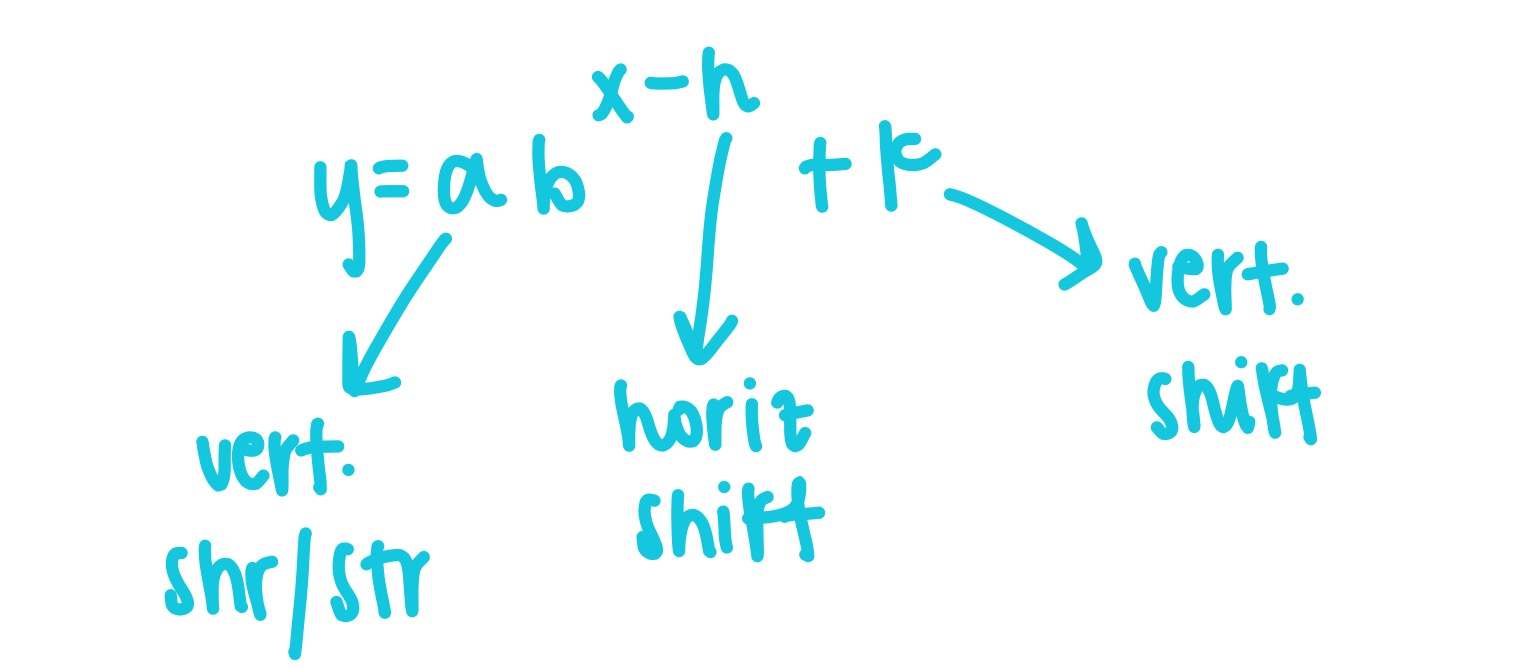
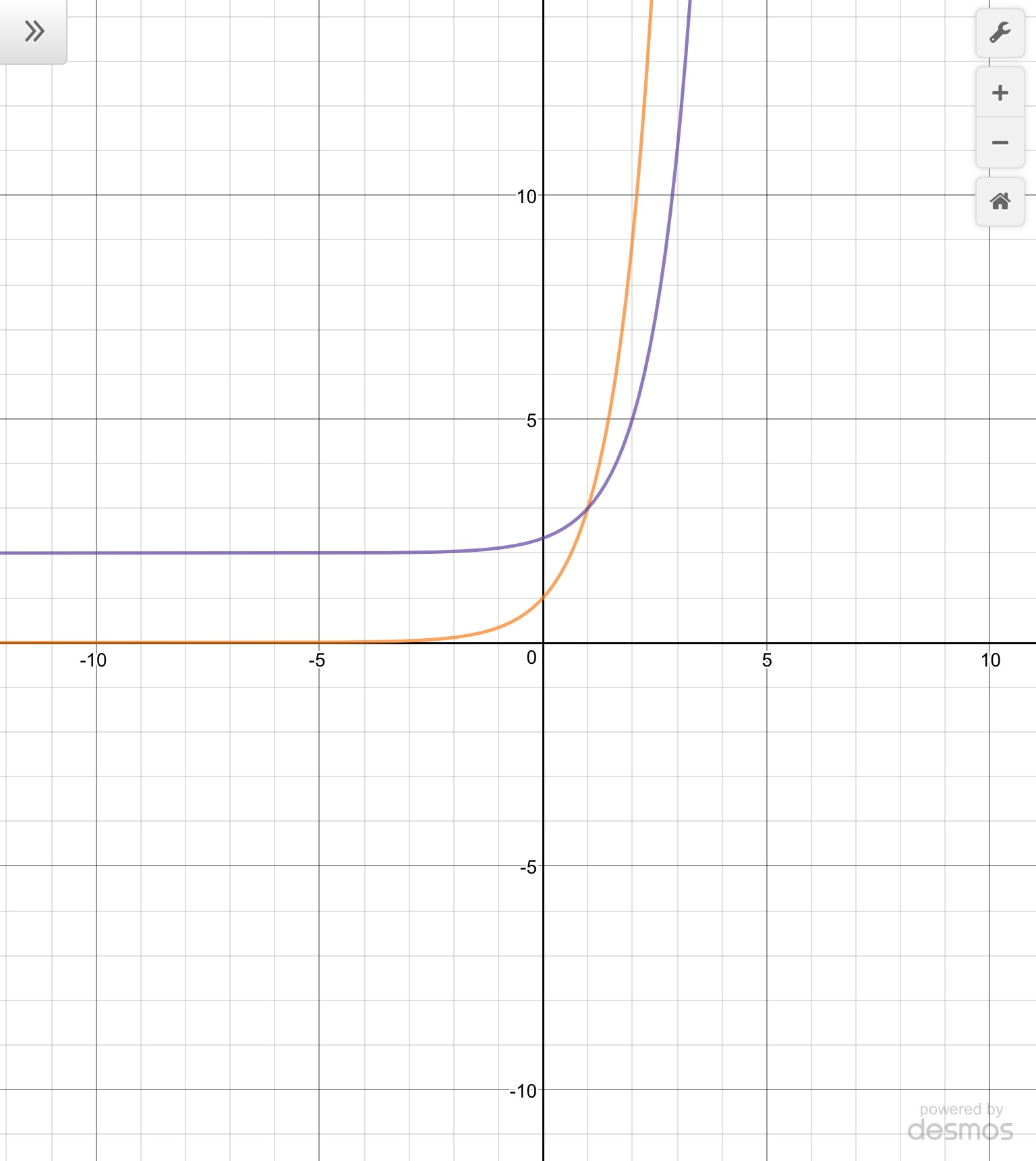
- Expoential
- Graph the parent function.
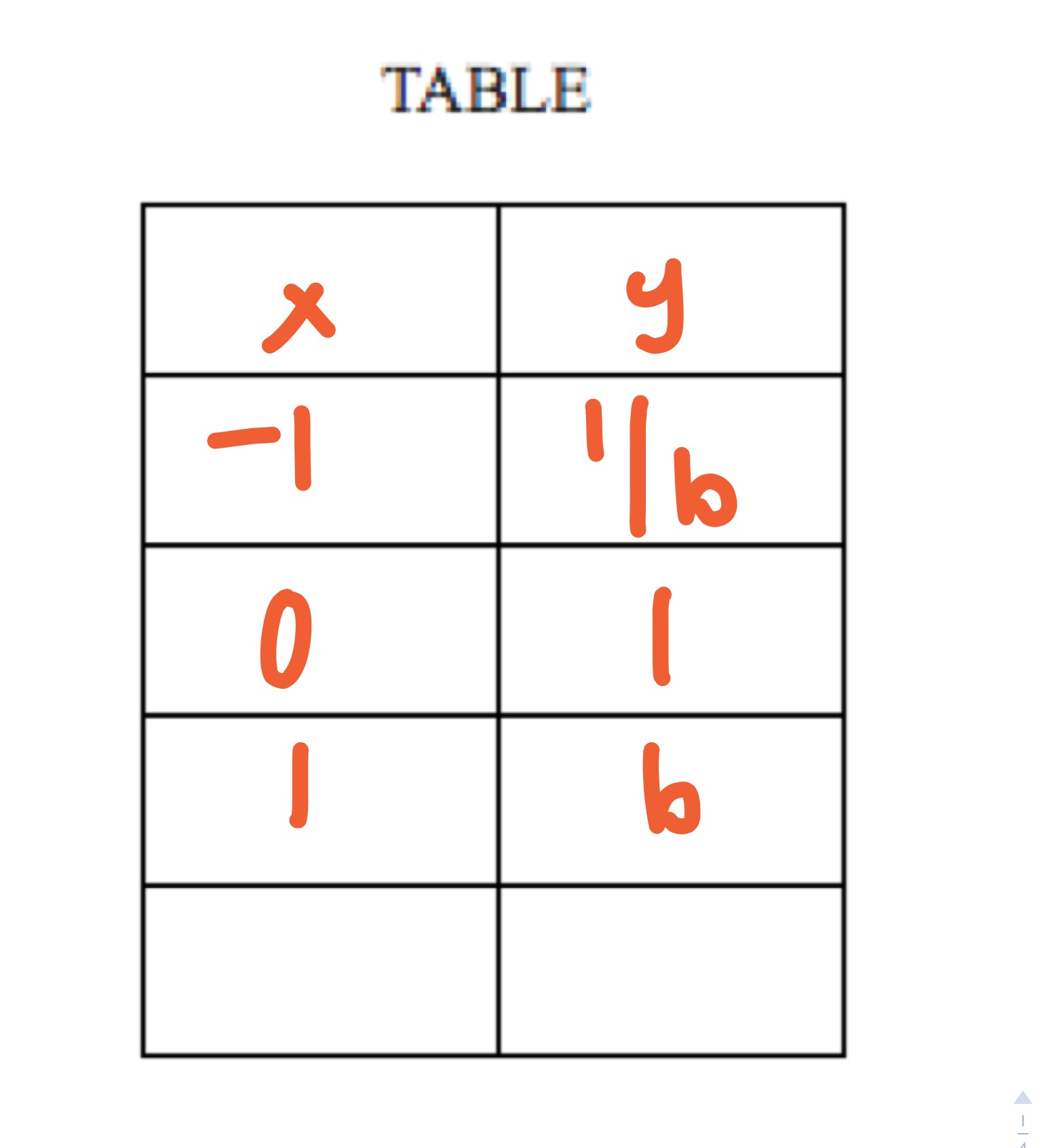
- Create a table of values for the exponential function f(x)=b^x
- ex: y=2+3^x-1
- -1: Horizontal Shift right 1 2: Vertical Shift up 2
- -1: Horizontal Shift right 1 2: Vertical Shift up 2
- ex: y=2+3^x-1
- Create a table of values for the exponential function f(x)=b^x
- Graph the parent function.
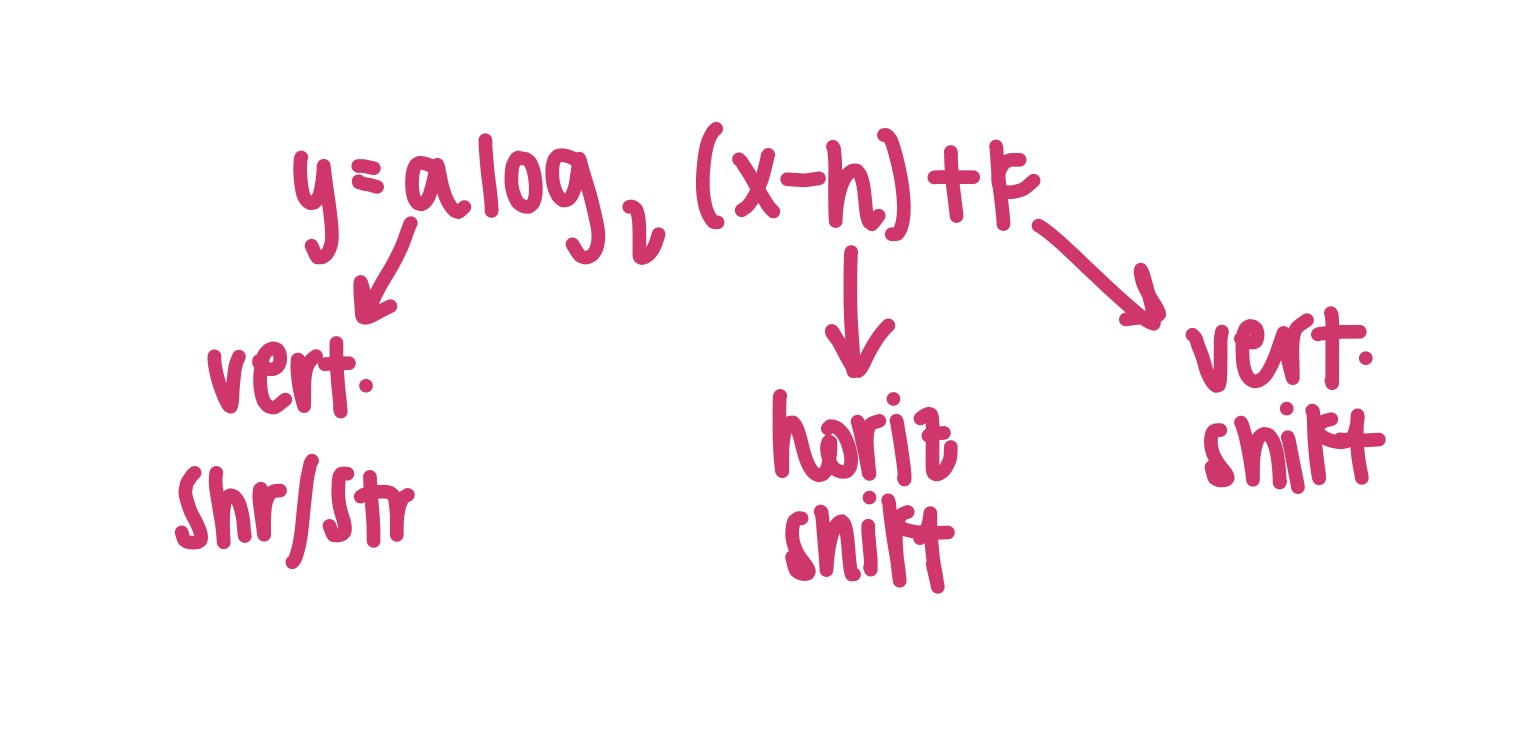
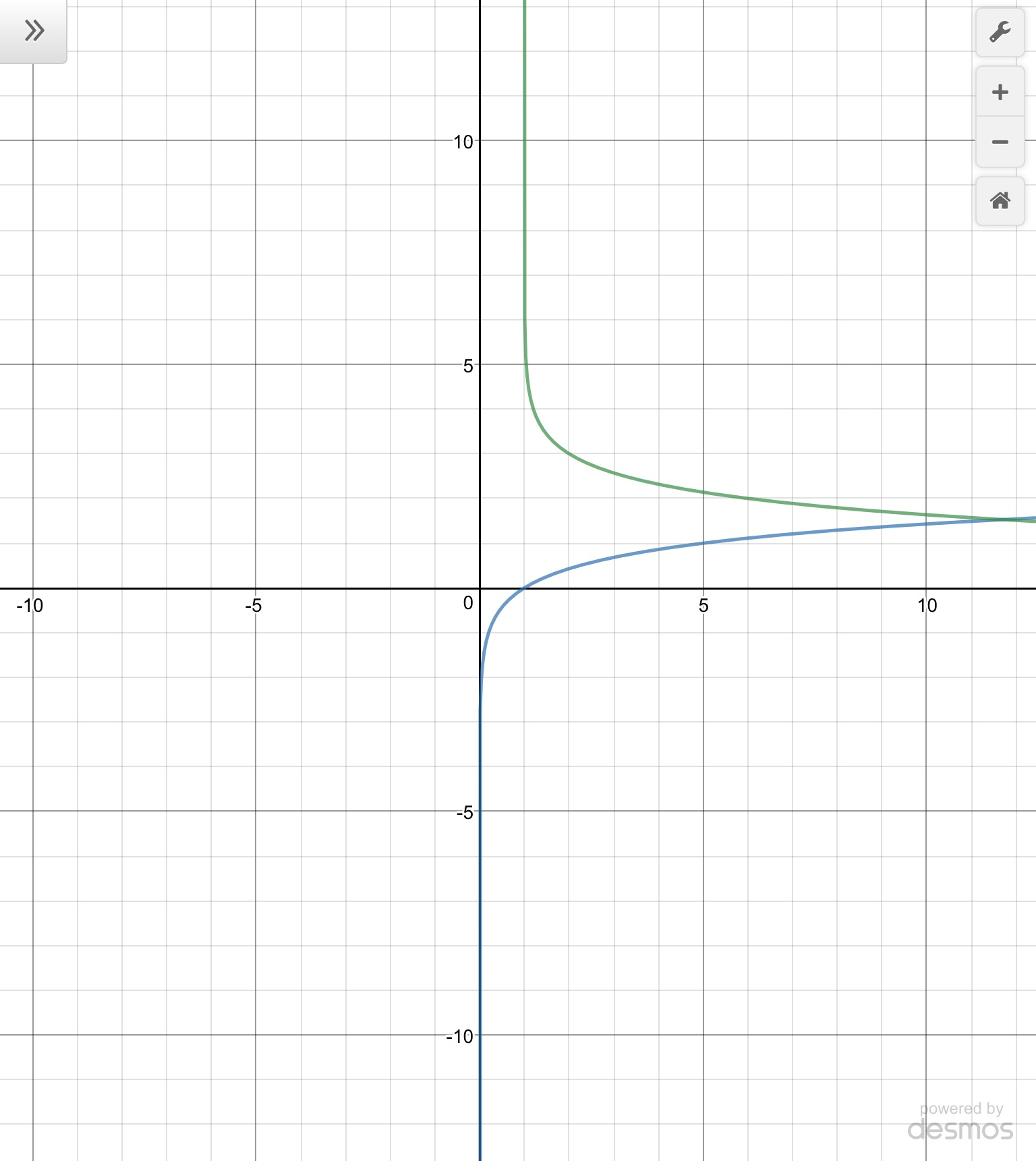
- Logarithms
- Graph the parent function.
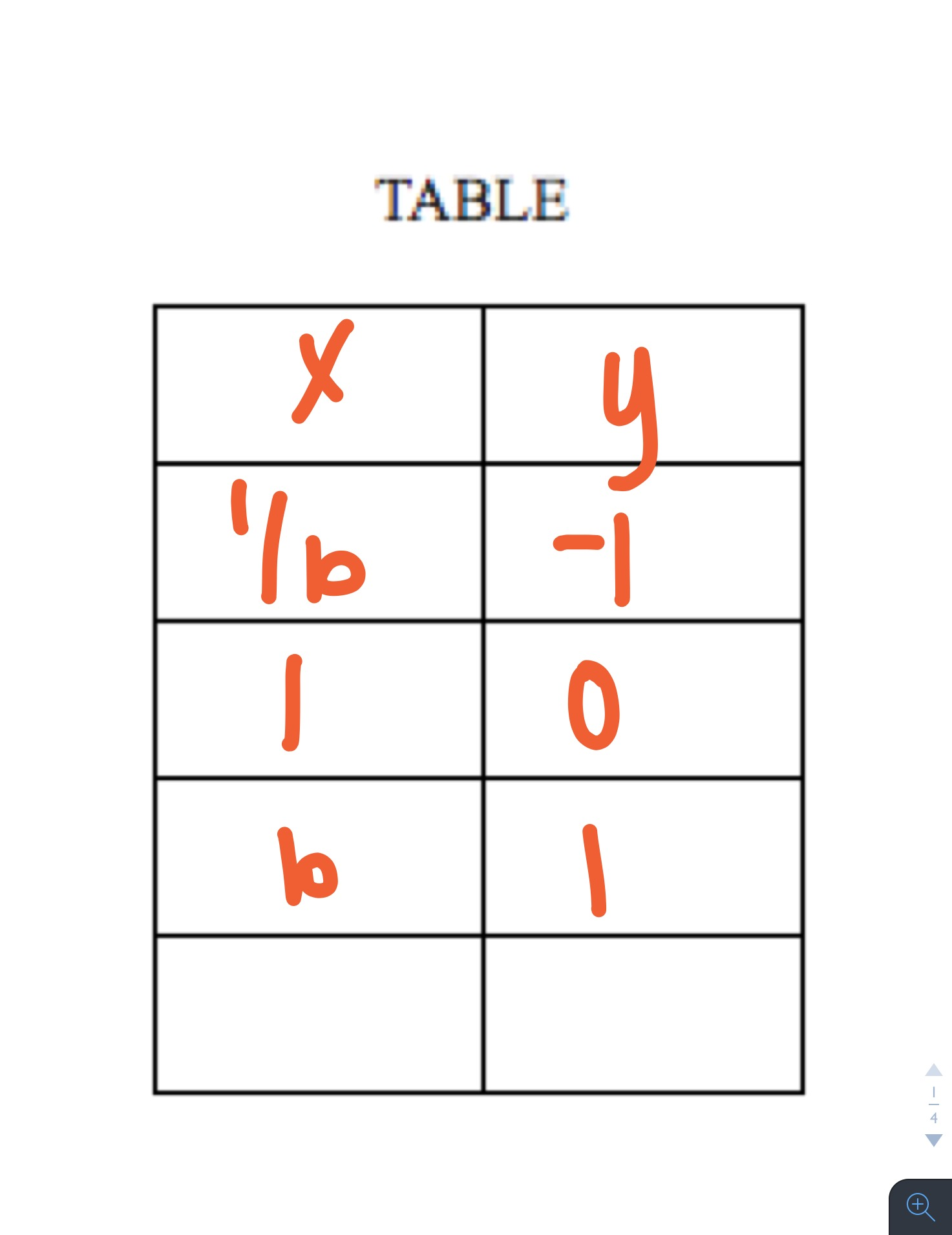
- Create a table of values for the logarithmic function f(x)=log(b)x
- ex: y=-log(5)(x-1)+3
- -1: Horizontal Shift right 1 -log: Reflection over X-axis 3: Vertical Shift up 3
- -1: Horizontal Shift right 1 -log: Reflection over X-axis 3: Vertical Shift up 3
- ex: y=-log(5)(x-1)+3
- Create a table of values for the logarithmic function f(x)=log(b)x
- Graph the parent function.
- Expoential
Word Problems
- Money
- Compound Interest
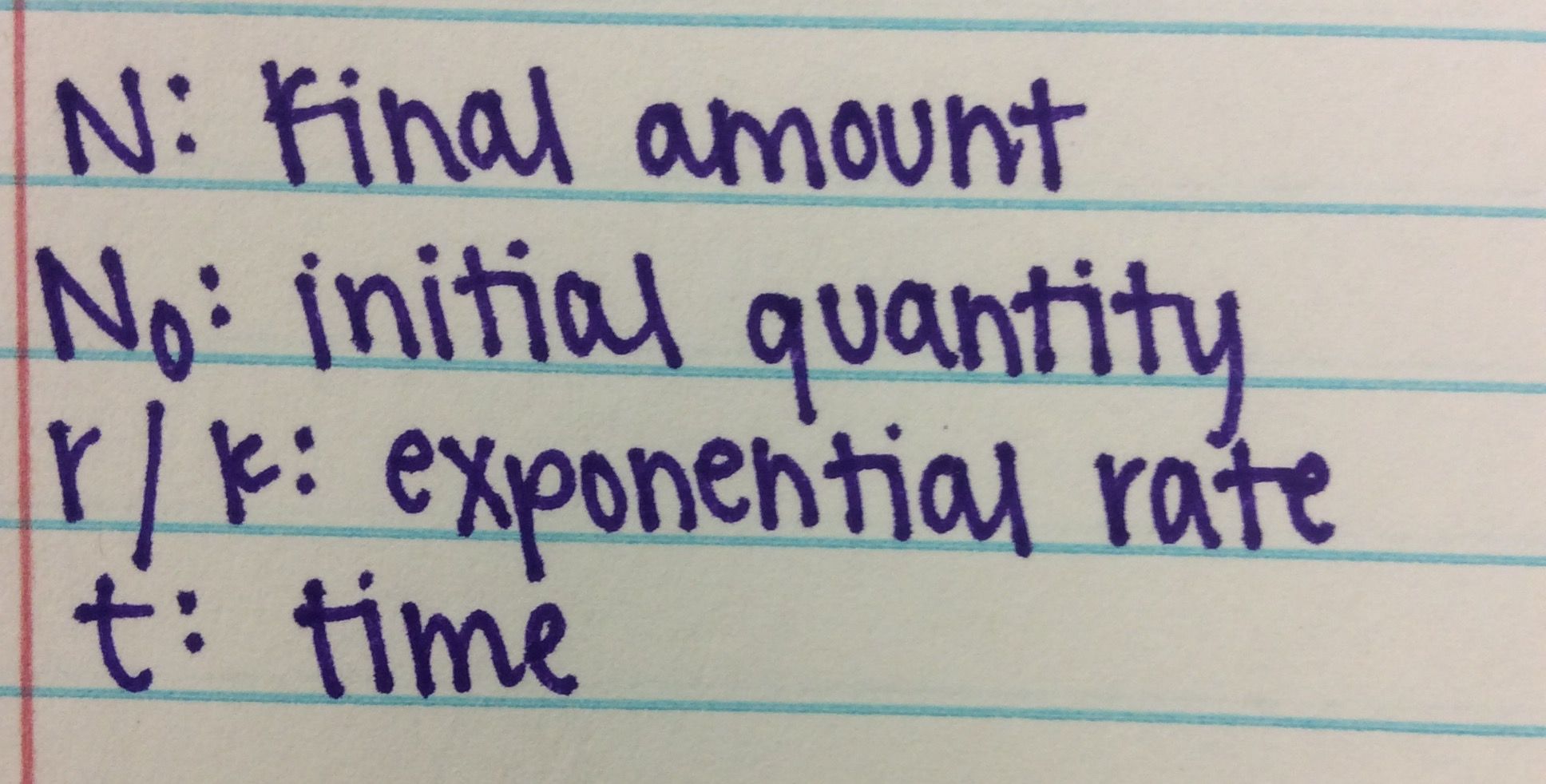
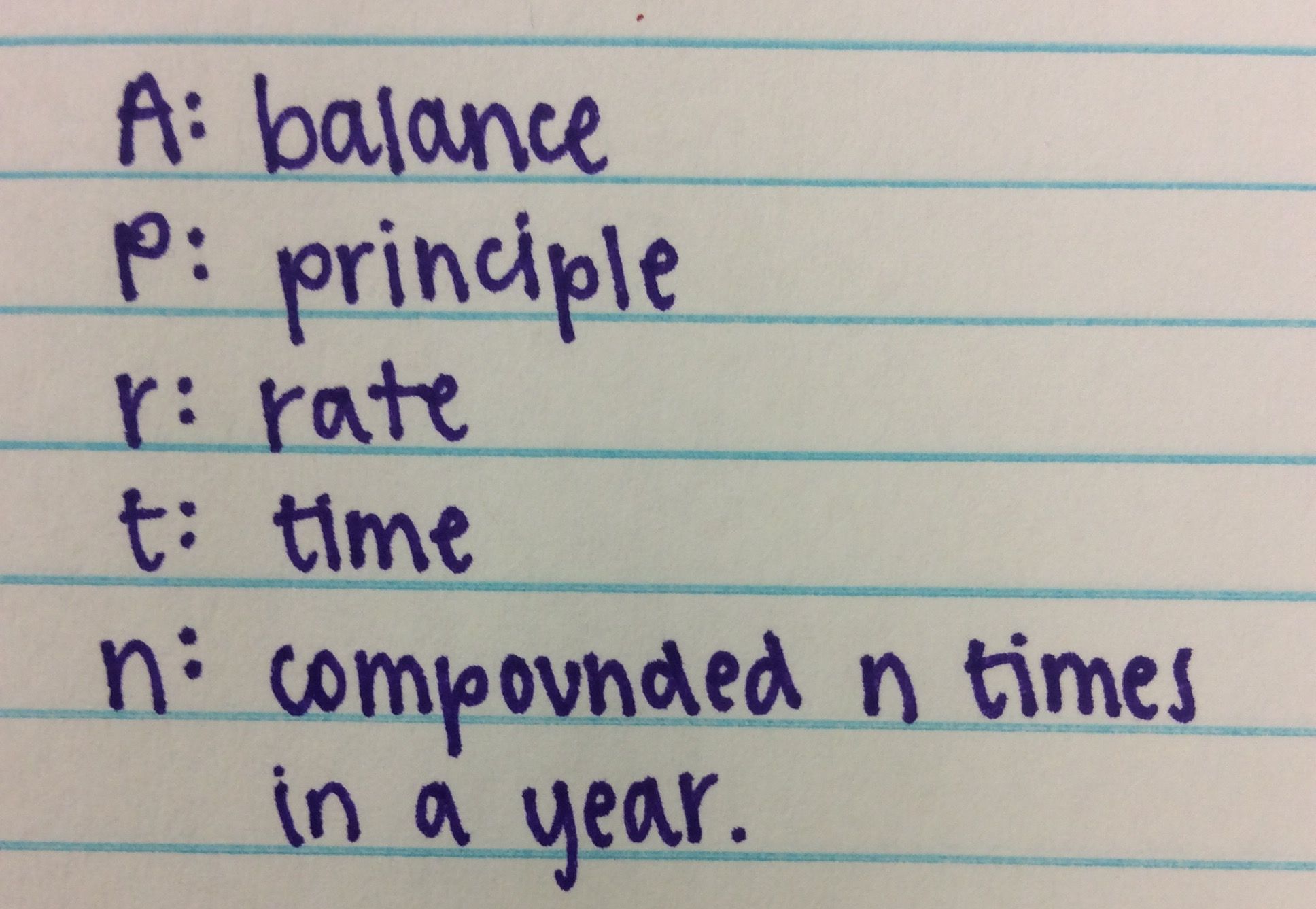
- A=P(1+r/n)^nt
- A=P(1+r/n)^nt
- Continuously Compounded Interest
- A=Pe^rt
- Compound Interest
- Population
- Exponential Growth
- N=N(o)(1+r)^t
- N=N(o)(1+r)^t
- Continuous Exponential Growth
- N=N(o)e^kt
- Exponential Growth
- Money
The log function is the inverse of the exponential function and vice versa.
- Converting
- Equivalent Exponential and Logarithmic Form
- In logarithmic notation: e=log(b)n
- e- exponent b- base n- answer
- In exponential form: n=b^e
- In logarithmic notation: e=log(b)n
- Equivalent Exponential and Logarithmic Form
- Converting
Real-World Problems
- Make a scatter plot of the data given.
- Plug data points into calculator table.
- Analyse the graph with the data points, determining if the points are increasing/decreasing.
- If the points are increasing, then you use the exponential equation. If the points are decreasing, you use the logarithm equation.
- Analyse the graph with the data points, determining if the points are increasing/decreasing.
- Plug data points into calculator table.
- Make a scatter plot of the data given.
Images and files in the map
Information
- Description
- Mind Map on Exponential & Logarithms, created by SAMANTHA B ROMAN on 14/11/2017.
- Created by
- SAMANTHA B ROMAN
- Views
- 5
- Rating