
Mind map
Water and Change
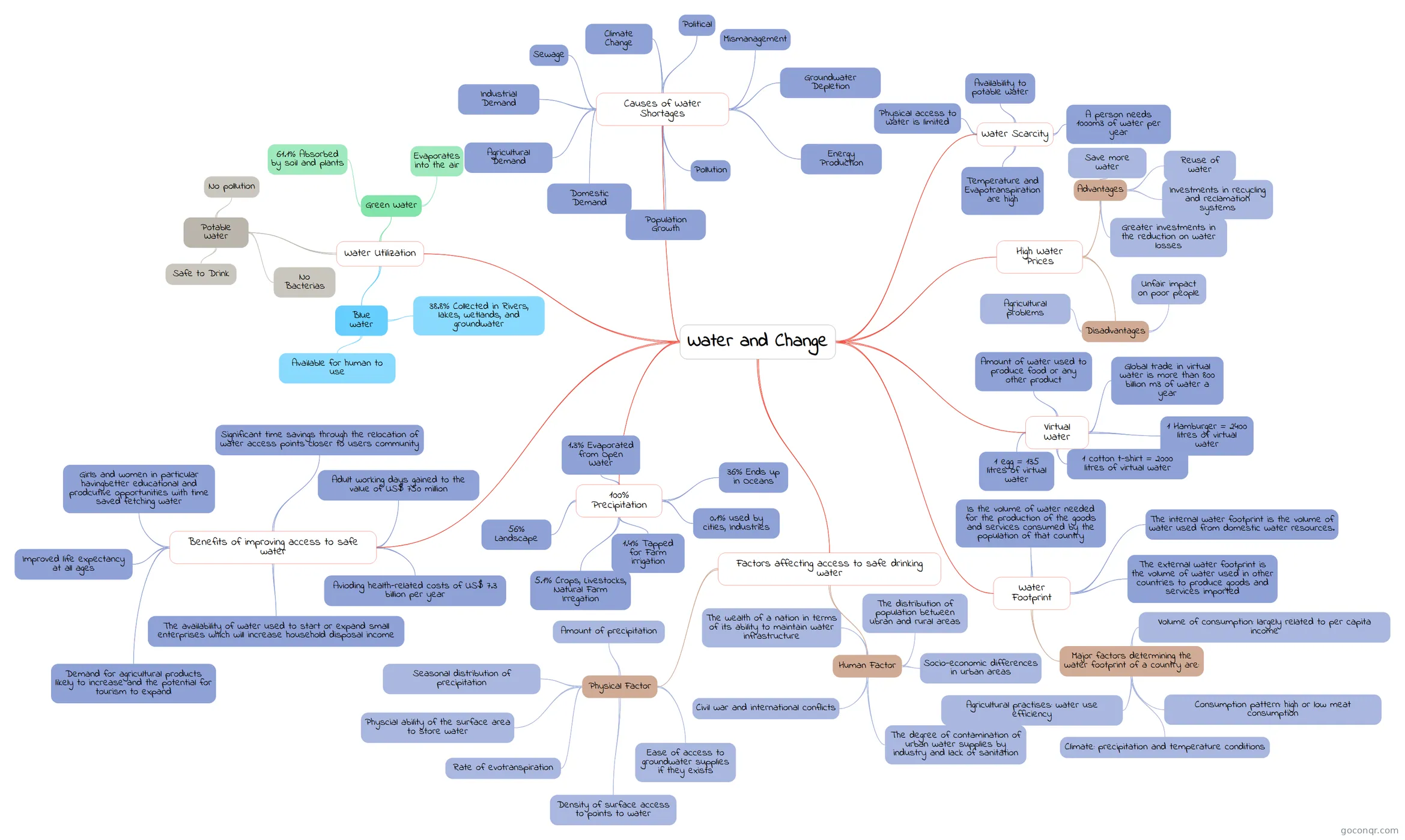
Mind map: Water and change
Map content
Water and Change
Water Utilization
- Blue water
- 38.8% Collected in Rivers, lakes, wetlands, and groundwater
- Available for human to use
- Green Water
- 61.1% Absorbed by soil and plants
- Evaporates into the air
- Potable Water
- No pollution
- No Bacterias
- Safe to Drink
- Blue water
100% Precipitation
- 56% Landscape
- 5.1% Crops, Livestocks, Natural Farm Irregation
- 1.4% Tapped for Farm irrigation
- 0.1% used by cities, Industries
- 1.3% Evaporated from Open Water
- 36% Ends up in Oceans
Causes of Water Shortages
- Population Growth
- Pollution
- Domestic Demand
- Agricultural Demand
- Industrial Demand
- Sewage
- Climate Change
- Political
- Mismanagement
- Groundwater Depletion
- Energy Production
Water Scarcity
- Physical access to water is limited
- Availability to potable water
- Temperature and Evapotranspiration are high
- A person needs 1000m3 of water per year
High Water Prices
- Advantages
- Save more water
- Reuse of water
- Investments in recycling and reclamation systems
- Greater investments in the reduction on water losses
- Disadvantages
- Unfair impact on poor people
- Agricultural problems
- Advantages
Virtual Water
- Amount of water used to produce food or any other product
- Global trade in virtual water is more than 800 billion m3 of water a year
- 1 Hamburger = 2400 litres of virtual water
- 1 cotton t-shirt = 2000 litres of virtual water
- 1 egg = 135 litres of virtual water
Water Footprint
- Is the volume of water needed for the production of the goods and services consumed by the population of that country
- The internal water footprint is the volume of water used from domestic water resources.
- The external water footprint is the volume of water used in other countries to produce goods and services imported
- Major factors determining the water footprint of a country are:
- Volume of consumption: largely related to per capita income
- Consumption pattern: high or low meat consumption
- Climate: precipitation and temperature conditions
- Agricultural practises: water use efficiency
Factors affecting access to safe drinking water
- Physical Factor
- Amount of precipitation
- Seasonal distribution of precipitation
- Physcial ability of the surface area to store water
- Rate of evotranspiration
- Density of surface access to points to water
- Ease of access to groundwater supplies if they exists
- Human Factor
- The wealth of a nation in terms of its ability to maintain water infrastructure
- The distribution of population between ubran and rural areas
- Socio-economic differences in urban areas
- The degree of contamination of urban water supplies by industry and lack of sanitation
- Civil war and international conflicts
- Physical Factor
Benefits of improving access to safe water
- Avioding health-related costs of US$ 7.3 billion per year
- Adult working days gained to the value of US$ 750 million
- Significant time savings through the relocation of water access points closer to users community
- Girls and women in particular havingbetter educational and prodcutive opportunities with time saved fetching water
- The availability of water used to start or expand small enterprises which will increase household disposal income
- Demand for agricultural products likely to increase and the potential for tourism to expand
- Improved life expectancy at all ages
Information
- Description
- Mind Map on Water and Change, created by thetoka1209 on 16/01/2015.
- Created by
- thetoka1209
- Views
- 8
- Rating